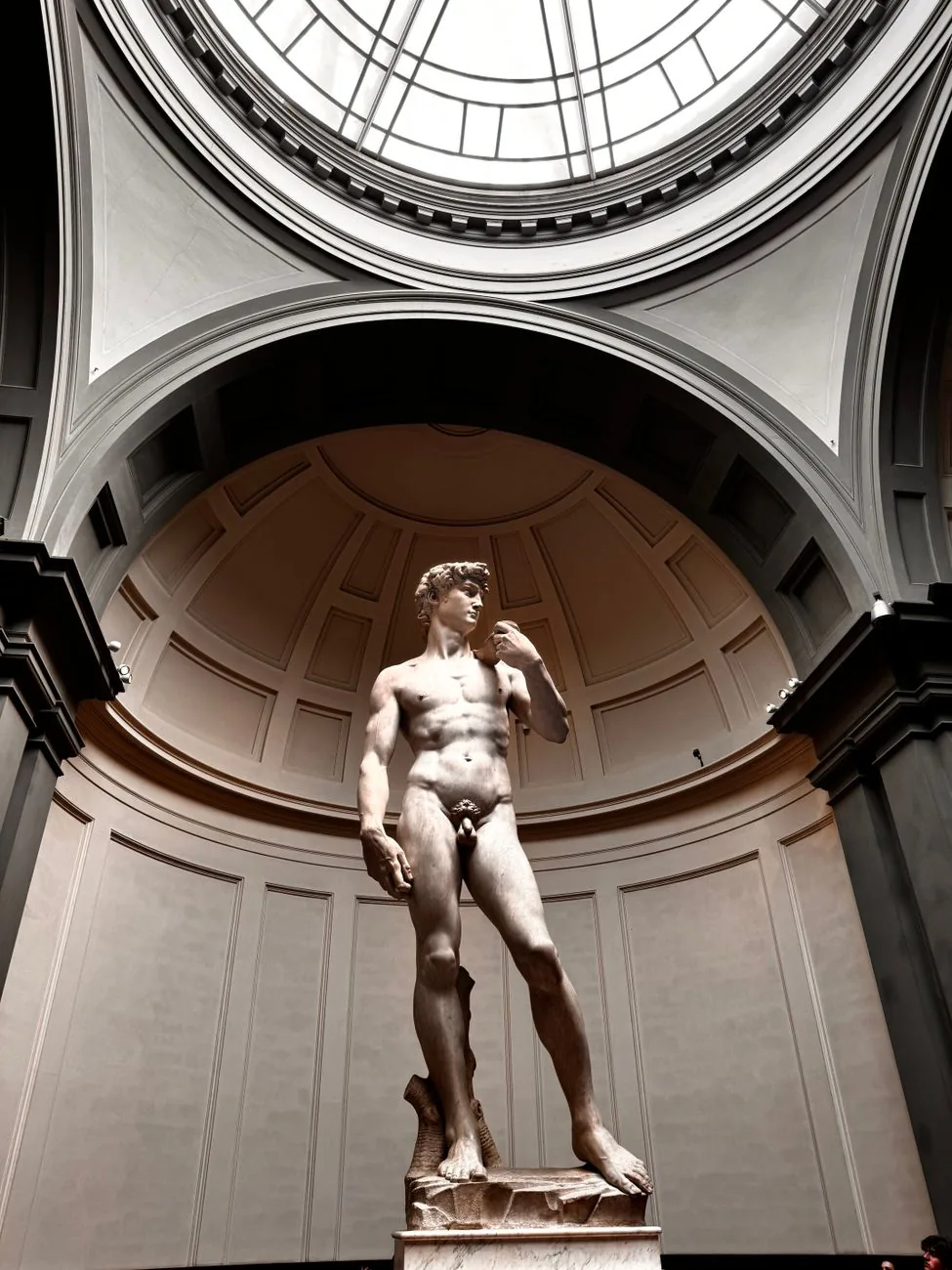
Choose the Accademia Gallery when Michelangelo’s David and a concentrated sculpture collection matter more to you than a broad survey of Renaissance painting. For most travellers, the practical choice is a timed reservation bought through the official Gallery ticket route: it adds a fee, but avoids the uncertain walk-up sales queue. The museum itself is compact, so the visit can fit a shorter Florence day if you protect time for security and entry.
The main decision is not whether David is included. He is included in general admission. It is whether the extra reservation cost is worth protecting your time, and whether the Accademia’s focused collection suits your day better than the Uffizi’s much larger painting collection.
Accademia Gallery Tickets: Buy the Right Entry
The Accademia Gallery is the Galleria dell’Accademia di Firenze at Via Ricasoli 58/60, the compact Florence museum built around Michelangelo’s David. Buy tickets through the Gallery’s official online ticket page. Reservations are highly recommended, although advance booking is not stated as a compulsory condition for every visitor.
- Name
- Accademia Gallery
- Location
- Florence, Italy Maps
- Site
- galleriaaccademiafirenze.it/en
- Hours
- Mon Closed
- Tue–Sun 08:15–18:50
- Essential fact
- A compact Florence museum best known for Michelangelo’s David and its concentrated sculpture collection.
- Booking
- https://www.galleriaaccademiafirenze.it/en/tickets/
- Price
- €20 regular admission
- €2 reduced: EU citizens aged 18–25 and reciprocal cases
- Free statutory free categories and listed 2026 free days
3 more fares
€4 booking/reservation fee€26 48-hour combined: Accademia + Bargello€38 72-hour combined: all six museums in the Accademia–Bargello
- Admission
- €20 regular; €2 reduced for eligible 18-25-year-old visitors and listed reciprocal cases; statutory free categories and the first Sunday of each month
- Reservation fee
- €4 per reservation
- Opening
- Tuesday-Sunday, 08:15-18:50; closed every Monday, 1 January and 25 December
- Time needed
- About 1 hour focused; 1-1.5 hours if you linger; about 30 minutes for David and the Prisoners only
- Booking
- Highly recommended; walk-up availability is not guaranteed
The regular category is the standard choice. The reduced category covers EU citizens aged 18-25 until their 25th birthday, citizens of Switzerland, Norway, Liechtenstein, Iceland and Uruguay, and qualifying reciprocal-residence cases. Free admission covers the statutory groups listed by the Gallery, including eligible students and teachers, disabled visitors with an eligible companion, authorised researchers, ICOM members and qualifying journalists. Everyone can enter free on the first Sunday of each month, with other free-admission dates published by the Gallery; the reservation service is inactive on free-admission days.
General admission covers the museum, including the Tribuna where David stands. The Gallery also lists a €26 combined ticket, valid for 48 hours, with the Museo Nazionale del Bargello, and a €38 ticket, valid for 72 hours, for all six museums in the Accademia and Bargello system. These are useful only if those museums are part of your plan. No official Uffizi-Accademia combination is listed, so treat the two galleries as separate ticket decisions.
Without a reservation, you can turn up and join the walk-up ticket queue, but availability is not guaranteed and the wait can consume the morning. Use this route only when you can absorb a long or unsuccessful wait.
Queues and Visit Length: Plan the Museum Stop
At the Accademia Gallery, “skip the line” means skipping the general ticket-purchase queue, not walking straight into the galleries. Walk-up visitors first wait to buy a ticket, with no guarantee that admission remains available. Reserved visitors use the marked reserved-entry route, but everyone still passes mandatory security. Some booking channels also require a short stop at a nearby redemption desk before security, so a timed ticket shortens the uncertain part of the wait rather than removing every queue.
For walk-ups, plan for a few minutes to about 20-30 minutes in quieter periods, especially early morning, low season or late afternoon. In busy high-season or midday conditions, 60-120 minutes is realistic, and exceptionally crowded days can exceed two hours. April-September, weekends, holidays and roughly late morning to mid-afternoon are the risky periods. Free-admission days are first-come, first-served and can produce the longest queues.
Once inside, protect about 1 hour for a focused first visit, or 1-1.5 hours if you want to linger over the surrounding rooms. A David-and-Prisoners visit can be about 30 minutes, while a slower look at the collection can extend towards 2 hours. Add the queue separately when placing the museum in a Florence day: an apparently short gallery stop can become a half-day commitment if you arrive without a reservation during a busy period.
The museum is open Tuesday-Sunday and closes every Monday, 1 January and 25 December, so those dates cannot be rescued by arriving early. On an open day, last admission is 18:20, the ticket office closes 30 minutes before the museum, and closing procedures begin at 18:40. For a booked visit, arrive 15-20 minutes before the selected time; allow around 20-30 minutes when your voucher requires collection or host check-in.
What to See Inside and How to Choose
Choose the Accademia Gallery for a concentrated sculpture stop, not for a complete survey of Florentine art. The route inside is easy to weight: spend most of your attention on David and the Prisoners, then decide whether the paintings and instruments justify a longer stay. That makes it a strong choice when your day has limited museum time or your interest is sculpture; it is a weaker choice if you want a wide sequence of major Renaissance painters.
The Three Highlights That Repay the Visit
The first major stop is Michelangelo’s David, encountered in the Tribuna.
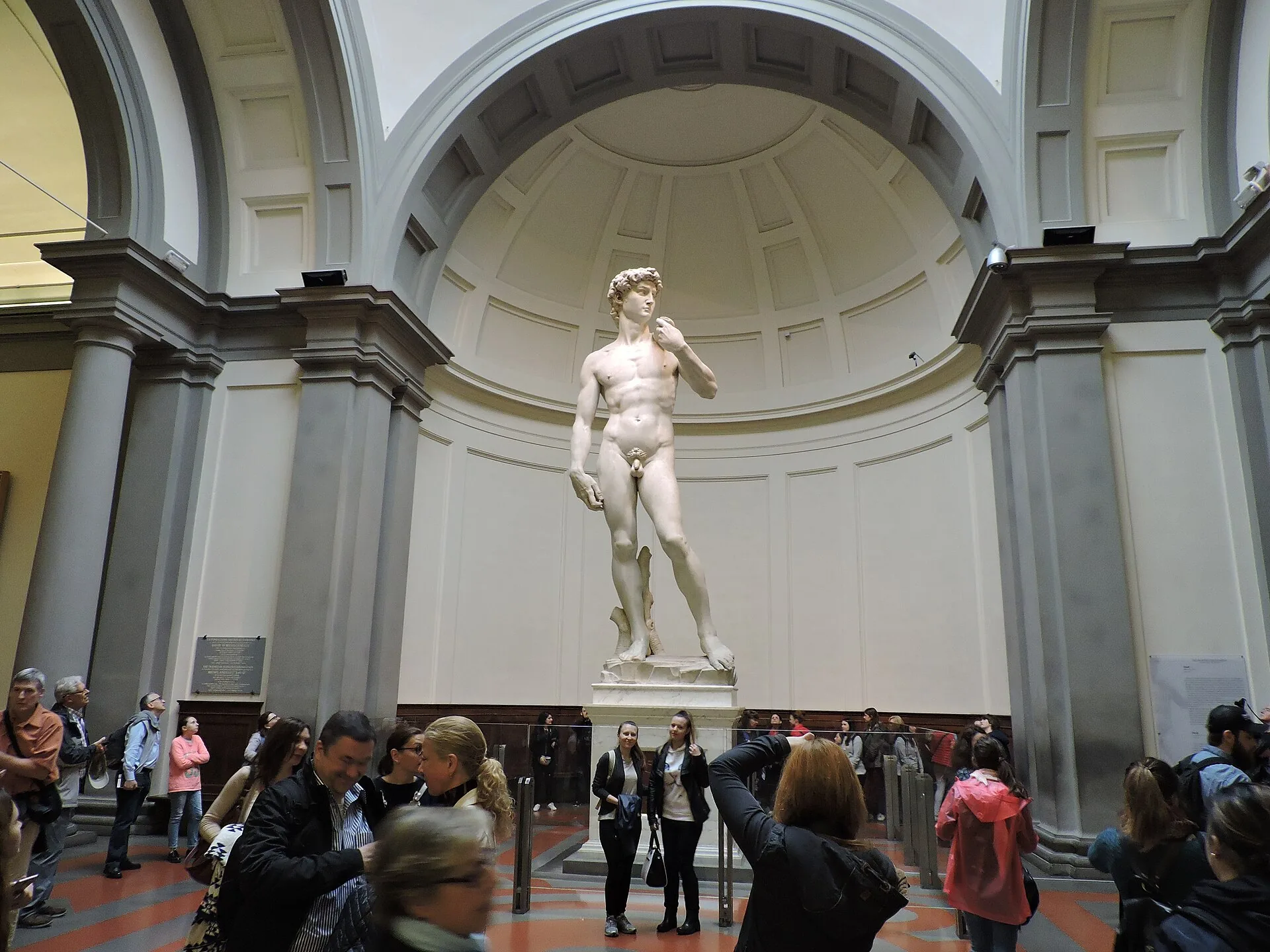
Dimitris Kamaras from Athens, Greece · CC BY 2.0
Its scale, clean silhouette and controlled tension reward a few quiet minutes from several angles, rather than a quick photograph before moving on. Next, seek the Prisoners: Atlas, Awakening, Bearded Slave and Young Slave. Their unfinished marble is the distinct payoff, with bodies that appear to emerge from the stone. They make the visit more than a single-statue pilgrimage, and they deserve priority even when the room is crowded.
Continue to the Hall of the Colossus and the adjoining Florentine Gothic and early Renaissance rooms. The monumental casts and large panel paintings convey the scale of a Renaissance workshop, while works associated with Giotto’s followers, Paolo Uccello and Filippo Lippi show how Florentine painting developed. If time is tight, choose a representative group here and omit the musical-instrument collection. Sculpture-led visitors should stay; anyone who dislikes compact indoor collections should not accept a long queue for this limited route.
Uffizi or Accademia: Choose by Collection and Time
The Uffizi is better when painting is the priority or you have half a day to give it. The Accademia is better for David, Michelangelo’s unfinished figures and a focused visit. For a short Uffizi comparison, the official Afternoon ticket is the useful option when you can enter from 16:00: it costs €16 when bought on the day or €20 before the visit date, admits you once to the Uffizi, and does not include the Accademia. The official 5-day ticket costs €40 and covers the Uffizi, Pitti Palace and Boboli Gardens, not the Accademia. There is no official combined Uffizi-Accademia ticket listed, so buy separately.
| Criterion | Accademia | Uffizi |
|---|---|---|
| Collection focus | Michelangelo and concentrated sculpture | Renaissance and Baroque painting |
| Best for | David, Prisoners, limited time | Botticelli, Leonardo, Raphael, Titian, Caravaggio |
| Realistic time | About 1-2 hours | 2-3 hours for highlights |
| Useful ticket | General admission, David included | Afternoon ticket from 16:00 |
| Busy walk-up queue | About 60-90 minutes | About 90-120 minutes |
| One-museum verdict | Choose for sculpture or a short stop | Choose for breadth or a half-day |
Timed entry is the safer plan for either museum in peak periods, because a walk-up queue can consume the time that made the shorter choice attractive. Pick the Accademia if one hour of concentrated sculpture is enough; pick the Uffizi if the larger sequence of paintings is the reason you came to Florence. If neither fits your day, use Florence’s museum shortlist to compare the other major collections before committing your remaining hours.
Sources for the figures in this guide