For an ordinary short hotel stay in Charleston, South Carolina, budget for government lodging taxes on top of the accommodation price. The main rate below applies within Charleston city limits in Charleston County, not to every hotel advertised as being in Charleston.
Hotel-imposed destination or service fees are separate from government taxes, although mandatory fees can themselves be taxable. Your final bill also depends on the property’s actual address, any qualifying exemption and what you have already paid through a booking company. Start with the room-tax breakdown, then reconcile the quoted total with the receipt.
Hotel tax rates
- Combined room-tax rate
- 14%, ordinary short stays within Charleston city limits in Charleston County
- State sales tax
- 5%
- State accommodations tax
- 2%
- Local sales taxes
- 3%: 1% local option, 1% county transportation, 1% school district/education
- County accommodations fee
- 2%
- City accommodations fee
- 2%
The statewide accommodation taxes are only part of your room-tax bill. Local sales taxes and the county and city accommodations fees add to them. A quote showing only the state portion therefore does not give the full tax amount for a hotel in this area.
Use the combined rate for a conventional hotel room when neither a longer-stay rule nor a guest-status exemption changes its treatment. Apply it to the taxable accommodation charge, rather than indiscriminately to every line on the receipt. Restaurant purchases and optional services need their own treatment.
Hotel addresses and tax exemptions
| Levy | Continuous-stay treatment | Same-person condition |
|---|---|---|
| State sales and accommodations taxes | Exempt at 90 days or more | Same person |
| County accommodations fee | Outside scope at 30 days or more | — |
| City accommodations fee | Exempt at 90 days | Same person |
Establish the hotel’s municipality and county with the property, rather than relying on its Charleston marketing name. North Charleston and Mount Pleasant are separate municipalities, so a Charleston-area description is not enough to apply the main rate.
The longer-stay rules differ by levy. Do not treat relief from one levy as relief from the whole bill. For a longer stay, ask the hotel to itemise any remaining local sales and accommodations taxes separately.
South Carolina’s accommodations-tax guest exemptions cover foreign diplomats and accommodation billed directly to federal government agencies, the American Red Cross, federal credit unions or charitable children’s hospitals. These are specific categories, not a general exemption for visitors travelling for work or charity.
Federal employees on official business must use a qualifying government payment arrangement for the accommodations sales-tax exemption. The federal government must be billed directly, or payment must be by government cheque or a government credit card billed directly to the government. Personal payment remains taxable even when later reimbursed, and a federal exemption certificate alone is insufficient. Arrange qualifying billing before paying rather than assuming reimbursement changes the tax.
Room prices, taxes and extra fees
- Multiply the nightly room price by the number of nights. Hypothetically, $200 for two nights gives a $400 room charge.
- For an ordinary short stay within Charleston city limits in Charleston County, apply the 14% combined rate. This room-only example adds $56 tax, making $456 in total.
- Account for mandatory hotel fees and their itemised taxes, then add separately payable services under their own tax treatment. Do not add prepaid amounts again.
Government taxes and hotel-imposed destination, resort or service fees are different charges. The state taxable accommodation amount includes the room and customary room services, such as maid service, even when a mandatory charge is separately stated. Mandatory destination-marketing and similar service fees also enter that state taxable amount.
Separately billed services beyond customary room services, such as laundry or in-room movies, can fall outside the accommodation base and may be taxed as additional guest charges instead. Separately stated optional amenities and guest services are not subject to accommodation tax. Optional does not necessarily mean tax-free.
The upfront advertised lodging total must include all known, calculable mandatory fees and appear more prominently than other price information. The FTC rule applies to hotels and booking sellers. Government taxes may be excluded upfront, but their nature, purpose and amount must be disclosed before payment is requested and included in the final payment amount. Genuinely optional add-ons may also be excluded upfront. Bundled airline-and-hotel packages subject to Department of Transportation tax-inclusive pricing rules must include taxes upfront.
Charleston’s city hospitality tax is 2% on prepared meals, food and beverages sold by covered establishments, including alcoholic drinks. It concerns dining purchases, not the hotel room. Once accommodation is accounted for, Charleston daily budgets help you allow for food, sightseeing and local travel.
Booking confirmations and billing mistakes
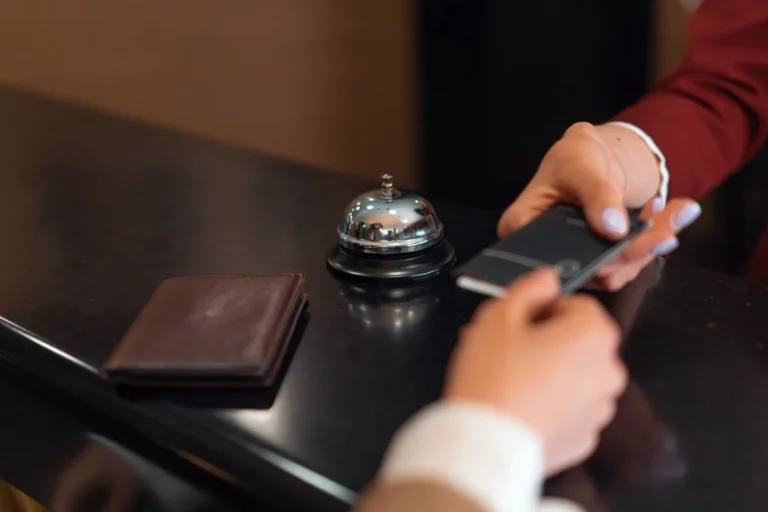
An online travel company that reserves your hotel room and accepts payment must collect and remit state and local accommodations taxes on the full taxable booking amount, including taxable booking and mandatory service fees. For bookings made without that company, the hotel remains responsible. Payment through a booking company therefore needs to be matched to the hotel’s final receipt, not treated as a reason to pay the same taxes twice.
Do
- Keep the itemised booking quote and final hotel receipt.
- Match prepaid amounts against charges still due, including any services bought during your stay.
- Distinguish a pending card hold from a settled charge.
- Identify a disputed line and ask its collector for a written explanation or corrected bill.
Don’t
- Assume every prepaid booking includes every charge.
- Add a temporary card hold to the settled stay cost.
- Dispute the whole bill without identifying the charge and who collected it.

Mikhail Nilov · Pexels License · Edited
Sources & fact-checking
Checks against the sources below cover: fares and charges, as well as services.
- City of Charleston — fares and charges
- Sales and Use Tax Manual, 2025 Edition
- Accommodations | SCDOR
- Charleston County Government — fares and charges
- Charleston County Council — fares and charges
- SC Revenue Ruling #14-5: Accommodations Tax and Sales Tax on Charges by Hotels, Motels and Other Places Furnishing Sleeping Accommodations
- SC Revenue Ruling #18-7: Destination Marketing Fees
- Federal Trade Commission — service
- City of Charleston Revenue Collections Division — service
- City Council of the City of Charleston — service
- Accommodations | South Carolina Department of Revenue
- Accommodations