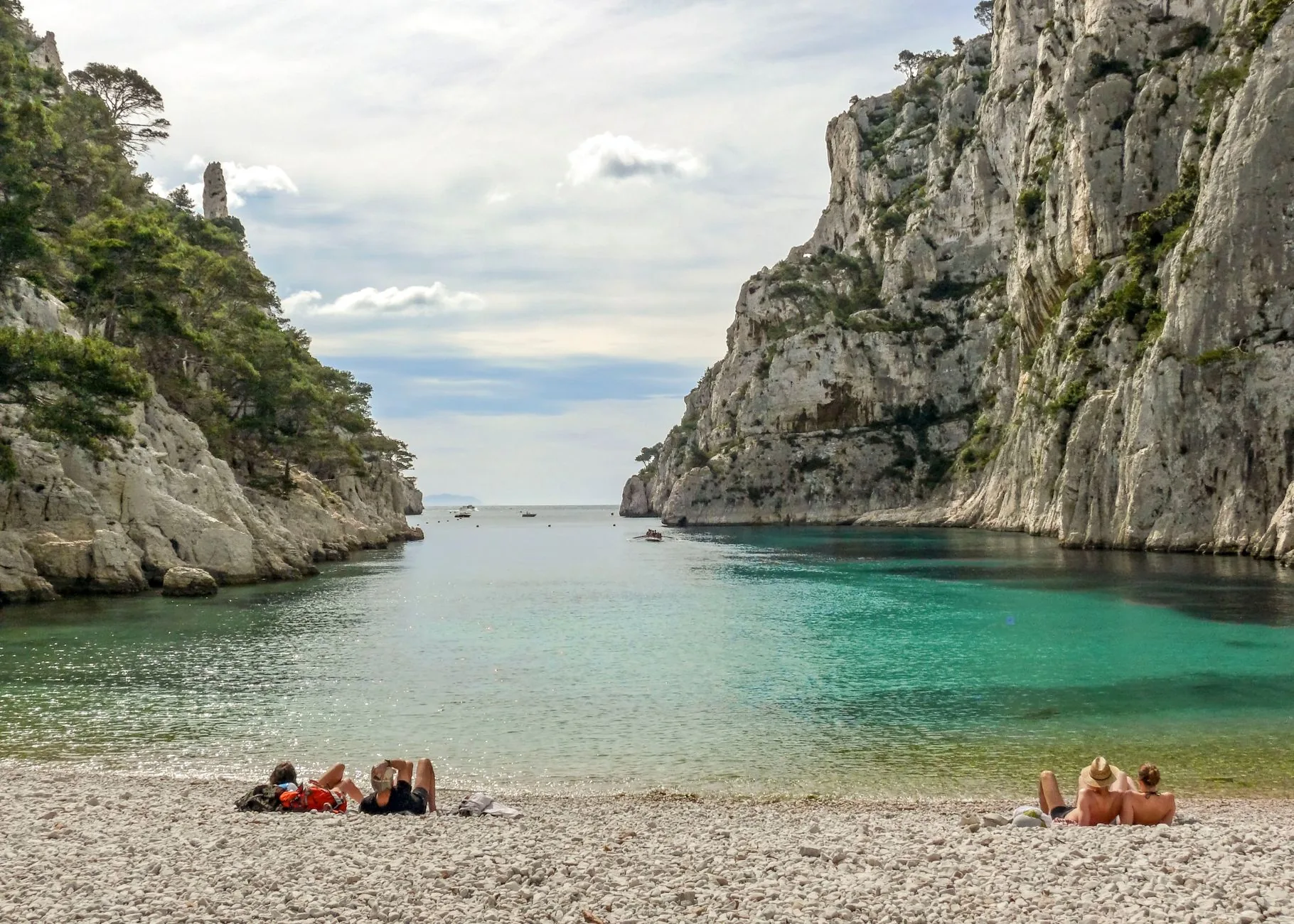
For a first visit, choose late September to the first half of October, roughly 15 September-10 October. You keep warm sea conditions and workable days for the city and the Calanques, while the August crowd and accommodation peak has eased. July and August are the wrong choice if your priority is comfortable sightseeing, manageable queues and lower relative prices. Choose winter instead only if the lowest prices and quiet museums matter more than boats, swimming and dependable coastal days.
Marseille’s Mediterranean coastline is the reason this shoulder-season window remains useful after summer.
The Best Time to Visit Marseille Is a Shoulder-Season Window
The recommendation suits a first-time traveller who wants to combine Marseille’s historic centre, museums, viewpoints and coastal walks without organising every day around heat or queues. Late September usually keeps the sea warm enough for swimming, and early October still gives you a realistic chance of a beach or boat day. The Calanques are easier to fit around the rest of the city once the main summer pressure has reduced, although a rainy spell, strong wind or a fire-risk decision can still change an outdoor plan.
Steffen Mokosch · CC BY-SA 4.0
- Best window
- Late September to the first half of October, roughly 15 September-10 October
- Best for
- A first visit balancing walking, swimming, coastal time and quieter sightseeing
- Main trade-off
- Less guaranteed beach heat and nightlife than July-August, but calmer streets and easing accommodation demand
- Avoid for this priority
- July-August; avoid November-February if coastal activities matter more than the lowest prices
The exchange is straightforward. July and August offer the hottest beach days, the warmest sea and the fullest summer programme, but they also bring the densest crowds, stronger accommodation demand and more pressure at popular sights. The shoulder season gives up some long, reliably hot evenings in return for easier walking, more flexible visits and generally lower rates. Winter makes the opposite bargain: January and February are quieter and cheaper, but shorter days, reduced boat activity, seasonal closures and the mistral make a sea-first itinerary less dependable. Major Olympique de Marseille match weekends and large events can briefly reverse the normal autumn advantage, so do not treat a shoulder-season date as protection from every demand spike.
Month-by-Month Conditions for Planning a Visit
The table uses long-term monthly averages, not a forecast. Mean air temperature and wet-day figures use the 1991-2020 climate normal. Sea temperatures are long-run monthly climatological averages, but the available sea series do not expose one identical measurement period. Wet days count rainy days, without using rainfall totals. Read the crowd and price columns as planning bands: school holidays, public holidays, events and advance booking can move them.
| Month | Mean air average | What it allows or restricts | Sea average | Rainy days average | Wind pattern | Crowds / relative prices |
|---|---|---|---|---|---|---|
| January | 8°C | Museums, Le Panier and food with minimal queues; cold sea, short days and wind can disrupt boats and exposed walks. | 13-14°C | 6 | Mistral frequent | Very low / very low, except New Year |
| February | 8°C | Easy urban culture and restaurants; poor for swimming, with winter wind, short days and reduced boat frequency. | 13°C | 4-6 | Typically windiest period | Very low / among the lowest |
| March | 10-11°C | Better city walks, markets and calm-weather Calanques hikes; cold sea and mistral still require a backup plan. | 13°C | 4-6 | Mistral episodes remain common | Low / low to lower-mid |
| April | 13-14°C | Strong for walking, hiking and sightseeing without summer congestion; rain or wind can interrupt coastal days, and swimming is cold. | 14°C | 5-8 | Cool-season mistral possible | Low-moderate / below summer |
| May | 17°C | Long outdoor days, cycling and Calanques hiking with manageable demand; the sea is cool for many swimmers. | 16-17°C | 4-6 | Less persistent than winter | Moderate / shoulder-season |
| June | 21°C | Useful for swimming, boats and open-air culture; heat builds and Calanques access can close with fire risk from 1 June. | 19-20°C | 3-4 | Sea breezes; occasional mistral | High / high, about 20-30% above base |
| July | 24°C | Best for beaches, warm water, late evenings and festivals; midday heat, queues and fire-risk closures restrict sightseeing and hikes. | 21-22°C | 1-2 | Usually lighter mistral; sea breeze | Very high / very high, about 40-60% above base |
| August | 24°C | Liveliest for swimming, beaches and boats; heat makes long walks harder, while Calanques fire risk and packed sites are major constraints. | 22-23°C | 2-3 | Sea breeze; occasional mistral | Very high, usually the maximum / very high, often maximum |
| September | 20°C | Warm water, more comfortable hiking and city sightseeing; early-month boat and trail plans remain weather- and fire-status-dependent. | 21-22°C | 4-6 | Less settled than high summer | Moderate, falling / high but easing |
| October | 16-17°C | Excellent for walking, hiking, food and value; early swimming remains possible, but heavy showers and less reliable boats need flexibility. | 19-20°C | 7-8 | Mistral frequency increases | Low-moderate / moderate and falling |
| November | 12°C | Quiet museums, markets, restaurants and low-cost stays; cooler, windier, shorter days and reduced seasonal services limit outdoor time. | 17°C | 8-9 | Cool-season mistral returns | Low / low, roughly 30-50% below summer |
| December | 9°C | Culture, food and recurring Christmas markets and santons; short days, wind and reduced boats limit the coast, while Christmas-New Year creates a local demand peak. | 15°C | 6-7 | Mistral possible | Low overall / low outside Christmas-New Year |
The recurring wind season matters as much as the thermometer. From roughly October to April or May, the mistral is more frequent, especially in winter and spring; it can make a sunny day feel cold and roughen exposed coastal or boat plans. Summer is less dominated by full mistral episodes, but a daytime sea breeze commonly builds and fades towards evening. Late May-June and September offer the most balanced outdoor conditions. In June, July and August, the sea is more useful for swimming, but heat, crowds and Calanques fire-risk controls become part of the decision.
Summer Needs a Heat and Queue Strategy
Marseille’s peak season is July and August, with pressure already building in June and often lasting into the first half of September. Heat changes the shape of the day: exposed waterfronts, the Corniche and longer Calanques climbs are harder in the middle of the day, even when the air feels pleasant near the water. The Old Port, Le Panier, Prado beaches and headline boat trips are busiest on Saturdays, Sundays and public holidays, especially from about 11:00 to 17:00. Tuesday to Thursday is usually easier, and early morning or late afternoon gives you more space.
Summer also changes the accommodation calculation. Demand rises sharply from June and is strongest in July and August, so a summer date usually costs more than the shoulder-season window. If you are comparing areas as well as dates, read a practical guide to where to stay in Marseille when seasonal demand starts to dominate the choice. For a lower-pressure day, use the first hours for a major sight or exposed walk, keep the hottest period for shaded interiors and lunch, and move to a smaller park, a less prominent cove or a quieter district later. A list of free things to do in Marseille is useful when ticketed sights and boats are under the most pressure.
Make a summer day workable
Do
- Start Calanques walks and exposed coastal routes early.
- Choose Tuesday to Thursday when your dates are flexible.
- Book the main sight, boat trip or scarce accommodation before arrival.
- Keep a shaded indoor option for the hottest part of the day.
- Use smaller parks, quieter coves and less-visited sectors when headline sites are packed.
Don’t
- Build the whole day around a midday hike in full sun.
- Assume a weekend at the Old Port or Prado will feel spacious.
- Leave a popular boat trip or accommodation choice until the last minute.
- Treat a summer Calanques route as guaranteed when fire-risk access can change daily.
Events and Seasonal Access Can Change the Choice
Recurring events can make a normally suitable date feel like high season. The Fête de la Musique around 21 June, Bastille Day on 14 July, the Festival de Marseille in June and July, and Marseille Jazz des Cinq Continents, generally in July, all add activity around central venues and transport routes. The Marseille-Cassis road race, usually in late October, can raise demand and complicate movement beyond the summer peak; the autumn Fiesta des Suds can create a smaller concert-driven spike. French school holidays, Christmas and New Year, and public-holiday long weekends also increase leisure demand. For more space, use January or February weekdays, or November weekdays outside school holidays and event dates.
The Calanques introduce a separate seasonal decision. From 1 June to 30 September, access to the forest massifs, including access by sea, is regulated each day by fire risk. The following day’s status is published from 18:00. On a red-risk day, entry to the forest massifs and land access to the Calanques are prohibited for the full day, Route des Crêtes closes, and boat tours may continue only without landing. Frioul remains visitable, so it is the practical fallback when a Calanques plan is stopped. This rule is why late September and early October are attractive, but it does not remove the need for flexibility in early autumn.
Motor vehicles without a municipal permit are prohibited on the access roads to Morgiou, Sormiou and Callelongue. Their seasonal operating pattern runs from early June through late September, with daily summer access and more limited periods at the shoulders; where the roads are open, the regulated window is 07:00-19:00. General rules also prohibit leaving marked trails, smoking or lighting fires, camping and off-road motor vehicles. If a major event collides with a red-risk day or a school-holiday weekend, shift the Calanques visit to another day and keep the city programme as the fixed part of the trip.
Sources for the figures in this guide