Bologna’s National Gallery is the strongest first choice if you enjoy painting, but the city’s museum collections offer quite different reasons to spend time indoors. Ancient objects, Bologna’s own history, Giorgio Morandi’s still lifes and university science each reward a different kind of attention.
These five visits are ranked for broad first-visit appeal before specialist interests. Choose the subject that draws you in, rather than trying to see all five. Piazza Maggiore is the starting point for the entrance walks below, but the museums are alternatives, not a single day’s route.
Which museum should you choose?
| Criterion | National Gallery | Civic Archaeological Museum | Palazzo Pepoli | MAMbo with Morandi | Palazzo Poggi |
|---|---|---|---|---|---|
| Full adult admission | €12, presale included | €6; +€1 if bought remotely | €10, audio guide included | €6, Morandi included | €10 |
| Suggested time inside | — | — | — | About 1.5–2 hours | About 1–2 hours |
| Recurring closures | Mondays | Non-holiday Tuesdays; 1 May, 25 December | Tuesdays | Mondays; 25 December | Non-holiday Mondays; 1 January, 1 May, 15 August, 24–25 December |
| Walk distance | about 1.1 km | about 200 metres | about 450 metres | about 1.5 km | about 950 metres |
| Walk time | about 14 minutes | about 3 minutes | about 6 minutes | about 20 minutes | about 12 minutes |
If you have time for only one, choose the National Gallery for painting. The Civic Archaeological Museum suits an interest in ancient objects; Palazzo Pepoli gives you Bologna’s story. MAMbo is the choice for modern art and Morandi, while Palazzo Poggi rewards curiosity about science and the history of teaching.
The National Gallery and Palazzo Poggi make an optional pairing in the university district, contrasting painting with scientific collections. Near Piazza Maggiore, the Archaeological Museum and Palazzo Pepoli connect ancient history with the city’s wider story. On a rainy day, give one collection you genuinely enjoy your attention before adding another.
1. National Gallery
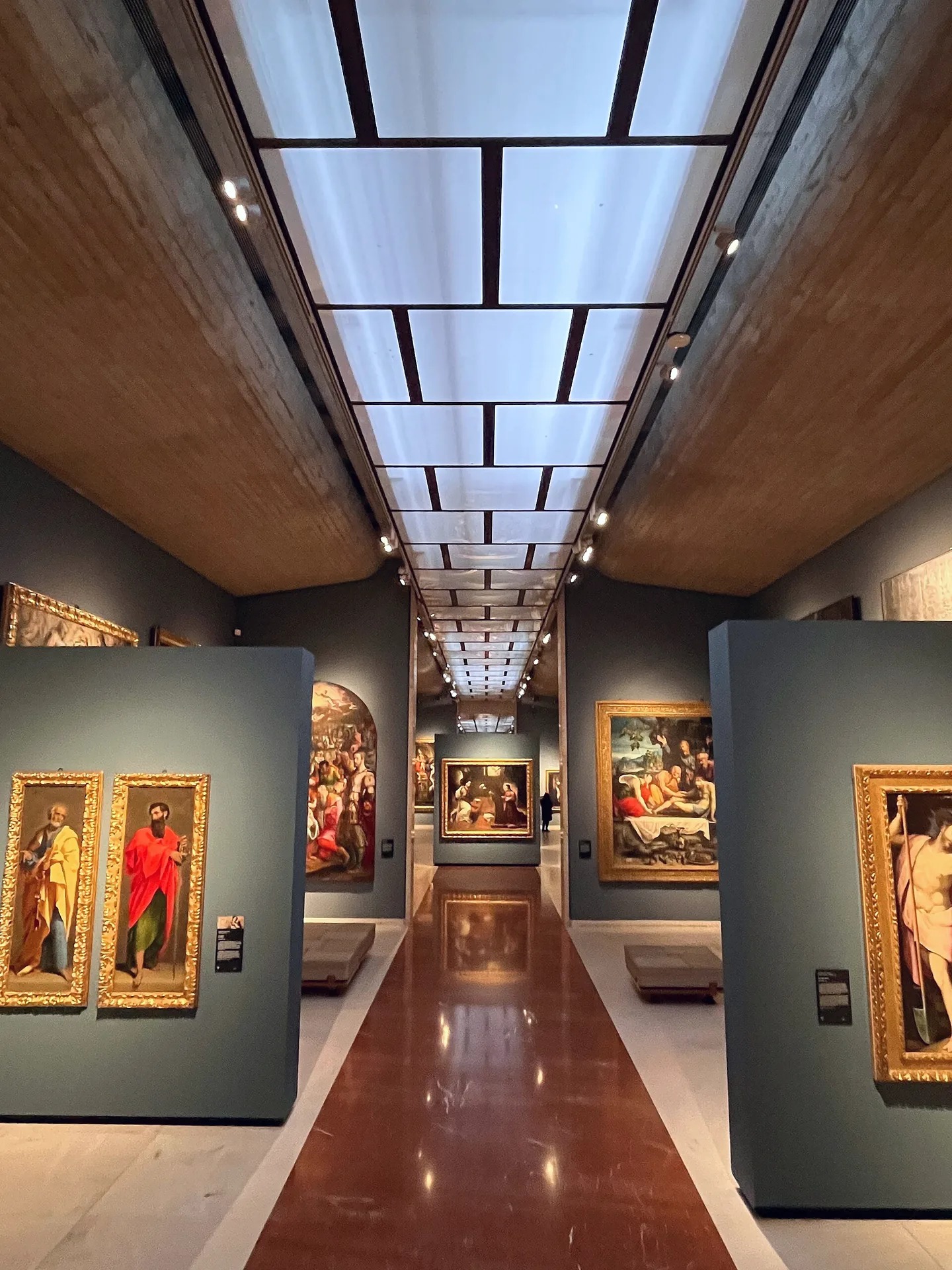
The National Gallery (Pinacoteca Nazionale) lets you follow painting from the medieval period to the 18th century, with Giotto, Raphael, Titian and the Carracci among its major names. It is the best choice here for a broad encounter with historic painting, rather than a visit devoted to one period or artist.
You can concentrate on those artists or explore the wider collection, looking at how religious subjects and ways of composing a picture change over time. Go in the earlier part of the day if you want to linger over individual paintings without approaching the entrance cutoff.
Monica_Rondoni · CC BY-SA 4.0 · Edited
Ordinary individual visits do not require advance reservation. The gallery opens on public holidays unless they fall on its closed day. The permanent-collection ticket also admits you to Palazzo Pepoli Campogrande within three months of issue. Campogrande is a different venue from Palazzo Pepoli’s city-history museum, so that entitlement does not cover the third museum in this selection.
- Name
- National Gallery
- Location
- Via Belle Arti 56, in the university district. Maps
- Site
- pinacotecabologna.cultura.gov.it
- Hours
- Mon Closed
- Tue–Sun 09:00–19:00
- Essential fact
- The National Gallery is a painting museum on Via Belle Arti in Bologna’s university district.
- Price
- €12
Palazzo Poggi offers a nearby change of subject if scientific models interest you more than another painting room. Add it only if that contrast appeals, because the gallery itself deserves unhurried looking.
2. Civic Archaeological Museum
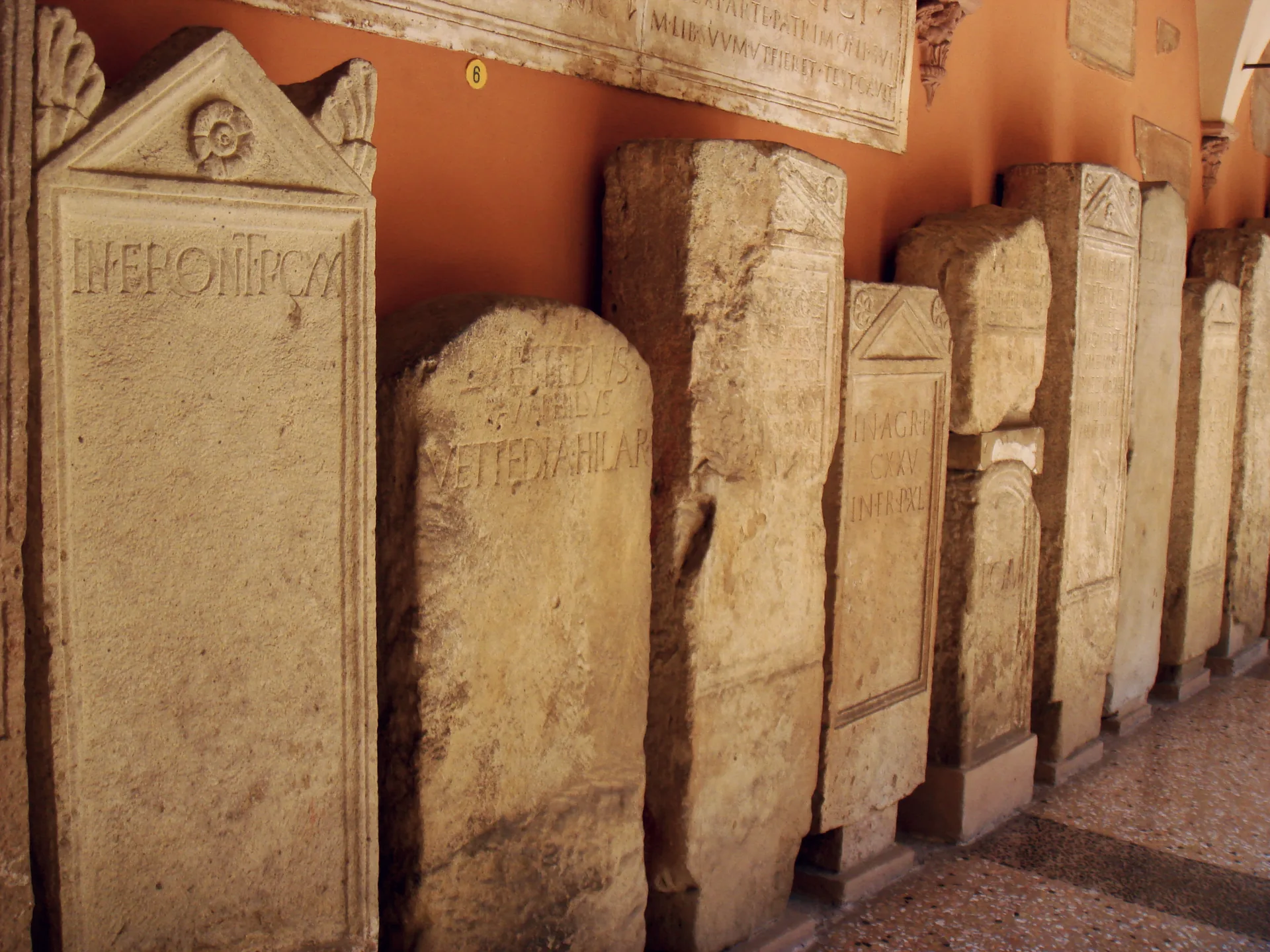
The Civic Archaeological Museum suits you if ancient objects hold your attention more readily than paintings. Egyptian material and finds connected with Bologna’s ancient past offer different scales of looking, from an individual object to the culture that produced it. Choose it for archaeology itself, not simply because it is close to the main square.
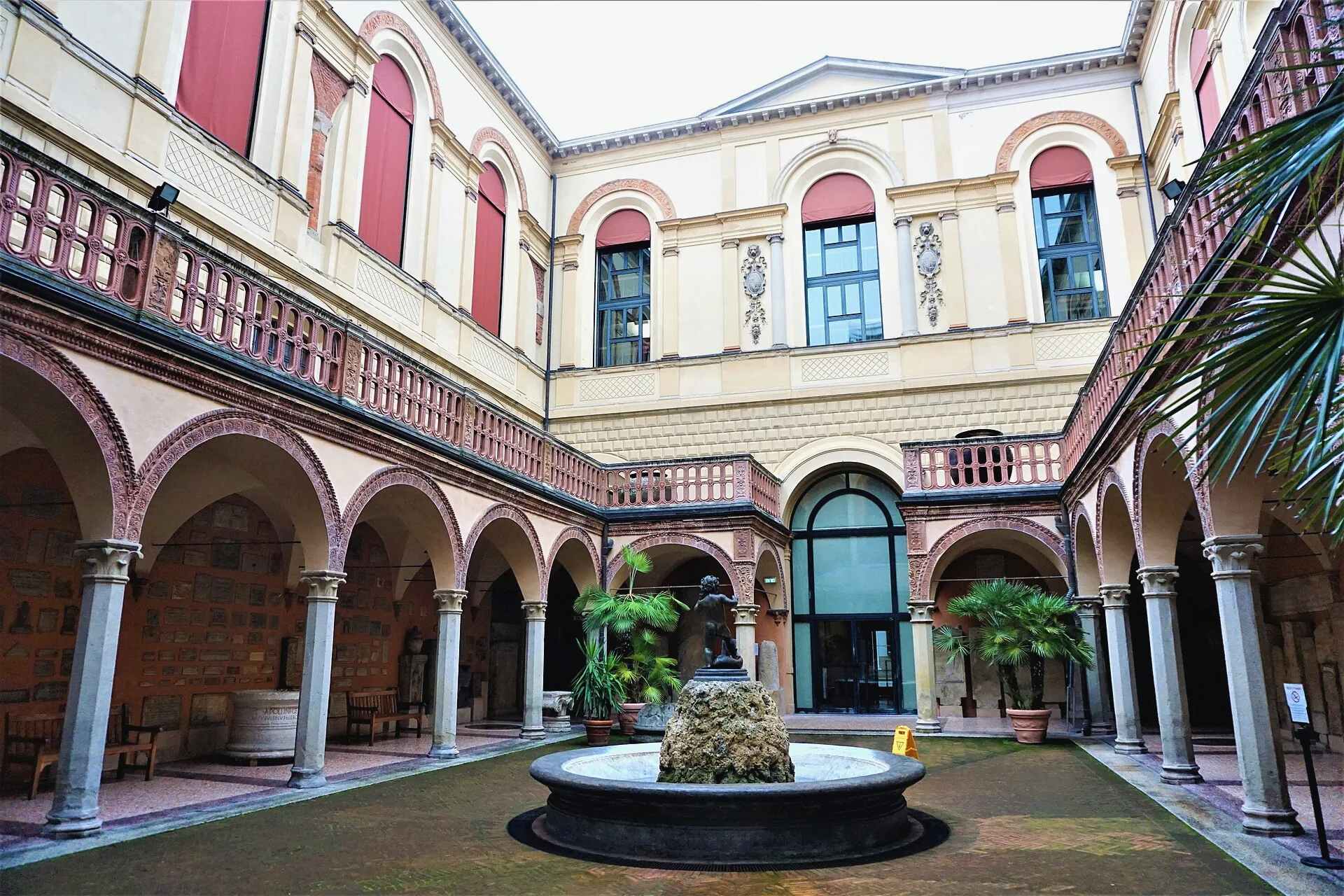
The former Ospedale della Morte, or Hospital of Death, gives the museum a historic setting beside Piazza Maggiore. Its courtyard provides a contrast to the collection rooms. Inside, take time with the objects rather than rushing through to another museum.
Stefano Bolognini · Attribution · Edited
Advance reservation is optional for ordinary individual visits. Buying remotely adds the booking fee shown in the comparison, so buying at the museum suits a spontaneous visit.
From 8 June to 31 October 2026, opening is 10:00–19:00 on open days. From 1 November 2026 to 6 June 2027, it is 09:00–18:00 on weekdays and 10:00–19:00 at weekends and on public holidays.
- Name
- Civic Archaeological Museum
- Location
- Via dell’Archiginnasio 2, beside Piazza Maggiore. Maps
- Site
- museibologna.it
- Hours
- Mon 10:00–19:00
- Tue Closed
- Wed–Sun 10:00–19:00
- Essential fact
- Bologna’s Civic Archaeological Museum occupies the former Ospedale della Morte beside Piazza Maggiore.
- Price
- €6
Palazzo Pepoli is an optional next visit if you want to carry that interest forward into Bologna’s broader history.
3. Palazzo Pepoli
Palazzo Pepoli’s Museum of the History of Bologna is the choice for understanding the city around you. Historical objects, multimedia and immersive storytelling trace Bologna from Etruscan Felsina to the present, giving ancient history a place within a longer urban story.
Choose Palazzo Pepoli when you want the city’s story rather than a survey of one collection type. Unlike the National Gallery’s paintings or the Archaeological Museum’s ancient objects, its organising subject is Bologna itself. Following that narrative can give context to the rest of a first visit.

Armin Kleiner · CC BY-SA 4.0 · Edited
The ticket includes an audio guide, which helps you follow the story as you move through the museum. Start in the earlier part of the opening day if you want room to pause at the displays rather than hurry towards the end.
Ordinary individual visitors do not need advance reservation and can buy tickets at the museum. Free tickets for visitors with disabilities and one companion require advance booking. Arrange those before arriving rather than relying on the ordinary walk-in rule.
- Name
- Palazzo Pepoli – Museum of the History of Bologna
- Location
- Via Castiglione 10, south-east of Piazza Maggiore. Maps
- Site
- palazzopepoli.it
- Hours
- Mon 10:00–19:00
- Tue Closed
- Wed–Sun 10:00–19:00
- Essential fact
- Palazzo Pepoli houses Bologna’s city-history museum on Via Castiglione.
- Price
- €10
The nearby Archaeological Museum is a complementary option for a closer look at ancient material, not an essential second stop.
4. MAMbo and the Morandi collection
MAMbo, Bologna’s Museum of Modern Art, explores Italian art from the postwar period onwards. Giorgio Morandi gives this visit a more focused draw: his still lifes ask you to look closely at relationships between everyday objects, their shapes and their colours.
Treat MAMbo and the Morandi collection as one visit. The wider collection opens out into modern artistic experiments, while Morandi rewards sustained attention to small differences within repeated subjects. That contrast makes the museum worthwhile whether you want a broad modern-art visit or have come chiefly for Morandi.
The dedicated Morandi Museum section is on MAMbo’s second floor. Allow the combined visit time shown in the comparison, choosing the longer end if you want to linger rather than work quickly through both collections.
MAMbo’s converted bakery setting puts art in a former working building rather than a historic palace. Its position on the north-western side of the centre makes it a separate choice, not an automatic addition to the museums around Piazza Maggiore.

Palickap · CC BY-SA 4.0 · Edited
Ordinary permanent-collection admission includes Morandi, and individual visits do not require advance reservation. Temporary exhibitions need separate admission, so choose whether your interest is in the permanent collections, an exhibition, or both before buying a ticket.
- Name
- MAMbo – Museum of Modern Art
- Location
- Via Don Minzoni 14, on the north-western side of the centre. Maps
- Site
- museibologna.it
- Hours
- Mon Closed
- Tue 14:00–18:30
- Wed 09:30–18:30
3 more days
Thu 09:30–20:00Fri 09:30–18:30Sat–Sun 10:00–19:00- Essential fact
- MAMbo is Bologna’s modern-art museum in a converted bakery on Via Don Minzoni.
- Price
- €6 · adult full price
5. Palazzo Poggi museums
Palazzo Poggi’s university collections make science and its teaching the subject of a museum visit. Anatomical waxes, obstetric models, natural-history material and maps show different ways of studying and representing the body and the wider world.
Choose Palazzo Poggi for scientific objects rather than paintings or a city-history narrative. The anatomical and obstetric displays can be confronting, especially when choosing with children, so consider their comfort with medical material before making this your family’s museum stop.
Utente:Mattia Barci · CC BY-SA 4.0 · Edited
Ordinary admission also includes the monumental University Library rooms: the Aula Magna, or Great Hall, and the Sala dello Stabat Mater, the Stabat Mater Room. These extend the visit beyond the scientific displays into the university’s historic interiors.
Use the allowance in the comparison for the whole museum visit, taking the longer end if you enjoy studying models and reading about their purpose. Start early in the opening window, particularly on weekdays when the museum closes earlier.
Ordinary individual visits do not require advance reservation. Public holidays follow the weekend opening window.
- Name
- Palazzo Poggi museums
- Location
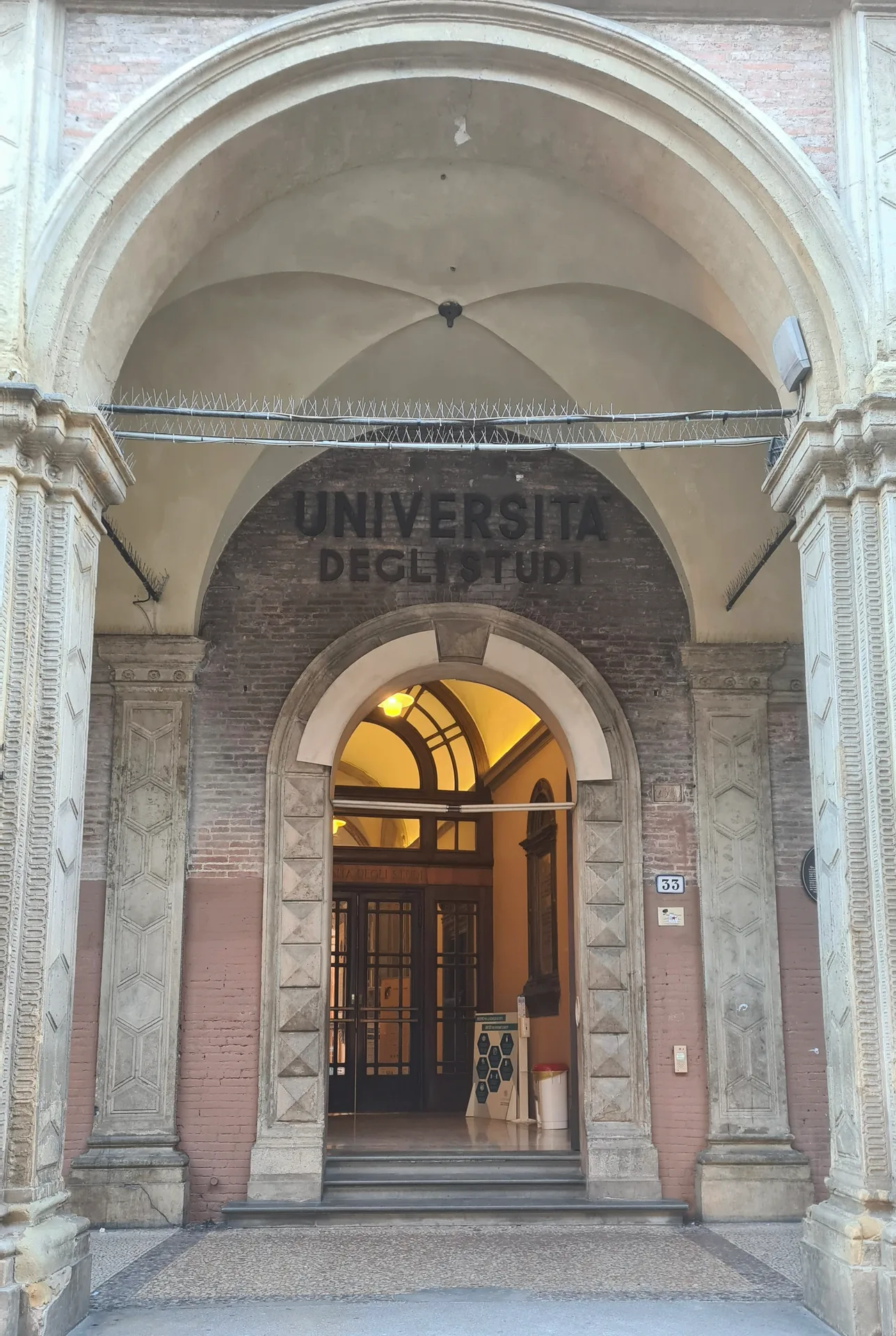
- Via Zamboni 33, in the university district. Maps
- Site
- sma.unibo.it
- Hours
- Mon Closed
- Tue–Fri 10:00–16:00
- Sat–Sun 10:00–18:00
- Essential fact
- Palazzo Poggi houses university collections of science and natural history on Via Zamboni.
- Price
- €10
- €6 ages 20–26 · over 65s
- Free UNIBO students and staff · visitors aged 19 or younger · other listed eligible visitors
The National Gallery is a nearby alternative or optional addition if you want to contrast scientific representation with painting in the university district.
Sources & fact-checking
Checks against the sources below cover: fares and charges, services, closures, and opening hours.
- Settore Musei Civici Bologna — fares and charges
- Settore Musei Civici Bologna — service
- Istituzione Bologna Musei — closures
- Musei Civici Bologna / MAMbo — service
- Sistema Museale di Ateneo, Università di Bologna — fares and charges
- University of Bologna University Museum Network (Sistema Museale di Ateneo) — opening hours
- Fondazione Bologna Welcome — fares and charges
- Pinacoteca Nazionale di Bologna — fares and charges
- Settore Musei Civici Bologna, Comune di Bologna — fares and charges
- Museo Civico Archeologico di Bologna — service