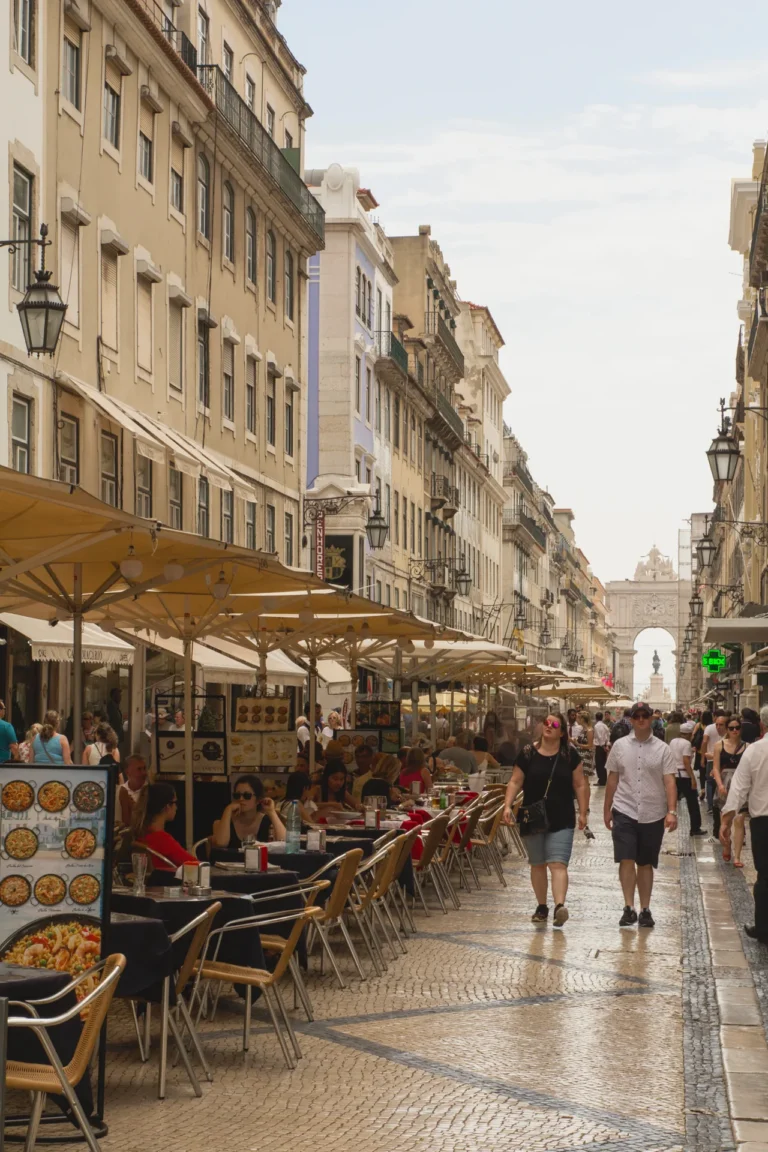
Pack ordinary casual clothes and comfortable, grippy shoes for Lisbon. Jeans and trainers work for daytime streets, and a neat change of top or an easy dress can take you into dinner. If you plan to enter a church, bring a layer that covers your shoulders, and take clothes to put over swimwear when you leave the beach. These are useful ways to dress for different settings, not a single dress code for the whole city.
City clothes and dinner outfits
Yes, jeans are appropriate for ordinary sightseeing in Portugal, including Lisbon. Choose a pair you can move in comfortably on steps and sloping streets rather than dressing for a formal occasion. A T-shirt, shirt or light top works for an ordinary day out. The shoes matter more than whether your trousers are denim. The same casual approach lets you move between viewpoints, transport and a lunch stop without a complete outfit change.
For an evening meal, smart-casual clothes are an option, not a general citywide requirement. If your plans include a particular restaurant or event, its own entry policy may affect what you wear there, but it does not make that policy a rule for Lisbon as a whole. A spare shirt or a change into neat trousers is more versatile than carrying a full formal outfit just in case.
Dressing for streets and dinner
Do
- Wear jeans, trousers or other comfortable casual clothes with shoes you can walk in around the city.
- Choose a clean shirt, simple dress or neat trousers if you want to feel more dressed up for dinner.
Don’t
- Treat swimwear as your outfit for cafés and city streets after a beach visit.
- Pack formal clothes on the assumption that every dinner requires them.
What to wear in churches
Lisbon Cathedral, the Sé de Lisboa, is a religious stop to combine with walking in the old centre, and its twin-towered façade and rose window are worth pausing for before you go inside. Cover your shoulders and knees as a mark of respect in a church, rather than treating that suggestion as a cathedral admission rule. You need not dress formally to make that adjustment.

Alvesgaspar · CC BY-SA 3.0 · Edited
If you have a sleeveless top on for a warm day, carry a light shirt to put over it before entering. A scarf can cover shoulders too, but a shirt stays in place more easily while you look around. Trousers or a skirt that reaches the knee make the transition simple if a church is only one stop among several.
From beachwear to city clothes
Wear swimwear at the beach, then put a cover-up or ordinary clothes on for the journey back and any city stops. A loose shirt and shorts, a dress or trousers are easy to pull on over a dry swimsuit. Do this for the change of setting, rather than treating a cover-up as a legal requirement across Lisbon.
If a café is part of your return, keep a dry top handy rather than relying on a towel as your only cover. Clothes that fit into a small bag make the shift from seaside time to a meal or another stop straightforward. For seaside options including Cascais, day trips from Lisbon can help you choose where to spend that beach day. The same spare outfit is useful for the trip home.
Shoes for hills and clothes for the weather
Choose comfortable shoes with grippy soles for Lisbon’s hills and stone pavements. Portuguese patterned stone paving, known as calçada portuguesa, can be slippery after rain, particularly on slopes. Supportive trainers or walking shoes are a more useful daytime choice than slick soles or narrow heels. If you want dressier shoes for dinner, carry them separately rather than wearing them through a walking day. The one-day walk through Lisbon gives you a concrete route to consider when deciding which pair to pack.

Girassolei · CC BY-SA 4.0 · Edited
In warm weather, breathable clothes make climbing streets more comfortable, but bring a light layer if your day runs into a cooler evening. For a wetter or cooler day, add a rain-resistant outer layer and shoes that stay secure on damp paving. A compact layer can travel in your bag instead of determining your whole outfit.