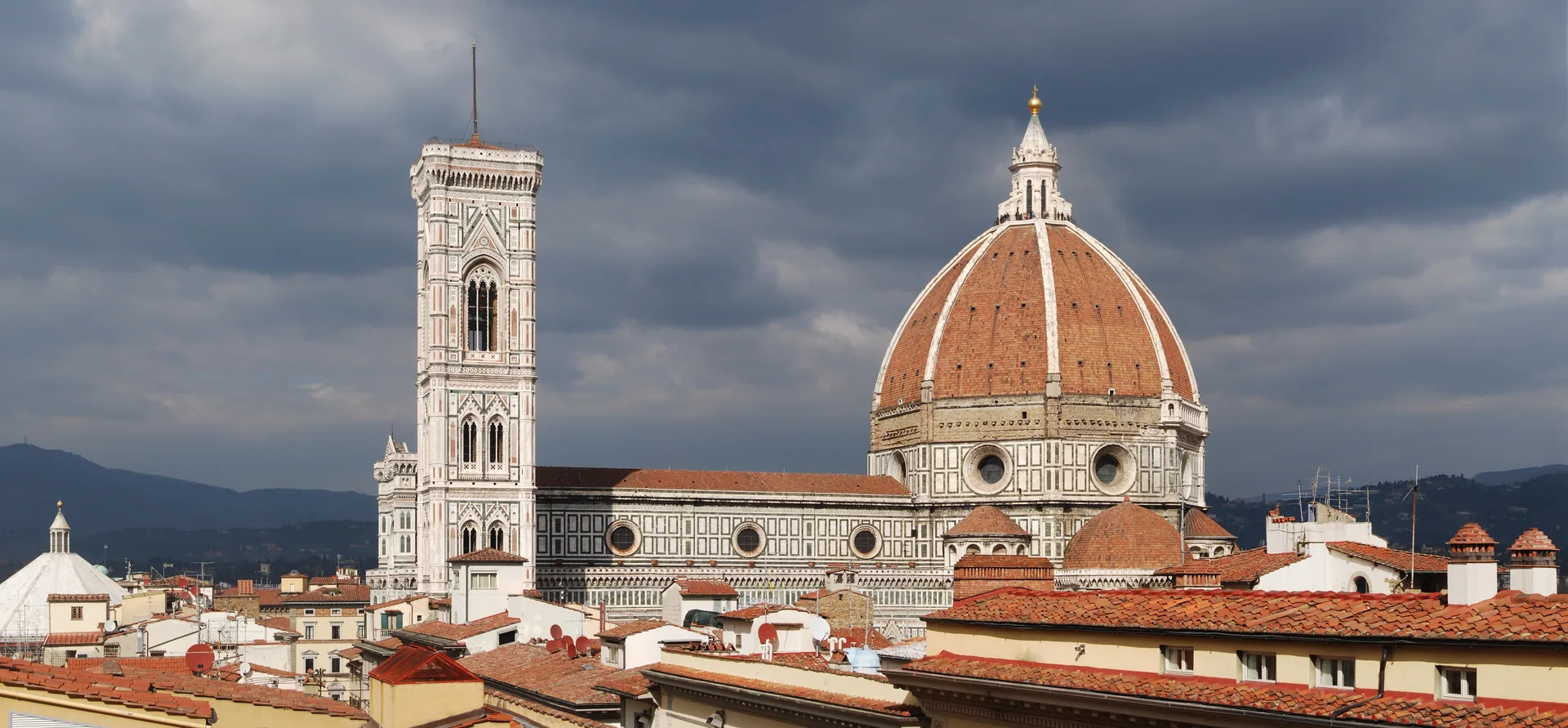
Two days are enough for a strong first visit to Florence if you protect one major timed interior each day and keep the rest of the plan walkable. This route gives the cathedral complex, one major gallery per day, historic squares, market food and a viewpoint. The trade-off is deliberate: you will not fit every museum and garden, so fixed entries set the order and flexible outdoor stops fill the gaps.
Plan at a Glance
A two-day Florence itinerary works best when you arrive midweek and keep the main sightseeing between the principal museums’ weekly closures. Each day has one protected indoor anchor, then uses markets, squares, a bridge, food and a viewpoint to keep the pace varied rather than turning both days into museum corridors. That is enough for a strong first visit, provided you accept the trade-off between two major galleries and the flexible outdoor stops.
- Best arrival weekday
- Wednesday, for a Wednesday-Thursday sightseeing window
- Airport-to-centre transfer
- T2 tram from Peretola to Santa Maria Novella area, about 20 minutes, €2 for a 90-minute urban ticket
- Rail arrival
- Santa Maria Novella to Piazza del Duomo, about 5-10 minutes on foot, no transit fare
- Getting around
- Walk between the historic-centre stops; no ticket needed
- Base area
- Centro Storico around the Duomo-Piazza della Repubblica area; most useful for walking, but pricier, busier and often noisier
- Closures shaping the order
- Uffizi and Accademia closed Mondays; Uffizi also 1 January and 25 December; the Cathedral closes Sundays, religious celebrations, Easter Sunday, 1 January and 25 December
If you fly, take the direct T2 tram from Peretola into the Santa Maria Novella area, so no airport-specific transport choice is needed. By rail, leave Santa Maria Novella on foot for the historic centre rather than changing to local transport. The best area to stay is the Centro Storico around the Duomo and Piazza della Repubblica. You pay more and accept more crowds, but the location protects the early starts and the evening crossings in this plan.
The Florence Cathedral complex is the visual anchor of the first morning, with the striped marble exterior, the Baptistery and the option of Brunelleschi’s Dome or another paid monument. The featured view belongs here because the plan starts with the building that fixes the character of the city.
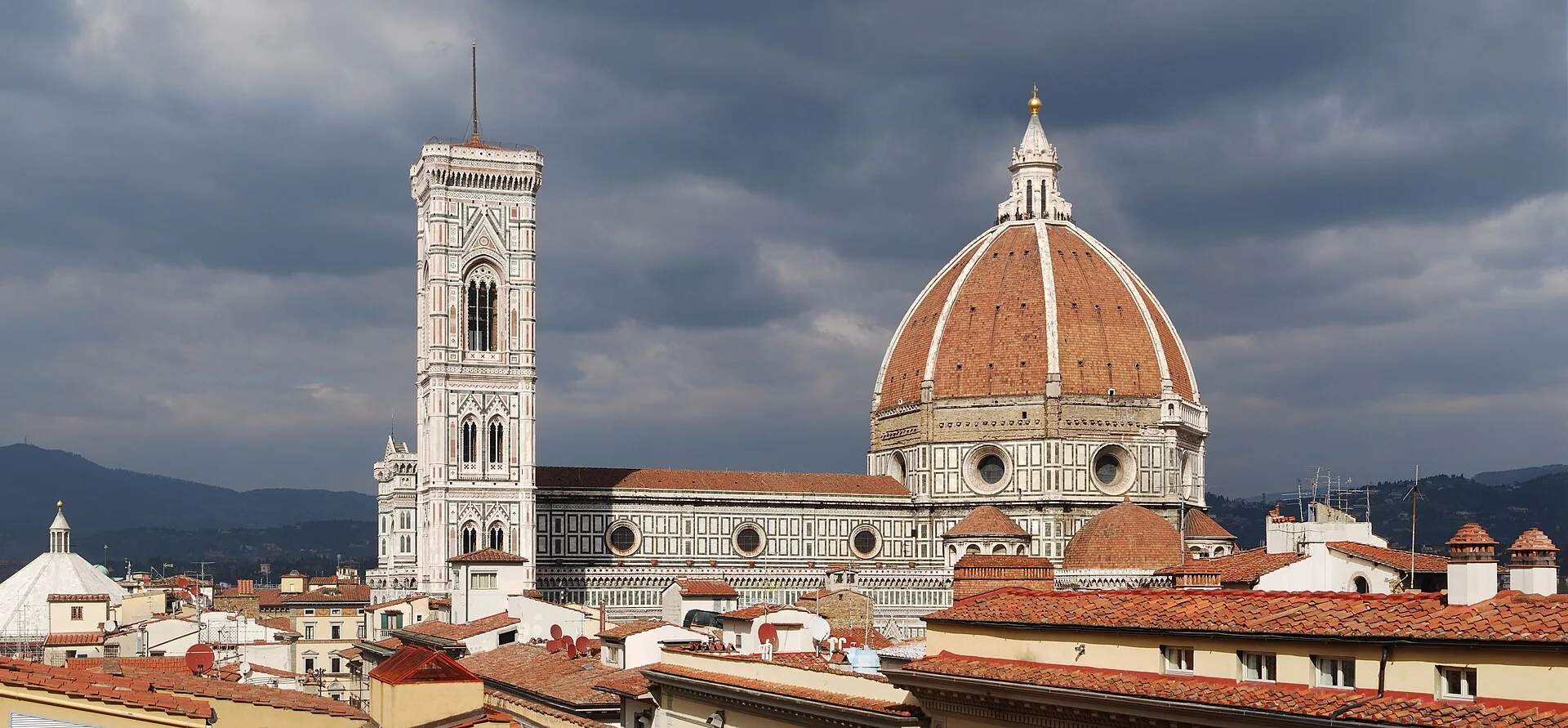
Felix König · CC BY 3.0
The practical compromise is one substantial indoor visit on each day, not three. Day 1 gives the Uffizi Galleries the longer art focus and keeps Piazza della Signoria, Ponte Vecchio and Santo Spirito flexible around it. Day 2 gives the Accademia Gallery the concentrated sculpture visit, then crosses through Santa Croce and Oltrarno to Boboli Gardens and Piazzale Michelangelo. Markets and public squares remain useful even when an interior is closed, while a garden or viewpoint can move with weather and daylight.
The arrival choice matters because the plan starts early and finishes on foot. The T2 tram is the simple default for an air arrival, while a rail arrival needs no second transport decision once you leave Santa Maria Novella. A taxi is the fallback after the tram’s final service, but it should be treated as a late-arrival solution rather than a reason to base the itinerary outside the centre. The Centro Storico also makes a short first evening useful: you can reach dinner and a square without spending the arrival night learning a new bus network.
Keep the two-day trade-off visible when choosing extras. The cathedral complex gives you architecture and a major climb or tower choice; the Uffizi gives you concentrated Renaissance painting; the Accademia gives you a short, sculpture-led visit. Markets, bridges and squares do not need to compete for a timed slot, so they should absorb delays and changing energy. If one gallery takes longer than expected, remove a secondary indoor museum before removing lunch, the river crossing or the final open-air stop. That is what makes the plan realistic for a first visit rather than merely complete on paper.
Book the Fixed Entries First
Book the fixed entries before arranging meals and secondary museums. The Dome climb is the least flexible appointment because its reservation is nominative, timed and non-modifiable; the two galleries are easier to move, but a reservation protects the short stay from a long queue. Use the wider list of things to do in Florence only after these anchors are chosen, so a substitute does not displace the visits that make the two-day plan work.
- Choose the Duomo experience first. The Cathedral itself is free and needs no reservation, but the Brunelleschi Pass costs €30 for an adult and includes the Dome, Bell Tower, Baptistery, Opera del Duomo Museum and Santa Reparata. The Dome reservation is included, mandatory, nominative, non-cancellable and valid only at the selected time, with a maximum five-minute delay. The climb is 463 steps with no lift; under-18s need an adult. If that effort is unsuitable, choose the Giotto Pass at €20 or Ghiberti Pass at €15 instead, and keep the Cathedral and easier monuments in the morning.
- Book the Accademia Gallery next. General admission is €20, the reduced fare is €2 for eligible visitors, and a reservation adds a €4 fee; reservation is strongly recommended. It opens Tuesday-Sunday from 08:15 to 18:50, with last admission at 18:20, and closes on Mondays, 1 January and 25 December. Bring the identity proof required for a reduced or free ticket. The Gallery has no cloakroom and rejects bulky bags over 40×30×18 cm, so use the official MyAccademia luggage-deposit option where applicable. If a bag, security issue or unavailable slot prevents entry, replace this stop with the National Bargello rather than assuming storage or same-day access will solve it.
- Place the Uffizi Galleries on the other day and reserve after the first two decisions. Ordinary admission is €25 on the day or €29 when bought before the visit date; the Afternoon ticket is €16 from 16:00, or €20 when bought in advance. Advance booking is optional but useful for queues. Every ticket is nominative, so the name and identity document must match, and one ticket permits one entry only. The Galleries close every Monday and on 1 January and 25 December. If the preferred slot is gone, use the next workable Uffizi time and shift Piazza della Signoria, Ponte Vecchio or the evening to the surrounding space rather than trying to replace a sold-out entry on arrival.
- Keep the outdoor stops as the release valves. Piazza del Duomo, San Lorenzo, Piazza della Signoria, Ponte Vecchio, Boboli Gardens and Piazzale Michelangelo can move around the bookings, but Boboli needs daylight, suitable weather and an open day. If the Accademia is unavailable, use the Bargello as the replacement indoor anchor; if the Dome climb is unsuitable, use the Giotto or Ghiberti Pass. Do not stack another major interior between a fixed gallery and its meal: the plan needs slack for security, ticket collection and the walk between districts.
Day 1: Cathedral, Market and Renaissance Art
Times are estimates from your start time
Cathedral complex
08:152 h
Begin with the paid monument selected in the Duomo complex, then use the Cathedral when its visitor window opens.
Market lunch
10:251 h 30 min
Browse the market stalls and food hall at San Lorenzo before lunch.
Uffizi Galleries
12:053 h 30 min
Use the reserved gallery entry as the day’s principal art visit.
Civic centre
15:351 h
Pause among Palazzo Vecchio, the Loggia dei Lanzi and the statues of Piazza della Signoria.
Ponte Vecchio
16:4045 min
Cross the historic bridge and look along the Arno before dinner.
Dinner
17:302 h
Have the planned evening meal in Oltrarno.
After dark
19:351 h
Finish in the square around the Basilica of Santo Spirito.
Ends around 20:35
The day-1 walking circuit runs from the cathedral complex through San Lorenzo and the Uffizi to the civic centre, Ponte Vecchio and the evening in Oltrarno.
Florence Cathedral is the morning’s first stop. The Dome and Bell Tower open at 08:15 on this weekday pattern, while the Cathedral itself admits visitors Monday-Saturday from 10:15 to 15:45 and is closed on Sundays and during religious celebrations. Start with the booked monument, then see the marble façade, Baptistery and Santa Reparata when their access fits. The Dome climb is 463 steps with no lift, so choose the Bell Tower or a non-Dome pass if the ascent is not suitable.
The market is the practical handover from stone to food. il Mercato Centrale Firenze operates every day from 09:00 to 23:00, so it remains useful even when the rest of the order changes. Use the ground-floor market for ingredients and the upper food hall for a quick Tuscan lunch, then leave San Lorenzo for the fixed gallery visit.
Make the Uffizi Galleries the day’s fixed art anchor, with its former administrative rooms beside the Arno and a Renaissance collection that includes Botticelli’s Birth of Venus.
- Name
- Uffizi Galleries
- Location
- Piazzale degli Uffizi 6, Firenze Maps
- Site
- uffizi.it/gli-uffizi
- Hours
- Mon Closed
- Tue–Sun 08:15–18:30
- Essential fact
- A major Renaissance collection in Florence’s former administrative offices beside the Arno.
- Price
- €25 same-day purchase
- €29 purchased before visit date
- €16 Afternoon entry from 4:00 p.m.
13 more fares
€20 Afternoon ticket purchased before visit date€2 eligible reduced-price visitorsFree eligible free-admission visitors€43 Uffizi + Vasari Corridor, same-day purchase€47 Uffizi + Vasari Corridor, purchased before visit date€20 Friday-evening Vasari Corridor, same-day purchase€24 Friday-evening Vasari Corridor, purchased before visit date€70 extra charge for groups of 11 or more€40 5-day ticket for all museums€58 5-day ticket including Vasari Corridor€80 annual pass, one person€120 annual family pass€20 supplement per Vasari Corridor access with annual pass
The Uffizi is closed every Monday and on 1 January and 25 December. On the Wednesday schedule used here, last useful admission is at 17:30, so keep the visit focused on the major Renaissance rooms rather than trying to read every label. The adjoining Piazza della Signoria then supplies the outdoor civic counterpoint, with Palazzo Vecchio and the Loggia dei Lanzi in the same square.
Dinner begins after the Arno crossing at Trattoria 4 Leoni on Via dei Vellutini. The street address and the trattoria give the evening a fixed landing point without adding another museum, while Ponte Vecchio supplies the bridge, river and historic shopfronts immediately before it.
Piazza Santo Spirito closes the route with its broad square and Basilica of Santo Spirito, rather than another timed interior. Piazza della Signoria, Ponte Vecchio and the Uffizi Galleries keep the day’s civic and artistic thread intact.
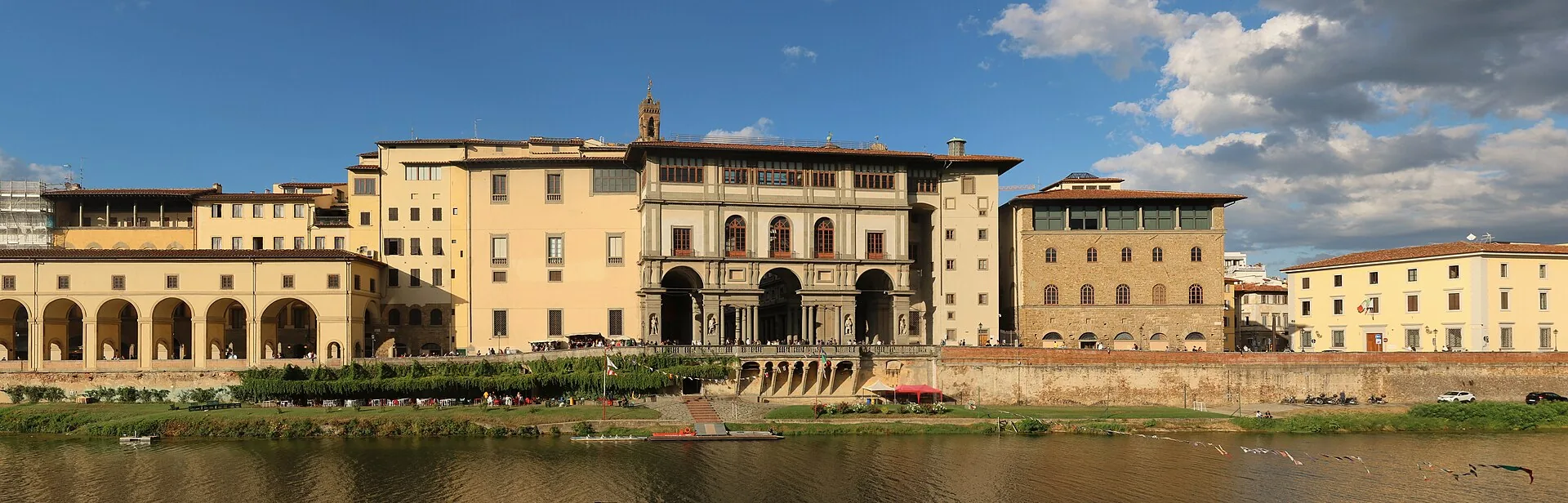
Ingo Mehling · CC BY-SA 4.0
Day 2: Sculpture, Oltrarno and the Final View
Times are estimates from your start time
Accademia Gallery
08:151 h 30 min
Start with Michelangelo’s David and the unfinished Slaves before the city becomes busier.
Santa Croce
10:051 h
See the basilica, its monumental tombs and the square after the sculpture visit.
Lunch
11:201 h 30 min
Take the planned lunch break before turning south towards the gardens.
Boboli Gardens
13:052 h 30 min
Use the garden paths, Palazzo Pitti setting and Egyptian obelisk as the south-bank anchor.
Final view
16:001 h 15 min
End above the Arno at Florence’s defining panorama.
Ends around 17:15
The day-2 walking route leaves the sculpture collection for Santa Croce, lunch in Oltrarno, Boboli Gardens and the final panorama.
Start with the Accademia Gallery as the day’s fixed sculpture visit. Its defining rooms are Michelangelo’s David and the unfinished Prisoners, so keep those even if the Hall of the Colossus and the wider painting collection are shortened. The Gallery closes on Mondays, 1 January and 25 December; last admission is 18:20, but this plan uses the first entry rather than leaving the visit until the end of the day.
- Name
- Accademia Gallery
- Location
- Via Ricasoli, 58/60, Firenze Maps
- Site
- galleriaaccademiafirenze.it
- Hours
- Mon Closed
- Tue–Sun 08:15–18:50
- Essential fact
- A Florentine sculpture museum best known for Michelangelo’s David and its unfinished Slaves.
- Price
- €20 regular admission
- €2 reduced: EU citizens aged 18–25 and reciprocal cases
- Free statutory free categories and listed 2026 free days
3 more fares
€4 booking/reservation fee€26 48-hour combined: Accademia + Bargello€38 72-hour combined: all six museums in the Accademia–Bargello
Continue to the Basilica of Santa Croce and its Piazza di Santa Croce setting, where the basilica’s monumental tombs give the morning a different scale from the concentrated sculpture museum. No weekly closure is listed for Santa Croce; Christmas Day is the published annual closure. On Sundays and listed religious holidays, visitor access is 14:00-17:30 with last admission at 17:00, which is why the Wednesday-Thursday version keeps this stop in the morning.
Lunch at Trattoria Cammillo on Borgo San Iacopo makes the handover to the south bank explicit. The restaurant and its street address are a fixed meal stop, while the garden and viewpoint remain the day’s flexible outdoor choices. If weather or seasonal access makes Boboli unsuitable, shorten the garden rather than sacrificing the Accademia or Santa Croce.
Boboli Gardens supplies the day’s spacious counterweight to David: use the Palazzo Pitti setting, the long garden perspective and the Egyptian obelisk shown in the day’s image. Finish at Piazzale Michelangelo for the view across the Arno, the Cathedral dome and the historic centre. The garden needs daylight and suitable weather, while the final square is the least fragile stop in the sequence.
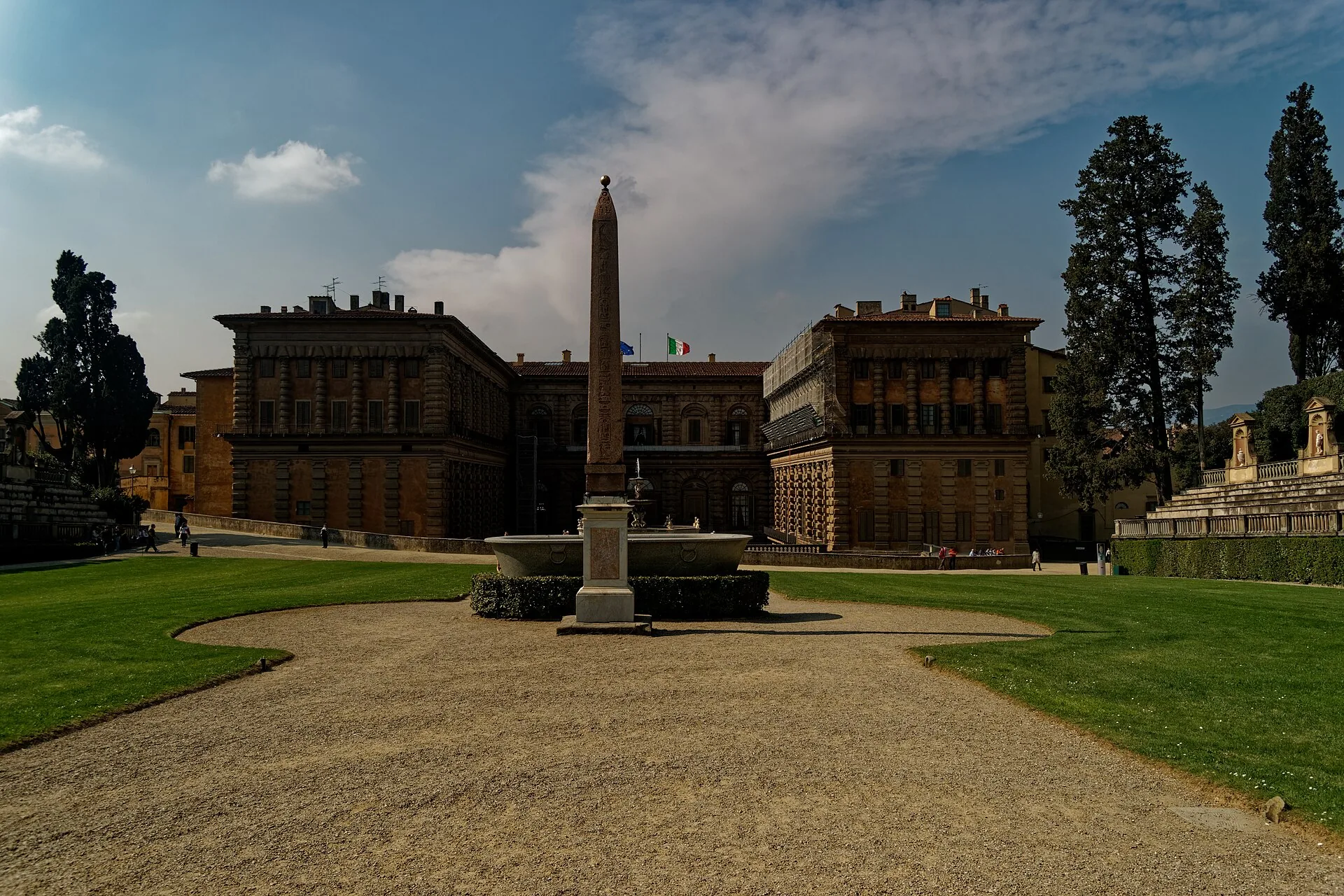
Txllxt TxllxT · CC BY-SA 4.0
The Cut: What to Drop with One Day Less
With one day less, remove Day 2 rather than compressing both gallery visits and the Dome into one rushed circuit. Keep Day 1 intact: the cathedral complex remains the first-visit anchor, the Uffizi remains the principal art interior, and the market, civic centre, bridge and Oltrarno evening provide variety without another fixed admission. The view that moves into the shortened plan is the river-and-city finish at Ponte Vecchio and Piazza Santo Spirito; do not add Piazzale Michelangelo unless a route for it has been planned separately.
- Cathedral complex to il Mercato Centrale Firenze: about 500 metres and about 7 minutes on foot.
- il Mercato Centrale Firenze to the Uffizi Galleries: about 1000 metres and about 13 minutes on foot.
- Uffizi Galleries to Piazza della Signoria: about 100 metres and about 1 minute on foot.
- Piazza della Signoria to Ponte Vecchio: about 350 metres and about 4 minutes on foot.
- Ponte Vecchio to Trattoria 4 Leoni: about 300 metres and about 4 minutes on foot.
- Trattoria 4 Leoni to Piazza Santo Spirito: about 350 metres and about 5 minutes on foot.
The walking total for this shortened sequence is about 2.5 km and about 33 minutes, excluding the time spent inside each stop and at the meal. The loss is specific: Michelangelo’s David and the Prisoners, Santa Croce, Boboli Gardens and Piazzale Michelangelo go. Do not replace them by dropping the market or the Uffizi, because that removes the food and art balance that makes one day in Florence feel complete.
If the Uffizi slot is late, keep the market and civic centre before it and use Ponte Vecchio after the gallery. If the Dome climb is unsuitable, retain the Cathedral complex with a non-Dome pass. The surviving plan therefore has one paid cathedral choice, one major gallery, one market meal, one civic square, one bridge and one evening square, with the fixed entries protected instead of merely listed.
The one-day version is strongest when the remaining booking is made before the flexible pieces. Put the Uffizi at the centre of the surviving day if that is the available principal slot, or keep the Cathedral complex as the morning anchor and let the gallery follow the market. The order can change around those appointments, but the number of major interiors should not increase. A second museum would consume the time that the shortened plan needs for food, the civic centre and the river.
Day 2 is the correct cut because its experiences are valuable but separable. David and the Prisoners form the Accademia’s essential core, yet they do not replace the Uffizi’s broader Renaissance collection. Santa Croce adds tombs and a monumental church, Boboli adds a garden-and-palace landscape, and Piazzale Michelangelo adds the high panorama. Losing them is clear and honest; pretending to keep all four would turn the first day into a sequence of admissions and rushed meals.
Do not move Boboli into the shortened plan unless daylight, weather and its access window all fit after the fixed visits, and do not present Piazzale Michelangelo as an extension of the Day 1 route without its own route figures. The dependable cut is therefore the complete Day 1 circuit, with Ponte Vecchio and Piazza Santo Spirito carrying the evening atmosphere that the second day’s final view would otherwise provide. You leave with the principal art visit, the cathedral choice, a named meal and a route that can actually be walked.
Sources for the figures in this guide
- Uffizi Galleries — closures
- Galleria dell’Accademia di Firenze — closures
- Uffizi Galleries — fares
- Galleria dell’Accademia di Firenze — fares
- Opera di Santa Maria del Fiore — fares
- Opera di Santa Maria del Fiore — service
- Le Gallerie degli Uffizi — service
- Ministero della Cultura — Galleria dell’Accademia di Firenze e Musei del Bargello — service
- Opera di Santa Croce — closures
- Opera di Santa Maria del Fiore — opening hours
- Opera di Santa Maria del Fiore — closures
- Mercato Centrale Holding Srl — service