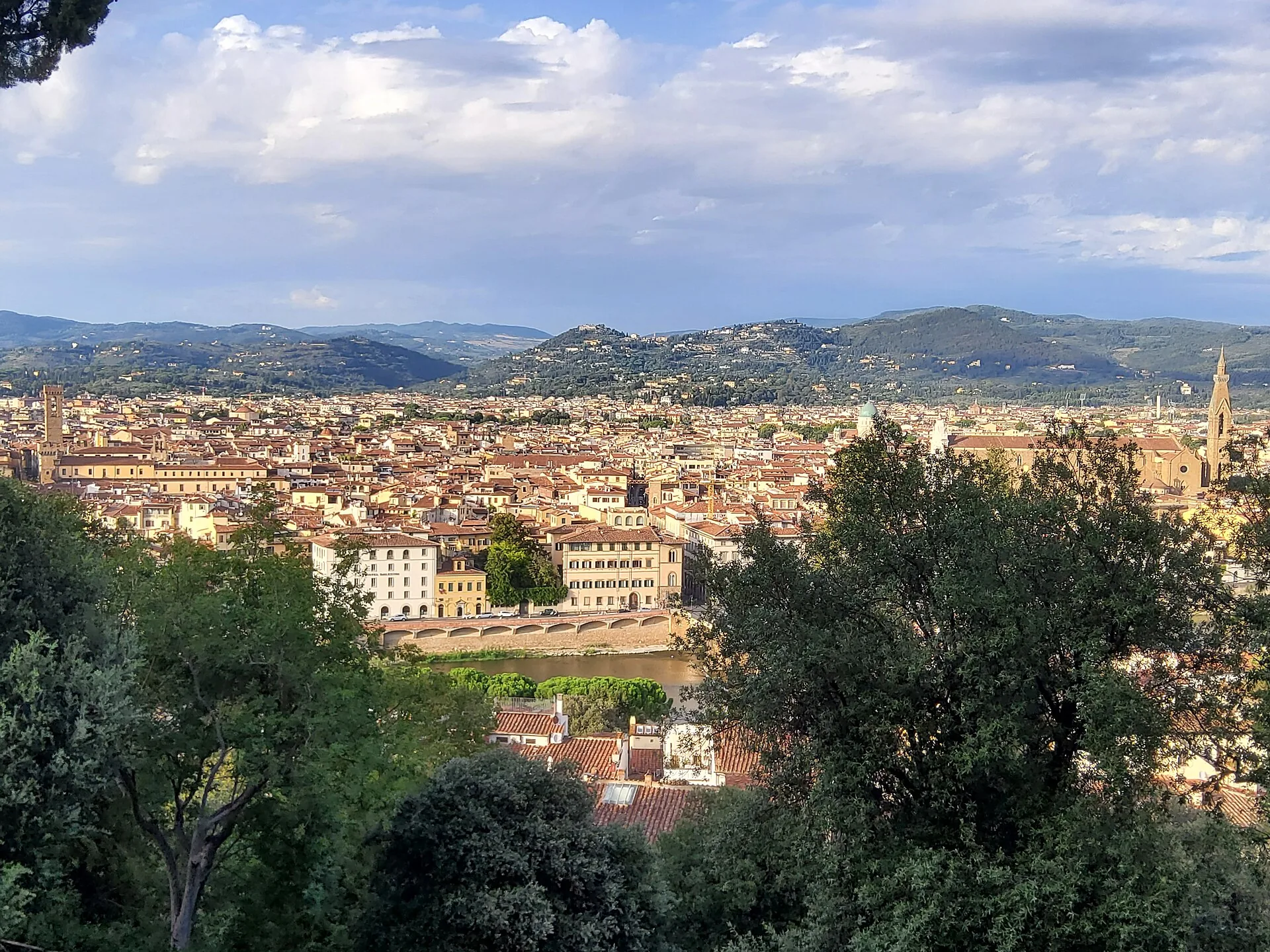
For a first visit, stay in Florence’s Historic Centre: it puts the Duomo, Uffizi and Ponte Vecchio within easy walking reach. Choose Santa Maria Novella instead if you arrive by train, have luggage or need the simplest late arrival. Santo Spirito suits returning travellers who want restaurants and evening life, while Campo di Marte is the practical lower-price option when you accept a daily journey into the sights.
Use Piazza del Duomo as the sightseeing centre when weighing each base. The short routes, transport links, evening character and traveller fit point to different choices. Prices are described as relative levels rather than nightly rates, because the gap changes with dates and demand.
Areas at a Glance
The Historic Centre is the default for a first visit because the sightseeing core is compact and Piazza della Repubblica sits close to Piazza del Duomo. Santa Maria Novella is the practical exception for rail arrivals and early departures. Santo Spirito is the better choice when evenings matter more than the shortest morning route. Campo di Marte can reduce accommodation costs, but only if you accept the journey into the centre.
| Area | To Piazza del Duomo | Transport and night coverage | Atmosphere | Best fit |
|---|---|---|---|---|
| Historic Centre | about 6 minutes on foot | C1, C2, C3, C4; official night network | Busy core; quieter edges | First visit; families wanting short walks |
| Santa Maria Novella | about 13 minutes on foot | 13, 17, 23, C2, C3; official night network | Station bustle; calmer side streets | Rail arrivals; luggage; late arrival |
| Santo Spirito | about 18 minutes on foot | 18 and C1; official night network | Restaurants and square life; quiet lanes nearby | Returning visitors; evening-focused stays |
| Campo di Marte | about 35 minutes total, line 6 then walk | Line 12; central interchange; official night network | Residential and spacious; quieter nights | Longer stays; families; budget-led trips |
Historic Centre Stays Closest to the Main Sights
The Historic Centre, Florence’s 1st district, sits around the Duomo and inside the main sightseeing core. From the Piazza della Repubblica edge to Piazza del Duomo is about 450 metres, or about 6 minutes on foot. That short walk is the main reason to choose it: you can return for a rest, split a museum day around a child’s energy, and reach several headline sights without planning every transfer.
The price is the trade-off. Accommodation in the central core is generally Florence’s costliest, and the busiest routes around the Duomo, Piazza della Signoria and Ponte Vecchio carry crowds well into the evening. After dark, those routes stay bright and active; side streets towards Santa Croce, Sant’Ambrogio and San Niccolò are calmer, although quieter also means less constant footfall when you return late. Choose a side street rather than a square-facing room if sleep matters.
This is the wrong base if you are arriving by car and expect to drive to the door. The area is within the restricted traffic zone, so read the Florence ZTL access rules before planning arrival. Authorised accommodation must register the vehicle and the approach is limited to the shortest route; an available place must be confirmed before entry. For most car travellers, staying outside the core is simpler than building the trip around access formalities.
The Historic Centre as a base
Pros
- Shortest access to the main sights
- Easy mid-day returns and manageable sightseeing days with children
- Lively, well-used central routes after dark
Cons
- Usually the highest accommodation price level
- Crowds, cobbles and evening noise on the principal sightseeing routes
- Restricted car access makes arrival more complicated
Santa Maria Novella Makes Arrivals Easiest
Santa Maria Novella, Florence’s 1st district, lies immediately west of the historic centre beside the city’s main railway station. From Santa Maria Novella station to Piazza del Duomo is about 950 metres, or about 13 minutes on foot. That makes this the easiest base when you arrive with luggage, have only a short stay or want to leave early without crossing the whole city first.
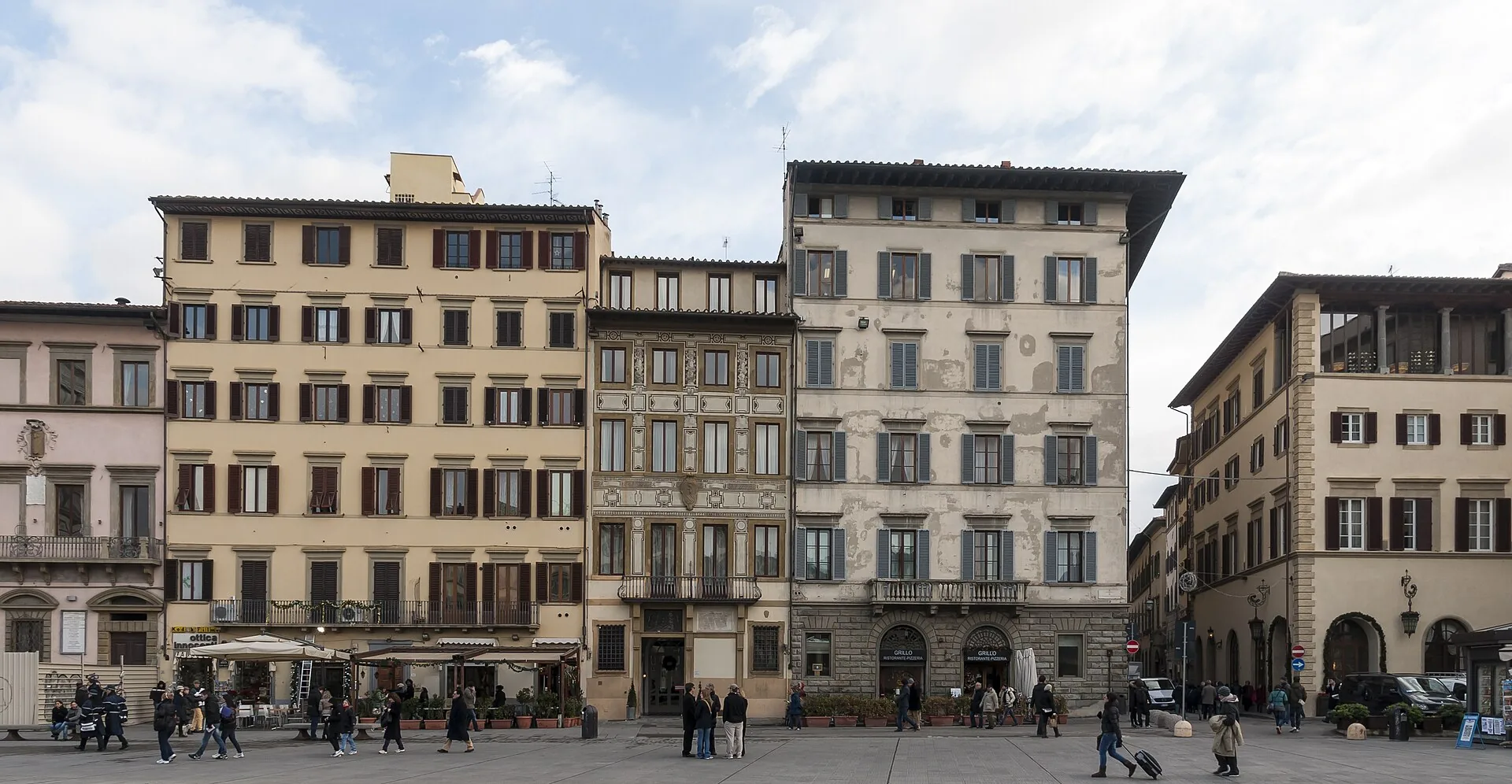
CEphoto, Uwe Aranas · CC BY-SA 3.0
The station frontage is functional rather than residential. Taxis, buses, rail passengers and through-traffic keep Piazza della Stazione and Via Alamanni busy, with more noise and footfall than the quieter streets by the basilica or towards the river. A few blocks away, the tone changes after dark: side streets are calmer, while the station forecourt remains active. For air arrivals, Florence Airport transfer options help you compare the tram and taxi choices before deciding how much first-mile convenience matters.
Santa Maria Novella is usually less expensive than the Historic Centre at the same level of demand, although its most central streets still command a central-city premium. It suits rail travellers, families who want a straightforward arrival and anyone who values transport flexibility over a romantic setting. Rail passengers can also use train routes into Florence to understand the wider connection, particularly if the station is part of a longer Italian journey. Reject the immediate station frontage if you need a quiet residential feel or expect to spend evenings on your doorstep.
Santa Maria Novella as a base
Pros
- Simple arrival by rail, with luggage kept to a practical central walk
- Good choice for short stays and early departures
- Quieter side streets retain access to the station and main sights
Cons
- Station frontage brings traffic, footfall and transport noise
- Less residential and atmospheric than Santo Spirito or central side streets
- The most convenient addresses can still cost more than outer districts
Santo Spirito Brings Evening Life Across the River
Santo Spirito, in Florence’s 1st district, sits across the Arno south of the historic centre in Oltrarno. From Piazza Santo Spirito to Piazza del Duomo is about 1.3 km, or about 18 minutes on foot. The crossing is easy, but it changes the rhythm of the day: you return through a bridge and the central sightseeing routes rather than stepping straight from your door into the Duomo area.
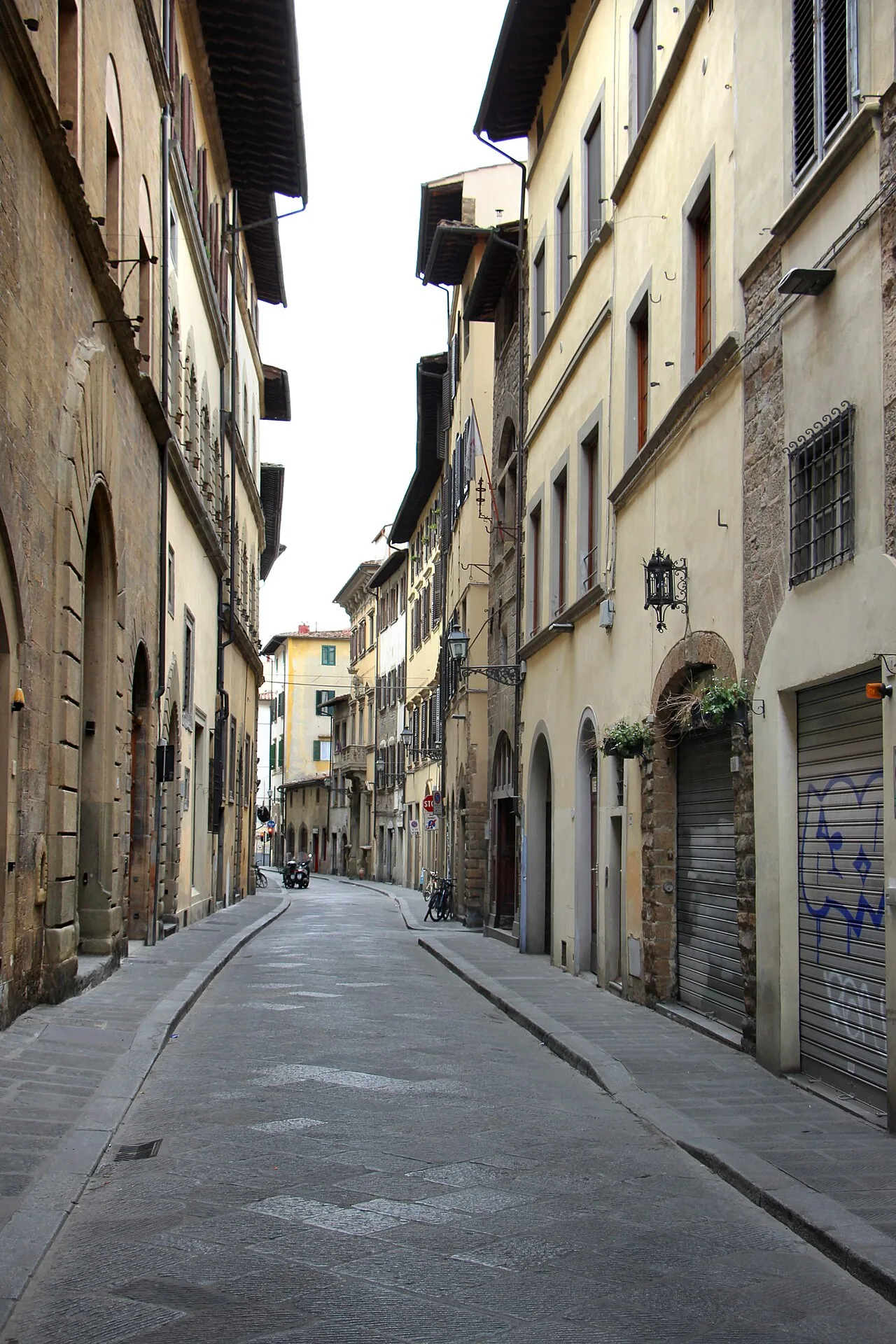
Francesco Bini · CC BY-SA 4.0
This area is strongest after the museums close. Piazza Santo Spirito and the restaurant streets around it stay sociable into the evening, with dining, conversation and movement continuing after dark. A few streets away, residential lanes are quieter and more settled. That contrast matters when choosing a room: the square-facing and restaurant-facing locations trade atmosphere for noise, while a side street gives you more sleep but less of the scene that makes the area useful.
Santo Spirito is often a little better value than the most expensive Historic Centre locations, but popular central addresses are not automatically cheap. It suits returning visitors, couples and independent travellers who want dinner and evening life close by, and it can suit families who prefer a neighbourhood setting and accept the longer morning walk. It is the wrong choice for an early museum schedule, repeated trips to Santa Maria Novella or anyone who needs a reliably quiet bedroom. The river crossing is modest, yet it is a daily cost in time and effort.
Santo Spirito as a base
Pros
- Strong evening character with cafés, restaurants and an active square
- More lived-in neighbourhood feel than the busiest sightseeing core
- Often better value than the most central tourist locations
Cons
- Livelier streets can bring late conversation and bedroom noise
- Longer morning access to the Duomo and other north-bank sights
- Less convenient for repeated station trips or early museum entries
Campo di Marte Trades Centrality for Space
Campo di Marte, Florence’s 2nd district, lies east of the historic centre and outside the main sightseeing core. From Campo di Marte station to Piazza del Duomo, the route goes by line 6 to Santa Maria Novella, then continues on foot. This is not a walkable-centre base in the same sense as the other three areas, so the daily timetable and your willingness to commute should decide the choice.
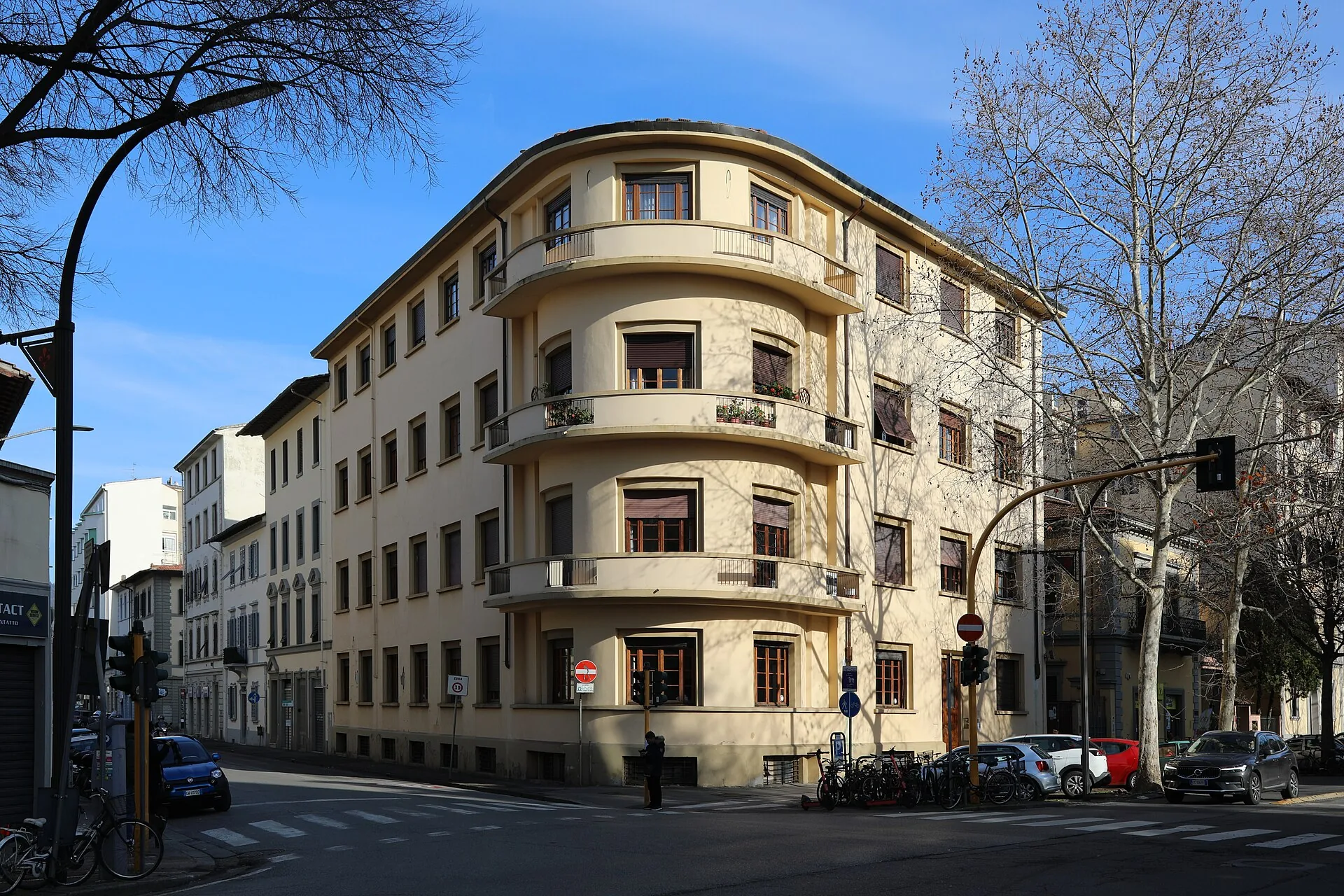
Francesco Bini · CC BY-SA 4.0
The district gives you more space and a more residential evening pattern. Streets around the station have local activity, while the apartment-lined roads away from it become quieter after dark; the stadium can change the feel when an event is taking place. That calm helps families and longer-stay travellers who want room to settle, but it can feel inconvenient if you want nightlife or a busy pedestrian scene outside the door. A late return may involve a quiet walk between the station and your accommodation rather than a continuous tourist flow.
Campo di Marte is roughly 20-30% cheaper than a comparable stay in Florence’s Historic Centre during the same travel period. The saving is real when central demand is high, but the journey to Piazza del Duomo takes about 35 minutes each way, before extra stops. Choose it when space, quieter nights and price matter more than spontaneous central access. Reject it for a short first visit built around repeated museum entries, long midday returns or evenings in the historic core.
Campo di Marte as a base
Pros
- More spacious, residential setting for families and longer stays
- Lower accommodation price level than the Historic Centre
- Quieter evenings and rail access for travellers comfortable with a commute
Cons
- Longer journey to Piazza del Duomo by public transport
- Daily transport reduces the value of a very short sightseeing stay
- Quieter streets can feel inconvenient late at night or for nightlife
The Best Base Depends on Your Trip
For a first visit, choose the Historic Centre. You minimise walking friction and can return to the room between sights. For a returning visitor, choose Santo Spirito if evening food and neighbourhood life matter more than the shortest route to the Duomo. For a family, choose Santa Maria Novella for the easiest arrival and transport, or a quiet edge of the Historic Centre if short walks matter most.
For a car-free trip, Santa Maria Novella is the strongest all-round base: the railway station, tram connections and central walking routes give you alternatives when luggage, weather or tired legs change the plan. For a late arrival, it is also the least awkward choice because you can keep the final approach compact and stay close to the city’s main transport interchange. Avoid choosing Santo Spirito solely for atmosphere if you need early, quiet mornings.
Campo di Marte is a real saving when a comparable stay is roughly 20-30% cheaper than the Historic Centre and you are staying long enough to absorb the commute. The journey to Piazza del Duomo takes about 35 minutes, so a return sightseeing day costs roughly 70 minutes before extra stops. For a short break, that time can outweigh the lower price. If you arrive by car, read about parking outside the historic centre before choosing an outer base, since the saving only works if the first and last mile remain manageable.
FAQ: Choosing Your Base
Is a Station-Side Base Practical for an Early Departure?
Yes, a station-side base is practical for an early departure, especially at Santa Maria Novella, because it reduces the first-mile journey with luggage. You still need to reach the station entrance from the accommodation and allow for cobbles, traffic and a quiet early street. A central base can work if you have arranged a separate transfer, but it adds one more leg.
Does a Short Break Need a Central Base?
Not always. A compact, museum-led short break usually benefits from the Historic Centre, because short walks reduce transfer friction and make a mid-day return realistic. A slower return visit can work from Campo di Marte or Santo Spirito if you value space, local evenings or a lower price level and accept the daily travel cost into the main sights.
Which Parts Make a Poor Base for a Quiet Night?
The station frontage in Santa Maria Novella, nightlife-heavy routes around Santo Spirito and parts of San Lorenzo are poor fits for a quiet night, because activity, deliveries or late footfall can continue after dark. A late arrival with luggage notices this most on the emptier side streets after the crowds thin. Choose a side street away from squares, or a residential part of Campo di Marte.
Sources for the figures in this guide