Myrtle Beach is generally safe for a visitor, with sensible cautions about late-night downtown crowds, unattended belongings and ocean conditions. For holidaymakers, theft is chiefly a concern when possessions are left exposed, while bar crowds and arguments deserve more attention around the Boardwalk and Ocean Boulevard on late summer weekend evenings. Families should give surf conditions and supervision at the water’s edge particular priority, rather than treating every part of the city as equally risky.
Visitor safety and crime
- Visitor verdict
- Generally safe, with nightlife and ocean cautions
- Crime risk settings
- Unattended beach belongings, parked cars and late-night downtown crowds
- Immediate police, fire or medical emergency
- 911
- Non-emergency police incident or theft report
- +1 843 918 1382, Myrtle Beach Police Department
Crime is an issue to take seriously, not a reason to rule out a holiday. The useful distinction is between theft opportunities and situations where an evening becomes confrontational. Your accommodation and evening plans affect which of these you encounter.
Resident-based citywide crime comparisons do not translate directly into your chance of becoming a victim during a short stay. A city receiving large numbers of visitors has people present who are not counted in its resident population, and an overall rate does not describe a particular hotel, beach day or dinner outing. Use the emergency contact for an immediate threat or injury, and the police non-emergency contact for routine reporting.
Downtown and the northern oceanfront
Choose your base by the property and your evening return, not a blanket “safest area” ranking. Downtown Myrtle Beach’s Boardwalk and Ocean Boulevard waterfront puts you near restaurants, entertainment and bar activity. It is not a no-go zone, but a room close to that activity also places your walk home among the evening crowds.
The northern oceanfront within Myrtle Beach puts more distance between your base and the downtown nightlife setting. It can suit a family wanting beach time without making the Boardwalk its nightly destination. If you still plan to dine downtown, the return journey matters as much as the quieter location of the room.
Look at the actual entrance you would use after dinner. A staffed reception, a clearly lit approach and parking connected to the entrance are more useful deciding details than a district label. Consider whether the last part of the walk passes active businesses or leaves you on an isolated stretch.
The city’s northern oceanfront is not North Myrtle Beach. North Myrtle Beach is a separate municipality farther north, not simply the northern end of this city. Keep that distinction in mind when comparing accommodation locations and planning an evening in downtown Myrtle Beach.
The Boardwalk and Ocean Boulevard after dark
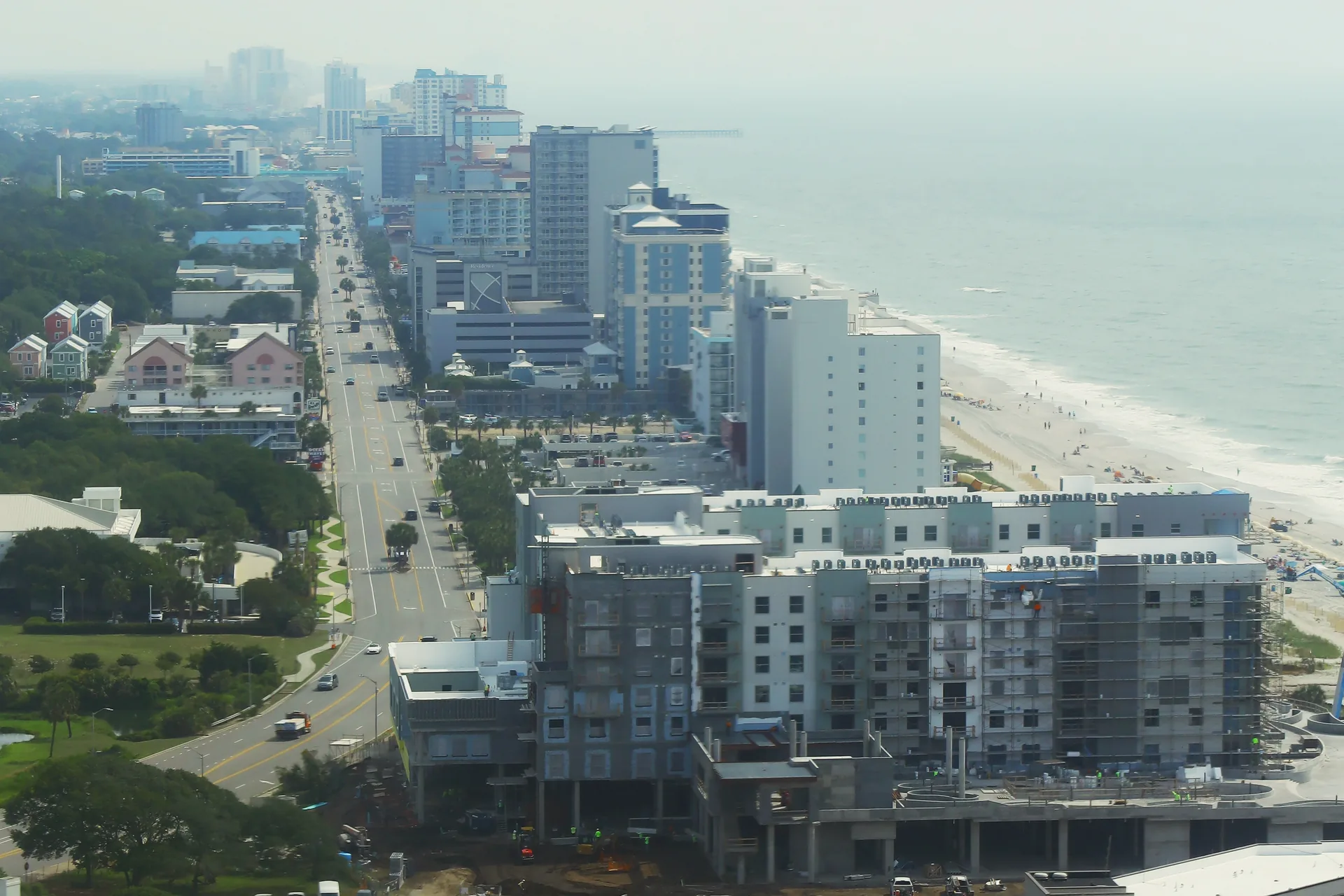
Ocean Boulevard combines hotel entrances and visitor businesses with the downtown waterfront’s evening activity. On late summer weekend evenings, bar crowds can bring intoxication and arguments into the street. Step away from a confrontation rather than stopping to watch or intervene.
formulanone · CC BY-SA 2.0 · Edited
Decide how you will return before heading out. Stay on an active route, and arrange a vehicle if the walk back becomes isolated. Wait at a populated pickup point where you can identify your vehicle without standing in traffic.
Coast RTA’s free seasonal Entertainment Shuttle runs daily during summer from 11am to 11pm, connecting downtown with selected hotels and resorts. Route 10, the Myrtle Beach Local, operates daily from 8am to 8pm. The shuttle does not serve every property, and its summer service is not a year-round return option. Arrange another way home if your evening extends beyond service hours.
For a taxi, contact a permitted provider to arrange pickup. A licensed Myrtle Beach taxi has a taximeter, a top light and a distinct company colour scheme. Permanent lettering on both sides and the rear identifies the company or association, taxi number and telephone number. Match the vehicle to the provider you contacted before getting in.
Rip currents, swimming conditions and storms
Choose a lifeguarded swimming area and pay attention to the flags before entering the ocean. Rip currents can carry swimmers away from shore, including people who swim confidently in a pool. Breaking waves do not make every stretch of water equally suitable for swimming.
If a current pulls you out, do not exhaust yourself fighting directly against it. Float or tread water and signal for help. If you can swim out of the current, move parallel to the shore before returning towards the beach. Someone watching from shore should alert a lifeguard rather than enter the current to attempt a rescue.
- Yellow flag: medium hazard from moderate surf or currents. Swim cautiously, with particular care for young children and weaker swimmers.
- Single red flag: high hazard from surf and strong currents. Swimming is not recommended.
Swimming is prohibited within 225 feet of any pier. Choose your swimming spot away from the structure rather than using it as shelter or a convenient landmark in the water.
At a posted stormwater-outfall sign, avoid swimming within 200 feet on either side. These outlets carry runoff towards the ocean, so give the signs particular attention after heavy rain. Wading, fishing and shell collecting are not considered a risk, so you can continue those shore activities without entering the water to swim.
During a thunderstorm, leave both the water and the exposed beach for substantial shelter. A beach umbrella is not suitable protection from lightning. Move into a building or an enclosed vehicle rather than waiting at the water’s edge for the storm to pass.
Sign up for the City of Myrtle Beach’s MB Alerts emergency notification system for emergency weather messages. For a tropical storm, follow official evacuation instructions and your accommodation’s arrangements. If an evacuation is ordered, act on it rather than planning to stay beside the ocean to watch the weather.
Beach days and evenings with children
At Ocean Boulevard, use controlled crossings and keep children beside you as you leave the Boardwalk. Crowded exits can separate a group just as everyone starts looking for dinner or transport. Choose an evening pickup point on the side of the road where you will finish, so tired children do not need an extra traffic crossing.
Before entering a crowd, agree on a recognisable reunion point and make sure children know how to contact their accompanying adult. A contact number carried with them is useful if they cannot remember it. Explain that a separated child should ask a police officer or a staffed business for help rather than leave with a stranger.
Assign an adult to continuous supervision at the surf and at accommodation pools. Make the handover explicit if another adult takes over. A lifeguard adds protection but does not replace your attention to a child, particularly when waves knock them off balance.
Build shade, drinking water and breaks into a hot beach day. Move away from the sand for a rest before children become overtired, and let their energy level shape the evening rather than extending an outing simply because attractions remain open.
Belongings on the beach and in car parks
A beach bag left on the sand is exposed while everyone is in the ocean. Outdoor dining creates a similar distraction when a phone sits beside a plate and attention turns elsewhere. Keep control of your belongings during the activity, not just when you arrive.
Do
- Take only what you need to the beach, and have someone stay with belongings while others swim.
- Keep phones and bags within reach at outdoor tables.
- Put valuables out of sight before reaching the car park, and lock the vehicle.
- Use a cash machine in a staffed setting and shield your PIN.
Don’t
- Leave bags unattended while the whole group enters the ocean.
- Leave a phone at the table’s edge or hang a bag out of sight behind your chair.
- Leave valuables visible in a parked car or sort them into the boot after parking.
- Withdraw cash while someone is distracting you or watching the keypad.
Getting help and reporting a theft
- Move to safety first. If there is an immediate threat or injury, use the emergency contact in the quick reference above.
- Freeze missing payment cards through your bank’s app or assistance service as soon as you are safe.
- Report the theft to Myrtle Beach Police Department. For a routine incident, use the non-emergency contact above and request an officer to respond, or make an in-person report.
- Retain the police report reference and record what was lost. Keep receipts, photographs and any bank notifications that help document losses for an insurer.
- Arrange replacement cards or travel documents before continuing your trip.
The Ted C. Collins Law Enforcement Center accepts in-person theft reports. It is the Myrtle Beach Police Department headquarters, so this is the office to use if you choose to report in person rather than request an officer. Give a clear account of where and when the theft happened and describe the missing items.
- Name
- Myrtle Beach Police Department headquarters
- Location
- 1101 N Oak St, Myrtle Beach, SC 29577 Maps
- Essential fact
- Myrtle Beach Police Department headquarters is a police facility in Myrtle Beach, South Carolina.
A police report records the incident but does not replace a passport. Contact the embassy or consulate representing the country that issued yours to arrange replacement documents. Explain any upcoming travel when you contact them, so the consular staff can advise on the document you need.
For a missing payment card, discuss replacement arrangements with its issuing bank after freezing it. Keep the details of disputed transactions together with your incident notes, so you can handle the bank’s questions and any insurance claim without reconstructing events later.
Sources & fact-checking
Checks against the sources below cover: services and key figures.
- Waccamaw Regional Transportation Authority (Coast RTA) — service
- Myrtle Beach International Airport — service
- City of Myrtle Beach — key figures
- Myrtle Beach Police Department — service
- The visitor’s country of citizenship (through its embassy or consulate in the United States) — service
- City of Myrtle Beach Ocean Rescue Division — service
- Visit Myrtle Beach — service
- Beach and Boating Regulations
- South Carolina Department of Environmental Services — service
- City Council Hurricane Presentation 2025