Lucca is a full-day excursion from Florence, not a half-day add-on. On the rail plan, about an hour and a half out, about 5 hours 22 minutes for the Lucca programme including its walks and stops, and about an hour and a quarter back make a working day of about 8 hours 7 minutes before delays. Take the train for the simplest independent day, drive when you need control beyond the centre, or use a tour when fixed logistics matter more than choice.
Lucca Is a Full-Day Trip from Florence
Your choice of transport changes how much of Lucca you can use, but none of the options turns this into a short stop. The independent rail plan starts and ends at Lucca station, then adds a walk into the centre. Driving is quicker than rail on the route from Villa Costanza, but the final parking decision still sits with you. A tour removes most planning and driving, at the cost of a fixed meeting point, timetable and group format.
The Transport Choice Sets the Day
The train has the service details needed for the comparison, so it carries the table. Its outbound and return journeys appear separately because the return is shorter in this sample.
| Option | Outbound journey | Return journey | Frequency | Fare per person | Last useful return |
|---|---|---|---|---|---|
| Train | about an hour and a half | about an hour and a quarter | generally every 30–60 minutes, with gaps | €8.90 one way; €17.80 return | 22:10 from Lucca, arriving about 23:50 |
The table makes the train workable for a long day: direct regional services mean you are not tied to one connection, although the timetable has no fixed hourly pattern. A car has no comparable service frequency, fare per person or last useful return, so its control and parking trade-off belongs in prose.
The Train Option Protects Your Sightseeing Window
Take the direct regional train from Santa Maria Novella station to Lucca station, then walk into the historic centre. The return is direct too. Plan the sightseeing around the departures in the comparison above, but allow time for the station-to-centre walk and for getting back from Piazza Napoleone. Do not build the day around the last service: leave the centre with enough margin to reach the station and absorb a missed departure.
The train keeps the independent day simple: you can leave the sightseeing circuit on foot and avoid city-centre driving. Budget the rail fare shown above, keep the afternoon flexible, and use the late service only as a safety net rather than as the day’s target.
Driving Gives More Control Outside the Centre
Driving from Villa Costanza to Lucca city centre takes just under an hour on the outbound road journey; the return takes about three quarters of an hour. Those figures cover the road between the two endpoints, not time spent finding a final parking place or walking from the car to the centre.
Before setting off, decide [where to leave your car in Florence] and read the relevant [Florence driving rules]. In Lucca, the car is most useful if you plan to continue outside the historic centre after the visit or are carrying equipment that makes the train awkward. For a centre-only day, parking uncertainty can cancel the time saved on the road, so driving suits control more than convenience.
Tours Trade Flexibility for Simpler Logistics
An organised tour suits you when meeting-point logistics, transport and day planning are the main obstacles. Shared options use a fixed Florence departure and return, with one nine-hour Pisa-and-Lucca sequence, or a minivan package starting at €199 per person with only two hours of free time in Lucca. You give up an on-demand start, your own route and the freedom to extend a stop. Choose it for simplicity, not for a more flexible Lucca visit.
A Compact Walking Circuit Covers the Historic Centre
From Lucca railway station, allow about 16 minutes on foot to reach Piazza dell’Anfiteatro, then move through the centre in a south-westerly arc: tower, cathedral, lunch at Piazza San Michele, a shortened wall walk and Piazza Napoleone. The order puts the climb before lunch, gives the indoor visit a clear place, and leaves the most flexible open-air stretch for the afternoon. After the final square, walk back to the station for the planned return.
Piazza dell’Anfiteatro
30 min
Orient yourself in the enclosed former Roman arena before continuing into the centre.
Torre Guinigi
1 h
Make the planned tower climb while you still have energy for the stairs and summit view.
Cathedral of San Martino
45 min
Follow the tower with a focused interior visit and its key artworks.
Piazza San Michele
Reach the central square and pause before the afternoon stretch.
Lunch or quick reset at Piazza San Michele
1 h
Use this deliberate pause for a meal, snack or short rest before the walls.
Lucca city walls
45 min
Walk a manageable section of the elevated ramparts rather than forcing the complete loop.
Piazza Napoleone
30 min
End the circuit with a broad civic square and a final time buffer, then walk back to Lucca railway station for the planned return to Florence.
The circuit’s central walks are short enough to leave time for the paid visits and lunch, while the arrival and return walks keep the programme tied to Lucca railway station.
Piazza dell’Anfiteatro Starts the Day
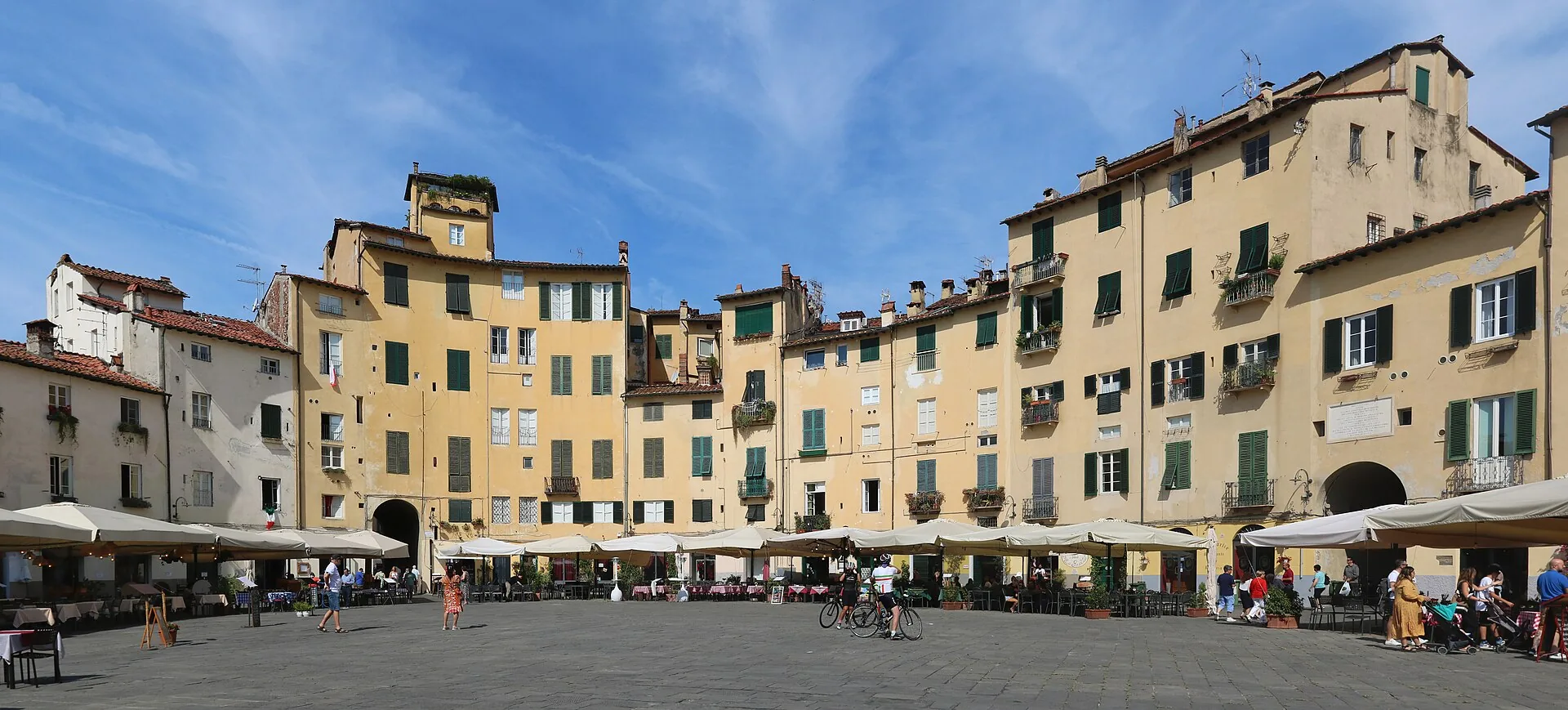
Piazza dell’Anfiteatro is the right first stop because its enclosed oval form is easy to read at a glance. The square occupies the footprint of Lucca’s Roman amphitheatre, while cafés, restaurants and historic buildings now line the inside edge.
- Name
- Piazza dell’Anfiteatro
- Location
- Piazza dell’Anfiteatro, Lucca Maps
- Essential fact
- A historic oval square built within the footprint of Lucca’s Roman amphitheatre.
Ingo Mehling · CC BY-SA 4.0
Trace the curve, identify the entrances and set your bearings before the short walk to Torre Guinigi. It is an orientation stop rather than a long interior visit, so it protects time for the tower and cathedral that give the circuit more depth.
Torre Guinigi Adds the Essential Climb
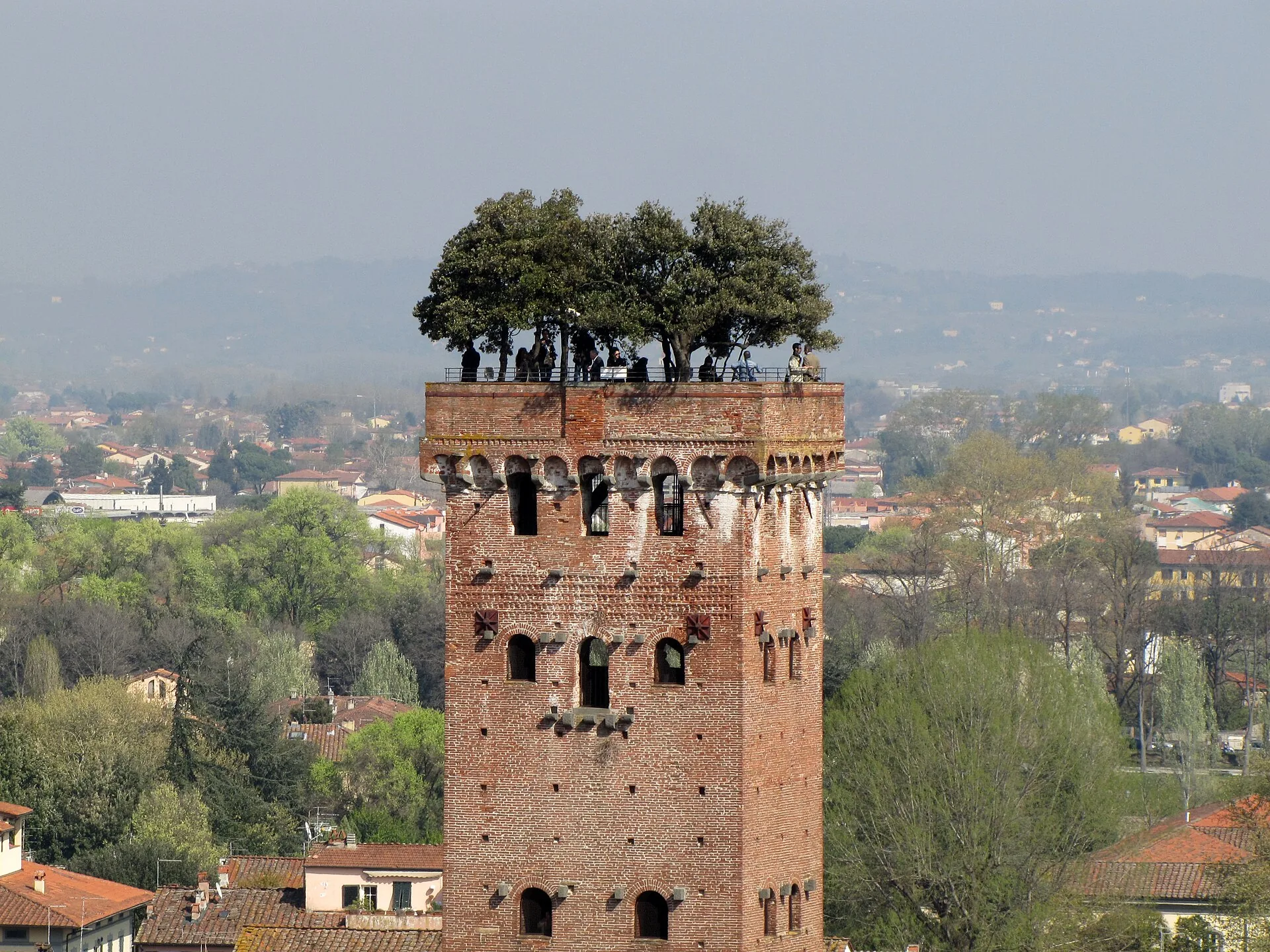
Torre Guinigi adds the day’s essential vertical view. The long, narrow stairway has roughly 230 steps and no lift, so the ascent is moderately strenuous and a poor choice if enclosed stairs, limited mobility or fatigue will make the summit uncomfortable.
- Name
- Torre Guinigi
- Location
- Via Guinigi 29, Lucca Maps
- Site
- cultura.comune.lucca.it
- Hours
- 10:00–18:30
- Essential fact
- A medieval tower with a rooftop garden and a climb above Lucca’s historic centre.
LivornoDP · CC BY-SA 3.0
The rooftop garden and view over Lucca’s roofs, walls and surrounding Tuscan countryside are the main reward. Entry is organised in staggered shifts: respect the start time and the flow of the next group. Advance booking is recommended through the Comune’s booking platform. If the climb is unavailable or unsuitable, use street-level views or consider Torre delle Ore instead, rather than disrupting the rest of the circuit.
San Martino Cathedral Provides a Focused Interior
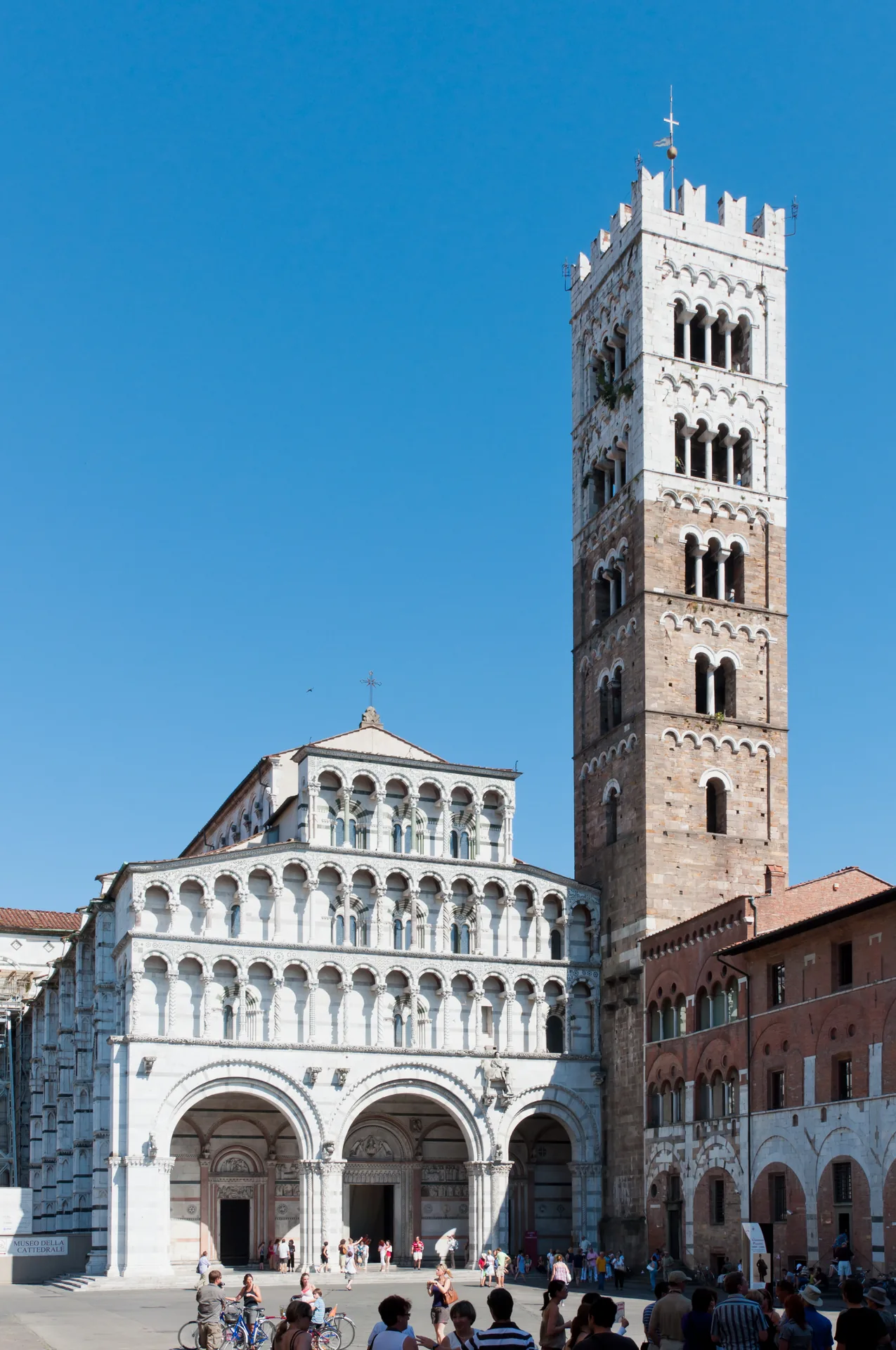
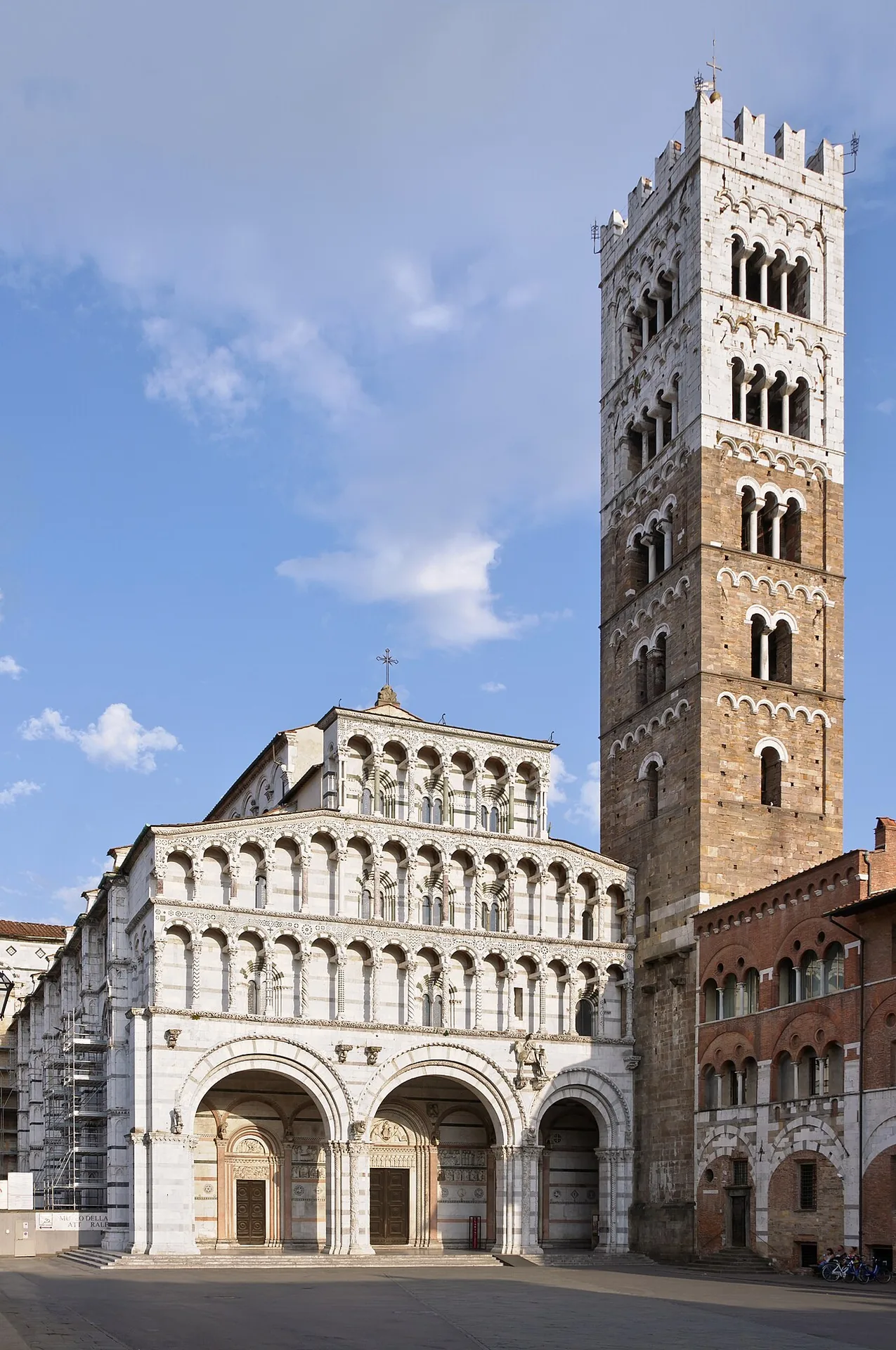
Cathedral of San Martino balances the tower with a concentrated indoor visit. After the climb, look first for Jacopo della Quercia’s marble tomb of Ilaria del Carretto and Matteo Civitali’s octagonal Tempietto del Volto Santo, then give attention to the Renaissance and Gothic paintings rather than trying to catalogue the whole interior.
- Name
- Cathedral of San Martino
- Location
- Piazza Antelminelli, Lucca Maps
- Site
- museocattedralelucca.it
- Hours
- Mon–Sat 09:30–18:00
- Sun 11:30–17:00
- Essential fact
- Lucca’s cathedral, known for its marble façade and richly decorated interior.
- Price
- €10 Combined · adult
- €20 Combined · special family ticket: parents with children over 6
- €8 Combined · students up to 25 · visitors over 65 · teachers with ID · groups of 10
11 more fares
€5 Combined · pilgrims · residentsFree Combined · children under 6 · disabled visitors plus accompanying person · tour guides · clergy€5 Cathedral and Ilaria del Carretto · adult€3 Cathedral and Ilaria del Carretto · students up to 25 · visitors over 65 · teachers with valid ID · groups of 10+Free Cathedral and Ilaria del Carretto · Lucca residents · children under 6 · disabled visitors plus accompanying person · tour guides · clergy;€3 Cathedral belltower · adultFree Cathedral belltower · children under 6 · disabled visitors plus accompanying person · tour guides · clergy€4 Cathedral Museum · adultFree Cathedral Museum · children under 6 · disabled visitors plus accompanying person · tour guides · clergy€4 Saints Giovanni and Reparata: church, archaeological area, Baptistery and St Giovanni belltower · adultFree Saints Giovanni and Reparata: church, archaeological area, Baptistery and St Giovanni belltower · children under 6 · disabled visitors plus accompanying person · tour guides · clergy
Myrabella · CC BY-SA 3.0
The cathedral earns its place because it changes the pace and supplies detail that the outdoor stops cannot. There is no listed weekly closing day or fixed annual closure. The official timetable sets last admission 30 minutes before closing, while special liturgical services can alter access. Put this visit before lunch when the day’s timetable allows it, then move on to Piazza San Michele.
Piazza San Michele Makes a Natural Lunch Break
Piazza San Michele is the circuit’s deliberate reset point after the cathedral. The Basilica of San Michele in Foro dominates the square with its ornate Romanesque façade, and the open space lets you pause without turning lunch into another fixed appointment.
- Name
- Piazza San Michele
- Location
- Piazza San Michele, Lucca Maps
- Essential fact
- A central Lucca square dominated by the church of San Michele in Foro.
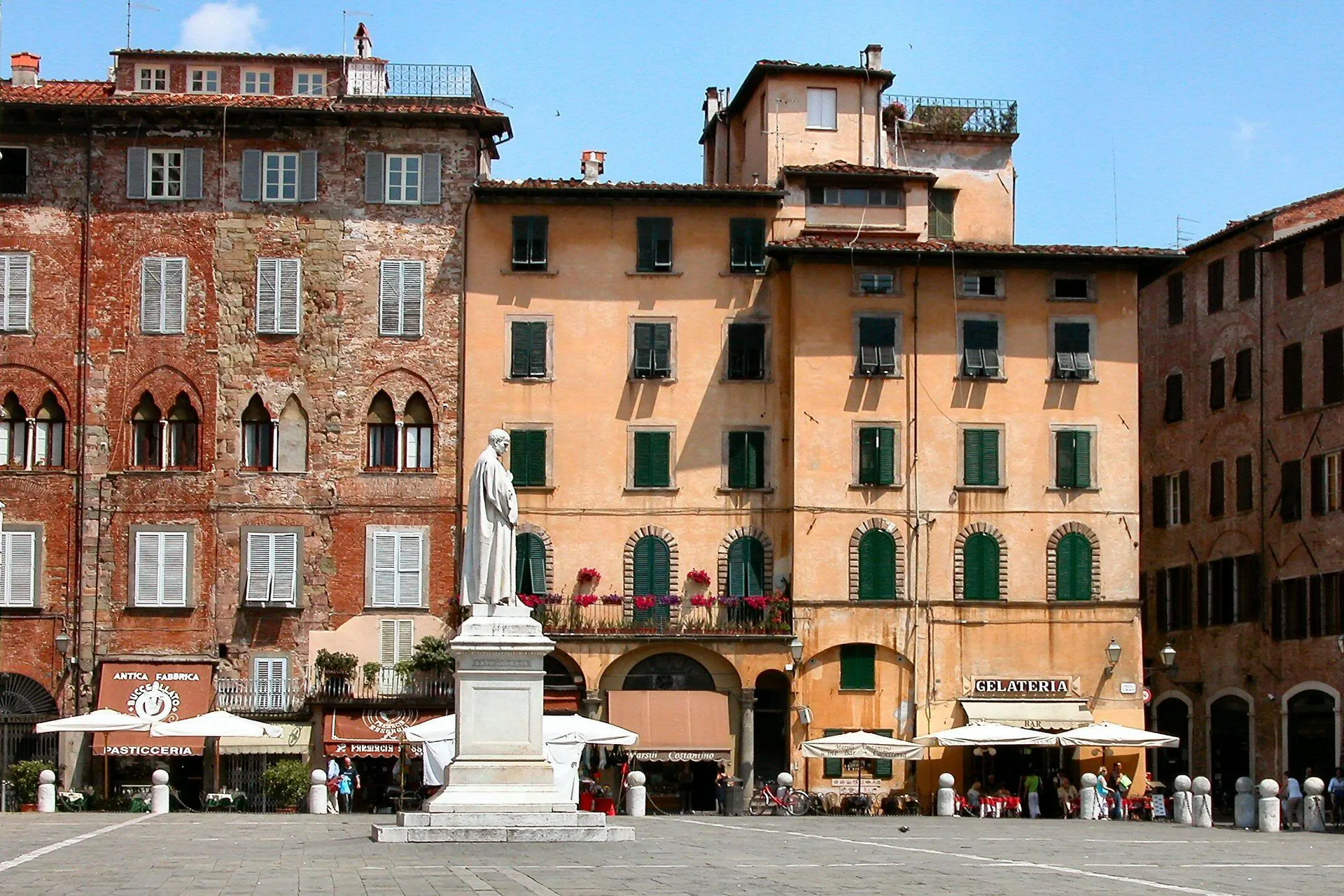
Peter Visser · CC BY 2.0
Use the break for a sit-down meal if the day is on time, or make it a quick piazza-and-snack stop when the tower or cathedral has taken longer than planned. That flexibility protects the afternoon wall walk. Once you leave, the route heads towards the ramparts rather than adding another central sight.
The City Walls Add the Best Open-Air Stretch
Lucca city walls provide the best open-air change of pace after lunch. Their tree-lined ramparts lift you above the historic centre, with views towards rooftops, towers and the countryside without requiring another museum visit.
- Name
- Lucca city walls
- Location
- Via delle Mura Urbane, Lucca Maps
- Site
- lemuradilucca.it
- Hours
- 10:00–18:00
- Essential fact
- A broad, walkable ring of historic ramparts around Lucca’s centre.
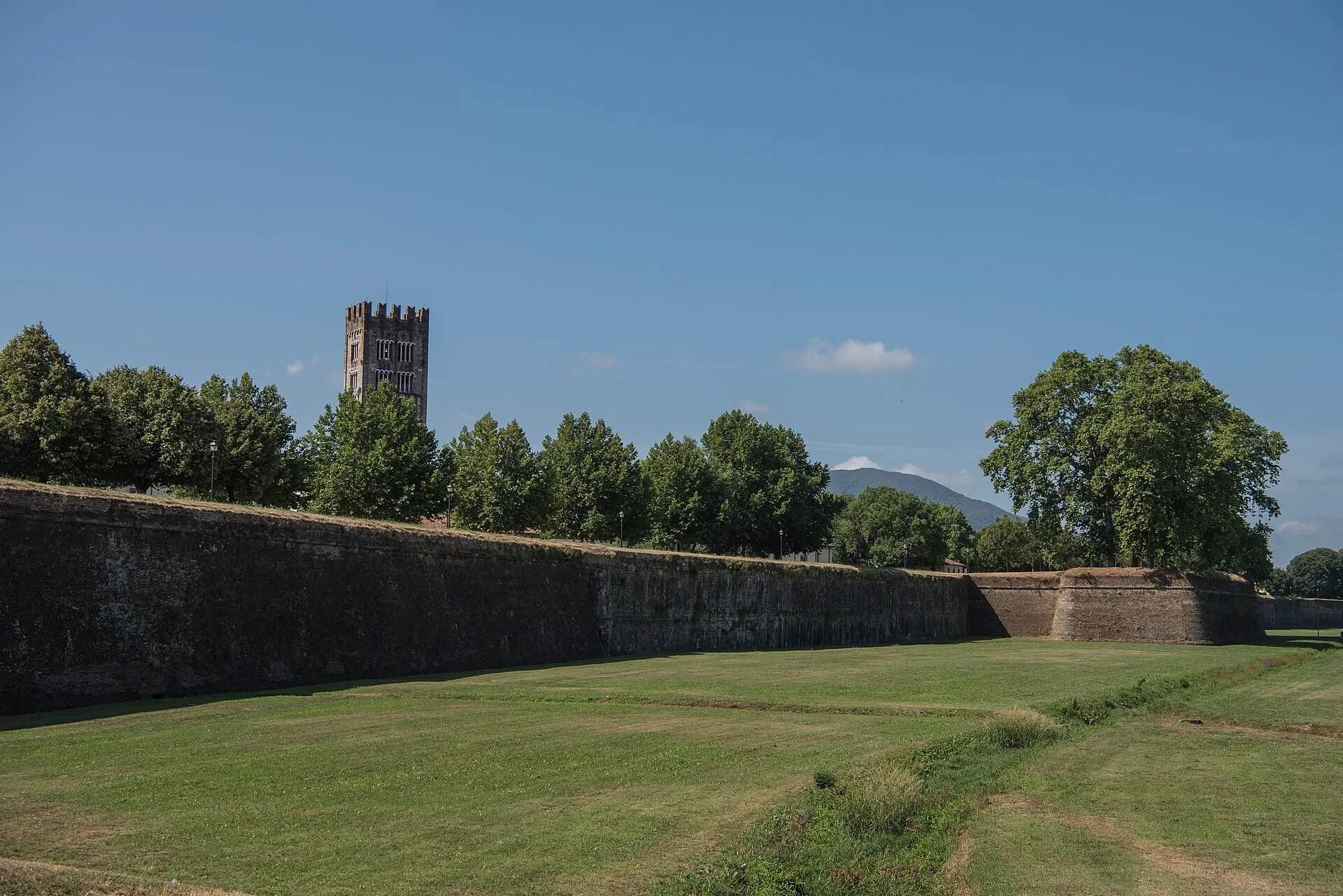
Alex2015Genova · CC BY-SA 4.0
Walk one or two sections rather than forcing the complete loop. That shorter stretch is the sensible choice in strong heat, with limited stamina or when the return train is important. Travellers who need to reduce walking can skip the walls altogether: the main sights are inside them, and Piazza Napoleone still gives the day a clear finish.
Piazza Napoleone Ends the Visit
Piazza Napoleone is a useful final stop because its broad civic space gives you room to pause, reorient and keep a return buffer. It closes the circuit without introducing another admission or a new destination.
- Name
- Piazza Napoleone
- Location
- Piazza Napoleone, Lucca Maps
- Essential fact
- Lucca’s broad central civic square and a practical final stop in the walking circuit.
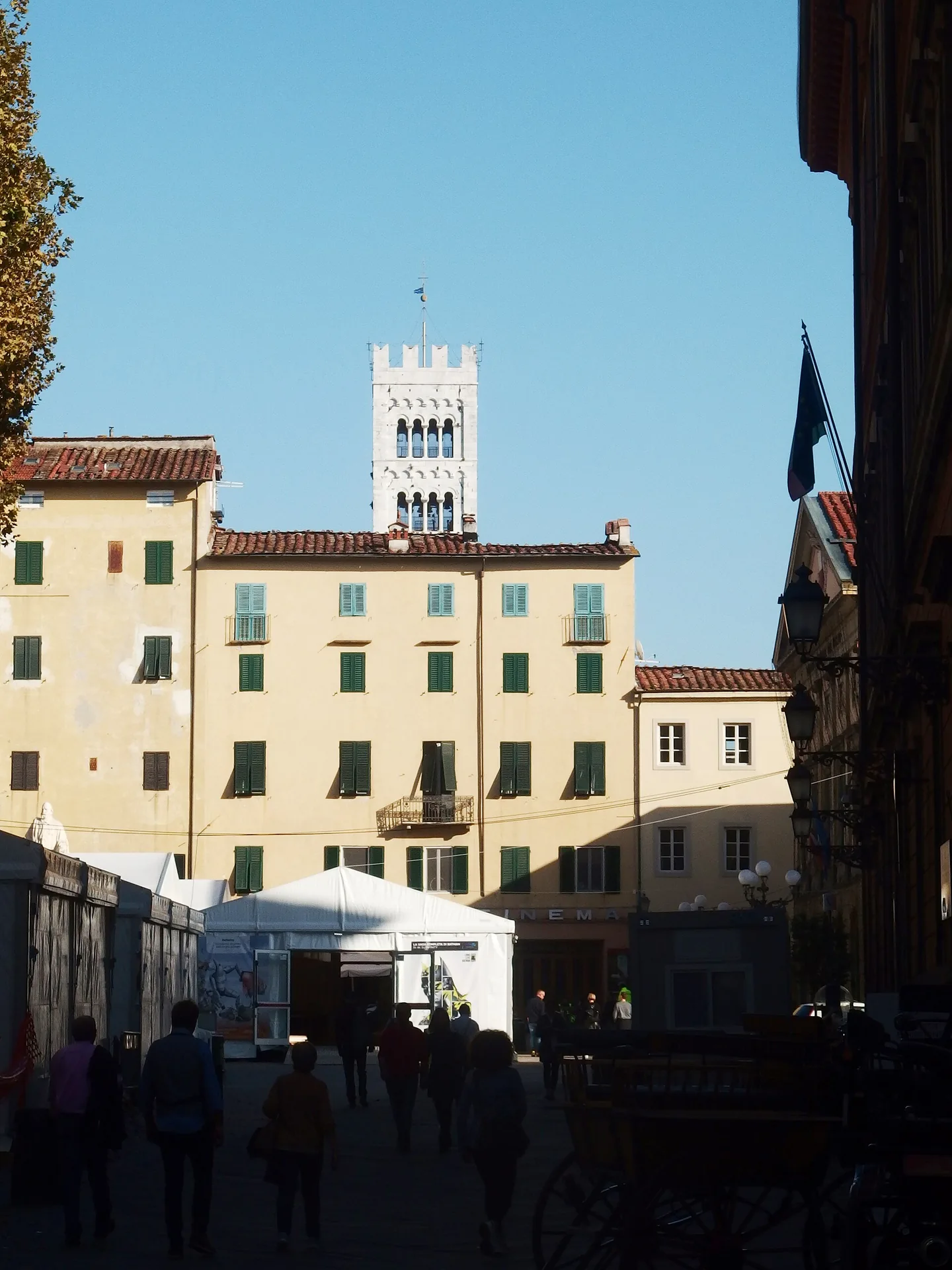
Palickap · CC BY-SA 4.0
Rest before the walk back to Lucca railway station. If the day is running late, remove time on the walls first, then shorten this pause; keep the cathedral or tower only if you have already made their access window. From here the walk to the station takes about 10 minutes, after which the planned rail return to Florence follows.
Tickets and Timing Decide the Independent Plan
Book the tower before you lock the rest of the independent day. Torre Guinigi uses staggered entry shifts, and advance booking is recommended, so its available start time should set the morning sequence. Put the cathedral after it, keeping the interior visit within the cathedral’s access window. Lunch, the wall section and Piazza Napoleone can stay flexible because they do not impose the same timed-entry decision.
Work backwards from the planned return: finish at Piazza Napoleone, allow the walk to Lucca railway station, and leave a margin before the train you intend to take. The late service is a safety net, not a reason to stay until the last possible departure. If you miss your preferred train, another daytime option may still exist, but gaps are not uniform.
Keep the route independent when you want to choose how long to spend at each sight. If you choose a tour, decide before planning attraction tickets: tour formats fix the Florence meeting point, departure timetable, shared transport and sequence, while one option gives only limited free time in Lucca. Its inclusions and exclusions determine whether separate monument tickets or a guided visit still matter.
If the tower has no suitable slot, replace the climb rather than forcing the timetable. If cathedral access is affected by a special service, move the outdoor stops forward and use the square, walls or a shorter lunch break. The day still works because its central walks are short and the final stop is deliberately non-essential. For a car day, keep the same sightseeing order but preserve time for the walk from your chosen parking place to the centre.
FAQ: Questions About the Day Trip
Is There a Direct Train for This Day Trip?
Yes, direct regional trains run from Firenze Santa Maria Novella to Lucca, with no change. They travel via Pistoia and Montecatini Terme. That makes an independent day straightforward: choose an outbound service that leaves room for the station walk and sights, then return from Lucca after walking back from Piazza Napoleone rather than relying on a connection.
Sources for the figures in this guide