Madeira Carnival brings two distinct kinds of celebration to Funchal: the Allegorical Parade’s themed costumes and samba choreography, and the Trapalhão’s humorous, often satirical disguises. Children’s and solidarity processions give the festivities a daytime, community focus, while Avenida Arriaga hosts music and performances beyond the main parade days.
Choose whether you want to watch or take part before planning your stay. Joining a samba school involves rehearsals, while joining the Trapalhão is a different, more informal undertaking, but still requires registration.
Carnival dates and the official programme
- Season
- February or March
- Full festivities
- Usually about two weeks
- Trapalhão participation
- Free
- Room-booking guidance
- Roughly 2–9 months ahead; earlier for central Funchal
Carnival Tuesday, also called Shrove Tuesday, is the day to count back from when choosing your parade weekend. It falls the day before Ash Wednesday in the Easter calendar. The full celebration stretches beyond the principal processions, so a stay outside the main weekend can still include Carnival entertainment.
The Madeira tourism authority publishes each edition’s programme on the Visit Madeira website, on its Carnival event page under “Official Programme”. The edition programme gives the detailed events and arrangements for your visit.
Staying near the celebrations is especially useful if you want to enjoy the evening spectacle without depending on a bus afterwards. Choose accommodation within walking reach if you plan to stay until the parade ends.
Carnival is worth making time for if you enjoy choreographed samba, comic costumes or community celebrations. Choose the main parade for organised spectacle, the Trapalhão for playful participation, or the children’s events for a daytime visit. If floral displays and costumed spring parades appeal more, the Madeira Flower Festival offers a contrasting reason to visit.
The main parade, Trapalhão and daytime processions
| Event | Recurring day | Time of day | Place | Character |
|---|---|---|---|---|
| Children’s Carnival | Friday before Carnival Tuesday | — | Avenida Arriaga; Municipal Garden | Children’s procession and show |
| Solidarity Carnival | Friday before Carnival Tuesday | — | Avenida Arriaga; Municipal Garden | Community procession and show |
| Allegorical Parade | Saturday before Carnival Tuesday | Evening | Funchal’s main avenues | Themed samba choreography |
| Trapalhão | Carnival Tuesday | Afternoon | Avenida Francisco Sá Carneiro to Praça da Autonomia | Humorous and satirical costumes |
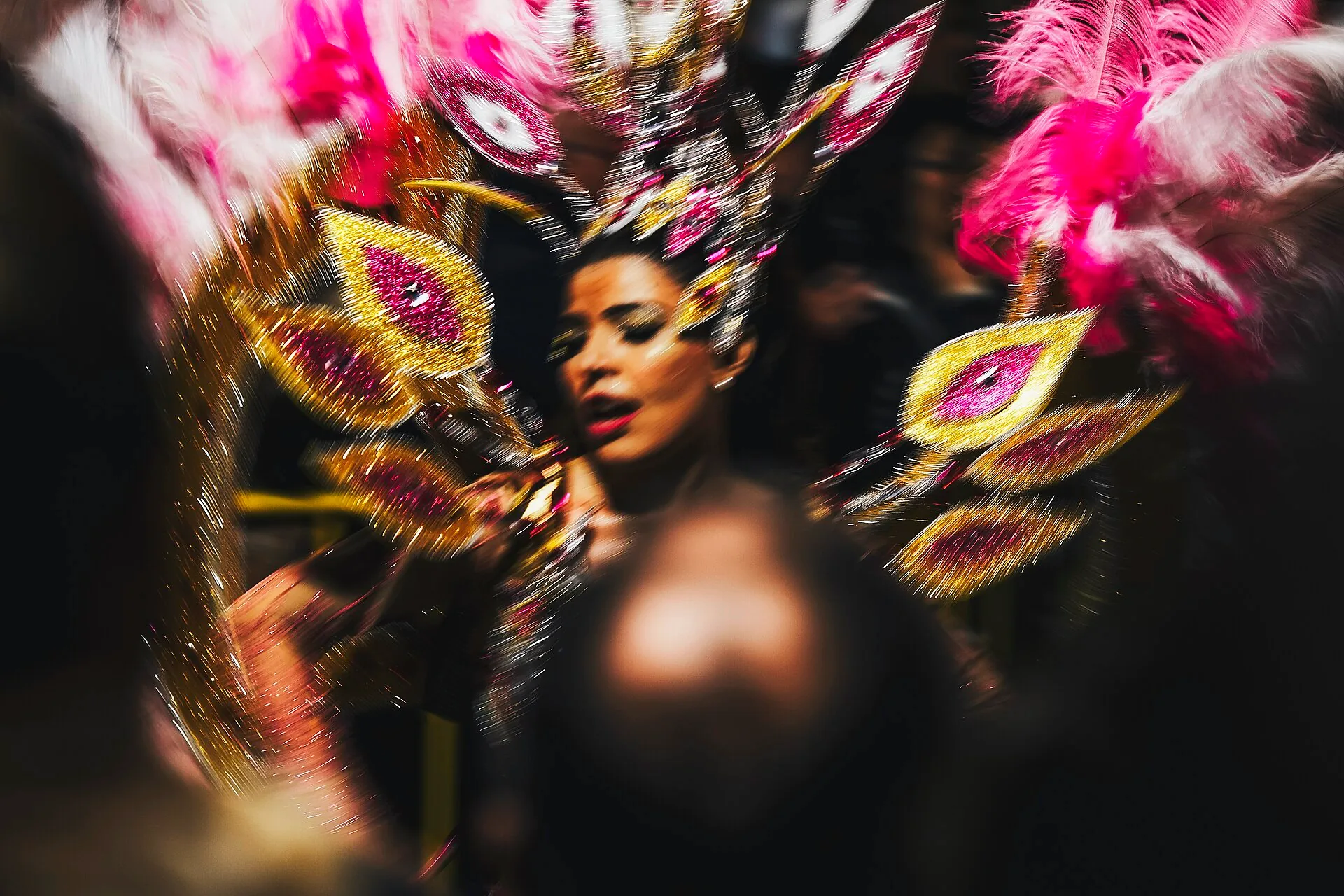
The Allegorical Parade is the choice for choreographed spectacle. Madeira’s samba schools and cultural, recreational and dance associations perform routines in themed costumes. Watch how each group’s clothing and movement develop its theme, rather than treating the procession as a succession of unrelated disguises. Funchal’s main avenues close to traffic and open to spectators, making street-side watching part of the celebration.
The Children’s Carnival brings hundreds of children from the Funchal Community Development Association into the celebrations. The Solidarity Carnival also combines a procession with a show. Funchal’s Municipal Garden, locally Jardim Municipal do Funchal, is where these community performances follow the processions. It gives you a different way to experience Carnival: watching a show in the garden rather than only seeing participants pass along a street.
- Name
- Jardim Municipal do Funchal
- Location
- R. Ivens 11, São Martinho, 9000-050 Funchal Maps
- Site
- visitmadeira.com
- Hours
- Open 24/7
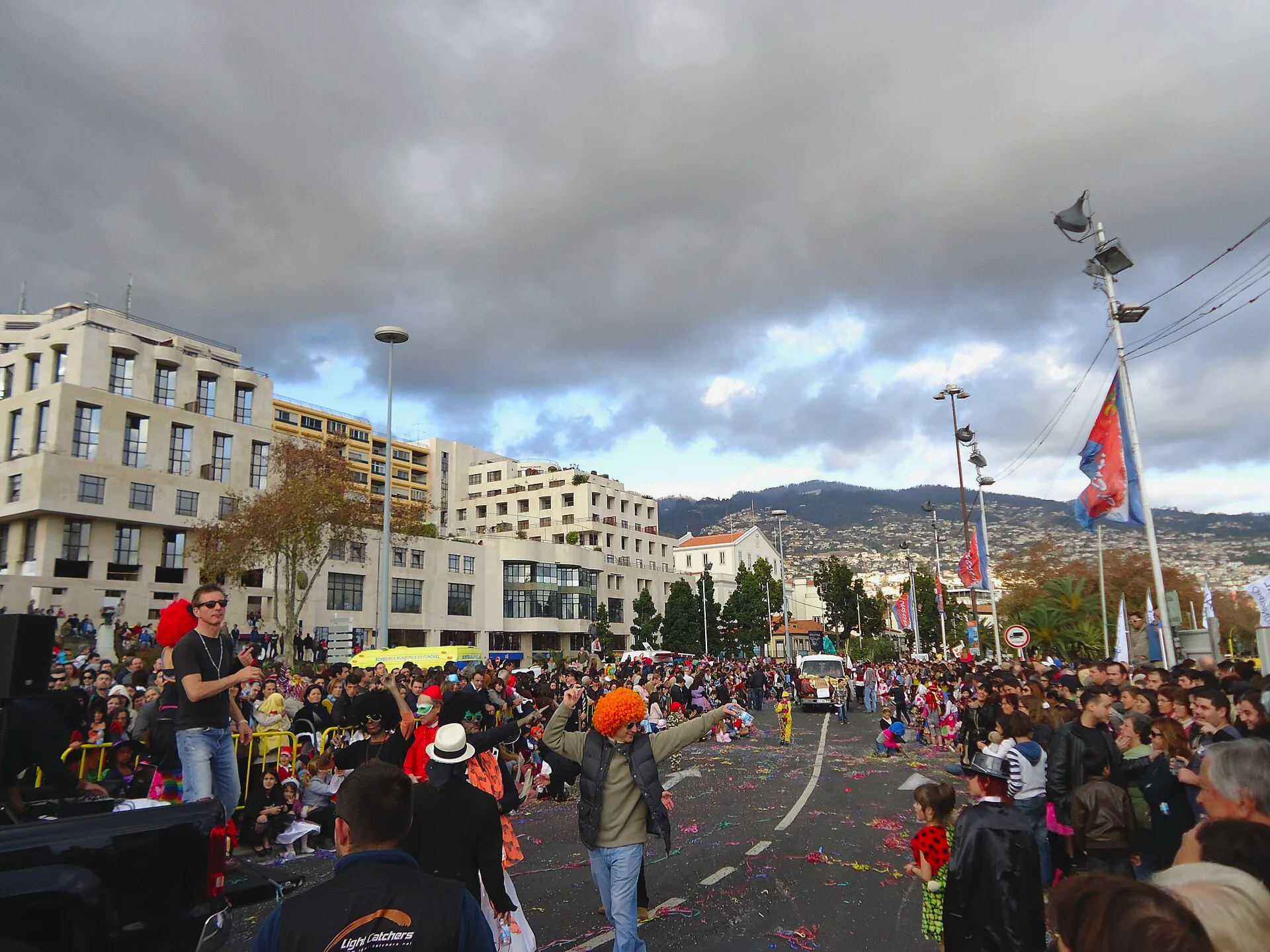
The Trapalhão puts humour ahead of synchronised dancing. Residents and visitors dress as comic characters or use costumes for satire, with individuals, pairs and groups bringing their own ideas. Its waterfront course follows Avenida do Mar towards the finishing square. For a spectator, the interest lies in the individual joke or character as much as in the procession as a whole. For a participant, an easily understood disguise can do more than an elaborate outfit.
Paulo SP/ Wikimedia · CC BY-SA 4.0 · Edited
Beyond these named processions, Avenida Arriaga remains a focus for Carnival music, performances and other street entertainment across the festivities. Leave room to spend time there rather than making every outing depend on a major parade. The combination of street events and garden performances lets you enjoy a shorter Carnival visit without committing to an evening in the busiest crowds.
Joining the samba parade or Trapalhão
To perform in the Allegorical Parade, enrol in a Madeiran samba school and attend a few rehearsals. You are joining a group’s choreography and costume theme, not simply walking into the parade in a disguise. Build that preparation into your stay: arriving just for the main weekend is better suited to watching than to learning a routine with a school.
The Trapalhão allows individual, pair and group entries, so you can create a character on your own or develop a shared joke with travelling companions. Its informal style makes it a more straightforward option for a short visit, provided you complete the entry process before joining.
Watching and participating are separate choices. If you only want to see the costumes, stay among the spectators rather than stepping into the procession. Keep the route clear for those taking part.
Malassadas and Carnival costumes
Malassadas are fried dough traditionally served with sugar-cane syrup, and a characteristic Madeira Carnival treat. Allow roughly €3–€6 per person for a modest snack, with the portion size and an accompanying drink moving the cost. Make it a break from watching rather than trying to eat while keeping your place at the front of a crowd.
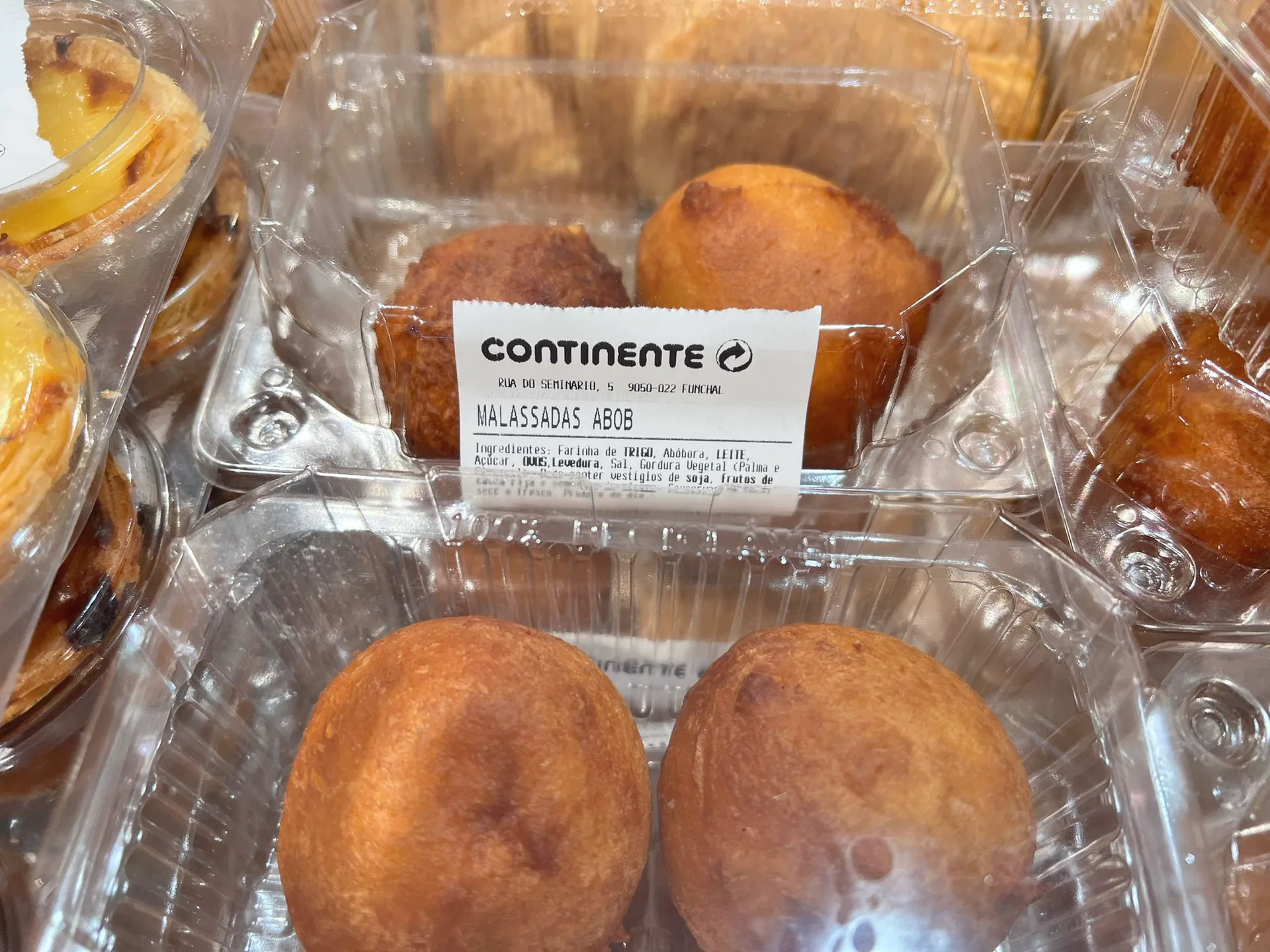
Msilva4444 · CC0 · Edited
For a simple Carnival disguise, budget around €10–€30 for a mask or a few inexpensive accessories. Reusing clothes can cost less, while buying a complete outfit costs more. This is a spectator’s or informal participant’s budget, not the cost of a samba school’s themed costume.
Wear comfortable shoes and bring a layer for standing outdoors in the evening. A disguise should let you move easily and see clearly. Organised participants need to follow their group’s costume and rehearsal preparation instead. When watching, keep bulky accessories out of other people’s sightlines, leave space for performers and ask before taking a close-up photograph.
Crowds, waterfront buses and staying nearby
For the main evening parade, arrive about 1–2 hours before the start for a good street-side position, leaning towards the longer lead time for a prime spot. Children’s Carnival events are typically quieter than the Allegorical Parade and Trapalhão, making them a gentler choice if dense crowds would spoil your visit.
SIGA publishes the parade bus arrangements, while Funchal City Council’s Traffic Department publishes traffic-restriction notices. The effect extends beyond spectators: if you are leaving Madeira through Cristiano Ronaldo International Airport on a parade day, arrange your departure around the disruption rather than around the usual waterfront pickup.
Carnival brings strong accommodation demand across Madeira. Staying within walking reach of central Funchal’s celebrations reduces your dependence on diverted transport. A room farther out may offer better value, but makes the return journey part of your evening’s planning.
Allow roughly €100–€200 per night for a central mid-range double room for two adults during Carnival. Room standard, proximity to the celebrations and event demand can push the price towards the upper end or beyond it, while simpler accommodation away from the centre may cost less.
Sources & fact-checking
Checks against the sources below cover: opening hours and services.
- Madeira Islands Tourism Board — opening hours
- Madeira Islands Tourism Board — service
- Funchal City Council (Câmara Municipal do Funchal) — service
- SIGA Madeira (CAM public transport operator) — service
- Direção Regional da Cultura — opening hours
- Regional Secretariat for Tourism, Environment and Culture, through the Regional Directorate of Tourism — opening hours