Berlin gives you the preserved Wall, major museum collections and evenings spread across distinct neighbourhoods. Munich places its Old Town, beer gardens and the English Garden closer together, with palaces and Bavarian excursions beyond the centre. Choose Berlin for a history-led break with room to explore, or choose Munich if you want compact sightseeing and time outdoors. Your dates and the length of your stay may decide more than either city’s reputation for cost.
Munich or Berlin at a glance
| Criterion | Berlin | Munich |
|---|---|---|
| Comparable mid-range central double room | Around €120–200 per room per nightBest | Around €140–220 per room per night |
| Sightseeing pattern | Museums and historic sites across districts | Walkable Old Town; outer sights by transit |
| Distinctive stops | Museum Island and Bernauer Straße | English Garden and Nymphenburg Palace |
| Evening choice | Neighbourhood bars, clubs and performances | Beer gardens, beer halls and concerts |
| Time to allow | Three to four days for several districts | Two to three days in the city; extra for excursions |
Berlin is the better fit if twentieth-century history, large collections and neighbourhood evenings are the point of the trip. Munich suits a shorter stay built around a walkable historic centre and a park, especially if you want to add a Bavarian outing. Neither city demands the same kind of pace: Berlin rewards choosing a few districts rather than trying to cross the whole city in a day.
On the same central, mid-range double-room basis, Berlin’s planning range is roughly €20 lower per night at either end. That is an estimate, not a guaranteed saving: compare similar rooms for your exact nights, particularly when a festival, trade fair or weekend changes demand, and make sure one apparent bargain is not far from the places you want to see. The Munich daily budget breakdown can help you judge what the room leaves for meals and local journeys.
If you have only a couple of days, Munich’s Old Town and English Garden make a coherent city break without constant transfers. With more time, Berlin’s memorials, museums and districts give you more distinct days. Allow additional time for either city’s outlying sights.
Berlin: museums, the Wall and neighbourhoods
Museum Island (Museumsinsel) gathers major collections on an island in the Spree. The Neues Museum is the choice for Egyptian and prehistoric collections, while the Alte Nationalgalerie has nineteenth-century art. The Altes Museum focuses on classical antiquity and the Bode-Museum includes sculpture and Byzantine art. All four admit visitors under their regular arrangements. Choose a collection rather than treating the whole island as one museum.

Thomas Wolf , www.foto-tw.de · CC BY-SA 3.0 · Edited
At the Berlin Wall Memorial on Bernauer Straße, surviving sections of the border and the documentation centre give you a place to understand how the division cut through an inhabited street. Go here for the history of the Wall rather than only a photograph of a painted fragment. The outdoor memorial and exhibition material ask for a different kind of attention from a museum-hopping day.

Ansgar Koreng · CC BY 3.0 de · Edited
Hackesche Höfe offers a change of scale: its connected courtyards hold shops, cafés and cultural spaces behind the street frontage. A walk through them lets you see a more everyday side of central Berlin after the island’s monumental buildings. For an evening, decide which district you want to spend time in rather than assuming every venue is near the landmarks, because Berlin’s spread makes that choice matter.
Munich: Old Town, park and palace
Marienplatz is the anchor for Munich’s Old Town: the New Town Hall frames the square, and the surrounding streets lead to churches, markets and places to stop for a meal. Begin on foot in the centre, then use the rest of your day for a different side of the city rather than treating the square as the whole visit.
The English Garden (Englischer Garten) gives you broad paths and lawns north of the centre. At the Eisbach Wave, watch surfers from the pavement on the bridge by Haus der Kunst. The viewing point does not give visitors access to the water. This is a short spectator stop within a longer park walk, not a place to plan a swim.

Isi Parente · Pexels License · Edited
Nymphenburg Palace is an outing beyond the Old Town. Its long Baroque frontage, state rooms and grounds warrant unhurried time, rather than a quick diversion between central stops. Take local transport out and leave space to walk the palace grounds. It is a different day from a concentrated Marienplatz circuit.

High Contrast · CC BY 3.0 de · Edited
Neuschwanstein is a regional excursion near Schwangau, not a Munich city sight. Give the castles and the journey a separate day rather than squeezing them into an Old Town afternoon. A Schwangau castles day trip helps you plan what time at Neuschwanstein and Hohenschwangau involves. If your break is short, the palace and park within Munich offer less travel for the time you have.
Arriving and getting around
From the UK, scheduled flights reach Berlin Brandenburg Airport (BER) and Munich Airport (MUC), and the Munich summer 2026 schedule includes a Bristol service. For central Berlin, take the Airport Express FEX or RE20 from the station beneath BER Terminal 1 to Berlin Hauptbahnhof, about 23 minutes. The airport is in fare zone C, so a journey into central Berlin needs an ABC ticket, not an AB city ticket. Allow separately for the trip from Hauptbahnhof to where you are staying.
From Munich Airport, S-Bahn lines S1 and S8 run via different sides of the city to München Hauptbahnhof in approximately 40 minutes, and the two services alternate at roughly ten-minute intervals. There is also a direct airport bus to the main station. Use your accommodation’s location, not just the main-station arrival time, to choose your route: a central hotel may still require a further local journey.
For a standard adult single journey within the central area, Berlin AB costs €4.00 and allows travel in one direction for 120 minutes with changes, but not a round or return trip. Munich Zone M costs €4.20 per adult single trip. Berlin is €0.20 less per central single journey on that basis. These central tickets are not interchangeable with airport travel: Berlin’s airport needs ABC coverage. Munich’s compact Old Town lends itself to walking, while Berlin’s district-to-district days are easier with public transport.
Dates and days to allow
With two days in Berlin, pick a museum or memorial and explore a nearby neighbourhood. In Munich, pair the Old Town with the English Garden. An extra day in Berlin opens up another district. In Munich it allows Nymphenburg or a full-day Bavarian castles excursion.
Oktoberfest runs annually from the first Saturday after 15 September to the first Sunday in October. Munich room prices can rise around the event, so compare the same dates before choosing on cost. The English Garden suits an outdoor day, while Nymphenburg’s interiors offer a change of scene. Berlin’s collections can anchor a wet day, but its Wall memorial and neighbourhood walks need time outside.
If you visit both cities
Visit Berlin first and Munich second if you want to finish with Bavarian excursions. Reverse the order when UK flights suit that arrangement better, and give both cities their own days.
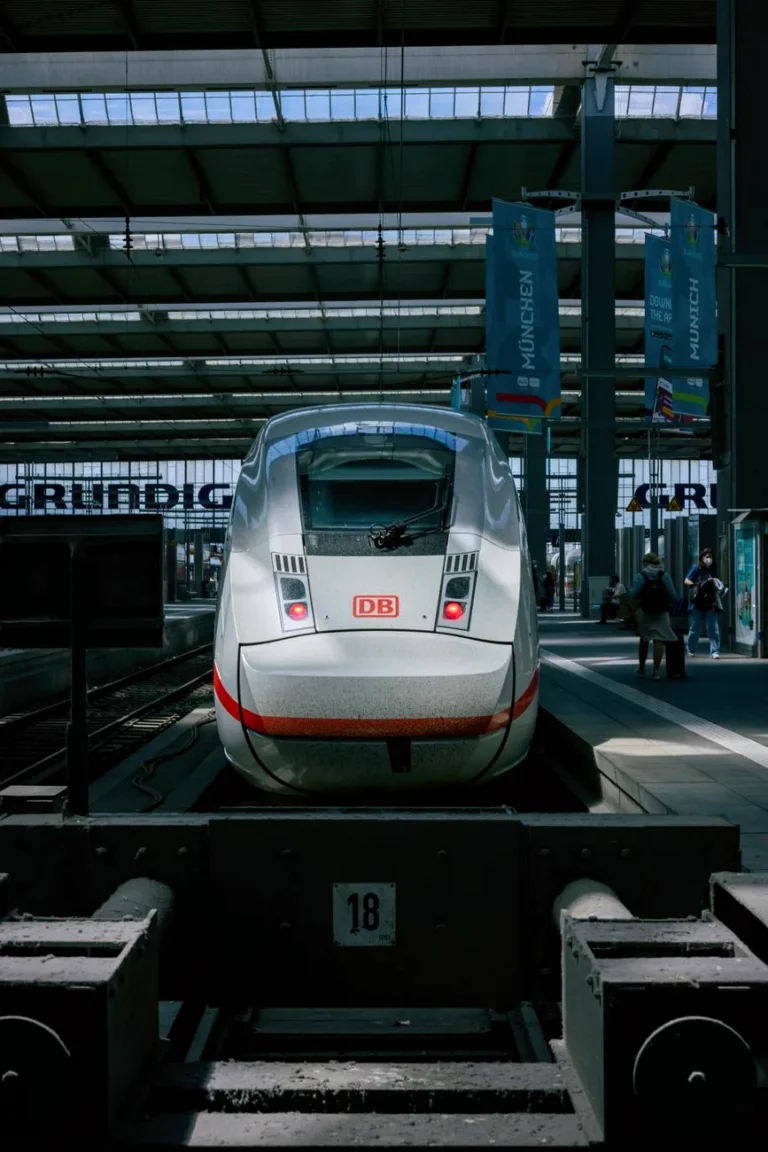
Direct ICE trains link Berlin Hauptbahnhof and München Hauptbahnhof without a change. The station-to-station journey is about 4 hours, covering about 646 km. In a price snapshot dated 26 September 2026, advance adult singles for the connections shown started at €70.98, but the fare varies by train and date. Allow separately for travel to Berlin’s station and onward travel from Munich’s.
Advance saver fares can be booked up to 12 months ahead, subject to timetable changeovers in June and December. If your flights or time in either city are undecided, leave the intercity train decision until you know which day you can travel.
The case for each city
Berlin for a short city break
Pros
- The Bernauer Straße memorial and Museum Island offer two very different ways into the city’s history.
- Neighbourhood bars, performance spaces and clubs offer varied evenings beyond the historic core.
Cons
- The spread between districts eats into a short stay; you have to select a few areas and use transit.
- A museum-heavy plan can be disrupted by differing weekly closing days.
Munich for a short city break
Pros
- Marienplatz and the Old Town give you a concentrated day on foot, with the English Garden close enough for a contrasting outing.
- Beer gardens and beer halls make a relaxed evening possible without building a cross-city itinerary.
Cons
- Nymphenburg takes you beyond the compact centre, while the Bavarian castles require a separate excursion day.
- Oktoberfest dates can push up the cost of a central room and change the character of an evening out.
Berlin rewards you when you want to change neighbourhoods and can spare the time between them. Munich gives you a simpler central base, but its regional trips use up whole days. If evenings are central to the choice, pick Berlin for breadth or Munich for a beer-garden-centred break. Neither city has just one kind of night out.
Which city should you choose?
- Choose Berlin for a first visit led by Wall history, major museums and several distinct districts, especially if you have three or more days.
- Choose Munich for a shorter break centred on Old Town walks and the English Garden, with another day if you want Nymphenburg.
- Choose the cheaper comparable room on your actual dates if budget decides: Berlin’s planning range is lower, but events and location can reverse the price you find.
- Visit both, Berlin then Munich, if you can give each city proper time and leave a separate travel allowance for the direct intercity train and station access.
If your interests split evenly, choose the city that fits the days you can give it. A tightly timed break works better as one focused visit than a rushed transfer between the two.
Sources & fact-checking
Checks against the sources below cover: services, fares and charges, and key figures.
- Deutsche Bahn — service
- Deutsche Bahn (DB) — service
- Destinations from BER | BER Airport
- Flughafen München GmbH — service
- Arrival and departure by Public transport | BER Airport
- Munich Airport — service
- Verkehrsverbund Berlin-Brandenburg (VBB) — fares and charges
- Münchner Verkehrs- und Tarifverbund (MVV) — fares and charges
- Staatliche Museen zu Berlin — service
- City of Munich — service
- City of Munich — key figures