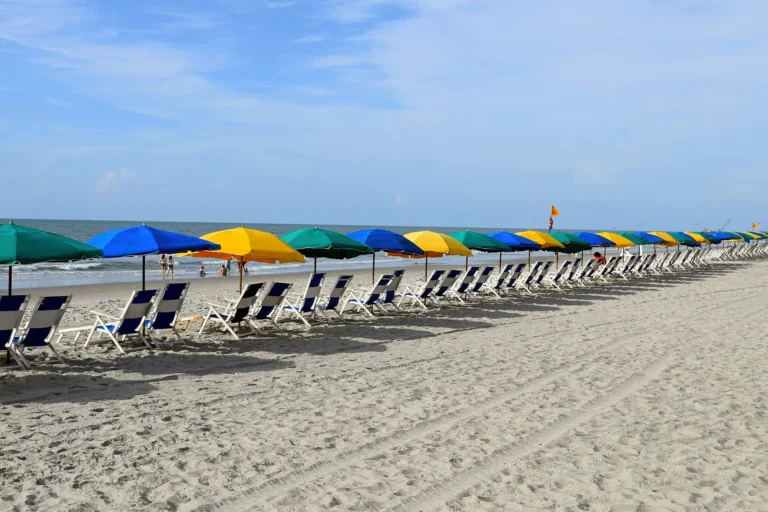
Choose summer for the best chance of comfortable, extended ocean swimming at Myrtle Beach. It brings the warmest water, but also stronger demand for oceanfront rooms. The shoulder seasons can suit shorter dips and more time walking the beach, depending on your cold tolerance.
Water warmth is only part of the decision on the city beachfront. Lifeguard coverage, surf warnings and location-specific water-quality advisories determine whether a warm-water day is also a suitable day to enter the ocean.
The swimming season
- Extended swimming
- Late June–early September
- Shorter dips
- May and late September–October, depending on cold tolerance
- Warmest water
- Summer
- Coolest water
- Winter and early spring
- Hottest air temperatures
- July
- Coldest air temperatures
- January
- Wettest month
- September
- Busiest period
- June–July, typically peaking in July
Yes, the ocean is generally warm enough for sustained swimming in summer. That comfort comes with busier beaches and higher room costs. For a less crowded visit, early autumn offers a balance of retained water warmth and easing lodging demand, but storm disruption remains possible.
Spring and autumn also suit beach walks, with a dip as an optional extra rather than the purpose of every day. Winter and early spring favour time ashore. For supervised swimming, choose a visit within the lifeguard season and swim while guards are on duty, not simply when the air feels warm.
Water warmth and beach weather
| Month | Average daily air high (°F) | Rain (inches) | Visitor demand | Beach-day verdict |
|---|---|---|---|---|
| January | 55.5 | 3.43 | Low | Walks, cold water |
| February | 57.8 | 3.76 | Low | Walks, cold water |
| March | 63.7 | 3.71 | Building | Mixed, ocean still cool |
| April | 71.5 | 3.38 | Building | Walks, warming air |
| May | 78.8 | 3.80 | Rising | Short dips, cooler water |
| June | 84.5 | 4.85 | Peak | Swimming, warming ocean |
| July | 87.4 | 6.61 | Highest | Swimming, heat and crowds |
| August | 86.5 | 6.27 | Easing from peak | Swimming, rain interruptions |
| September | 83.0 | 6.77 | Drops after Labor Day | Mixed, warmth but storms |
| October | 75.6 | 4.11 | Lower, event bumps | Short dips, cooling ocean |
| November | 66.4 | 3.06 | Low | Walks, cooler conditions |
| December | 58.6 | 3.81 | Low | Walks, cold water |
Typical summer ocean water is around 80°F, compared with roughly 55–60°F in winter. These seasonal estimates describe swimming comfort, not today’s temperature. Warm water usually supports longer swims, while cool water can make a dip brief even on a sunny day. Wind, sunshine and your own cold tolerance affect how comfortable you feel.
Springmaid Pier’s NOAA/NOS weather and tide station is the observation location for Myrtle Beach’s ocean-temperature climatology. Its 920,078 quality-controlled observations span 2005–2025. Other beach communities in Horry and Georgetown counties generally have very similar water temperatures. Historical averages describe the seasonal pattern, whereas a live reading describes conditions at a particular time.
The air-temperature column is not a substitute for ocean warmth. Spring break and autumn events can also interrupt the broad demand pattern, so a quieter season need not mean a quiet holiday weekend.
Summer, shoulder seasons and winter
Summer is the strongest choice when swimming is the main reason for your trip. Warm ocean water lets you spend more of a beach day swimming rather than warming up afterwards. Heat and rain can still interrupt time outdoors, so leave room for a break ashore rather than expecting every afternoon to be uninterrupted beach time.
Summer vacation weeks and major holiday weekends bring heavier beachfront crowds and stronger lodging demand. Reserve accommodation well ahead if those dates are fixed, especially if an oceanfront room matters more to you than a wider choice of locations.
Spring offers a different balance. Warm spring air does not mean the ocean has warmed enough for a long swim. Treat swimming as a short, optional part of a day that also includes beach walks. Spring-break weeks can make the beachfront busier than the season’s generally lighter demand suggests.
Autumn retains some of summer’s ocean warmth while visitor demand falls after Labor Day. It can suit travellers who want shorter swims without the pressure of peak vacation weeks. However, warm water does not protect a visit from storm-driven surf, and later autumn increasingly favours time on the sand over sustained swimming.
Winter is best approached as a beach-walking trip, not a swimming holiday. Cooler water limits comfort, while lighter demand often makes oceanfront accommodation more affordable. A lower room price is worthwhile if you want an ocean view and walks rather than long sessions in the water.
- Summer: estimate $180–$350 per night.
- Spring: estimate $120–$220 per night.
- Autumn: estimate $110–$200 per night.
- Winter: estimate $80–$150 per night.
These rounded planning ranges use the same basis: an oceanfront double room for two adults, including mandatory charges and excluding parking. Weekends and holidays tend towards the upper end and can exceed it, while quieter midweek stays tend towards the lower end. Hotel standard and room type also affect what you pay.
Surf, water quality and swimming restrictions
- Ocean swimming is permitted on the public city beachfront. Stay within 150 feet of shore and no deeper than chest depth, or you may be ordered out.
- Keep at least 225 feet from any pier, where swimming and other aquatic activities are prohibited. Respect marked hazard-area restrictions and instructions to leave dangerous water.
- Choose supervised swimming during the recurring 15 April–30 September lifeguard season. Busy-season daily hours are 9am–6pm (April 2023 service report).
- Green means low hazard, not no hazard: swim with caution. Yellow means moderate surf or currents: use caution.
- Single red means high surf or strong currents, and swimming is not recommended. Blue signals dangerous marine life: use caution and follow lifeguard instructions.
- The S.C. Beach Guide identifies affected monitoring locations. Avoid swimming in water under an advisory until it is lifted. Wading, fishing and shell collecting are considered safe under that advisory, but a separate surf closure still applies.
- Follow warnings and lifeguard instructions at the stretch where you intend to swim.
- Follow beach-access restrictions communicated through Myrtle Beach’s Regroup emergency notifications.
A water-quality advisory applies to the affected water, not a closure of the beach itself. It concerns conditions at a monitoring location, while a surf closure addresses a separate hazard. The two can apply independently on the same beach day.
Stronger onshore winds and larger waves increase rip-current risk. Longer wave periods can also raise that risk, and conditions differ between stretches of beach. Warm water and sunshine do not make rough surf safe. Conditions at your chosen stretch matter as much as seasonal comfort.

Defi22 · CC BY-SA 4.0 · Edited
Atlantic hurricane season runs from 1 June to 30 November. That recurring window overlaps warm-water visits, including the quieter autumn period. Storms can bring dangerous surf and temporary restrictions, so keep plans flexible enough to replace a swim with time away from the waterfront when necessary.
Myrtle Beach’s Regroup emergency notification system offers visitors beach and severe-weather warnings as well as hurricane and tropical-storm updates. The city’s Visitor Resources page describes this alert service. These alerts can change plans during a warm-water visit, including when a storm affects beach access rather than just swimming comfort.
What to wear and bring
For summer swimming, bring swimwear, sunscreen, sunglasses and a hat for time out of the water. Sun protection matters on the sand as well as during a swim. Make shade breaks part of a long beach day.
For shoulder-season dips, have a dry change and a wind-resistant layer ready when you come out. Pack rain protection and keep a spare dry layer protected from showers. Winter beach walks call for warmer layers, with an outer layer that blocks the wind.
Shorten or skip a swim if the cold makes you uncomfortable. A wetsuit may help some swimmers, but there is no universal water-temperature threshold that suits everyone. Your tolerance and intended time in the water matter. Clothing supports comfort, but it does not make rough surf safe or override a warning to stay out.
Sources & fact-checking
Checks against the sources below cover: key figures, services, and opening hours.
- National Weather Service Wilmington — key figures
- National Centers for Environmental Information, National Oceanic and Atmospheric Administration — key figures
- Beach and Boating Regulations
- Lack’s Beach Service — Home / Find a Spot
- City of Myrtle Beach Progress Report, April 2023
- Beach Water Quality and Beach Flag System
- South Carolina Department of Environmental Services (SCDES) — service
- South Carolina Department of Environmental Services — service
- Visitor Resources
- National Weather Service Wilmington, NC — key figures