Choose June weekdays outside CMA Fest for Nashville’s best summer balance of sightseeing and live music. You get gentler daytime heat than later in summer, easier movement on Lower Broadway than on busy weekend nights, and less pressure on central accommodation than during the festival.
The trade-off is rain, so keep an indoor visit in the day rather than building everything around walking. July and August still suit a music-focused trip, but shorter outdoor stretches and a substantial museum afternoon make them a better fit than continuous sightseeing on foot.
June, July or August?
- Recommended summer window
- June weekdays outside CMA Fest
- Hottest summer month
- July
- Coolest summer month
- June
- Wettest summer month
- June
For outdoor-led sightseeing, favour the gentler end of summer rather than the driest month. The rain trade-off is manageable when you can move a walk around an indoor visit. A day that combines some street-level exploring with music gives you more flexibility than one devoted entirely to outdoor sights.
If July or August dates are fixed, make the Country Music Hall of Fame and Museum a substantial part of the day, not just a brief escape between walks. Live music need not depend on spending the afternoon outdoors, and evening plans can follow a proper rest.
For accommodation value, ordinary dates away from the festival matter more than choosing a month purely for a cheaper room. Compare the same central location and a double room for two adults, since a lower price farther out buys a different stay.
If prolonged outdoor sightseeing is your priority and you can change season, the best time to visit Nashville is worth weighing across the whole year rather than limiting the choice to summer.
Summer weather by month
| Month | Average daily high | Average daily low | Precipitation | Rain days | Crowds | Weather-led verdict |
|---|---|---|---|---|---|---|
| June | 87.7°F | 67.0°F | 4.36 inches | 10.7 | Festival peak; weekdays quieter | Good fit: gentler heat, more rain |
| July | 90.9°F | 70.5°F | 4.16 inches | 10.3 | Weekends busy; weekdays quieter | Mixed: greatest daytime heat |
| August | 90.4°F | 69.8°F | 3.79 inches | 9.4 | Weekends busy; weekdays quieter | Mixed: less rain, still hot |
July is a poor fit for a continuous walking-heavy day, but not for a visit built around shorter walks and indoor attractions. Put outdoor exploring earlier, then give the afternoon to galleries or another cool indoor setting. Moving every outdoor stop into the evening does not remove the heat trade-off.
Daily highs describe the warmer part of the day, while daily lows describe its cooler end, usually overnight. The warmer nights later in summer mean that evening music and an evening walk are different propositions: the former can take you indoors, while the latter still leaves you outside in warm conditions.
Rainfall volume and frequency answer different questions. The total tells you how much precipitation accumulates across a month, while the day count indicates how often even a small amount occurs. A rain day does not mean an entire day of rain, so leave room to switch the order of a walk and a museum visit rather than abandoning outdoor time altogether.
The smaller rainfall totals later in summer do not buy a cooler sightseeing day. Choose July or August for an indoor-led music visit rather than expecting their drier conditions to suit long walks.
CMA Fest and Broadway crowds
CMA Fest is a June event, not a fixed-weekend rule. Choose it deliberately if the festival is the reason for your trip. For ordinary sightseeing and bar-based music, dates outside its window avoid the concentrated demand. The next announced edition runs from 10–13 June 2027.
During CMA Fest on 4–7 June 2026, downtown hotel occupancy reached 89.4%, with about 100,000 fans downtown each day. That substantial concentration of visitors around the music district makes the event a different accommodation choice from an ordinary summer stay.
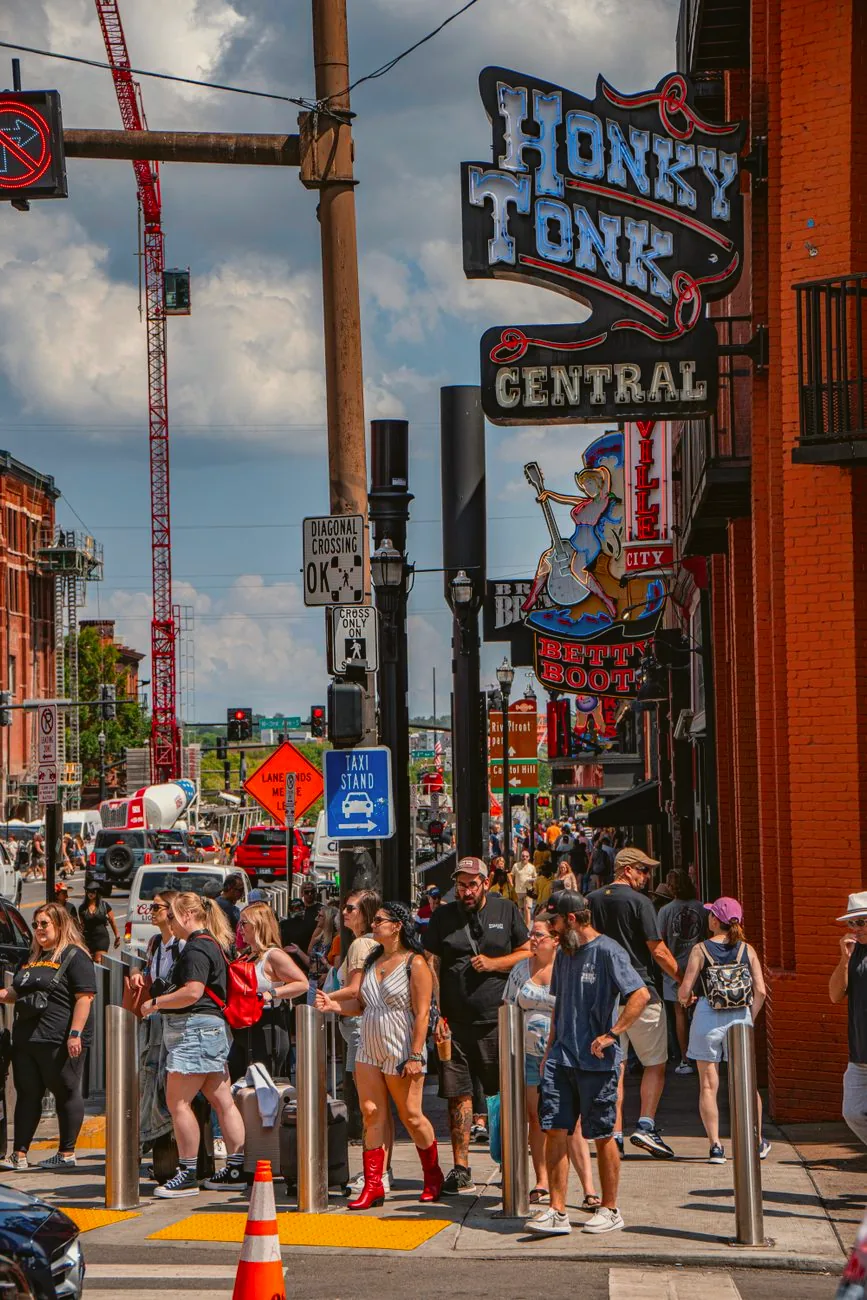
Lower Broadway’s bars and sidewalks are especially crowded on Friday and Saturday nights, when movement slows and entry queues are more likely. Choose a weekday, particularly earlier in the day, if easier movement and bar entry matter more than the weekend bustle. Special events can overturn that pattern, and a busy Thursday can feel like a weekend.
For a comparable central double room occupied by two adults, allow roughly $180–$300 per night on ordinary summer dates and $300–$500 or more during the festival. These are planning ranges, with location, hotel standard and weekend demand moving the price. June outside the event can offer better value than festival dates, while July and August are not automatically cheaper simply because they are hotter.
If your dates include a weekend, put the music visit you most want to enjoy on a weekday where possible. Reserve the busier night for a less tightly planned outing, rather than expecting quick entry at several bars in succession.
Outdoor mornings and indoor afternoons
- Country Music Hall of Fame and Museum: general admission throughout June, July and August, open daily, 9am–5pm.
- Tennessee State Museum: free general admission throughout June, July and August. Open Tuesday–Saturday, 10am–5pm, and Sunday, 1pm–5pm.
Make the indoor afternoon a visit worth enjoying, not just a pause between outdoor stops. The Country Music Hall of Fame and Museum’s core exhibition galleries are indoors and put country music at the centre of the afternoon, making it a natural partner to live music later. Leave enough room in your day to engage with the exhibitions instead of hurrying through to the next walk.
The Tennessee State Museum gives the afternoon a broader historical focus. Its indoor permanent galleries range from Natural History and First Peoples to Civil War and Reconstruction and Tennessee Transforms. The indoor Tennessee Time Tunnel connects the visit through the state’s history, so you can spend meaningful time inside without making the whole day music-focused.
On Sunday, the State Museum fits the afternoon rather than the morning. Its admission arrangement also makes it a useful choice when you want a substantial indoor visit without adding an entrance charge.
Use June’s gentler conditions for a little more outdoor exploring in the morning, but keep the option to move indoors when rain interrupts. In the hotter months, follow a short outdoor morning with a substantial indoor afternoon and a proper break. A rest at your accommodation before evening music leaves you free to enjoy the night rather than carrying on through a tiring, outdoor-heavy day.
Heat alerts and summer storms
- Excessive Heat Watch: reschedule outdoor activities rather than keeping a walking-heavy plan.
- Excessive Heat Warning: avoid heavy activity and direct sunlight, stay hydrated and find a cool indoor place.
An official heat alert calls for a stronger change than simply shortening a walk. Use the National Weather Service Nashville alert actions above to change the day’s outdoor plans, rather than trying to keep every stop. Give the afternoon to the Country Music Hall of Fame and Museum or, on its open days, the Tennessee State Museum, and leave time for a rest before music.
A storm can change how much outdoor sightseeing fits into the day. Give yourself time to enjoy the indoor visit rather than rushing through its galleries in the hope of fitting every outdoor stop into a shorter gap. Missing a walk need not mean losing the afternoon.
For ordinary short summer outings, carry water, use sun protection and choose breathable clothing. A light layer helps when you move into cooled interiors. These measures support a comfortable day, but they do not replace the change of plan an alert or thunder requires.
Sources & fact-checking
Checks against the sources below cover: opening hours, key figures, and services.
- Country Music Hall of Fame and Museum — opening hours
- Tennessee State Museum — opening hours
- Tennessee State Museum — key figures
- National Weather Service Nashville (NWS Nashville) — service
- National Oceanic and Atmospheric Administration (NOAA), National Centers for Environmental Information (NCEI) — key figures