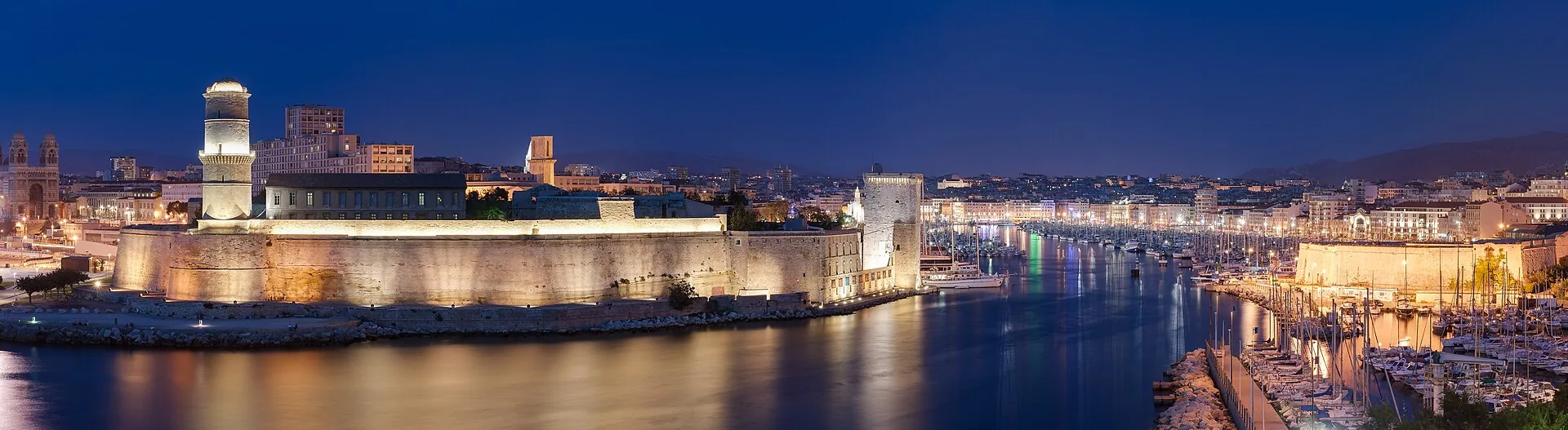
Start this Marseille day at 09:30 at Vieux-Port and expect to finish at about 19:35 in Cours Julien. The route is deliberately walkable but not queue-proof: harbour orientation, Le Panier, a flexible market lunch, Notre-Dame de la Garde and a scaled evening stop fit in that order. Keep Notre-Dame as the defining afternoon visit, and treat the final quarter as optional if your departure is fixed.
Morning: Harbour and Old Town
Times are estimates from your start time
Vieux-Port
09:3045 min
Orient yourself around the harbour basin and quays before heading inland.
Le Panier
10:351 h 30 min
Follow a compact old-town loop through lanes, stairways, Place de Lenche and La Vieille Charité.
Marché des Capucins
12:251 h 15 min
Choose an informal market lunch, leaving enough time to browse and find a place to eat.
Notre-Dame de la Garde
14:153 h 30 min
Make the hilltop basilica and its terraces the day’s main viewpoint visit.
Cours Julien
18:151 h 30 min
Finish with street art, cafés and small shops, or shorten this stop for your departure.
Ends around 19:45
- Day span
- 09:30-19:35
- Anchor closure
- Notre-Dame de la Garde: open daily, no weekly closing day
- Free entry
- Vieux-Port and Le Panier
- First cut
- Drop Le Panier first, before shortening lunch or Notre-Dame de la Garde
Start at Vieux-Port
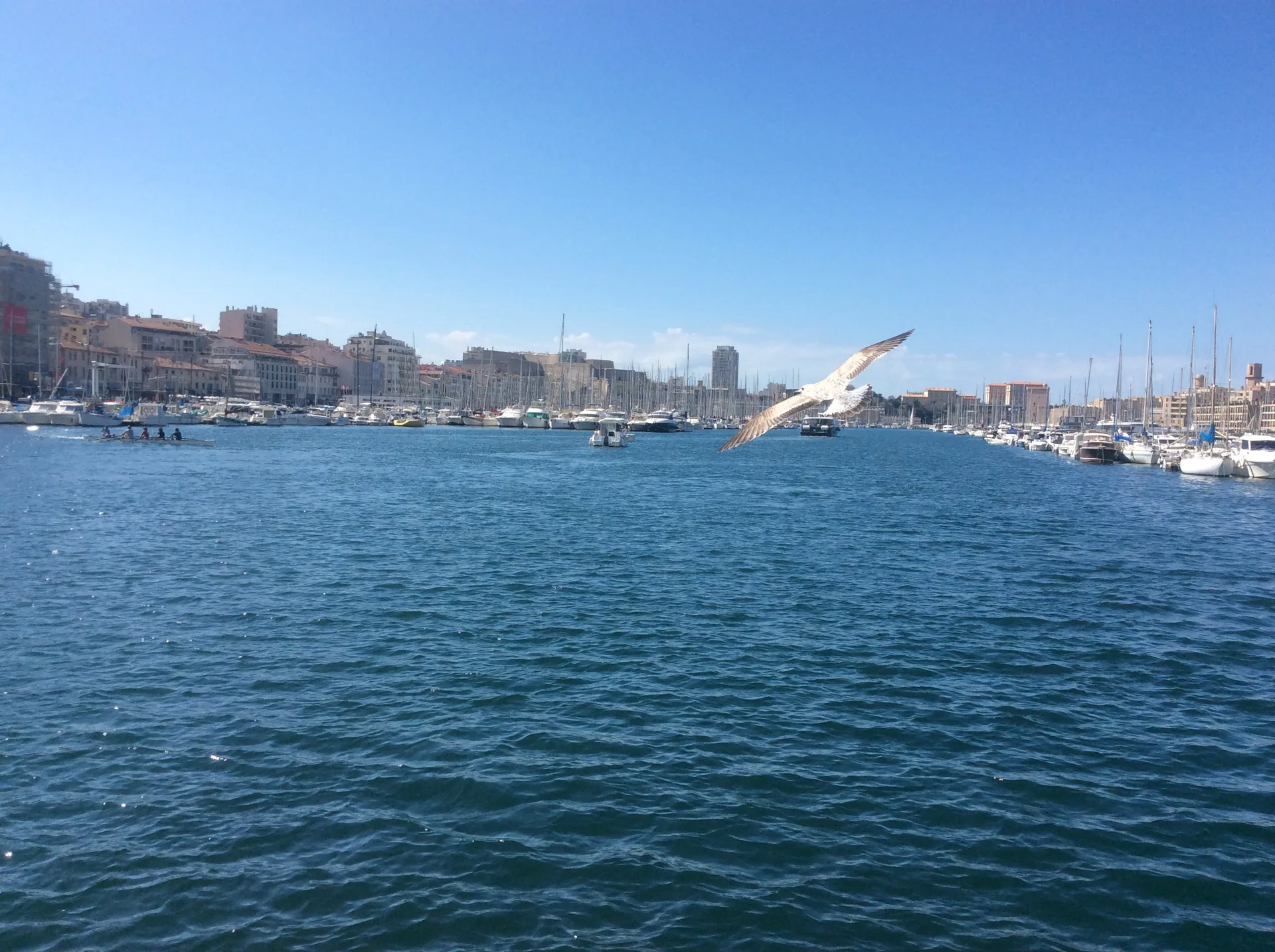
Begin at Vieux-Port, Marseille’s central harbour basin, where the quays give you an immediate sense of the city’s shape.
Kdeifalla2026 · CC BY-SA 4.0
Vieux-Port is free to explore and works as an orientation stop rather than a waterfront detour. Look along the Quai des Belges at the eastern end, then use the north and south quays to read the basin, fishing boats, yachts and excursion vessels. Fort Saint-Jean and MuCEM mark the entrance to the west; the Hôtel de Ville anchors the north side, while Notre-Dame de la Garde rises to the south. That triangle gives you bearings before the route turns inland.
- Name
- Vieux-Port
- Location
- Marseille city centre Maps
- Essential fact
- Marseille’s central harbour basin is the natural starting point for a first day on foot.
- Price
- Free
Keep the stop brief if you are focused on museums, beaches or a quieter maritime setting. Otherwise, linger for the fish-market atmosphere and a short quay walk, then leave towards Le Panier rather than extending around the full basin. The harbour is a useful start because it gives you bearings without spending the morning on a long waterfront detour.
Walk through Le Panier
Continue into Le Panier, Marseille’s historic hillside neighbourhood, for a tighter, more textured walk than the open harbour provides.
- Name
- Le Panier
- Location
- 2nd arrondissement, Marseille Maps
- Essential fact
- Marseille’s historic hillside neighbourhood is explored through narrow lanes, stairways and small squares.
- Price
- Free
Start at Place de Lenche and take the stairways and narrow lanes around Rue du Petit-Puits, Rue du Panier and Rue des Muettes. Notice painted façades, small pieces of street art and the changing views between close-set buildings. Continue east and downhill to La Vieille Charité, the former almshouse with its enclosed Baroque courtyard, then leave via Rue de la Charité towards the centre. These are concrete stops, not a reason to cover every lane.
The useful direction is towards lunch, so protect the afternoon by resisting a full neighbourhood tour. The uphill surfaces and stairs are tiring for anyone with limited mobility, a pushchair or a preference for level walking. Focus on the square, lanes and Charité courtyard, then continue towards the market while it still offers a flexible meal.
Lunch: Market Food Near the Centre
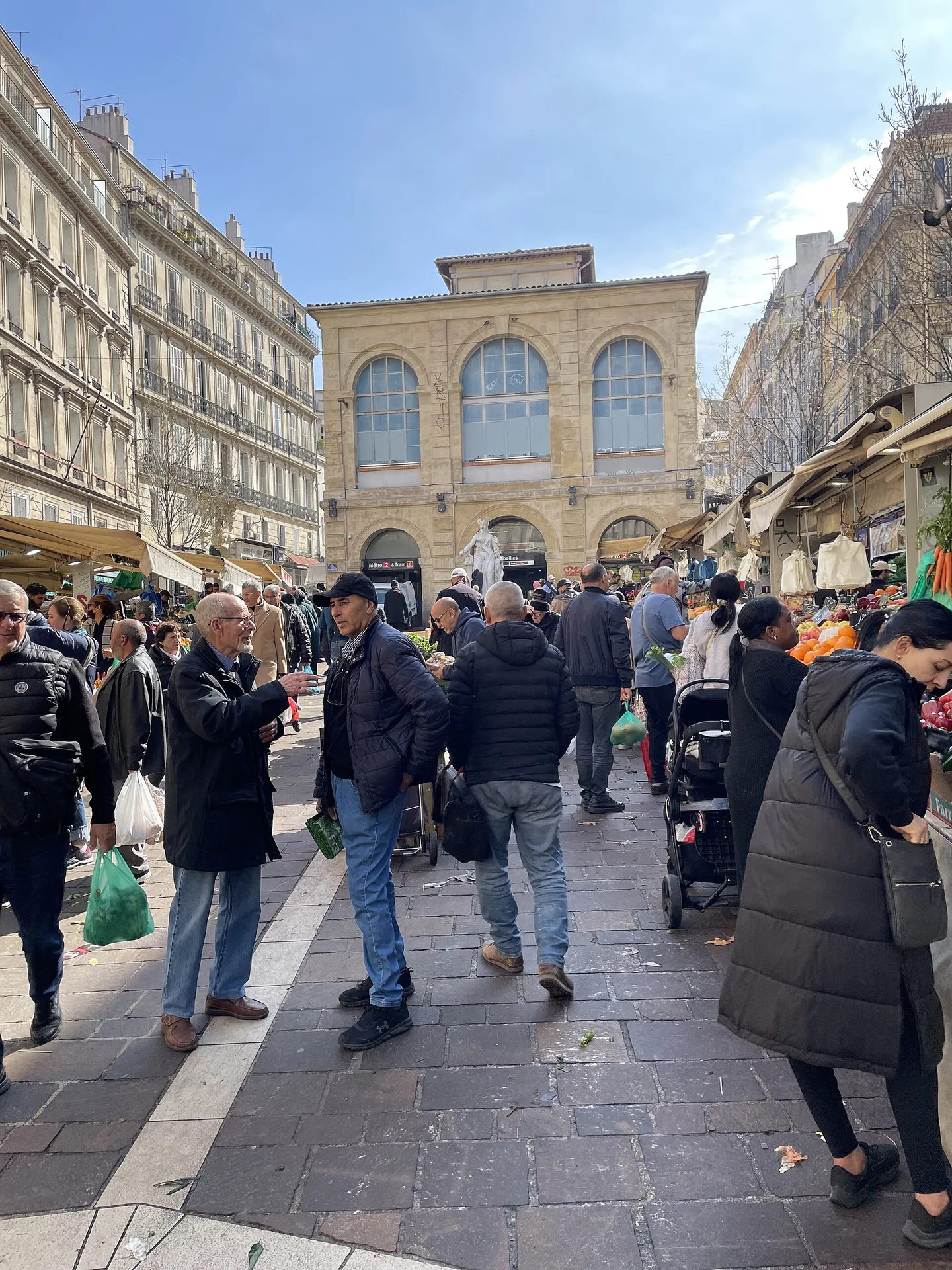
Use Marché des Capucins, on Rue du Marché des Capucins in Noailles, as the day’s flexible lunch rather than a reservation that can hold up the route.
Carl Ha · CC BY-SA 4.0
Browse produce, spices, olives, meat and prepared-food stalls, looking for Maghrebi and Mediterranean dishes such as couscous, tagines, grilled meats, sandwiches and pastries. Take time to compare stalls, order and eat without turning lunch into a fixed booking. Seating is limited and basic, often shared or supplied by the stall, so expect counter service or takeaway rather than a reserved table and a fixed meal sequence. From here, the route turns uphill towards Notre-Dame de la Garde, making a prompt departure more valuable than a long sit-down lunch.
The day’s walking route runs from Vieux-Port through Le Panier and Marché des Capucins to Notre-Dame de la Garde and Cours Julien.
Afternoon: The Hilltop View
Climb to Notre-Dame de la Garde
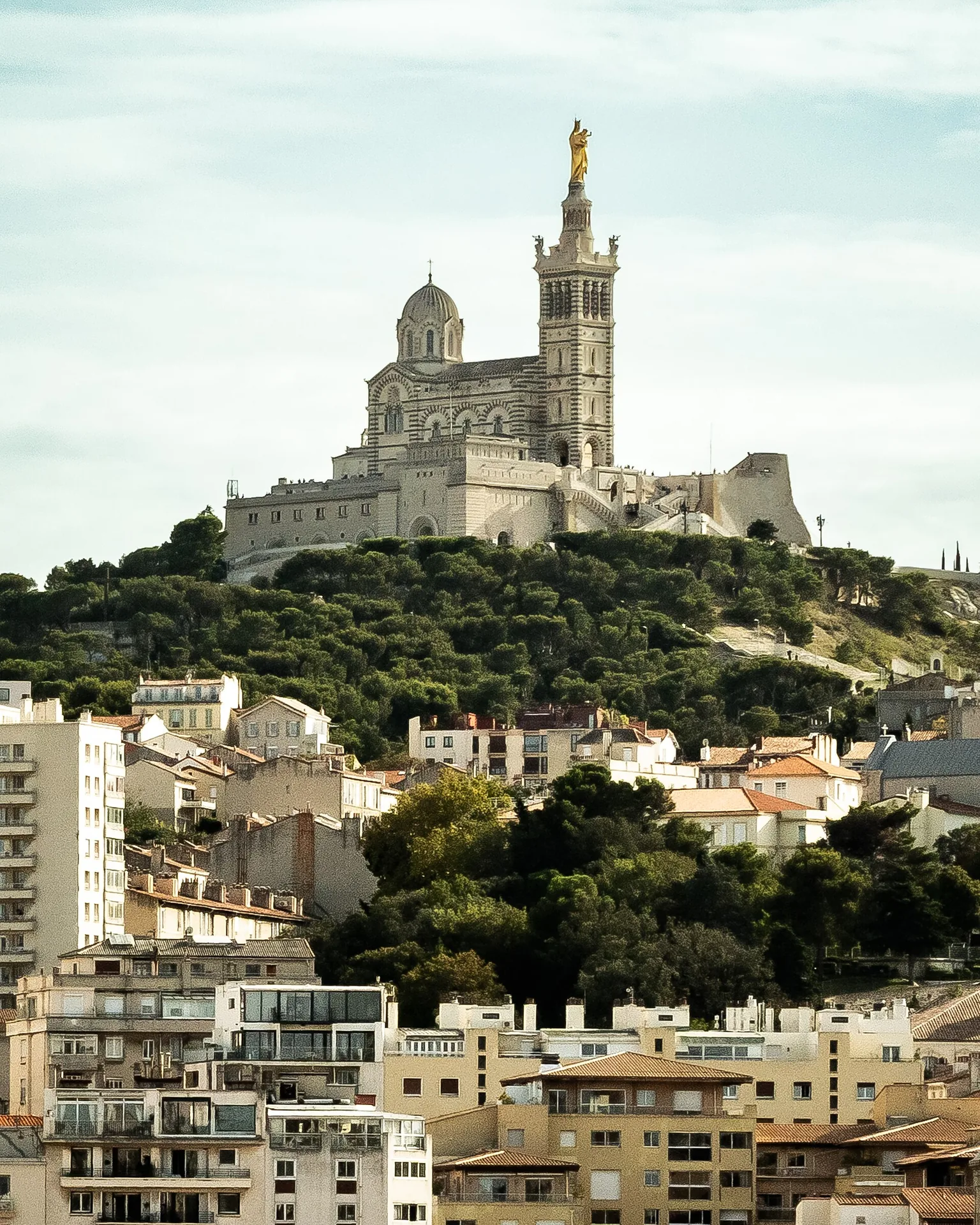
After lunch at Marché des Capucins, make Notre-Dame de la Garde the day’s defining detour: the climb earns time because the summit joins a landmark interior to Marseille’s broadest city-and-sea outlook.
Epgui · CC BY-SA 4.0
Notre-Dame de la Garde has no weekly closing day, and no annual closure dates are listed. There is no separate last-admission time; celebrations and occasional special events can restrict interior visits, so treat the late afternoon as a poor time to gamble on a long visit. Plan the interior earlier rather than treating the end of opening hours as a guaranteed last admission.
- Name
- Notre-Dame de la Garde
- Location
- Marseille Maps
- Site
- basiliquenotredamedelagarde.com
- Hours
- 07:00–18:00
- Essential fact
- This hilltop basilica combines a distinctive interior with a wide outlook over Marseille and the Mediterranean.
The final approach is steep and tiring, with a substantial uphill effort that matters more than the map suggests. Wear comfortable shoes and leave room for pauses. If hills are a problem, use a taxi, private car or tourist road-train rather than turning the climb into the part of the day that exhausts you. That is especially sensible with limited mobility, young children or low tolerance for exposed slopes.
At the summit, look first across the terraces and Mediterranean, then give the basilica’s richly decorated façade and interior their own attention. The panorama takes in the Old Port, the dense city, the sea and the surrounding hills, so it complements the close lanes of Le Panier rather than repeating them. If the upper church is closed or inaccessible, the esplanade, terraces, exterior and open viewpoints still justify the detour. Do not assume that the crypt or other interior areas will be available when the main visit is restricted.
Inside, look for the alternating pale and dark stone, the Byzantine-influenced decoration and the votive atmosphere rather than expecting a quiet museum gallery. Outside, the striped bulk of the basilica and the summit statue make the building legible from below, while the terraces give you changing angles across the harbour. This is why the stop still works for visitors who are more interested in the city than in religious architecture.
Treat the summit as an exposed outdoor viewpoint as well as an indoor visit. Bright sun, wind and heat can make the terraces harder than the short interior circuit, and the climb is less forgiving after a heavy lunch. Carry water, pause when needed and keep the group together on the approach. If the sanctuary is busy for worship, enjoy the exterior and panorama without treating every closed doorway as a failed visit.
Set off from the market with the viewpoint as the priority, not as a final spare-time option. That protects the visit from the temptation to extend lunch or add another old-town lane. Once the panorama is done, Cours Julien can expand or disappear according to the evening you have left.
Evening: Street Art and a Flexible Finish
From Notre-Dame de la Garde, finish at Cours Julien, where street art and everyday neighbourhood life make a better flexible ending than another major attraction.
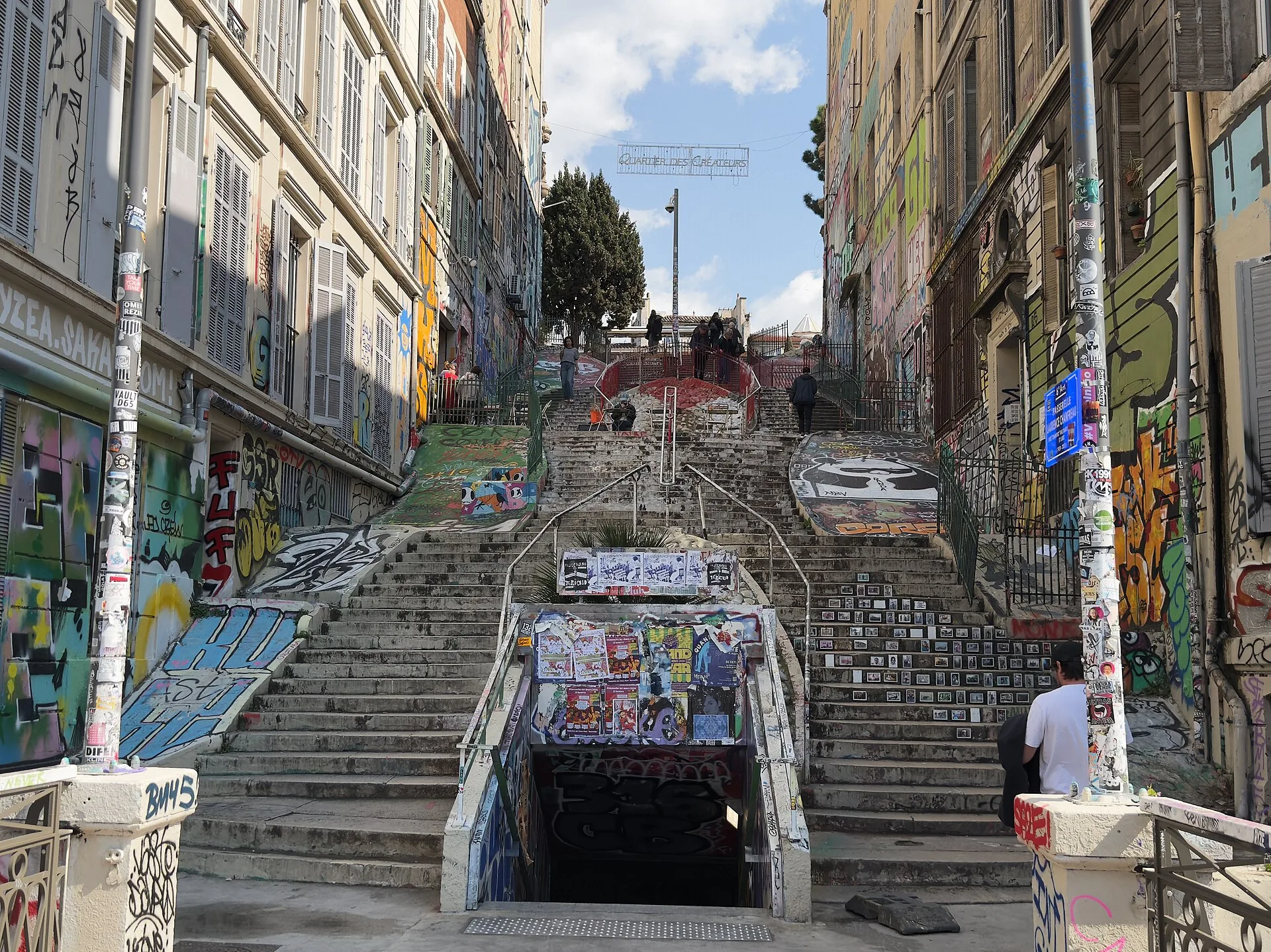
Mike is Michi · CC BY-SA 4.0
Start on the main square and follow a compact loop around rue des Trois Mages, rue Crudère, rue Pastoret and rue Bussy-l’Indien. Look for dense murals, independent cafés, bars and small shops, then glance towards La Plaine without letting the side streets become a second tour. The point is browsing: there is no single monument that must be reached before you can leave.
Use the full stop when you have a comfortable margin, or keep to the square and one or two adjoining streets when the viewpoint visit ran late. If your train, boat or tour leaves at a fixed time, protect the return journey instead of forcing an evening. Overnight visitors choosing among the best areas to stay should also weigh the final walk, noise and how easily they can get back after the quarter closes down.
The quarter suits different endings: take a drink and watch the square if energy is low, browse the painted stairways if you have time, or make one café your meal stop instead of adding another cross-city transfer. Its independent character is the reward, so leave before the wandering becomes logistics. The route has already delivered the major viewpoint; Cours Julien should add atmosphere, not create a new deadline.
What to Give Up When the Day Slips
If the day slips, choose between a full MuCEM visit and the compact route’s pace. A realistic MuCEM visit takes about 2½-3 hours, including entry and security, the main galleries, Fort Saint-Jean and the walks between them. That is not a small add-on to the harbour and hilltop plan: it is a second shape of day.
Drop Le Panier first if you choose the museum. You lose the 90-minute old-town stop and its stairways, painted lanes, Place de Lenche and La Vieille Charité, but you keep the harbour orientation, flexible lunch and Notre-Dame de la Garde. The museum therefore replaces the old-town experience rather than competing with lunch or the viewpoint for the same kind of time. Do not try to fit a full MuCEM visit into the route while keeping every other stop at its planned scale.
For queues or a late start, cut Le Panier first, then shorten or remove Cours Julien. Keep lunch flexible and protect Notre-Dame de la Garde, because the hilltop panorama is the day’s defining stop. For a cruise departure, remove Cours Julien immediately, then cut Le Panier if the return margin remains tight. A short Vieux-Port look, a quick market meal and the viewpoint give you a coherent day; a final street-art loop is not worth missing a ship.
FAQ: How Much Fits in One Day?
A day is enough for the essentials
Yes, Marseille is worth a day if you want the harbour, Le Panier and Notre-Dame de la Garde more than a complete museum visit. The route gives you distinct city experiences, but walking, queues and the hilltop climb impose limits. Keep the meal flexible and accept that MuCEM needs a separate choice, not an extra stop.
A short stop needs one compact area
With only a few hours, stay around Vieux-Port and Le Panier. See the harbour basin, take a short old-town loop through Place de Lenche and La Vieille Charité, then eat near the centre if time allows. Drop Notre-Dame de la Garde and Cours Julien rather than crossing the city for incomplete visits.
The better choice depends on your priority
Choose Nice for a more compact historic centre and an easy waterfront day. Choose Marseille for a working harbour, stronger neighbourhood contrasts and a major hilltop viewpoint over the city and Mediterranean. For one day, Nice is simpler to pace; Marseille offers more variety if you accept walking and make one clear cut.
Sources for the figures in this guide