Wear something festive and elegant to the Salzburg Festival, but treat that as a welcome, not a condition of admission. You can build a suitable outfit around clothes you already own: tailored trousers and a shirt, a dress, a suit or dressier separates. Traditional Austrian dress is another option, not a purchase you need to make.
Choose clothes that remain comfortable when you sit, and shoes you can walk in. For an outdoor performance, a removable layer is useful. Bag size and cloakroom requirements, unlike styling choices, are practical rules to settle before you leave for the venue.
The Festival’s dress expectations
- Requested attire
- “Festive and elegant evening attire”
- Performance scope
- Festival performances generally; no venue-specific guidance
- Audience exemptions
- None identified
- Time and season limits
- None specified
- Performance-specific exceptions
- None published
- Admission status
- Welcomed, not required; no clothing-related consequence stated
Choose the dressier end of your own wardrobe rather than treating the occasion as a compulsory black-tie event. The request gives you a direction for dressing, not a prescribed combination of garments. A polished outfit can serve that purpose without a dinner jacket or a full-length gown.
For a daytime concert as well as an evening opera, start with the same dressier clothes and adapt them for your comfort. A shirt or blouse that sits neatly under a jacket gives you the option of removing a layer without changing the character of the outfit. If you are packing for several performances, choose pieces that work together rather than a separate look for each venue.
Choosing an outfit
Start with a dressier outfit you already enjoy wearing. Tailored trousers with a pressed shirt make a straightforward choice. Add a jacket if you like its shape and feel. A suit can work with a simple shirt, while a dress or a skirt with a blouse offers another way to dress for the occasion. Dressier trousers and a fine knit are useful separates if you prefer neither a suit nor a dress.
Putting your outfit together
Do
- Try the complete outfit sitting down, including its waistband and sleeves.
- Choose presentable shoes you have already worn comfortably.
- Use a favourite accessory to make familiar clothes feel more dressed up.
Don’t
- Treat a tie, heels or a long gown as compulsory.
- Wear new shoes for the first time on performance day.
- Buy formal accessories simply because you assume they are needed.
These combinations can suit different ages and gender presentations: choose the cut and silhouette you like, rather than a gendered checklist. Reusing one outfit for several performances is a sensible choice. Change a shirt, blouse or accessory if you want variety, and allow clothes to air between wearings.
If your trip also includes opera in Munich, the Munich opera dress code explains that venue’s own guidance and helps you decide whether to reuse the same outfit there.
Dirndl and lederhosen
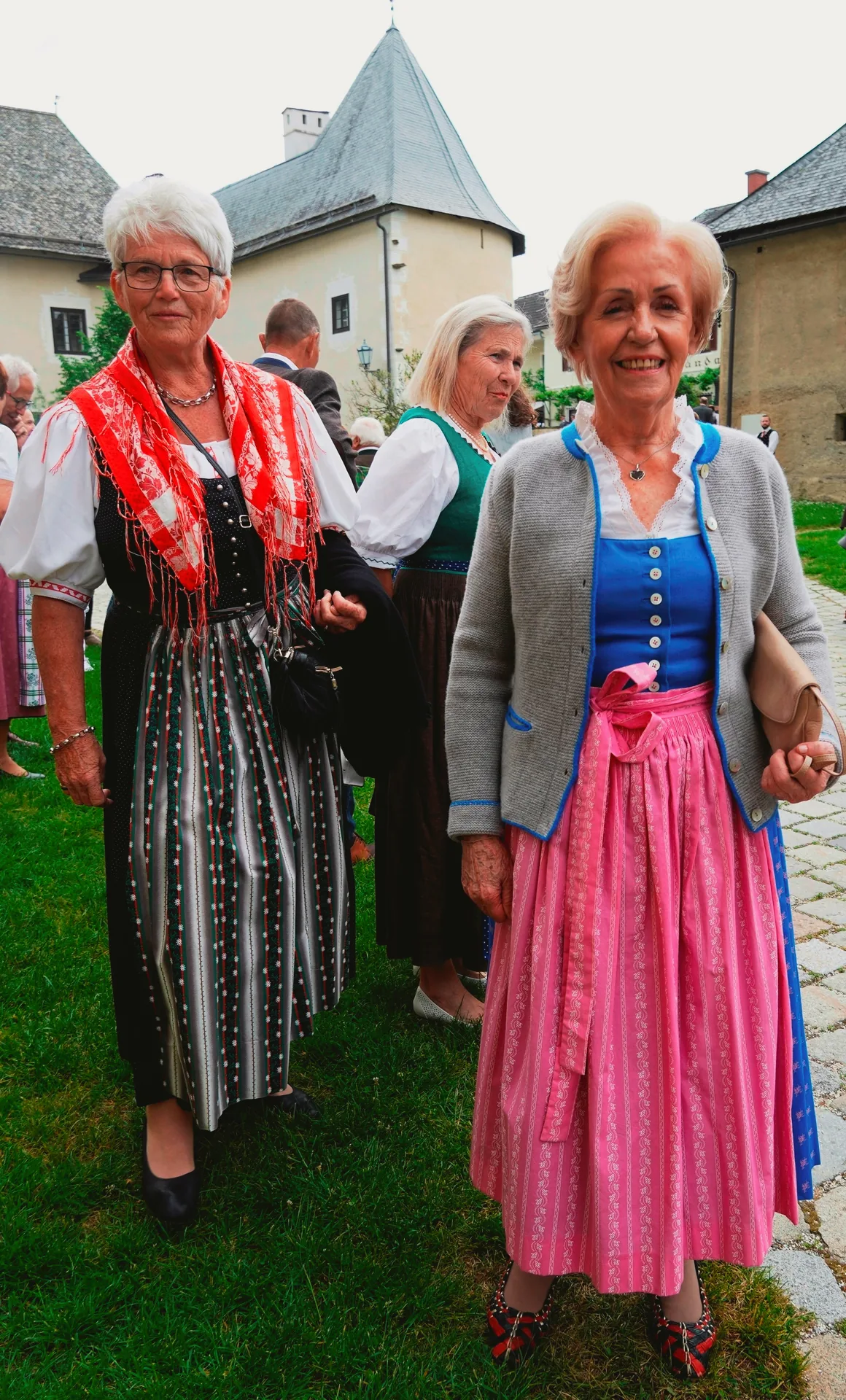
A dirndl, a traditional dress with a fitted bodice, skirt and apron, is suitable for Festival performances. Lederhosen are traditional leather breeches, worn as part of Austrian regional dress. Both are familiar among audiences for Jedermann, meaning Everyman, where many visitors choose traditional clothing.
If you already own traditional dress and enjoy wearing it, it is a natural option for the occasion. Otherwise, stay with your existing dressier outfit: there is no need to buy or hire a costume for attendance. Think of traditional dress as another way to dress festively, rather than something you need to wear to fit in.
Naturpuur · CC BY 4.0 · Edited
Jedermann outdoors
Jedermann at Cathedral Square (Domplatz) is an open-air performance. The square in front of Salzburg Cathedral is the setting, so choose your outfit with outdoor seating in mind rather than only how it looks indoors.
Breathable fabric and a light, removable knit let you adjust without changing the whole outfit. Make sure the layer feels comfortable over your shirt or dress when seated. Bring compact weather protection for the approach, and choose dressy flats, loafers or other presentable shoes that are comfortable for walking as well as sitting. Keep your hands free by choosing a layer you can carry easily when you take it off.

Leonhard Lenz · CC0 · Edited
Bags, coats and umbrellas
Choose a small bag for your performance essentials, rather than bringing everything you carried while sightseeing. Measure it at home, including its fullest part, and pack only what you will need for the outing. Put your ticket and essentials where you can reach them easily, so that you can keep the bag closed while seated.
At all Festival events and venues, jackets, coats and umbrellas must be left at the cloakroom for fire-safety reasons. The service is free of charge. Use outerwear for the journey, then be ready to hand it over on arrival. Keep anything you need during the performance in your permitted small bag, rather than in a coat pocket, so you do not need to retrieve your coat to reach it.
Sources & fact-checking
Checks against the sources below cover: services.