Choose pre-Christmas weekdays for St Augustine’s historic sights and festive evenings. Nights of Lights makes December worth considering even if the beach is only an optional walk. The trade-off is heavier evening demand in the historic centre and winter weather that can switch from mild to chilly abruptly.
If the lights matter less than a calmer visit, February is the stronger alternative. For December, leave room to enjoy Plaza de la Constitución after dark and keep your daytime sightseeing flexible rather than making swimming the purpose of the trip.
Which December dates to choose
- Recommended dates
- Pre-Christmas weekdays
- Best suited to
- Historic sightseeing and Christmas lights
- Warmest winter daytime average
- February, within December–February
- Coldest winter overnight average
- January, within December–February
- Wettest winter month
- December, within December–February
- Busiest December stretch
- Christmas–New Year week
December is a good choice if festive sightseeing matters more than quiet evenings. Before Christmas, weekday visits tend to bring less pressure than weekends, particularly when people gather in the historic centre for the lights. You can spend the day at the sights, pause for a meal and enjoy the display without building the entire visit around an evening arrival.
Pre-Christmas weekends suit travellers who want the festive setting and can accept busier streets and more competition for central parking. The peak holiday stretch is a less comfortable choice if you prefer unhurried sightseeing. Arriving earlier helps with the journey, but does not make the evening crowds disappear.
For a swimming-led holiday, choose another season. December works better when a beach walk is a pleasant option rather than something the trip must deliver.
December weather and winter alternatives
| Month | Average daily high | Average daily low | Average monthly rainfall | Crowds | Suitability |
|---|---|---|---|---|---|
| December | 68.9°F | 51.3°F | 2.99 inches | High at weekends and holidays | Good for lights; busy evenings |
| January | 67.5°F | 47.8°F | 2.74 inches | Easing; lights still draw visitors | Mixed: lights, colder nights |
| February | 69.7°F | 50.2°F | 2.69 inches | Generally quieter | Good for calmer sightseeing; no lights |
Changing winter month does not transform the weather. The small differences in average daytime temperatures make your sightseeing priorities and tolerance for crowds more useful deciding factors. January eases after the holiday rush, but the continuing lights mean it is not uniformly quiet. February gives up that festive attraction in exchange for generally lighter visitor pressure before spring-break traffic builds.
Daily highs describe the warmer part of the day, while lows describe overnight conditions, not what you should expect throughout an afternoon walk. These historical averages are not a forecast for your stay. Monthly rainfall totals describe the amount of rain, not the number of rainy days or how long a shower lasts.
Winter cold fronts can replace mild, humid weather abruptly with cooler, drier air. Keep exposed sightseeing movable within your stay, rather than assuming every afternoon will feel alike. A pleasant spell is the time for the waterfront or Castillo de San Marcos’s open upper levels, but a cold or wet spell need not cost you a day of sightseeing.
The Lightner Museum’s substantial indoor galleries make it a rewarding cold- or wet-weather alternative. In the former Alcazar Hotel, its collections bring together decorative arts, costumes and mechanical musical instruments alongside other curiosities. Choose it for a proper visit to the collections, not merely a brief refuge from the weather, and leave the outdoor sights for a more comfortable spell.
Nights of Lights on foot
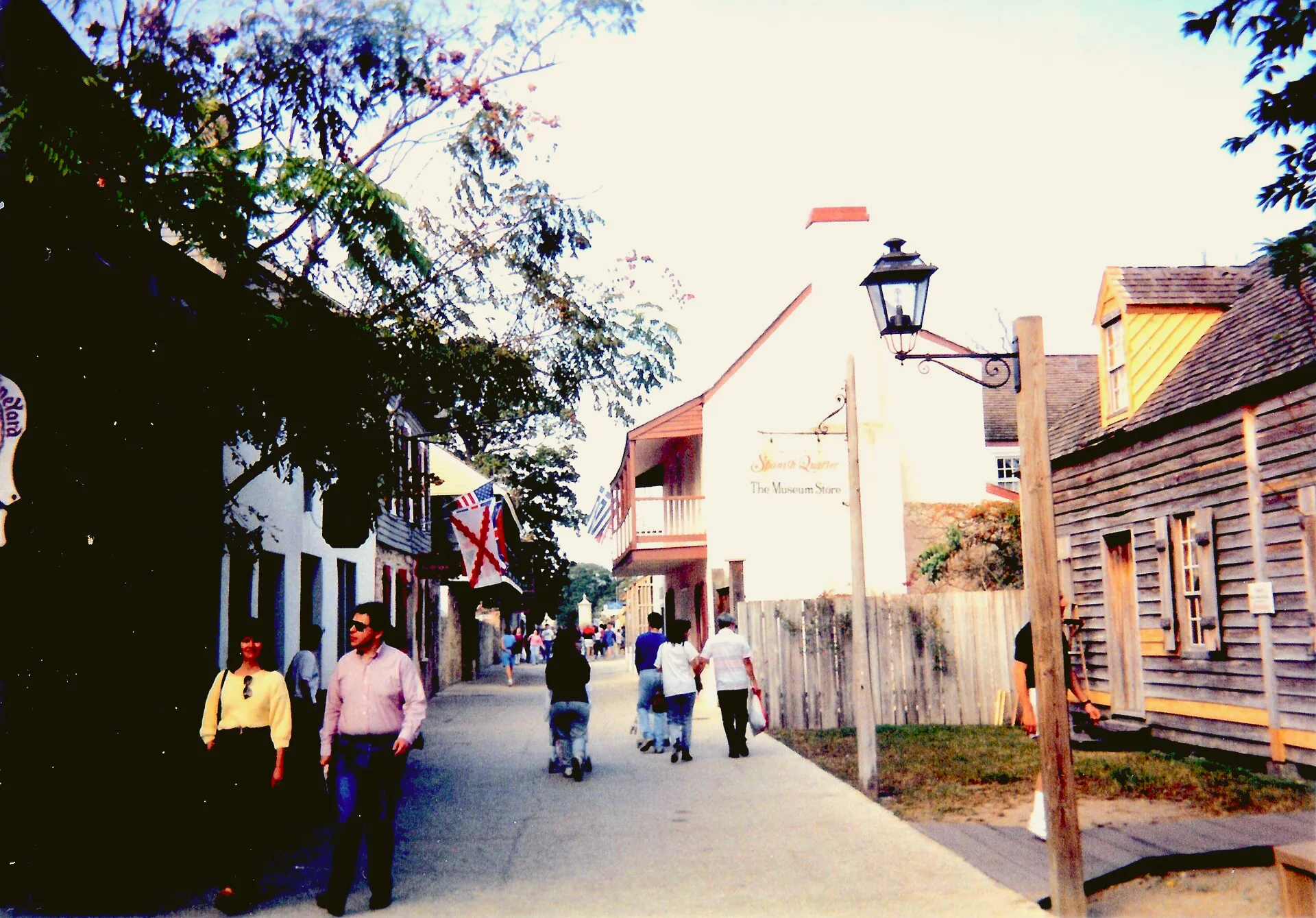
Nights of Lights gives St Augustine its distinctive Christmas appearance: the historic district’s Spanish colonial buildings are illuminated, including those around Plaza de la Constitución. The central square is a rewarding focus for an evening on foot, with the surrounding buildings giving the display a historic setting rather than the character of a separate ticketed attraction.
The season runs each year from the Saturday before Thanksgiving through the end of January. Viewing the public display while strolling the streets is free, but paid tours and parking are separate costs. You do not need a tour to enjoy the illuminated buildings, and a walk lets you linger around the square rather than treating the lights as a quick circuit.
Arrive for daytime sightseeing and stay for the lights, rather than making the display the first stop of an evening car journey. On busy evenings, central parking fills and arrivals back up. Drivers may circle or queue for the garage, while rideshare pickups add to the congestion. Leaving can be slow too, so a car-based evening outing needs patience at both ends.
Make the afternoon and evening part of the same visit to the historic centre, with a meal or a break between them. That gives the buildings attention in daylight as well as after dark, and avoids relying on finding a central parking space just as other visitors arrive. Walking removes the need to move a car between nearby sights, but it does not remove the crowds.
Beach walks or swimming?
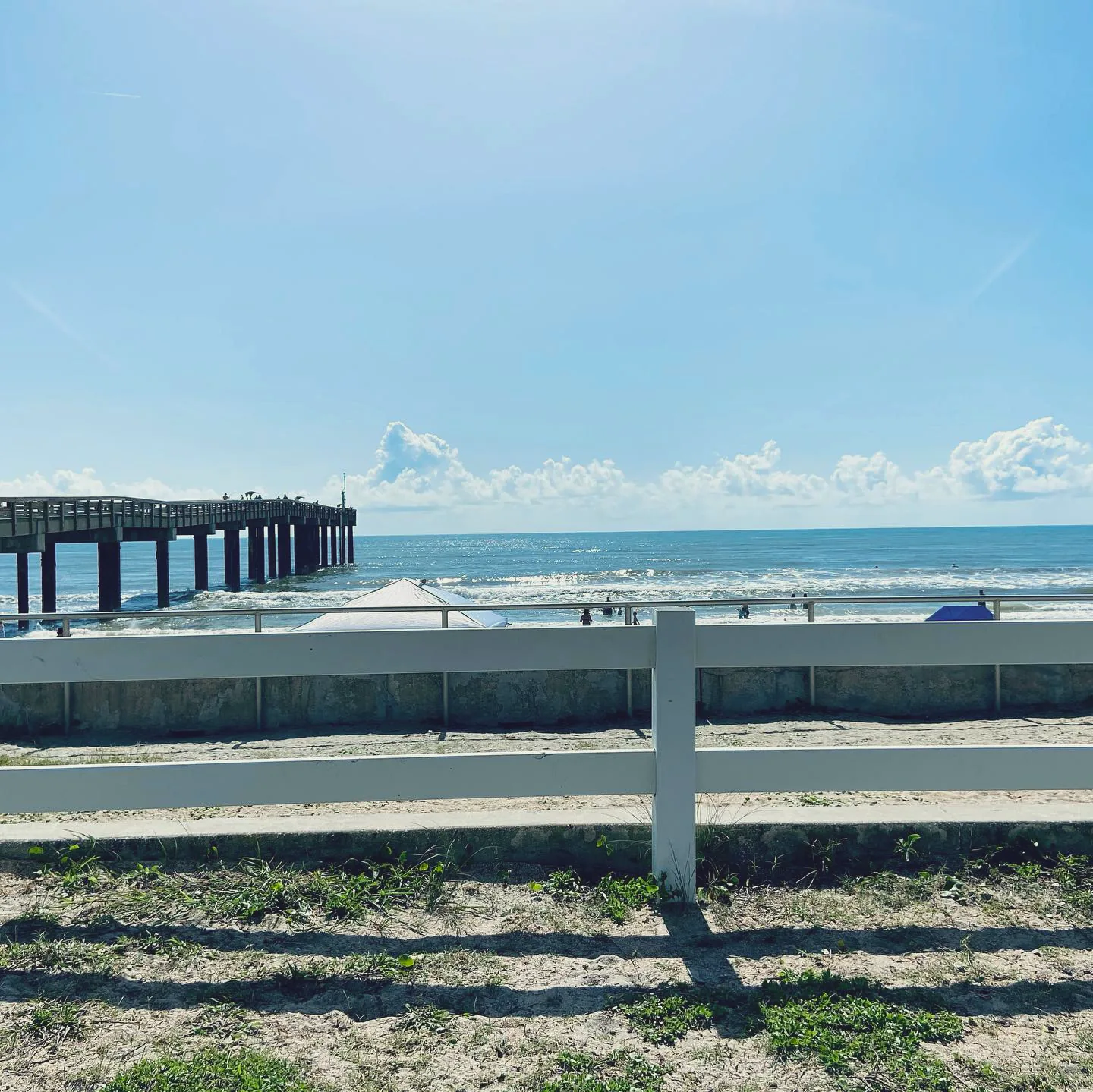
Choose St Augustine Beach for a flexible December walk, not a holiday that depends on swimming. The Atlantic shoreline offers a different outing from the historic centre, but being able to reach the sand is not the same as having suitable conditions for entering the water.
Pedestrian access remains open 24 hours a day, with no December seasonal restriction. That leaves room to choose a beach walk around a calmer outdoor spell instead of committing to it on a fixed day.
Winter northeasters bring strong north-east winds and large waves, and can persist for days or even weeks. The largest waves generally occur during these storms in late autumn, winter and early spring. When coastal wind dominates the day, return to historic-centre sightseeing rather than trying to make an exposed beach outing work.
Cstickel(byu) · CC BY-SA 4.0 · Edited
Keep the beach as a change of scene alongside the lights and historic sights. A calmer spell may suit walking by the ocean, while a cold, wet or blustery one is a better opportunity for the Lightner Museum. This is a stronger December plan than making the success of your stay depend on time in the sea.
Castillo de San Marcos at the holidays
- Castillo de San Marcos is open on New Year’s Day as part of its ordinary daily schedule.
- Choose a calmer daylight spell for the fort’s exposed ramparts and upper gun deck.
- When wind or rain takes over, move the outdoor visit and spend time in the Lightner Museum’s indoor galleries.
Castillo de San Marcos rewards time on its ramparts and upper gun deck, where you can take in the fort’s position beside Matanzas Bay. These open upper levels are exposed to winter wind, rain and cold. The interior casemates, the rooms within the fort’s walls, are sheltered, giving the visit a different character from a wholly outdoor waterfront walk.
Put the fort before the evening lights, with time to enjoy both. Daylight gives the open levels their place in the visit, while the illuminated historic centre is the later attraction. You need not hurry straight from one to the other: a meal or a rest makes the day more enjoyable than treating the fort as a stop to complete before dark.
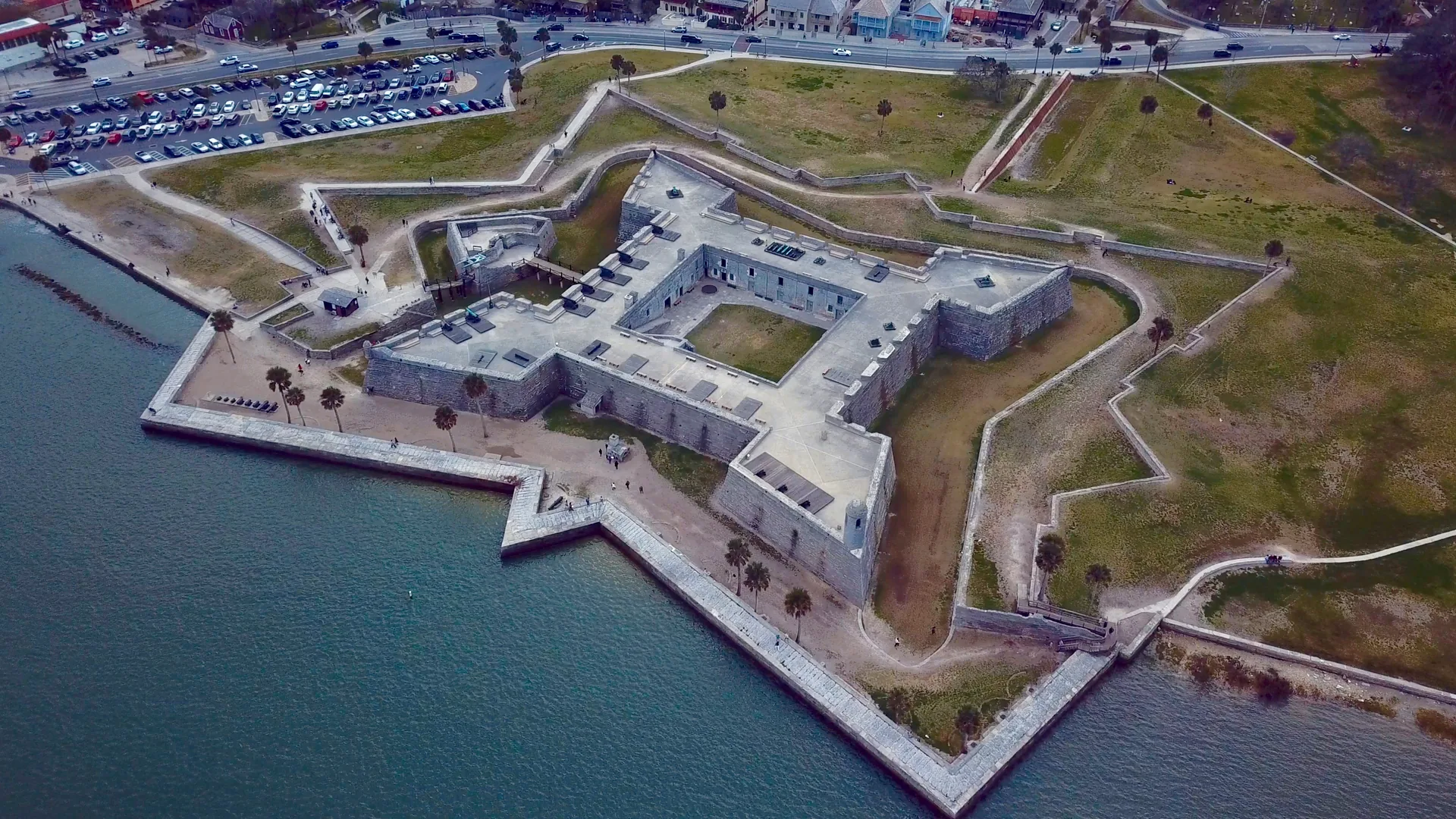
Jonthomascampbell · CC BY-SA 4.0 · Edited
Sources & fact-checking
Checks against the sources below cover: services, key figures, and closures.
- St. Johns County Marine Rescue — service
- St. Johns County — service
- St. Johns County — key figures
- National Park Service — closures
- City of St. Augustine Nights of Lights FAQ
- City expands Free Park & Ride shuttle operations during Nights of Lights
- National Oceanic and Atmospheric Administration (NOAA), National Centers for Environmental Information (NCEI) — key figures
- Florida Climate Center, Office of the State Climatologist — key figures