Savannah rewards a mix of public spaces and visits that explain the city’s history. Start with the Historic District squares, Forsyth Park, Owens-Thomas House & Slave Quarters and River Street, then choose among church architecture, African American history, contemporary art and Bonaventure Cemetery according to your interests. You need not fit all eight into one outing.
Which sights to choose
| Sight / arrival point | Adult admission | Visit time | Approach |
|---|---|---|---|
| Historic District / Johnson Square | Free | — | Walking, about 0.4 miles |
| Forsyth Park fountain | Free | — | Walking, about 0.6 miles |
| Owens-Thomas House & Slave Quarters | $30 | 45–60 minutes, tour | Walking, about 0.3 miles |
| Cathedral Basilica of St. John the Baptist | Free, $3 voluntary donation | 20–30 minutes | Walking, about 0.3 miles |
| River Street / Rousakis Riverfront Plaza | Free | — | Walking, about 0.6 miles |
| First African Baptist Church | $15 | 1–1½ hours, tour | Walking, about 0.6 miles |
| SCAD Museum of Art | $10 | 1–1½ hours | Walking, about 0.6 miles |
| Bonaventure Cemetery | Free, self-guided | 1½–2 hours | Driving, about 3.7 miles |
For a first visit, give priority to the squares, Forsyth Park, Owens-Thomas and the riverfront. Together they offer Savannah’s public spaces, household history and river setting. The numbered entries follow visitor priorities, not a walking circuit.
Choose the cathedral for its decorated interior, First African Baptist Church for African American history or SCAD Museum of Art for contemporary exhibitions. Bonaventure is a separate journey worth making if grave sculpture and the cemetery landscape appeal to you.
Museum interiors are useful for rain, while outdoor visits are better earlier in the day during peak summer heat. Tour times in the table exclude check-in and waiting, so leave room around them rather than treating them as your whole visit.
1. The Historic District squares
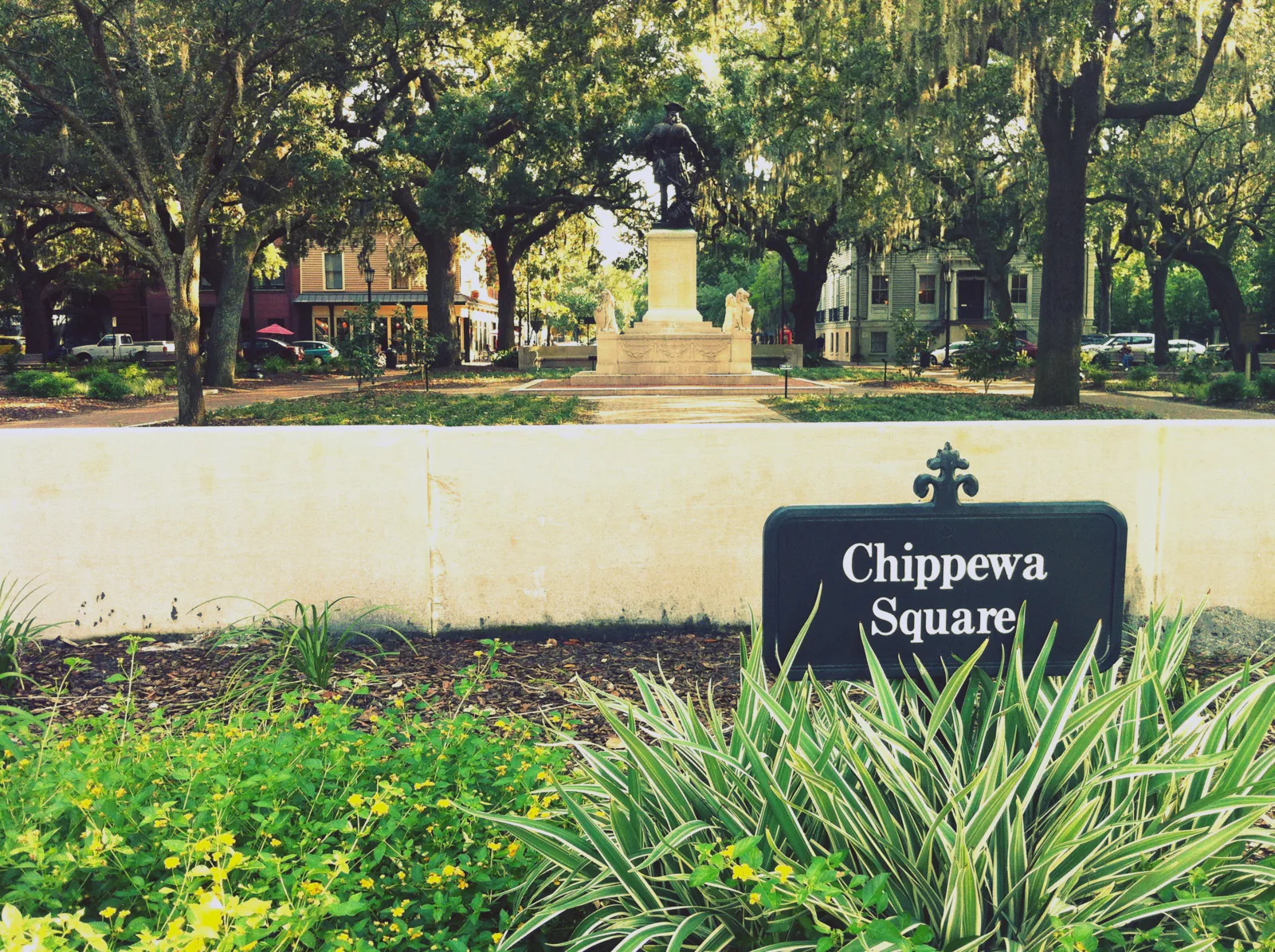
Johnson Square, Chippewa Square and Monterey Square give you three different focal points along Bull Street. Look beyond their monuments and fountains to the historic buildings framing each square.
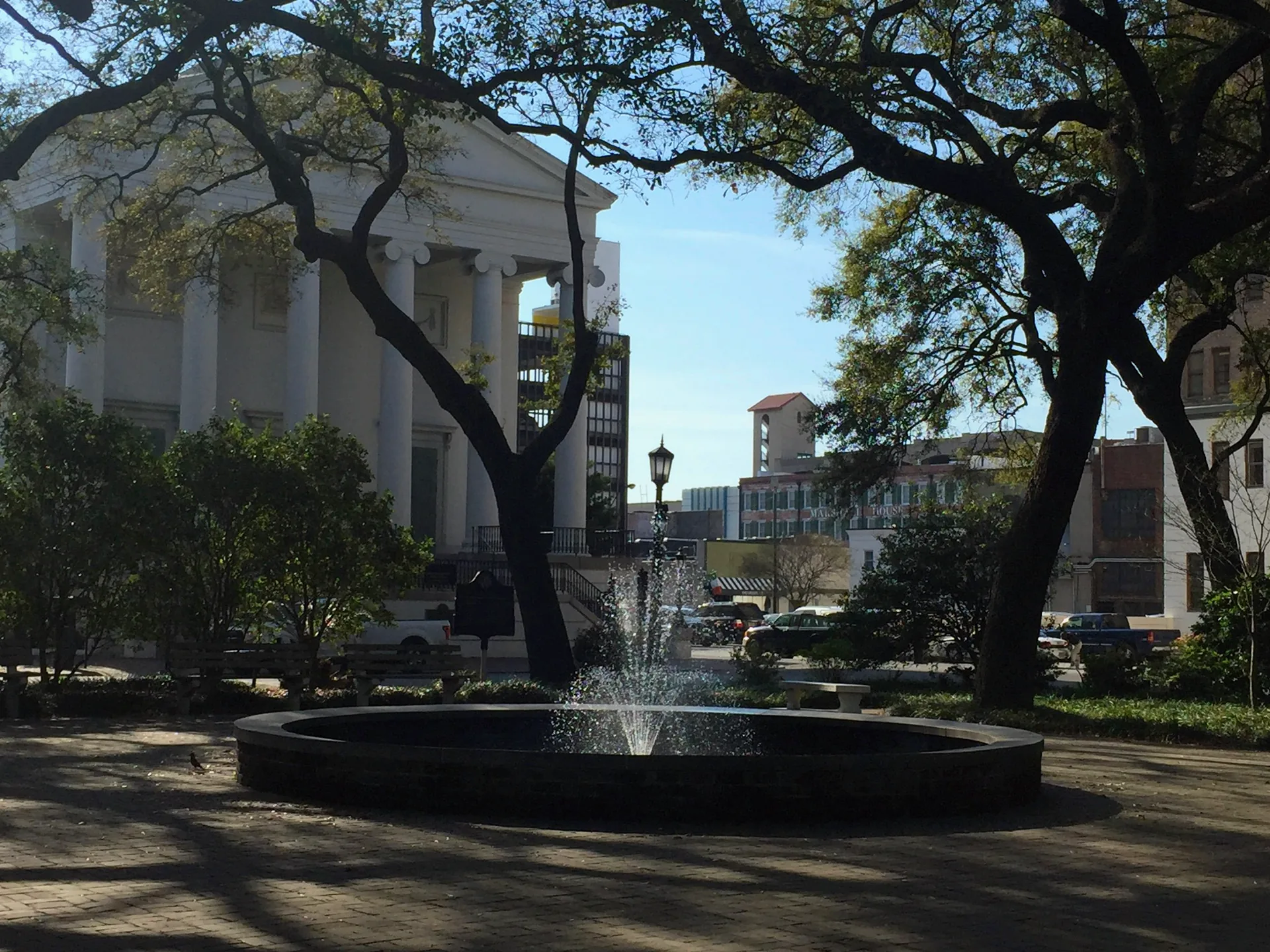
- Johnson Square: fountains within the open public space.
- Chippewa Square: the statue of James Oglethorpe.
- Monterey Square: the Pulaski monument in the southern part of the district.
Walk between a few squares with pauses rather than trying to collect them all. Their repeated pattern of streets and public spaces helps you understand the Historic District’s layout, but each setting deserves a look of its own. The southern squares pair naturally with Forsyth Park if you want to keep walking.
Ordinary public access to Johnson, Chippewa and Monterey Squares is free. In hot weather, set out earlier, carry water and wear comfortable footwear. Use the shaded places for a break rather than making the walk a continuous march.
Seasider53 · CC BY-SA 4.0 · Edited
2. Forsyth Park
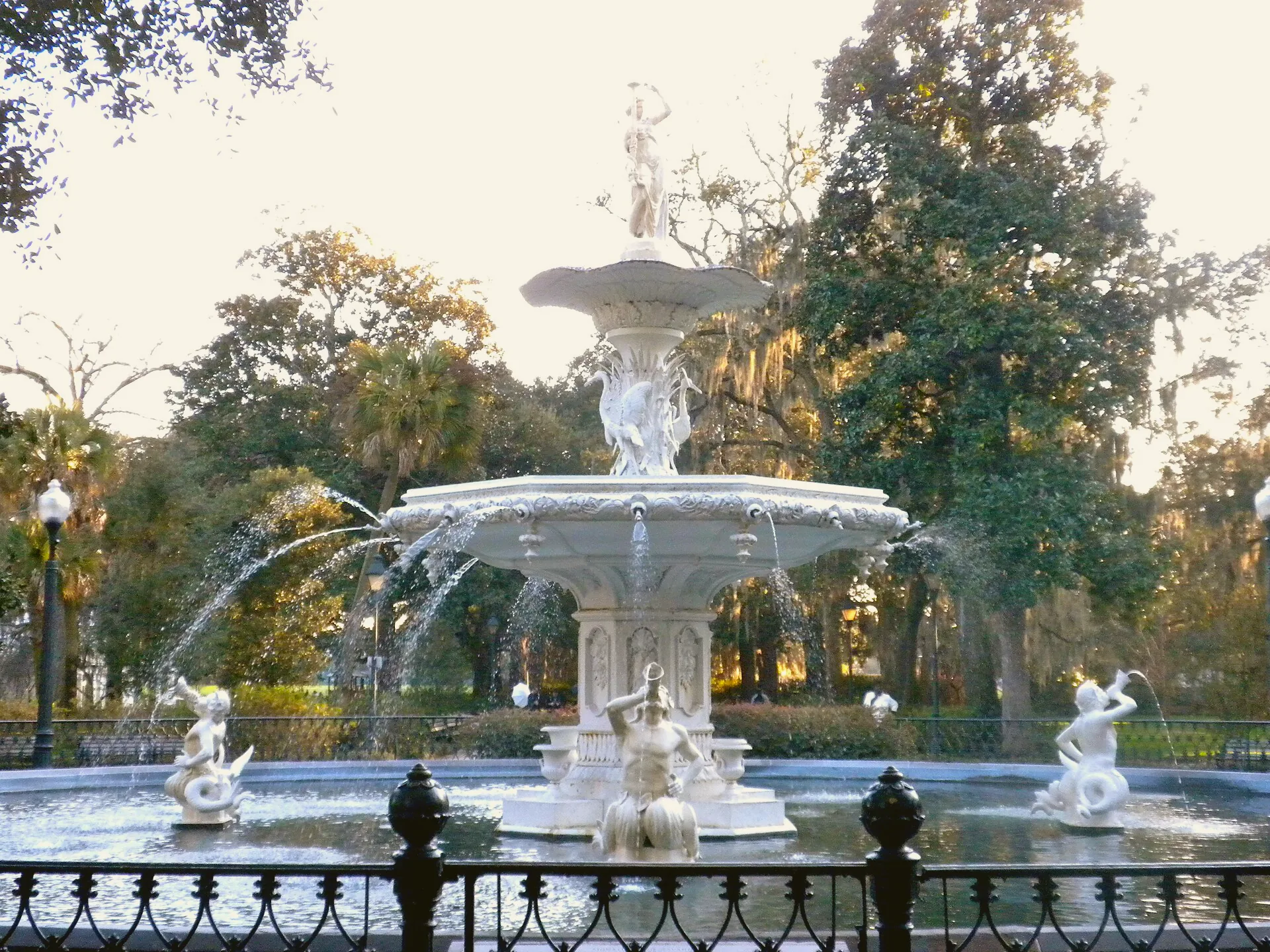
South of the main squares, Forsyth Park gives you more room to walk or sit. Its ornate fountain is the landmark to seek out first, but the oak-shaded paths and southern lawns offer different ways to enjoy the park. Continue beyond the fountain if you want a walk and a seated break, rather than just a photograph.
The fountain is back in operation following its restoration. Around it, take time to look at the tiered structure before moving along the paths. The lawns farther south make a useful change from the smaller, enclosed spaces of the Historic District squares.
If you have been exploring Monterey Square, the park is a natural continuation southwards. An early visit is the more comfortable choice in summer, especially if you want to spend time on the open lawns rather than stay beneath the trees.
Jennifer Morrow from San Francisco · CC BY 2.0 · Edited
3. Owens-Thomas House & Slave Quarters
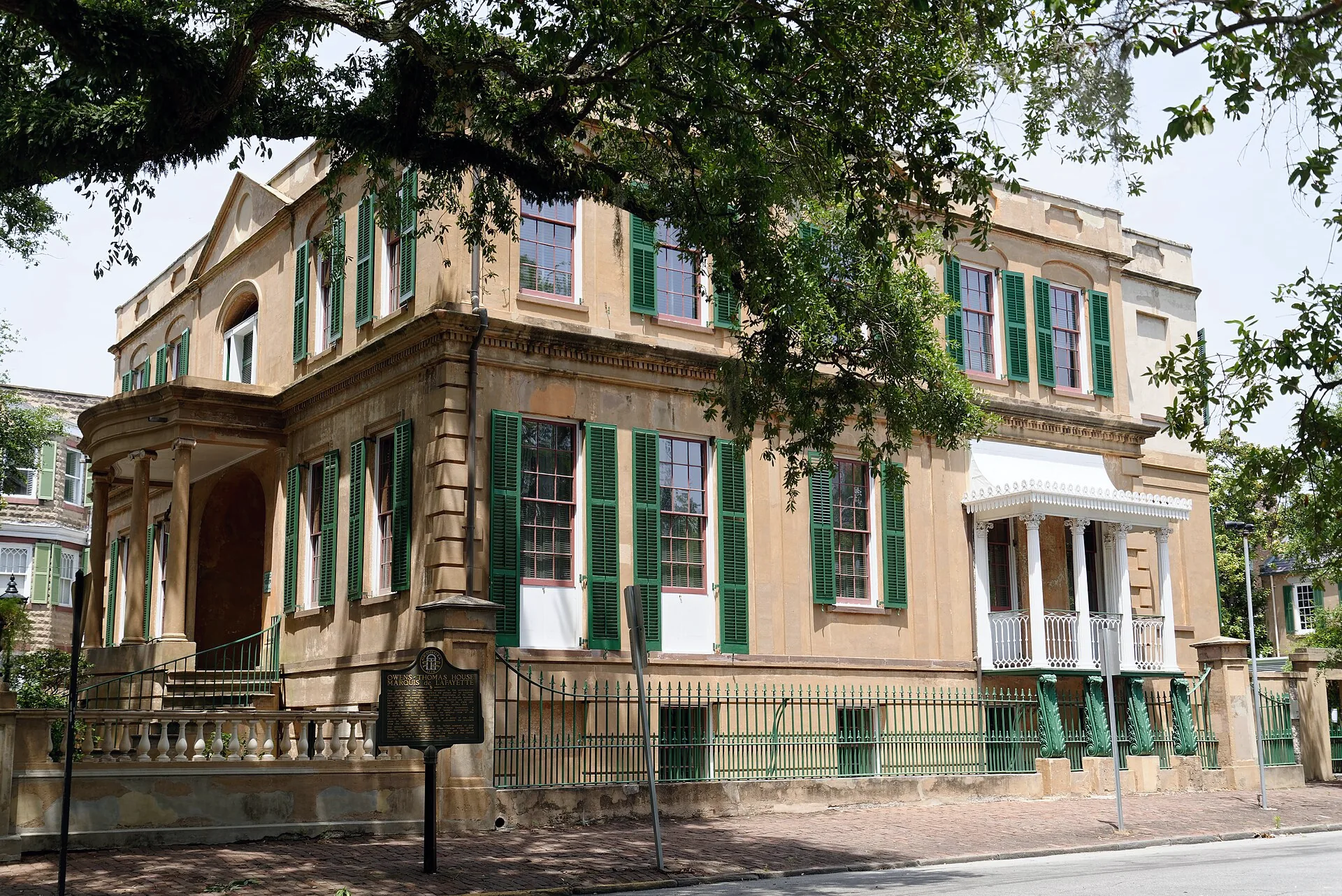
Owens-Thomas House & Slave Quarters brings the residence and the spaces occupied by enslaved people into the same visit. Choose it for the relationship between architecture, household life and slavery, not simply to admire a furnished historic house. The contrast between those spaces is central to understanding whose work sustained the household.
The admission ticket lasts seven days and includes unlimited visits to the Jepson Center, Telfair Children’s Art Museum and Telfair Academy, alongside the Owens-Thomas tour. That gives you other indoor visits to spread across your stay.
- Name
- Owens-Thomas House & Slave Quarters
- Location
- 124 Abercorn St, Savannah, GA 31401 Maps
- Site
- telfair.org
- Hours
- Mon Closed
- Tue–Sun 10am–5pm
- Essential fact
- Owens-Thomas House & Slave Quarters is a historic house museum beside Oglethorpe Square in Savannah.
- Price
- USD 30
The house opens daily, 10am–5pm. Guided tours run 10am–3pm, followed by self-guided audio tours from 3:30pm–4pm. Choose an earlier guided visit if you want the history interpreted as you move through the property.
Reservations are optional. You can join an available tour through the onsite ticket booth, or arrange one in advance, subject to space, up to four weeks ahead. Check in at the ticket booth even if you booked online, and arrive at least five minutes before your scheduled tour. Allow extra time for waiting as well as check-in.
Bubba73 · CC BY-SA 3.0 · Edited
4. Cathedral Basilica of St. John the Baptist
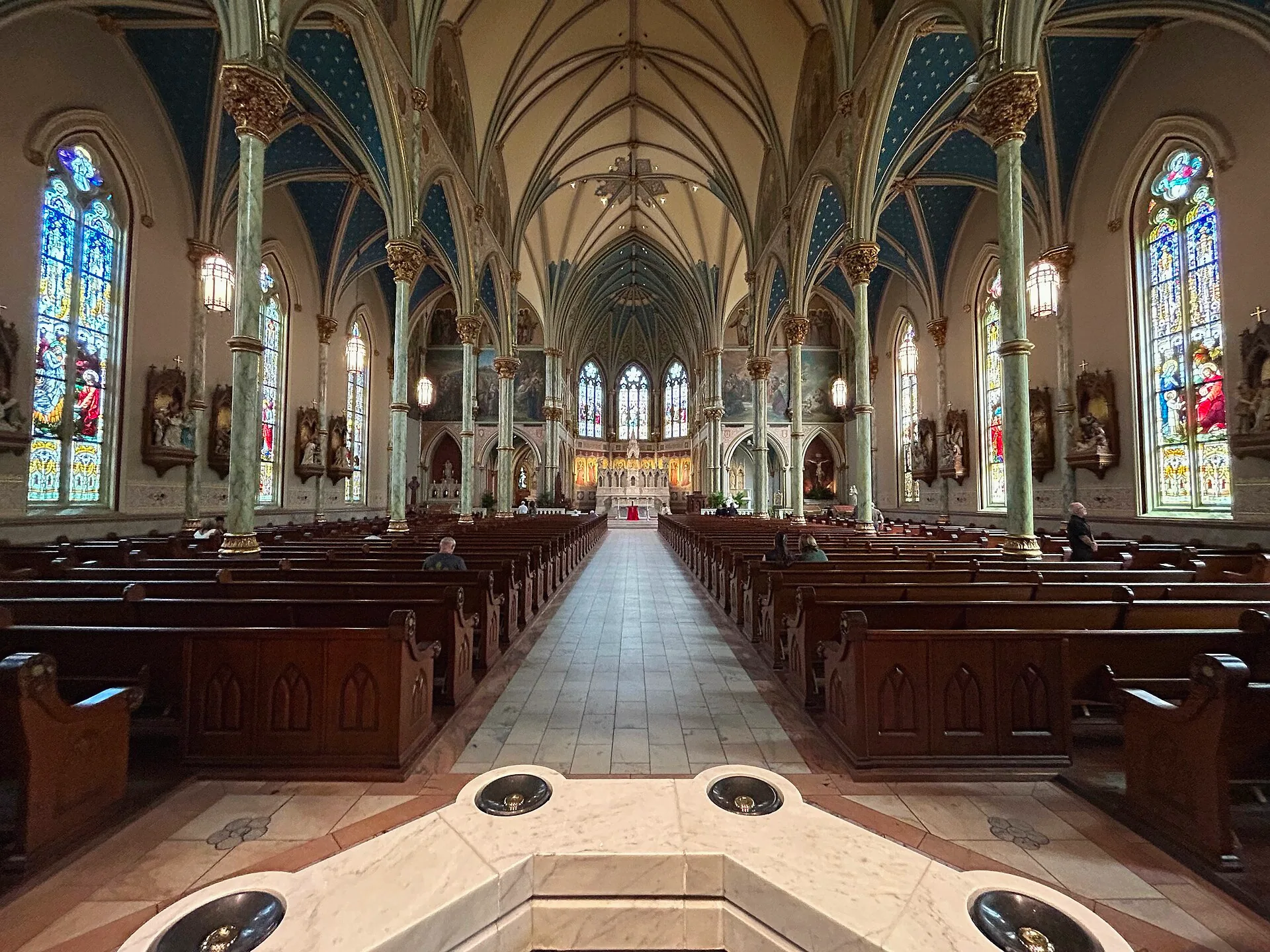
The Cathedral Basilica of St. John the Baptist rewards a visit for its stained glass, painted interior and vaulted ceiling. Beside Lafayette Square, it offers an architectural contrast to the house museums. Look upwards as well as towards the altar to take in the decoration across the interior.
- Name
- Cathedral Basilica of St. John the Baptist
- Location
- 222 E Harris St, Savannah, GA 31401 Maps
- Site
- savannahcathedral.org
- Hours
- 9am–4:30pm
- Essential fact
- The Cathedral Basilica of St. John the Baptist is a Catholic cathedral beside Lafayette Square in Savannah.
- Price
- Free
No ticket is required. Sightseeing windows are Monday–Saturday, 9am–11:30am and 1pm–4:30pm, and Sunday, 1pm–4:30pm. On Sunday, make this an afternoon visit rather than an early stop among the squares.
For step-free access, use the elevator entrance on the Harris Street side. This lets you reach the interior without taking the main entrance steps.
PalauanReich · CC BY-SA 4.0 · Edited
5. River Street and Factors Walk
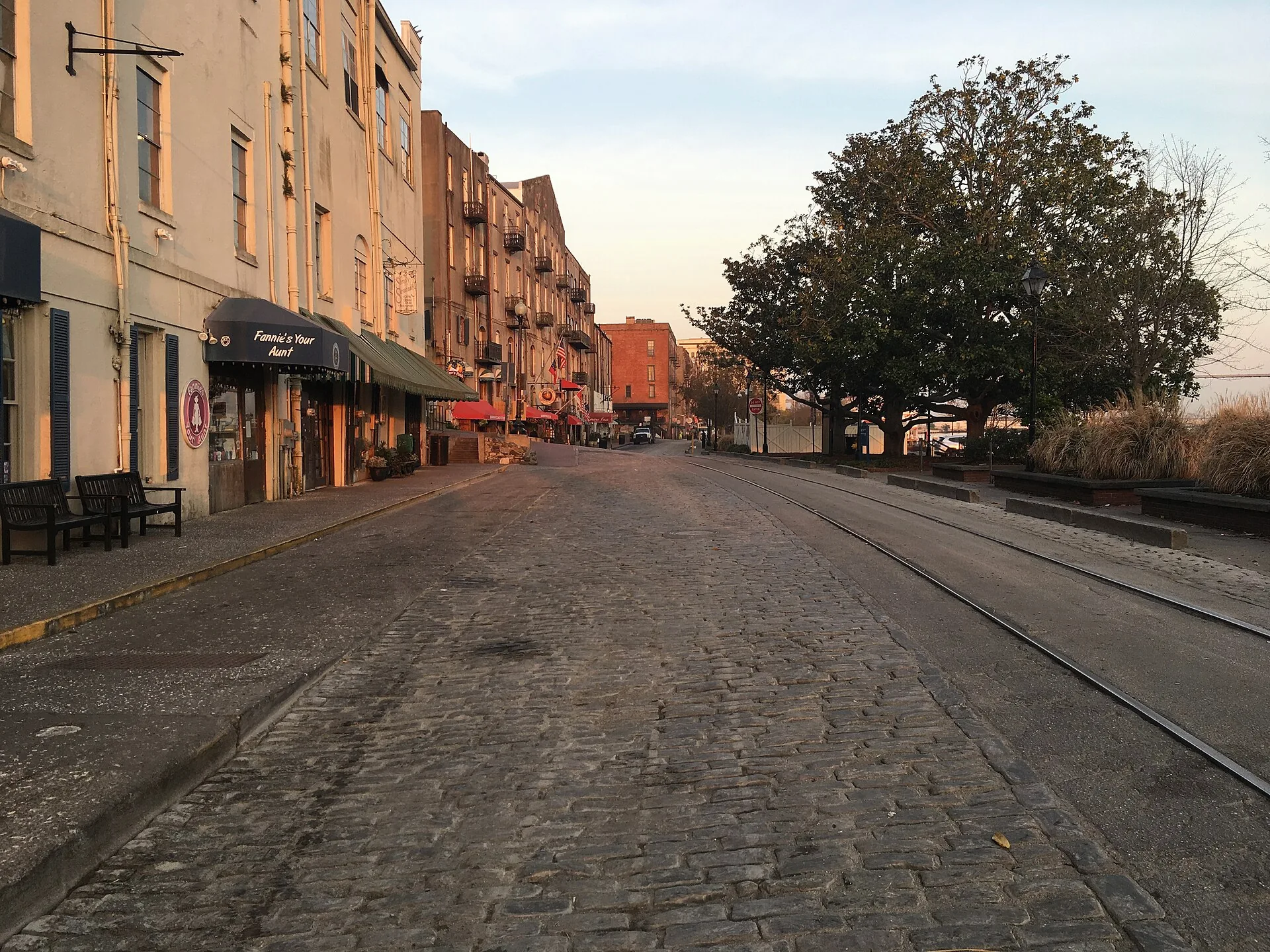
River Street, Factors Walk and Rousakis Riverfront Plaza are worth exploring for river views and reused warehouse architecture, whether or not you want to shop. River Street runs beside the water, with the plaza providing an open riverside space. Factors Walk sits along the bluff behind it, where changes of level help explain the relationship between the warehouses and the river.
Use the public elevators if you need a step-free descent from the upper Historic District. One is between the Hyatt Regency and City Hall, and another is at The Alida Hotel. They avoid steep ramps and stairs, but River Street’s cobbles still make the waterfront uneven underfoot.
A late-afternoon stroll leaves room to pause by the river. Outdoor browsing need not involve purchases in the individual shops and businesses.
Seasider53 · CC BY-SA 4.0 · Edited
6. First African Baptist Church
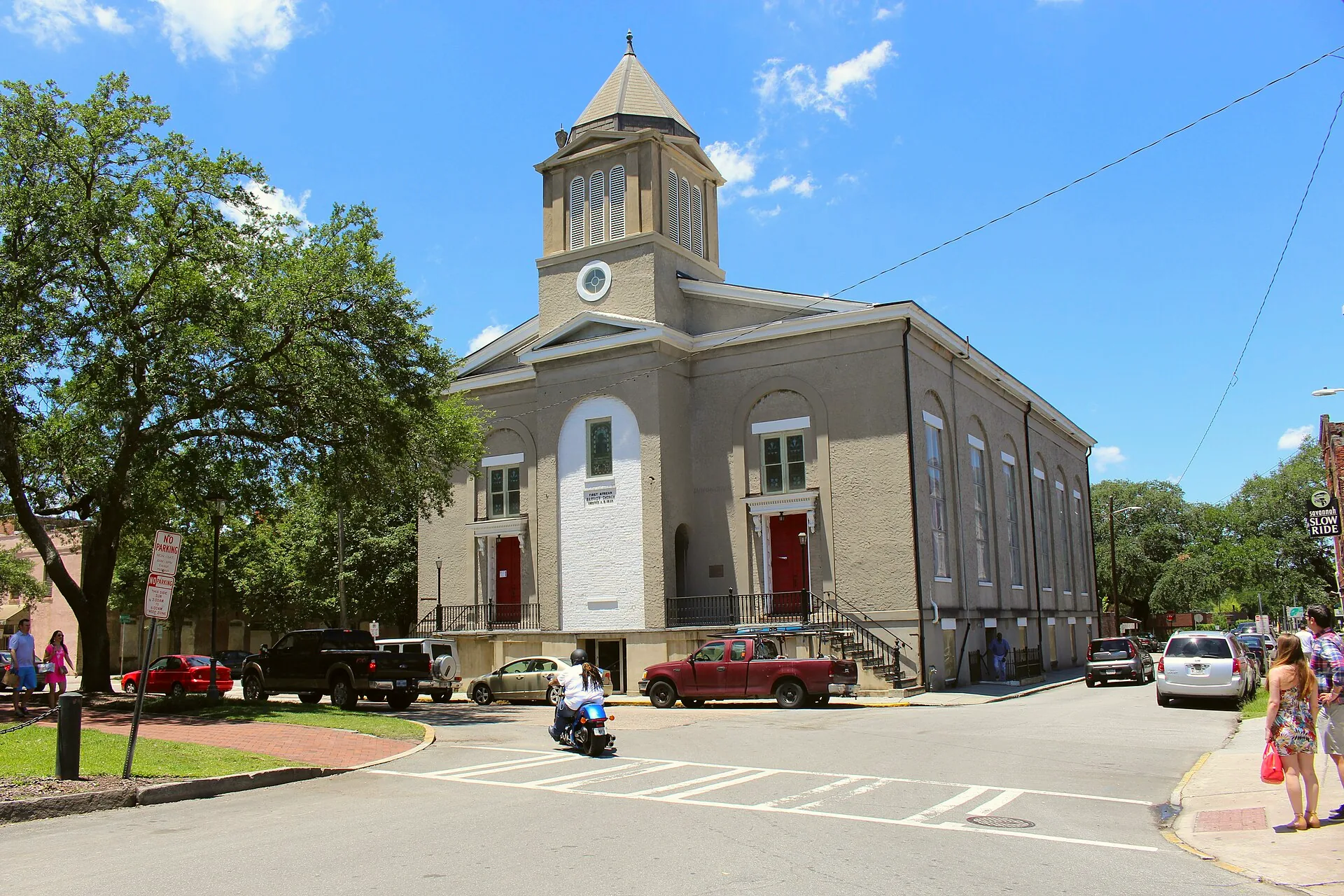
First African Baptist Church offers a historical tour that puts African American history at the centre of the visit. Choose the tour for the congregation’s history, rather than treating it as another church interior. Attending worship is a different activity from joining a visitor tour.
The church faces Franklin Square, so you can spend time in that public space before or after the tour. Nearby City Market adds a place to browse shops and galleries without turning the church visit into a long cross-city outing.
- Name
- First African Baptist Church
- Location
- 23 Montgomery St, Savannah, GA 31401 Maps
- Site
- firstafricanbc.com
- Hours
- Mon Closed
- Tue–Thu 10am–5pm
- Fri 10am–3pm
Show 2 more
Sat ClosedSun 9am–12:30pm- Essential fact
- First African Baptist Church is a historic church beside Franklin Square in Savannah.
- Price
- USD 15 Adult tour
- USD 12 Visitor tour · seniors, military, or students
Historical tours run Monday–Saturday at 1pm. Arrive at least ten minutes beforehand, and leave some room afterwards for questions or a tour that runs longer. The fixed departure makes this a visit to arrange your other downtown stops around, rather than drop into whenever you pass.
Individual visitors do not need a reservation, and tickets can also be purchased online. Choose the historical tour schedule when planning your visit, rather than the church’s general opening hours.
Michael Rivera · CC BY-SA 4.0 · Edited
7. SCAD Museum of Art
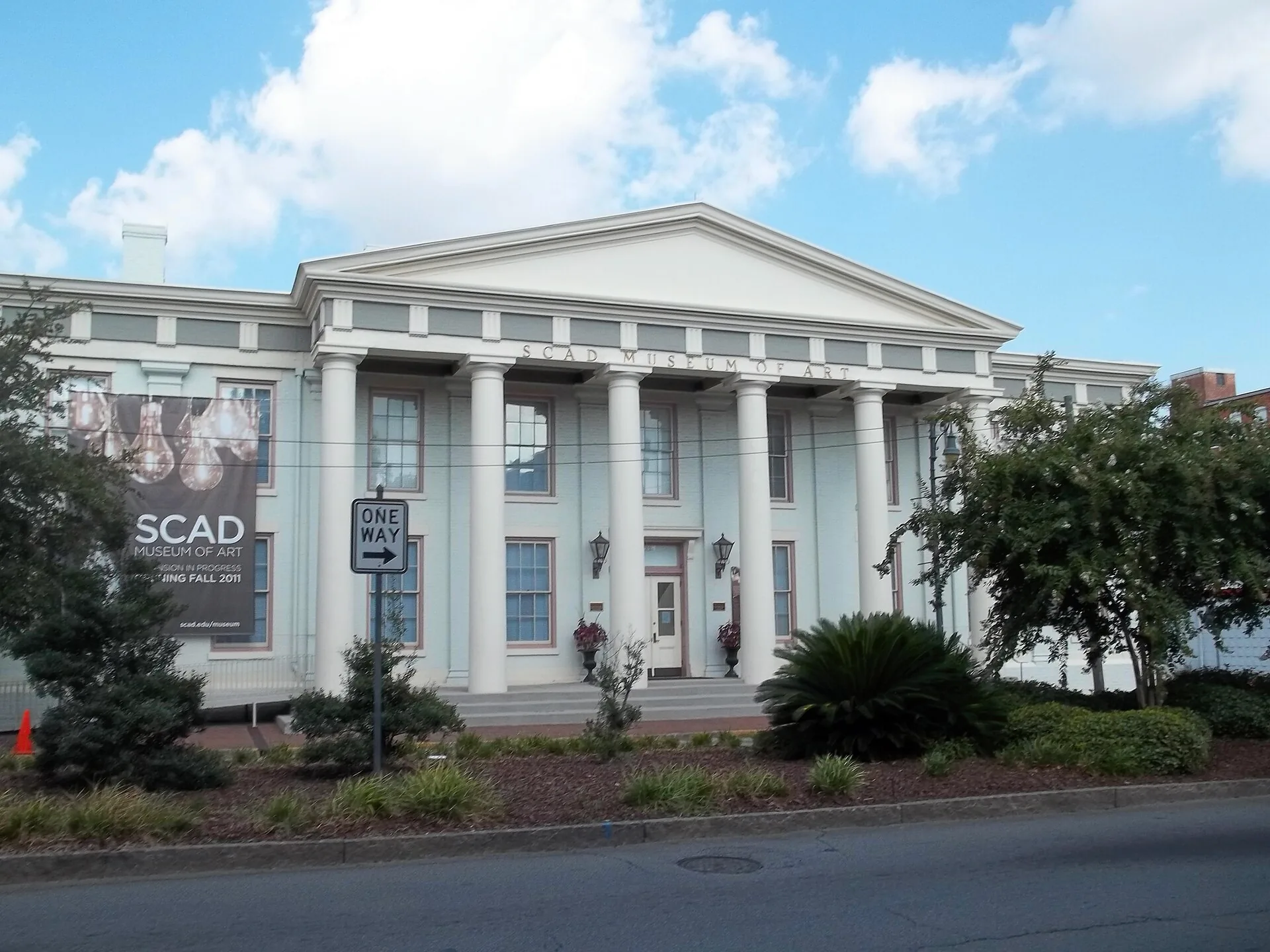
SCAD Museum of Art offers contemporary and changing exhibitions, making it a different indoor choice from Savannah’s historic-house interpretation. Choose it when you want art rather than another period interior. Allow yourself to spend longer with work that catches your attention instead of moving through every gallery at the same pace.
The museum lies west of the central squares, so it works as a deliberate detour from a downtown walk. It is a useful rain alternative if you would rather trade outdoor browsing for exhibition rooms.
- Name
- SCAD Museum of Art
- Location
- 601 Turner Blvd, Savannah, GA 31401 Maps
- Site
- scadmoa.org
- Hours
- Mon 10am–5pm
- Tue Closed
- Wed 10am–5pm
3 more days
Thu 10am–8pmFri–Sat 10am–5pmSun 12pm–5pm- Essential fact
- SCAD Museum of Art is a contemporary art museum in western downtown Savannah.
- Price
- USD 10
- USD 8 seniors and military
Ordinary individual visitors do not need a reservation. Thursday’s evening opening offers another way to fit the museum around outdoor sightseeing, while Sunday calls for a later start. You can keep the earlier part of either day for squares or the riverfront.
Ebyabe · CC BY-SA 3.0 · Edited
8. Bonaventure Cemetery
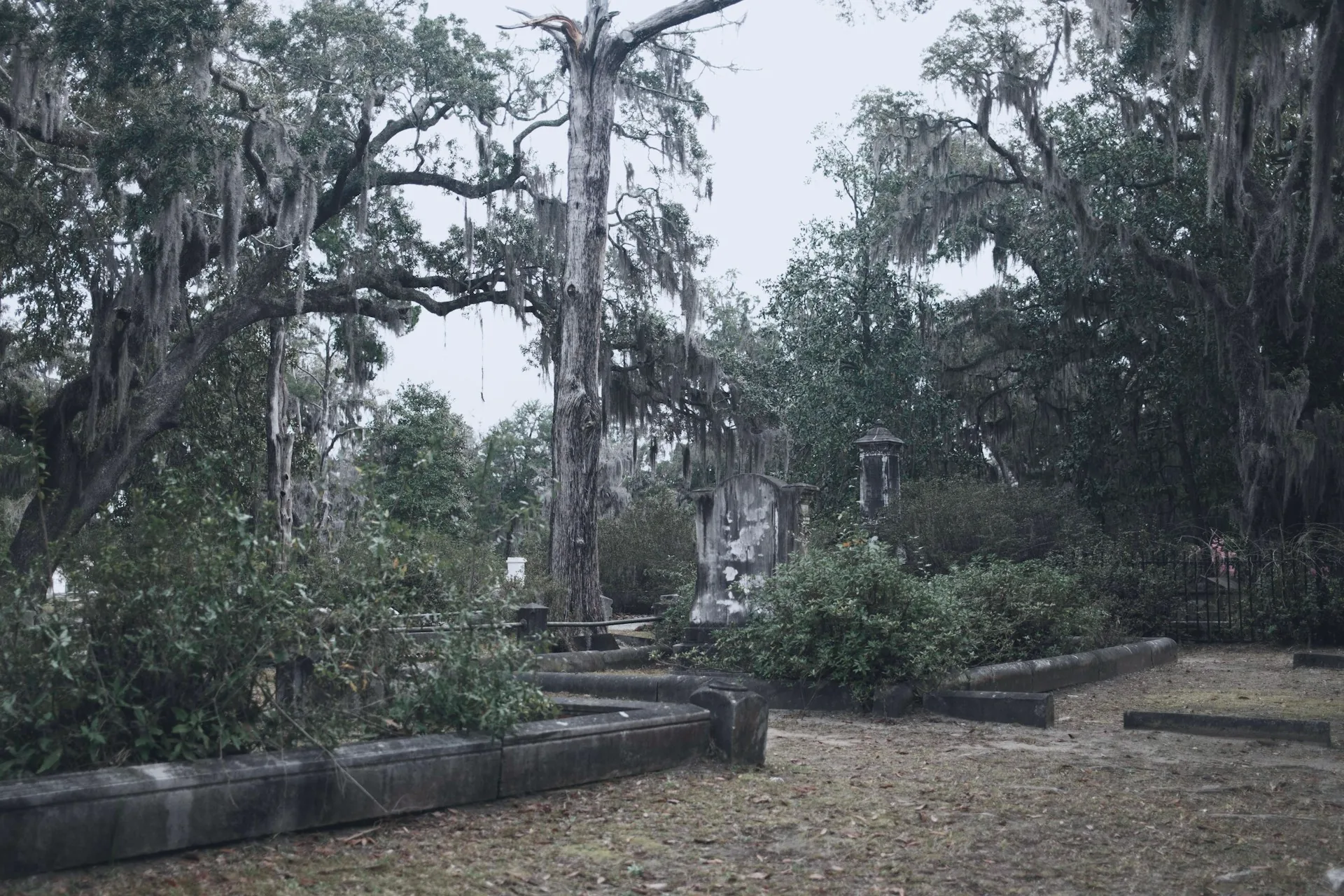
Bonaventure Cemetery combines live oaks, sculptural graves and a riverfront landscape beyond the downtown cluster. Make the separate journey if cemetery sculpture and the setting interest you, rather than adding it solely to complete a list. If those are not priorities, there is plenty to keep you among the central squares and museums.
Explore respectfully on a self-guided visit. Look at the carving and monuments from the paths, keep clear of graves and give any funeral party privacy and space. This remains an active cemetery, not simply an outdoor collection of sculpture.
No reservation is needed for an ordinary self-guided visit, and you can visit any day of the week. Personal vehicles are allowed on cemetery roadways.
Expect mostly dirt-and-gravel paths between graves, with some paved main roads and few sidewalks. Wear shoes suited to loose, uneven ground. In summer, arrive before peak heat and bring water, especially if you want to explore on foot rather than mainly from the roadways.
Nick Wilson · Unsplash License · Edited
Sources & fact-checking
Checks against the sources below cover: fares and charges, key figures, and services.
- SCAD Museum of Art — fares and charges
- Telfair Museums — fares and charges
- Forsyth Park | Savannah, GA – Official Website
- City of Savannah — key figures
- Johnson Square — City of Savannah
- Facilities • Chippewa Square
- Monterey Square | City of Savannah
- FAQs — City of Savannah
- First African Baptist Church — service
- Cathedral Basilica of St. John the Baptist — fares and charges
- Cathedral Basilica of St. John the Baptist — service
- City of Savannah Department of Cemeteries — fares and charges
- Tours / Events / Groups
- Vehicle & Traffic Regulations