In New Orleans, tipping is expected for full-service dining, unless gratuity is already included. Allow for tips alongside the prices of meals, drinks and other services, and read the bill before adding anything. For hotels, guides and musicians, carrying small cash makes it easier to give the tip to the person who helped you.
Tipping amounts by service
| Service | Suggested tip | Unit / deciding condition |
|---|---|---|
| Full-service restaurant | 15–20%; usually start at 20% | Meal amount chosen for tipping; gratuity not included |
| Separately paid drinks | About $1–$2 | Per drink; more for involved cocktails |
| Completed bar tab | About 20% | Tab total; account for tips already paid |
| Taxi | About 15–20% | Fare; more for luggage help |
| Housekeeping | About $2–$5 | Per serviced day; more for extra work |
| Luggage assistance | About $1–$2 | Per bag; more for heavy loads |
| Valet retrieval | About $2–$5 | Each car retrieval |
| Paid tour guide | About 10–20% | Tour price per person; gratuity not included |
| Tips-based tour guide | About $10–$20 | Per person; length and experience |
| Street musicians | At least $1 | When you stop to listen; more for longer stays |
| Venue band | About $5–$10 | Per person enjoying a set; more for a longer evening |
These are customary suggestions, not compulsory fees. For other services, use the work involved and the help you received to choose within a range. A gratuity already included on a bill is different from an additional tip you choose to leave.
Include tips when working out New Orleans daily budgets, alongside accommodation, meals and activities. Small cash is useful for services without a payment screen, especially room attendants and musicians.
Restaurant bills and included gratuities
Read the subtotal, tax and any included charge before choosing an extra tip. The food and drink subtotal gives you a clear amount to work from, separate from tax. Then look at what the bill has already added, rather than treating the final total as food and drink alone.
A voluntary tip is freely chosen by you. A compulsory service charge is imposed by the business and, under federal wage rules, is not a tip. A service charge does not necessarily go to your server: the employer may retain it or distribute it, subject to wage laws. Ask how it is handled if that affects your decision.
Do
- Read each charge and enter only the additional tip you intend to pay.
- Ask about the restaurant’s group-gratuity policy for your party.
- Raise a service problem with staff or a manager before payment.
Don’t
- Treat a blank tip line as proof that no gratuity was added.
- Assume every restaurant applies the same group policy.
- Add a tip automatically without accounting for an included charge.
For a dinner where $200 is the amount you choose to tip on and no gratuity is included, the restaurant range gives a $30–$40 tip. The upper end matches the usual starting percentage. If $200 is instead a final total containing tax or an included charge, read its components before using it for the calculation.
Group gratuity is a restaurant-specific policy, not a city-wide rule. Establishing that policy when arranging a group meal makes it easier to agree how everyone will share the bill.
SpotOn POS · Pexels License · Edited
Bar tabs and payment screens
Choose between tipping with separately paid drinks and tipping when you close a tab. On an open tab, you do not need to leave a tip after every round. Use the corresponding suggestion in the service reference, and account for anything you have already handed the bartender.
Is $5 a good tip at a bar? For one straightforward drink, $5 is generous, but it means something different after several drinks or a round of labour-intensive cocktails. Judge it against the order and the work involved, rather than treating it as a suitable amount for every tab.
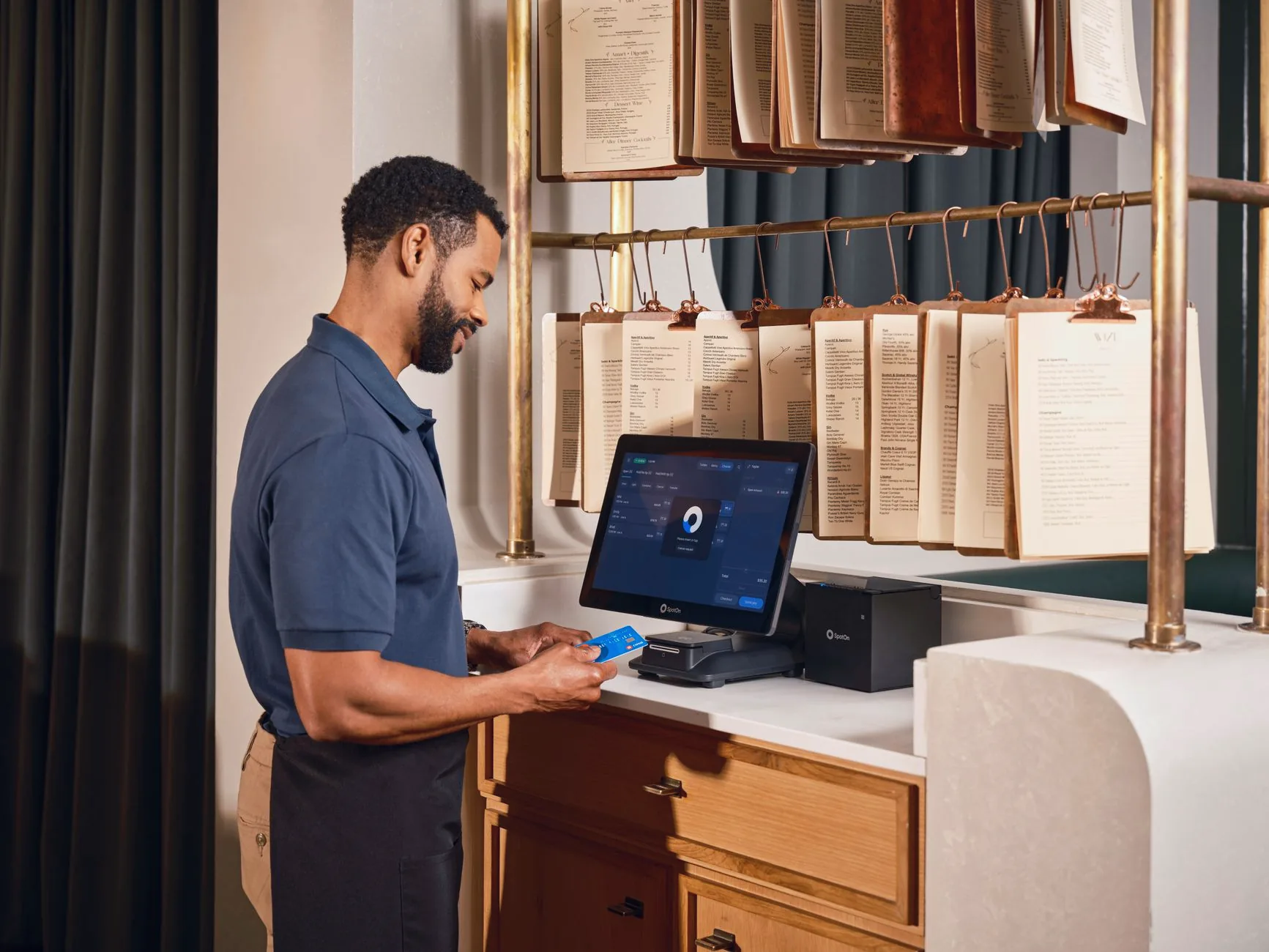
If you have tipped in cash, remember that when filling in the card receipt’s additional tip line. On a payment screen, pause long enough to read the options and select the amount you intend, including a custom amount if that suits your order better.
A counter-service or takeaway tip prompt is not the same situation as a full-service meal. You can choose whether to recognise the help you received without treating the screen’s suggested buttons as compulsory charges.
Paying taxi and rideshare tips
For a New Orleans cab driver, apply the taxi suggestion in the service reference to the fare you pay. Choose towards the upper end for help with luggage or unusually helpful service, rather than tipping on the fare plus another tip.
The airport’s fixed-rate taxi fare and the driver’s gratuity are separate. An agreed or regulated fare does not itself mean you have tipped the driver. When paying, make clear which amount covers the ride and which is your tip, especially if handing over cash and expecting change.
For a rideshare journey, choose cash or the app as your tipping method. If you have already handed the driver a cash tip, account for that before responding to the app’s later prompt. Luggage assistance can inform your choice here too.
Housekeeping, luggage and valet tips
Leave housekeeping tips day by day, rather than saving them all for checkout. Different room attendants may clean on different days, so a single end-of-stay payment may not reach everyone who helped. You can tip on the last day for that day’s service, but it is not a substitute for earlier daily tips.
Put the cash somewhere visible with a note saying “For housekeeping”, or in an envelope labelled for the room attendant. This makes its purpose clear, rather than leaving staff to decide whether loose money was forgotten. If your room is not serviced on a particular day, there is no housekeeping visit to tip for that day.
Luggage assistance is separate from room cleaning. Give the person helping with your bags the chosen tip once the assistance is complete, using the per-bag suggestion in the reference and allowing more for a heavy or awkward load.
Tip the valet when your car is brought back, each time you retrieve it rather than once at the end of the stay. The parking charge pays for parking and is distinct from the attendant’s gratuity. Keep suitable cash accessible before requesting the car so payment does not become a search through your luggage.
Tour guides, bands and street performers
- Carry small notes for guide tips and musicians’ jars or buckets.
- Read a paid tour’s payment details to establish whether gratuity is included.
- Give your guide the chosen tip at the end of the tour.
- When stopping for street music, put your tip in the performers’ visible container.
- At a live-music venue, distinguish admission from a voluntary tip for the band.
A paid tour’s price and the guide’s gratuity are separate unless inclusion is stated. Use the paid-tour suggestion in the service reference to choose an additional amount. A tips-based tour works differently: there is no fixed ticket price, and the guide’s remuneration is what participants choose to pay for the experience. Think about the length of the tour and what you gained from it.
Street performances on Royal Street bring live music into the French Quarter’s public spaces. If you stop to listen, use the street-musician recommendation in the reference and give more when you stay longer. A visible jar or bucket lets you contribute without interrupting the performance.

Infrogmation of New Orleans · CC BY-SA 4.0 · Edited
Band tips matter particularly in no-cover rooms, where musicians rely on them. At a ticketed or cover-charge show, an extra tip is welcomed rather than uniformly expected. Admission may help pay for the show, but it is not the same payment as a voluntary band tip. Choose an amount according to the performance you enjoyed and how long you listened.