A second visit to Bologna can take you from a painted saint’s story to the machines that helped shape the city’s economy. The Oratory of Saint Cecilia and Palazzo Poggi sit in the university quarter, within easy reach of Piazza Maggiore, while the other choices take you beyond the historic centre.
These five places reward different kinds of attention: following a fresco narrative, examining scientific teaching models, encountering a memorial, understanding production and looking closely at funerary sculpture. Choose by your interests rather than trying to fit all five into one outing. The Ustica memorial, in particular, asks for emotional as well as sightseeing time.
Five places to choose from
| Criterion | Oratory of Saint Cecilia | Palazzo Poggi Museum | Museum for the Memory of Ustica | Industrial Heritage Museum | Certosa monumental cemetery |
|---|---|---|---|---|---|
| Standard adult admission | Free | €10 | Free | €5 | Free |
| Suggested visit duration | 20–30 minutes | — | — | — | 1–2 hours |
| Walk from Piazza Maggiore | about 700 metres | about 950 metres | about 2.6 km | about 4.1 km | about 3.2 km |
Pair Saint Cecilia’s frescoes with Palazzo Poggi’s historical science collections for nearby indoor visits, particularly in rain. Treat the Ustica memorial in Bolognina, the Industrial Heritage Museum beside the Navile canal and the Certosa west of the centre as separate excursions. Choose machinery for an interest in how things work, or Certosa for sculpture and architecture. If the towers and main square are still new to you, Bologna’s first-visit sights give you a different starting point.
1. Oratory of Saint Cecilia
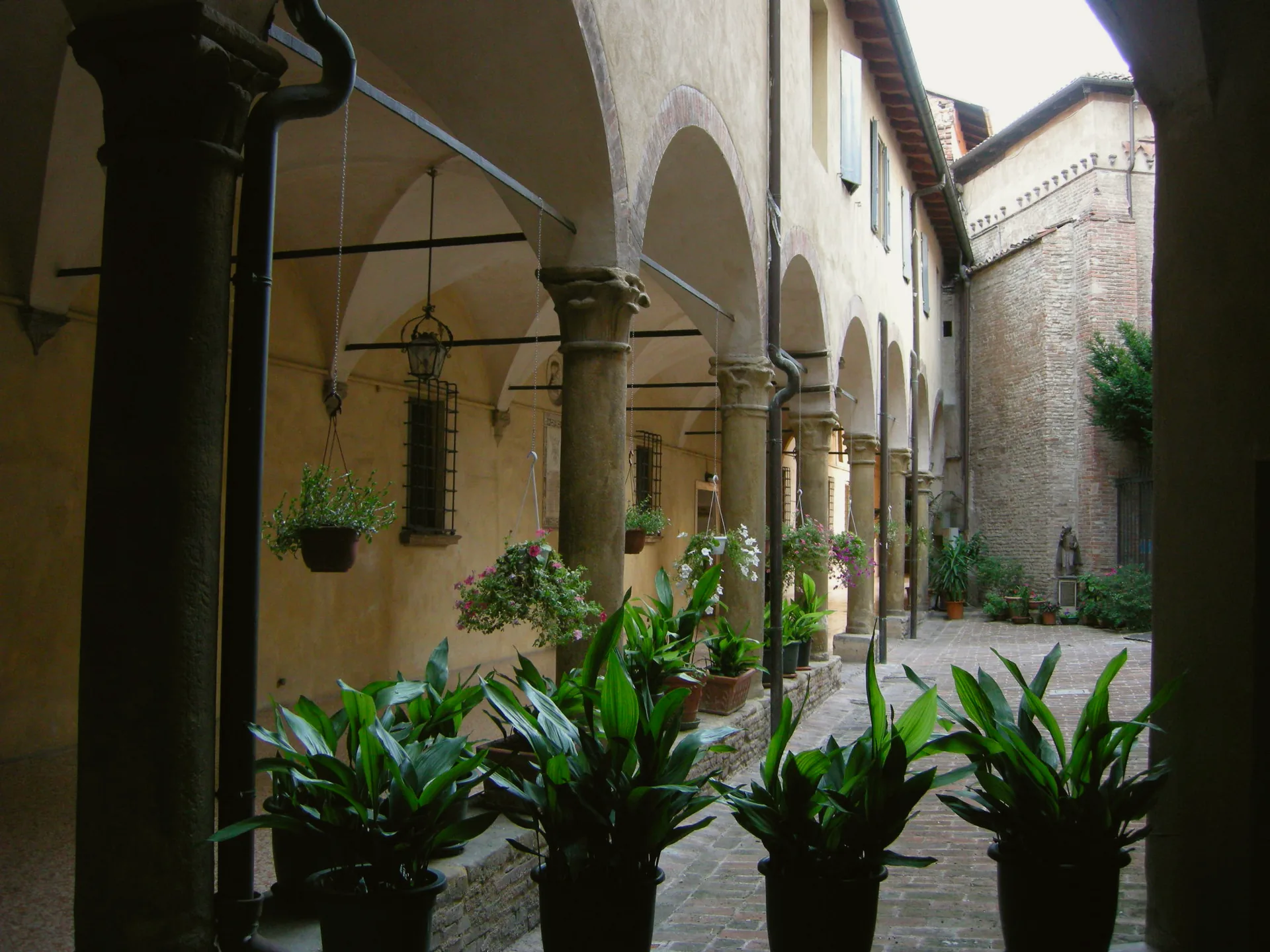
The Oratory of Saint Cecilia rewards you with a story told across the walls of a small room, rather than another large church to navigate. Its fresco cycle follows Saint Cecilia and Saint Valerian: look from scene to scene, attending to gestures, clothing and the way each episode is arranged.
The modest entrance on Via Zamboni is easy to pass while heading towards the university quarter’s larger buildings. Once inside, the compact setting lets you compare the paintings without covering much ground. Slow looking matters more than moving quickly through the room.
It is a sheltered choice when rain interrupts a walk through the centre. Palazzo Poggi Museum, farther along Via Zamboni, makes a nearby companion: the move from religious storytelling to scientific observation gives the two visits quite different rewards.
sailko · CC BY-SA 3.0 · Edited
2. Palazzo Poggi Museum
Palazzo Poggi Museum takes you beyond the familiar anatomical theatre into the objects used to teach and investigate science. Anatomical and obstetric models depict bodies and childbirth explicitly, so choose with that material in mind. Geography displays and ship models offer another way into the collections, showing how scholars represented the wider world.
The decorated rooms let you look at scientific instruments and teaching material within a palace setting. These broader collections are easily overshadowed by the better-known anatomical theatre, but reward an interest in the university’s scientific work beyond anatomy. It is also an indoor companion to the Oratory of Saint Cecilia.
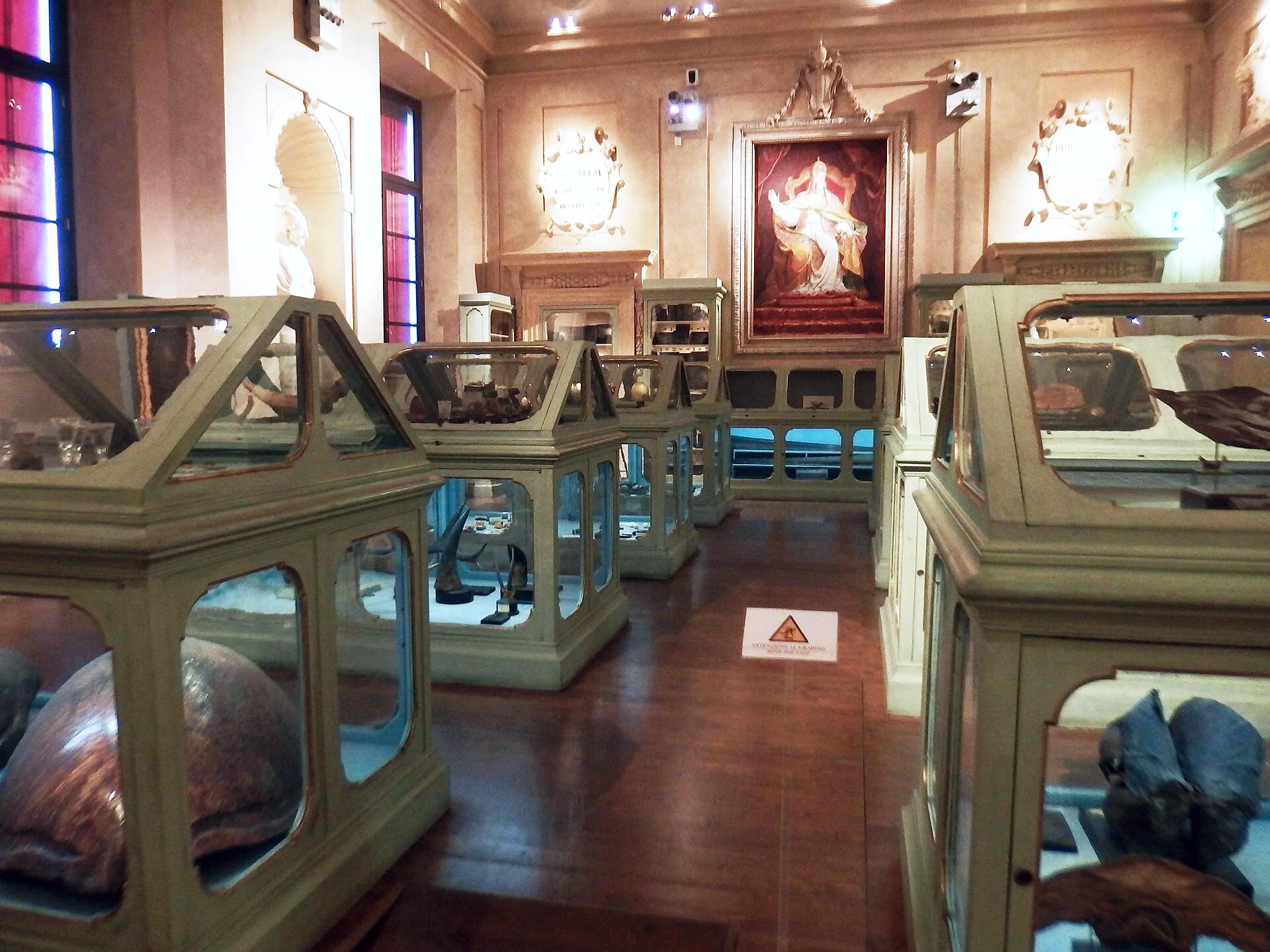
Palickap · CC BY-SA 4.0 · Edited
The standard ticket covers geography and nautical science, military architecture, physics, natural history, chemistry, human anatomy and obstetrics, plus the Aldrovandi Museum collection. It also includes the European Museum of Students (MEUS). Individual visits require no advance booking, but independent groups of more than 10 people must notify the museum in advance.
- Name
- Palazzo Poggi Museum
- Location
- Via Zamboni 33, Bologna Maps
- Site
- sma.unibo.it
- Hours
- Mon Closed
- Tue–Fri 10:00–16:00
- Sat–Sun 10:00–18:00
- Essential fact
- A museum of historical scientific collections in a university palace on Via Zamboni.
On public holidays, the museum opens 10:00–18:00, including holiday Mondays.
3. Museum for the Memory of Ustica
The Museum for the Memory of Ustica is a memorial to loss, not an unusual aircraft exhibit. Christian Boltanski’s installation surrounds the recovered aircraft from the Ustica disaster, keeping the people who died at the centre of the encounter. Give yourself room for a difficult response, and keep conversation quiet.
Its Bolognina location, north of the railway station, takes it outside the central sightseeing circuit. Make it a deliberate excursion rather than a quick stop between lighter attractions. Individual booking is recommended to avoid queues, but is not compulsory.

Palickap · CC BY-SA 4.0 · Edited
The recurring visiting windows are 28 September–26 June, Thursday and Friday 09:30–13:30 and Saturday and Sunday 10:00–18:30; and 27 June–30 September, Friday to Sunday 17:00–20:00. The summer evening window makes this a different choice from a daytime museum visit.
- Name
- Museum for the Memory of Ustica
- Location
- Via di Saliceto, 3/22, Bologna Maps
- Site
- museomemoriaustica.it
- Hours
- Mon–Wed Closed
- Thu–Fri 09:30–13:00
- Sat–Sun 10:00–18:00
- Essential fact
- A memorial museum in Bolognina containing the recovered aircraft within Christian Boltanski’s installation.
4. Industrial Heritage Museum
At the Industrial Heritage Museum, follow how Bologna made things, from silk production to mechanical industry. Machinery and exhibits about production processes offer a different reward from painted palace rooms: look for the relationship between a machine’s moving parts and the work it performs.
The former brickworks beside the Navile canal is part of that story, and its position beyond the centre makes this a deliberate excursion. If you choose the longer approach on foot, favour dry weather and a cooler part of the day rather than setting out in midday heat.

MUSEO DEL PATRIMONIO INDUSTRIALE DI BOLOGNA · CC BY-SA 2.5 · Edited
Exhibition rooms across the floors are generally accessible to visitors with mobility disabilities or difficulty walking. The manually operated revolving entrance door can be awkward, so use the intercom to request assistance through the side entrance if needed.
- Name
- Industrial Heritage Museum
- Location
- Via della Beverara 123, Bologna Maps
- Site
- museibologna.it
- Hours
- Mon Closed
- Tue–Fri 09:00–13:00
- Sat–Sun 10:00–18:30
- Essential fact
- A museum of Bologna’s industrial history in a former brickworks beside the Navile canal.
5. Certosa monumental cemetery
The Certosa monumental cemetery turns funerary sculpture into the focus of a visit. Its former monastery setting, arcaded burial spaces and continuing funerary purpose distinguish it from a conventional sculpture museum. West of the centre, it requires a deliberate journey rather than a detour from the main square.
Explore the Third Cloister (Chiostro III), Colombarium Hall (Sala del Colombario) and Sixth Cloister (Chiostro VI) for a selective encounter with monuments and their architectural settings. Look at how sculpted figures express remembrance, grief and status, rather than trying to cover the whole cemetery.
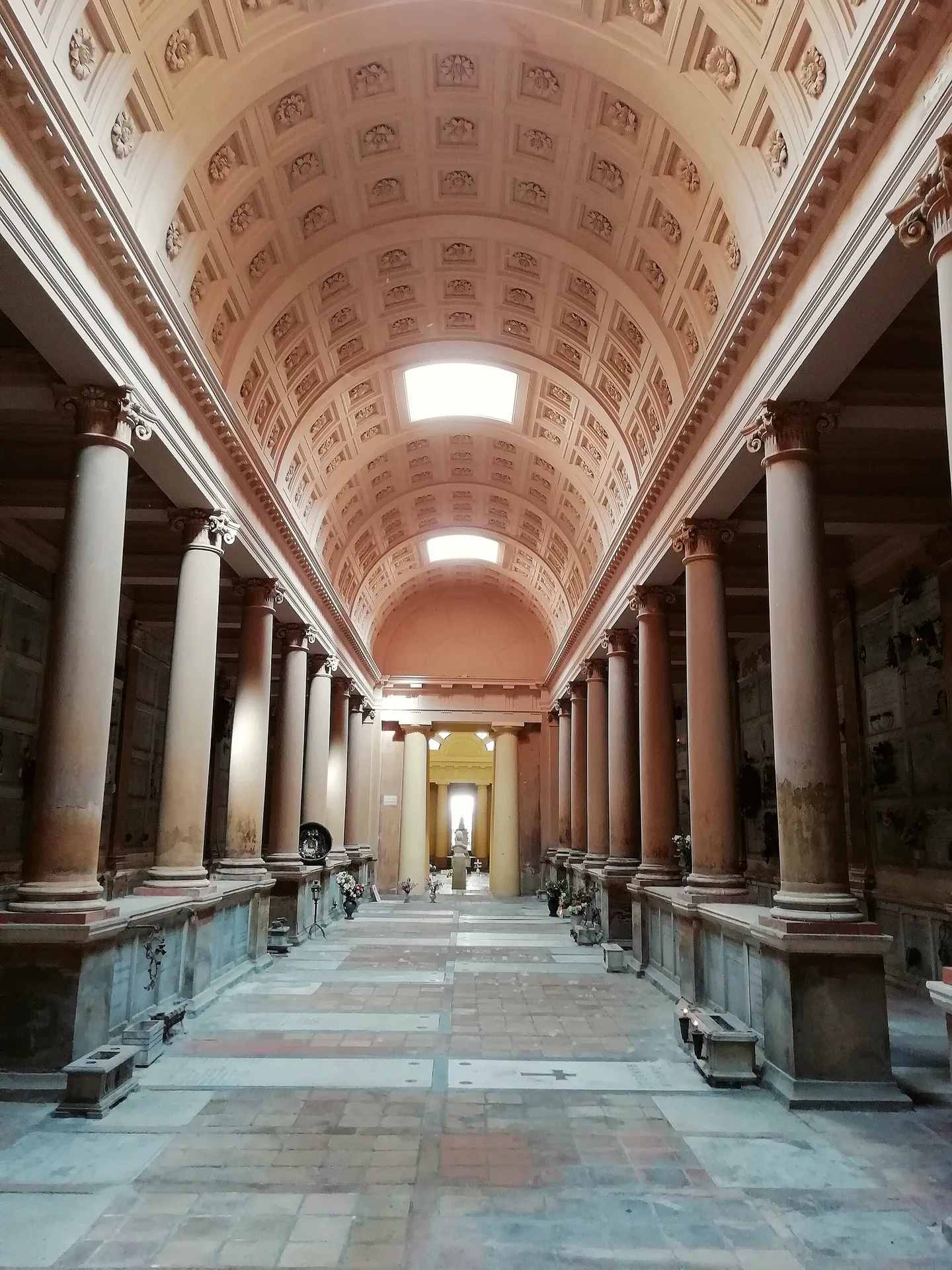
Urban38 · CC BY-SA 4.0 · Edited
Choose a dry morning or cooler afternoon, wear comfortable shoes and give mourners space. Independent entry needs no advance booking, while guided tours and events have separate arrangements. Public access is daily, including holidays, 08:00–18:00 from 1 March to 2 November and 08:00–17:00 from 3 November to 28 February.
- Name
- Certosa monumental cemetery
- Location
- Via della Certosa 18, Bologna Maps
- Site
- bolognaservizicimiteriali.it
- Hours
- 08:00–18:00
- Essential fact
- Bologna’s monumental cemetery, with historic cloisters and funerary sculpture west of the city centre.
Sources & fact-checking
Checks against the sources below cover: fares and charges, opening hours, and services.
- University of Bologna, University Museum Network (SMA) — fares and charges
- University of Bologna University Museum Network (Sistema Museale di Ateneo) — opening hours
- Istituzione Bologna Musei — fares and charges
- Oratorio di Santa Cecilia – Bologna Welcome
- Certosa di Bologna – Monumental cemetery
- Bologna Servizi Cimiteriali Srl — opening hours
- Settore Musei Civici Bologna — fares and charges
- Bologna Welcome — service