Venice’s sweets range from Carnival fritters to biscuits made for dipping in coffee or wine. Burano contributes rich butter biscuits, while Venetian bakeries offer sweet fugassa bread. What you choose depends as much on the time of year as on whether you want a quick snack or something to take home.
Choosing and ordering sweets
| Sweet | What it is | When to have it | Typical price |
|---|---|---|---|
| Fritole | Fried dough balls | Sweet snack | €2–4 each |
| Galani | Crisp pastry ribbons | Shared snack | €3–6 per 100 g |
| Zaeti | Cornmeal raisin biscuits | Breakfast or afternoon | €2–4 per 100 g |
| Baicoli | Thin twice-baked biscuits | Coffee break | €4–8 per packet |
| Bussolà | Burano butter biscuits | After a meal | €2–4 per 100 g |
| Fugassa | Enriched sweet bread | Breakfast or coffee | €4–7 per slice |
| Crema fritta | Fried custard | Sweet snack | €2–4 per piece |
| Fave dei morti | Small nut sweets | Sweet snack | €3–6 per 100 g |
Fritole are Venice’s characteristic sweet, with local classics ranging from zaeti and baicoli to Burano’s bussolà. At a bakery or pastry counter, ask for individual pastries by number and loose biscuits by weight. A small bag lets you try several kinds. Larger portions and filled pastries usually cost more, while packaged biscuits vary with packet size.
Takeaway or standing at the counter is usually the cheaper choice. Sitting down can add roughly €2–5 per person to a pastry-and-coffee stop, with a larger premium at prominent cafés. Ask for un caffè for an espresso, typically €1.50–2.50 at the counter.
Breakfast is commonly around 07:00–10:00, afternoon coffee around 15:00–17:00 and dinner around 19:00–21:00. A restaurant’s coperto, a cover charge, typically adds €2–5 per person to a meal. It is separate from buying pastries to take away.
Fritole: Carnival fritters
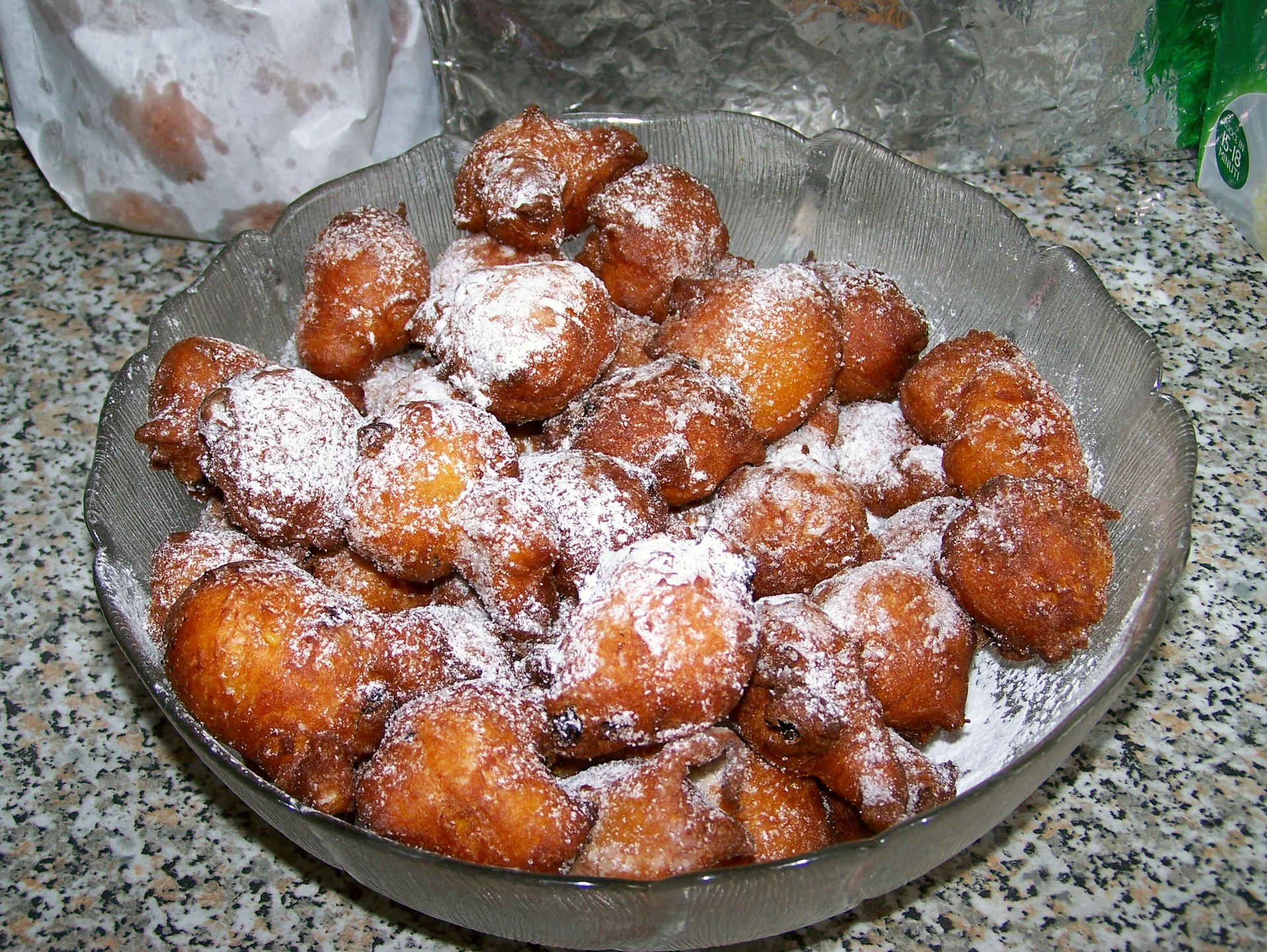
Fritole, often labelled frittelle at the counter, are rounded fritters with a sugared surface and a soft fried-dough centre. Flour, eggs, milk, sugar and yeast form the dough, often enriched with raisins and pine nuts.
Choose plain fritole for the fruit-and-nut dough, or a filled version for a creamier snack. Pastry counters commonly offer pastry cream, chocolate or zabaglione, a sweet egg-and-wine cream. Ask which filling is inside rather than relying on the sugared exterior.
Their usual selling season runs roughly from January through Shrove Tuesday, making them a Carnival choice for a sweet snack rather than a dependable year-round purchase.

Simone Coletta · CC BY-SA 3.0 · Edited
Galani: crisp fried pastry
Galani are thin, sugar-dusted ribbons of fried pastry, with blisters visible on their crisp surface. The dough combines flour, eggs, sugar and butter with a little grappa, an Italian grape spirit, or white wine, and lemon zest sometimes adds a citrus note. Rolling it very thin before cutting and frying gives the ribbons their brittle texture.
At Venetian counters, crostoli usually means thicker rectangular or triangular pieces, though naming varies across Veneto. Buy galani during Carnival, especially in the weeks before Lent, from a bakery or pastry counter for a light sweet to share.

Team Picsfast · Pexels License · Edited
Zaeti: cornmeal and raisin biscuits
Zaeti are golden-yellow biscuits whose name refers to their colour, with cornmeal giving the crumb its distinctive character. Wheat flour, butter and eggs enrich the dough, raisins bring pockets of sweetness and lemon zest is a common flavouring. At bakery and pastry counters, the spelling zaleti is also used.
Look for small diamonds or ovals with raisins visible in the yellow crumb. These are an everyday breakfast or afternoon-snack choice, traditionally served with coffee or a glass of wine. Their combination of grain and fruit makes them a different prospect from a cream-filled pastry, especially when you want biscuits to nibble rather than a single substantial sweet.
Baicoli: thin twice-baked biscuits
Baicoli are lightly sweet, thin oval biscuits designed for dipping. Their dough contains flour, sugar, butter, yeast and egg whites. Small loaves are baked first, cooled and sliced thinly, then the slices are baked again until dry and crisp.
Have baicoli with coffee, hot chocolate or sweet wine so you can soften each slice as you eat. They suit a coffee break or the end of a meal. Bakeries sell their own versions, while Colussi is the name associated with the familiar packaged biscuits sold by food retailers. Their dry texture also makes them a practical sweet to carry home.

Semolo75 · Public domain · Edited
Bussolà: Burano’s butter biscuits
Bussolà is Burano’s rich butter biscuit, rooted in the island’s family baking tradition. Flour, butter, sugar and eggs give it a firm texture, often scented with lemon zest or vanilla. The plural is bussolai.
Ask for bussolà for the ring shape, or esse for the S-shaped biscuits. Both forms are customary at island counters, so the name helps you choose what you see in the display. Traditionally eaten at Easter and on other festive occasions, they accompany coffee or wine after a meal. You can buy them at bakeries and pastry counters on Burano as well as in Venice, without making an island trip solely for a biscuit.
Fugassa: Venetian sweet bread
Fugassa is Venetian sweet bread, not savoury focaccia. Its enriched dough of flour, eggs, butter, sugar and yeast produces a soft crumb, and depending on the recipe, candied citrus peel, almonds or pearl sugar add flavour and texture. Have a slice for breakfast or with coffee at a bakery.
Easter is its customary season, though some bakeries make it beyond the holiday. Dal Nono Colussi offers a useful year-round exception: it has made fugassa since opening in 1956. Its sourdough version contains no candied fruit, raisins or almonds, so the bread itself is the focus rather than added fruit or nuts. This is a walk-in reference when you want to try fugassa outside its traditional season. Plan your stop for a morning or afternoon opening rather than lunchtime.
- Name
- Dal Nono Colussi
- Location
- 2867A Calle Lunga de, Dorsoduro, Campo S. Barnaba, Venezia Maps
- Site
- dalnonocolussi.company.site
- Hours
- Mon Closed
- Tue–Sat 08:00–12:00, 15:00–18:00
- Sun Closed
- Essential fact
- A pastry shop in Dorsoduro, Venice.
Crema fritta: fried custard
Crema fritta is fried custard with a crisp golden coating and a soft centre, rather than a ball of fried dough. The custard commonly combines milk, egg yolks, sugar and flour or starch, with lemon zest and vanilla for flavour.
It is left to set, cut into pieces, then dipped in beaten egg and rolled in breadcrumbs before frying. Look for cut pieces with a breadcrumb crust at a pastry counter or a rosticceria, a shop selling prepared food. Choose it as a sweet snack when you want the contrast between a crunchy exterior and a creamy filling, rather than the fruit-studded dough of a fritter.
Fave dei morti: autumn sweets
Fave dei morti means ‘beans of the dead’, but these small sweets are nut-based rather than made from beans. In the Venetian version, pine nuts, often combined with almonds, give the flavour, while sugar and egg whites bind the mixture. Their small rounded shapes and varying colours help you pick them out among larger pastries.
Choose them for an autumn sweet snack from a pastry counter. They are associated with All Souls’ Day, which falls on 2 November each year, and are ordinarily sold in late October and early November around that observance and All Saints’ Day. A small bag suits nibbling with coffee or sharing.

DinaBenedettoFerrandina · CC BY-SA 4.0 · Edited
Sources & fact-checking
Checks against the sources below cover: key figures.