Venice Carnival brings masked parades to St Mark’s Square and decorated rowing boats to the Grand Canal, alongside street performances and elaborate paid evenings. Dressing up turns the visit into a chance to take part rather than simply watch.
Choose the experience you most want before arranging your stay: the water procession, the mask contest and the Marie tradition occupy different parts of the programme. A ticketed dinner show is a separate commitment, with its own dress requirement and a much larger budget.
Dates and the official programme
- Months
- January or February
- Duration
- Varies by edition
- Public Street Show admission
- Free
- Public Street Show reservation
- Not required
Venice Carnival ends on Shrove Tuesday, the day before Ash Wednesday. Count back from that closing day when considering the final weekend, rather than assuming the festival occupies the same calendar dates each year.
The organiser publishes the complete calendar on the official Venice Carnival website, carnevale.venezia.it, under “Full program”. Its day-by-day listings give venues and performance times. Different events keep different hours, so a festival day is not a single continuous show: choose a named event and its place in the calendar.
Carnival is Venice’s masked celebration, with public parades, performances and traditions alongside separately ticketed entertainment. It is worth attending if those spectacles are the reason for your visit. You can watch participants’ creations and catch street acts. If your priority is moving easily between sights, the busiest event days offer less freedom: reaching a square or leaving a performance can shape the rest of your day.
Water procession, mask parade and the Marie
| Moment | Programme position | Part of day | Participants | Viewing place |
|---|---|---|---|---|
| Festa Veneziana | Opening traditional programme | Morning | Masked rowing crews | Erbaria, Rialto |
| Most Beautiful Mask rounds | Selected festival days | Midday or afternoon | Costumed entrants | St Mark’s Square |
| Festa delle Marie appearances | Days vary by edition | Daytime, often afternoon | The Marie | St Mark’s Square |
| Mask competition final | Closing weekend | Afternoon | Finalists | St Mark’s Square |
| Closing mask parade | Shrove Tuesday | Late afternoon | Masked participants | St Mark’s Square |
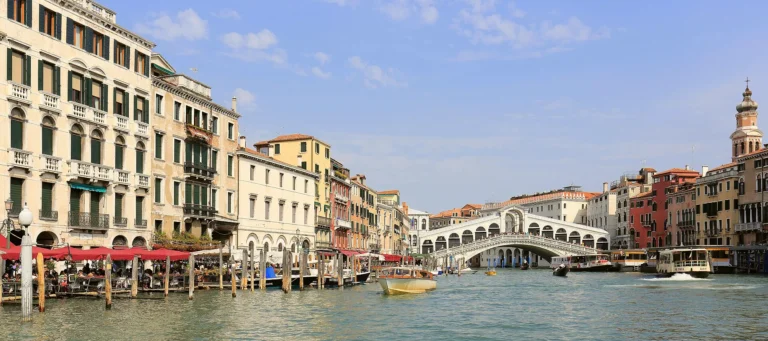
In the Festa Veneziana, Venice’s water celebration, masked rowers from the city’s rowing associations propel decorated traditional boats from Punta della Dogana along the Grand Canal towards Rialto. At their head is the Pantegana, a giant papier-mâché rat. The Pantegana bursts open beneath Rialto Bridge, releasing confetti and streamers at the finale.
Erbaria is the place to watch the procession’s arrival and join the party at its end. Choose a position on the open waterfront rather than stopping on the bridge: the finale draws attention towards the same narrow stretch of canal.
- Name
- Erbaria
- Location
- San Polo, Venice Maps
- Essential fact
- A waterfront square on the Grand Canal beside the Rialto market.
The Most Beautiful Mask parade puts participants’ original creations before the public, from individual disguises to coordinated groups. St Mark’s Square (Piazza San Marco) is the viewing place for the stage programme and announcement of winners. Selected parade days lead towards the competition final and a closing parade. The individual rounds’ hours vary rather than repeating at one fixed daily time.
- Name
- St Mark’s Square
- Location
- San Marco, Venice Maps
- Essential fact
- Venice’s main monumental square, beside St Mark’s Basilica and the Doge’s Palace.
- Price
- Free
C · CC BY-SA 4.0
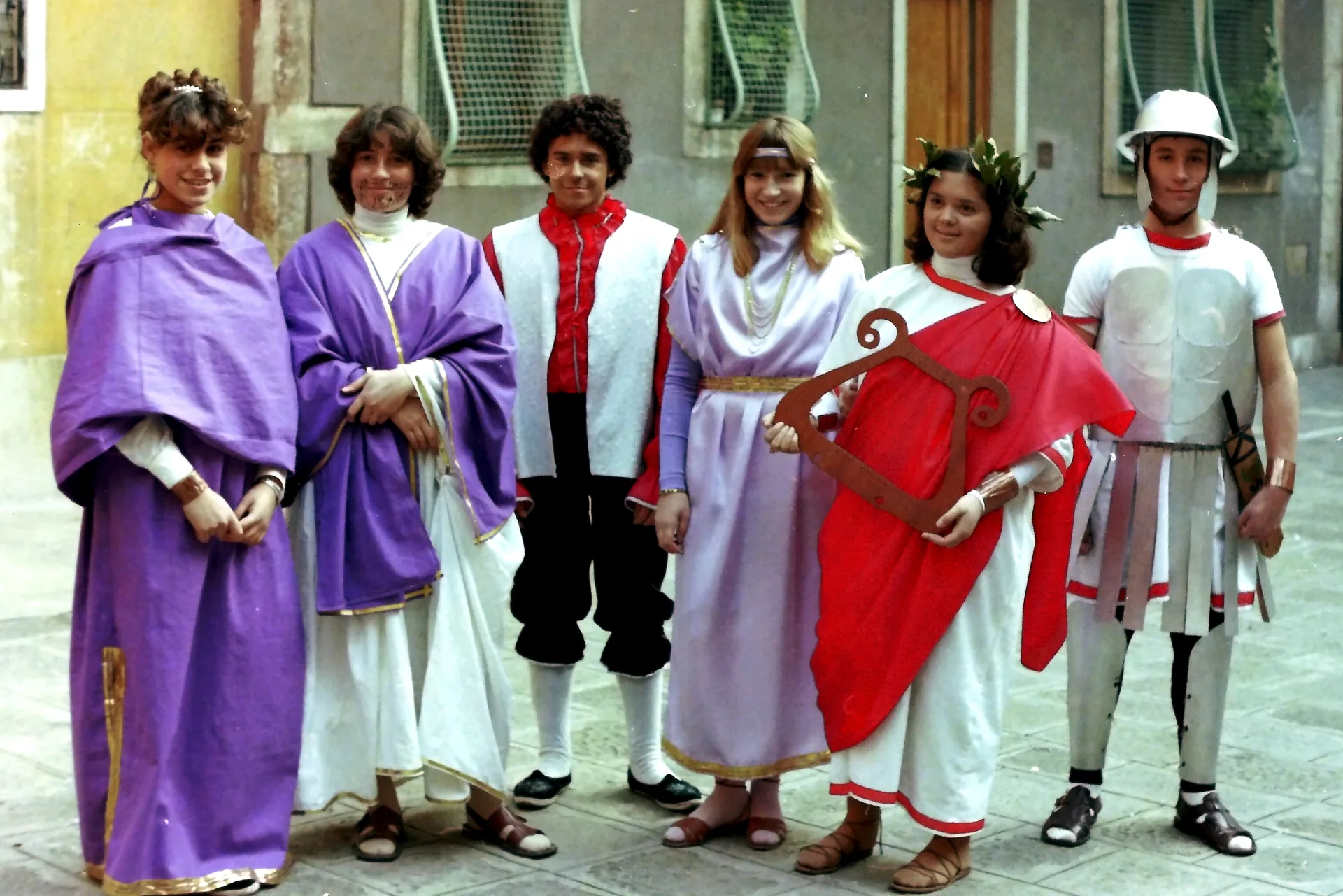
The Festa delle Marie, the festival’s Marie pageant, brings its participants into the public celebration, with the twelve Marie presented on the square’s stage. Its appearance days and water-procession arrangements vary by edition. Santa Sofia has served as a departure point for the procession along the Grand Canal, but the square is the clearer choice for watching the presentation. The Maria of the Year, the pageant winner, traditionally represents the Angel in the Flight of the Angel.
Choose Erbaria for the water finale and St Mark’s Square for the stage events. They offer different ways to watch: one centres on boats arriving at Rialto, the other on costumes and presentations before an audience. Avoid treating the Marie appearances as an event that always falls on the same weekday.
The Venice Carnival Street Show adds performances in public squares and streets throughout the celebration. Its daily online listings pair each act with a venue and time, allowing you to choose a performance near your other plans instead of spending the whole day at the main stage.
Tickets, dinner show and rooms
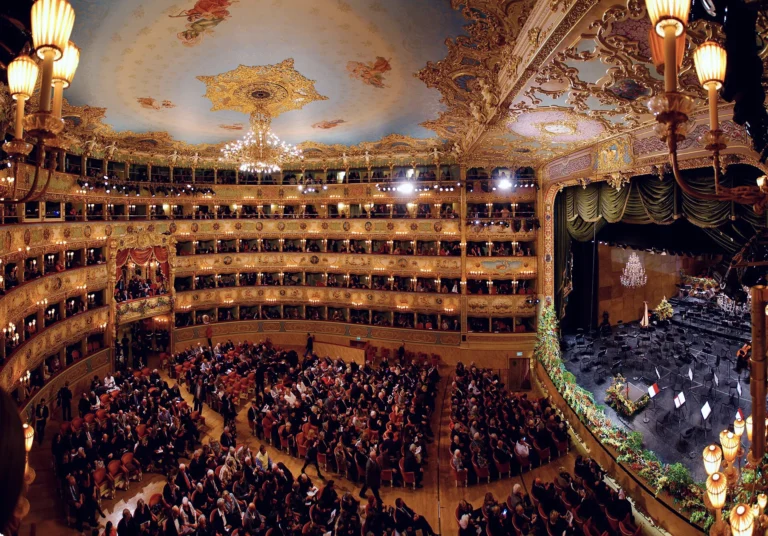
The Official Dinner Show at Ca’ Vendramin Calergi combines a meal with an evening of performance rather than a public-square parade. Admission is for adults aged 18 and over, and tickets start at €650. The menu is prepared by the Wagner Restaurant chefs. Live music, dancers, acrobats, magic, fakir acts and tarot readings lead into a DJ set.
Paid events have separate tickets. The organiser provides purchase routes through the official Carnival website and Venezia Unica sales outlets. Some event pages offer online-only sales. Arrange a paid evening before building the rest of your visit around it, including time to change and reach the venue.
Room demand rises on Carnival weekends, especially the final weekend, when desirable rooms disappear faster and rates climb. As a broad planning estimate, allow about €150–€350 per night for a standard double room in a mid-range hotel in the historic city. Peak weekends and central locations can cost more. Secure your accommodation once your festival dates are decided.
When weighing staying in Venice or Mestre, consider whether you want to return easily to change costume or rest. A historic-city room makes that simpler, while mainland savings come with a journey back after the evening.
Masks, costumes and taking part
Ordinary clothes are acceptable for spectators at public street events. A mask or costume is a way to join in, not a condition of watching. Dress for standing outdoors first, with warm layers and comfortable shoes that cope with steps, bridges and uneven paving.
The bauta, a traditional Venetian disguise, combines a white mask with a projecting, beak-like chin, a black cloak and a tricorn hat. Its shape allowed the wearer to eat and drink while masked, and the outfit helped conceal identity. It offers a recognisable alternative to an elaborate fantasy costume.
To enter the Most Beautiful Mask contest, book a parade slot in person at the dedicated desk beside the stage in St Mark’s Square. Make registration your first stop if participation is the purpose of your visit, rather than arriving only when the parade begins.
- For a simple mask, budget roughly €10–€30, but handmade work can cost considerably more.
- For costume hire, allow roughly €100–€300, depending on the outfit’s complexity and rental period.
- For a purchased costume, allow roughly €150–€500 or more. Detailed bespoke work sits above this range.
Try the mask with your coat and glasses before committing to it. You should be able to see clearly and move comfortably through a crowd, not just pose for photographs.
Frittelle and other Carnival sweets
Frittelle, sweet Carnival fritters, are a seasonal snack to fit between events. The traditional Venetian version is commonly made with raisins and pine nuts, while filled versions often contain custard, cream or zabaglione, a sweet egg-and-wine cream. Choose a filling before ordering, as the pastries can look similar from the counter.
Galani are thin, crisp strips of fried pastry, usually dusted with icing sugar. Castagnole, small round fried dough sweets, are another Carnival choice, typically rolled in sugar. They are different from the larger, often filled frittelle, and suit a smaller snack.
As a rounded budget, allow about €2–€4 for a fritter and €2–€5 for a coffee or other hot drink at the counter, depending on what you order. Sitting at a table can bring a higher price, especially around the main squares. A counter stop suits a quick pastry between performances, while a table is worth considering when you want a proper seated break.
Crowds and getting around
The opening and final weekends draw the heaviest Carnival crowds, with headline spectacles such as the Festa Veneziana water parade and the Flight of the Angel concentrating visitors around Rialto and St Mark’s Square. Arrive before the spectacle rather than at its advertised start if seeing it matters to you. Leave room in your day for the slower approach and departure, not just the performance.
Venice Santa Lucia station and Piazzale Roma are the main arrival points for travellers coming by train or road. From either, allow extra time to reach the viewing areas. If you are staying on the mainland, decide how you will return after your chosen evening before setting out.
ACTV adds Carnival services and special routes, while waterbus services can change around the water procession. AVM/ACTV publishes transport notices through its official channels, and the City of Venice publishes pedestrian-access announcements on its Live website. These changes depend on the event and date, so ordinary service patterns may not apply during a spectacle.
Keep to the right in narrow lanes and keep moving on bridges. Bridges are thoroughfares, not viewing platforms: choose an open square or waterfront for watching, and step clear of the flow when you need to pause or meet someone.
Sources & fact-checking
Checks against the sources below cover: opening hours and services.
- Venice Carnival official website — opening hours
- Comune di Venezia and Ve.La. S.p.A. — opening hours
- Venice Carnival organiser — service
- Venice Carnival Street Show
- Carnevale di Venezia — service
- Carnival Official Dinner Show
- Arsenale Water Show
- Venice Municipal Police (Comando generale della Polizia Locale) — service
- AVM/ACTV — service
- City of Venice (pedestrian access); AVM/Actv (public transport) — service
- City of Venice — service
- Carnevale di Venezia 2026. From myth to sport: Venice celebrates Milan–Cortina in this year’s edition!
- Carnevale di Venezia (official event organizer) — opening hours
- Festa Veneziana – Corteo acqueo del Carnevale 2026
- Carnevale di Venezia official site — opening hours
- La Maschera più bella del #CarnevaleVenezia2026
- Domani in Piazza San Marco sfilerà la Maschera più Bella del Carnevale 2026
- Carnevale di Venezia (official site) — opening hours
- Vela S.p.A. — opening hours
- Festa delle Marie | Carnevale di Venezia 2027 – Official site
- La Festa delle Marie – Il Corteo acqueo
- Venice Carnival (Carnevale di Venezia) — opening hours