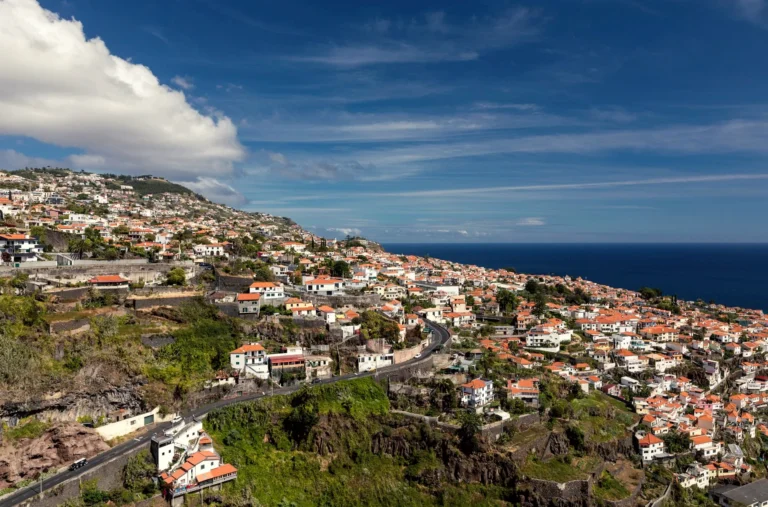
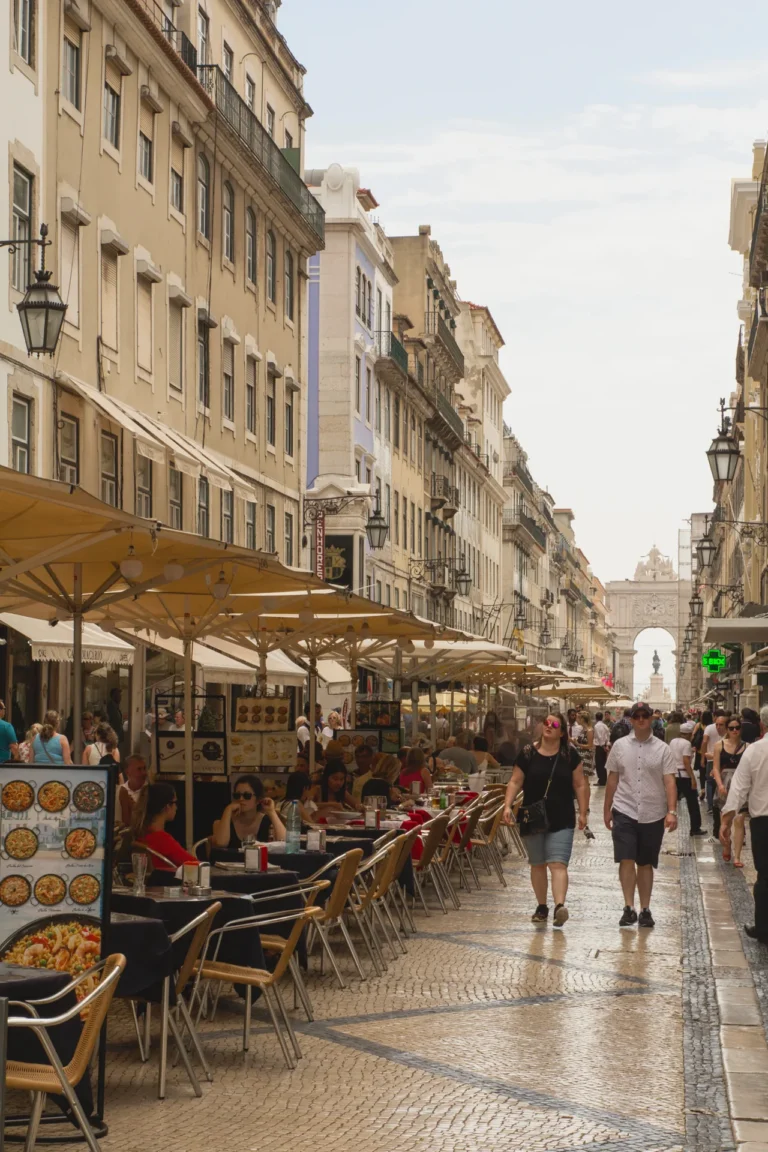
Choose the lower Old Town for central sightseeing and restaurant evenings, or choose the Lido for a waterfront-oriented stay. Rua Santa Maria puts your accommodation among the Old Town’s dining streets, while the Lido puts the coastal promenade close at hand.
Funchal Cathedral provides a useful central reference for comparing the two. Your room’s exact position matters too: an address uphill from the waterfront changes the walk, and a bedroom facing a busy dining street or main road changes the evening.
Old Town and the Lido compared
| Criterion | Lower Old Town | Lido waterfront |
|---|---|---|
| Representative walk to Funchal Cathedral | about 1000 metres; about 14 minutesBest | about 2.8 km; about 40 minutes |
| Terrain | Level lowest streets; rising, cobbled side lanes | Level promenade; rising terrain by Estrada Monumental |
| Evening surroundings | Restaurant tables, bars and conversation | Road traffic; promenade walkers and drinks |
| Accommodation mix | Guesthouses, apartments; a few hotels | Large hotels, resorts and apartments |
| Typical room-only night for two | €90–€150 | €100–€170 |
These rounded room estimates use the same basis: a mid-range private en-suite double for two adults, room only, on ordinary spring or autumn weekdays outside holiday peaks, booked a few months ahead with comparable cancellation terms. Sea views, larger rooms and peak demand push prices upwards, while simpler rooms and less sought-after dates can bring them down. Neither area guarantees a cheaper equivalent room.
The Old Town walk starts at Largo do Corpo Santo, in the lower seafront neighbourhood around Rua Santa Maria. The Lido walk starts at the waterfront by the Lido bathing complex, beside the hotel stretch of Estrada Monumental west of the centre. Both end at Funchal Cathedral, a central sightseeing landmark. An accommodation address farther inland adds a different approach, so treat these as neighbourhood reference points rather than walks from every front door.
The bus-based Lido-to-cathedral journey is about 2.9 km and about 18 minutes, combining an access walk, a ride on route 001 and the final walk to the cathedral. Allow separately for waiting at the stop. This inbound journey is distinct from the route 002 evening return connection described below. The Old Town favours frequent central visits on foot, while the Lido favours days spent by the waterfront.
Old Town around Rua Santa Maria
Rua Santa Maria is the dining spine of the lower Old Town, east of Funchal’s central streets. Around it and Largo do Corpo Santo, you can make restaurant evenings part of the stay rather than a separate outing. The base meant here is the seafront neighbourhood and its lowest streets, not every lane climbing inland.
Guesthouses and self-catering apartments or flats dominate, with a hostel and a few hotels rather than a broad choice of large resorts. Choose this area for a smaller-scale base with dining close by, not for a resort-style stay. An apartment can suit a traveller who wants space to prepare meals, while a guesthouse offers a different arrangement within the same neighbourhood.
The seafront and main street are fairly level, but side lanes rise and may include steps. Uneven cobbles make wheeled luggage awkward even on the lowest streets, and wet weather can make the surface slippery. A low-lying address does not guarantee smooth footing. Shoes with good grip and luggage you can lift briefly are more useful here than assuming every approach will be an easy roll.
In the evening, restaurant tables extend onto Rua Santa Maria’s cobbles, with conversation and music from bars and restaurants. That proximity is enjoyable if dinner and drinks are your priority, but a street-facing bedroom may receive the same activity. If undisturbed evenings matter more than dining on your doorstep, favour a room away from the dining street or the Lido instead. Room orientation still matters in either area.
Lower Old Town as your base
Pros
- Suits travellers making frequent central visits on foot.
- Restaurant evenings can stay close to your accommodation.
- Guesthouses and apartments offer a smaller-scale alternative to large hotels.
Cons
- A poor fit if you want a large resort as the focus of your stay.
- Street-facing bedrooms can receive restaurant and bar noise.
- Cobbles, rising side lanes and steps can be troublesome with luggage or limited mobility.
The Lido waterfront and Estrada Monumental
The Lido waterfront, west of central Funchal, suits a stay built around the coastal promenade rather than the Old Town’s dining lanes. Use the promenade and the adjacent hotel stretch of Estrada Monumental as the search area, not the whole São Martinho parish. Large hotels and resort-style properties are the main accommodation character, alongside apartments and holiday rentals.
The Lido promenade is comparatively level and gives you somewhere to walk by the sea without making a central sightseeing trip. Estrada Monumental and the approaches around it lie in rising, often steep terrain. Choose the accommodation’s position relative to the promenade, not just a “Lido” label. A waterfront-focused day can still involve an uphill return to your room.
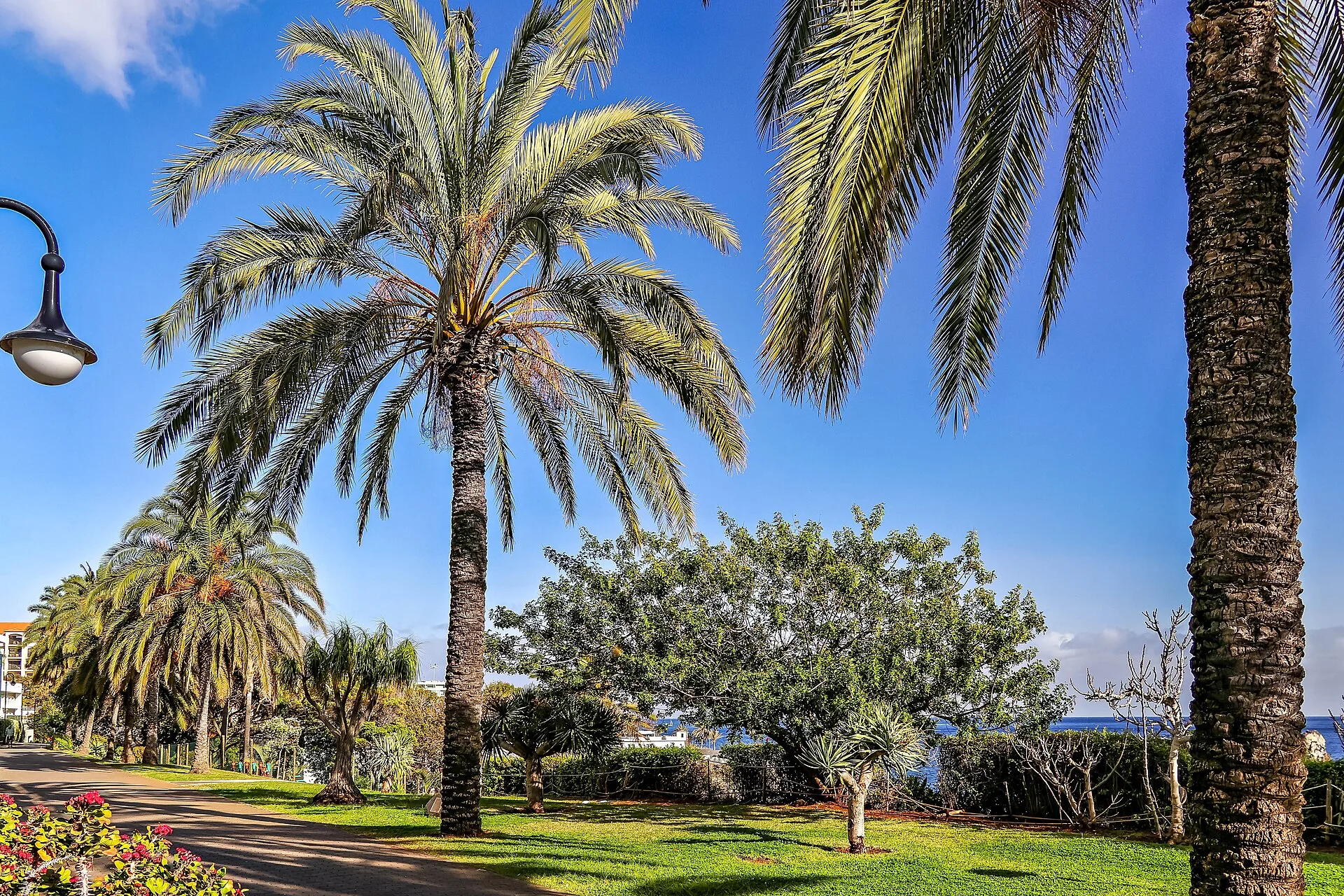
Dr · CC BY-SA 4.0
Estrada Monumental carries traffic into the evening, while the promenade attracts walkers, joggers and people stopping for drinks. A road-facing bedroom may pick up passing cars; rooms set away from the road can have a different exposure. The Lido is not automatically a quiet alternative to Rua Santa Maria. The building and bedroom layout matter as much as the area name.
Lido as your base
Pros
- Suits travellers who want waterfront walks woven into their days.
- A stronger fit for those seeking large hotels or resort-style accommodation.
- Apartment alternatives let you stay near the coast without choosing a resort.
Cons
- Reject it if repeated journeys to central sights would dominate your stay.
- The level promenade does not remove slopes around your accommodation.
- Road-facing rooms can receive evening traffic noise.
For a return from the centre, Horários do Funchal route 002 connects central Funchal with the Lido promenade. Board towards the Lido at Palácio de São Lourenço. This makes a central dinner possible without committing to a walk back, but your meal needs to leave time to reach the boarding point.
Which area should you choose?
- Choose the lower Old Town if frequent central sightseeing on foot and nearby restaurant evenings matter most. Reject a street-facing room if bar and dining noise would spoil your sleep, and avoid a difficult cobbled or stepped approach if footing is a concern.
- Choose the Lido if waterfront time and a larger hotel are the centre of your stay. Reject it if you want to return to your room repeatedly between central visits. Choose room orientation carefully if road noise matters.
- Use the Lido as a price-led fallback only when a comparable room is genuinely cheaper. The trade-off is a one-way walk of about 40 minutes from the waterfront to Funchal Cathedral, or a bus journey with access walks and waiting. Compare like-for-like cancellation terms and room features before treating the offer as a saving.
The best part of Funchal to stay in is therefore the one closest to the activities you want most often. Let your everyday plans decide, then narrow the choice to the actual address and bedroom. Neither an Old Town location nor a Lido sea view cancels out an awkward approach or unwanted evening noise.
Sources & fact-checking
Checks against the sources below cover: services.