Choose September for a walking-led visit to Strasbourg, or late spring if longer outdoor days matter more to you. Christmas markets are a separate reason to travel: you trade easy browsing and daylight for a festive visit, with weekday dates generally the more comfortable choice. For ordinary sightseeing, European Parliament session weeks can matter as much as the season when choosing accommodation.
Best months for sightseeing
- Walking-led sightseeing
- September
- Longer-day alternative
- Late spring
- Highest average precipitation
- May
- Lowest average precipitation
- February
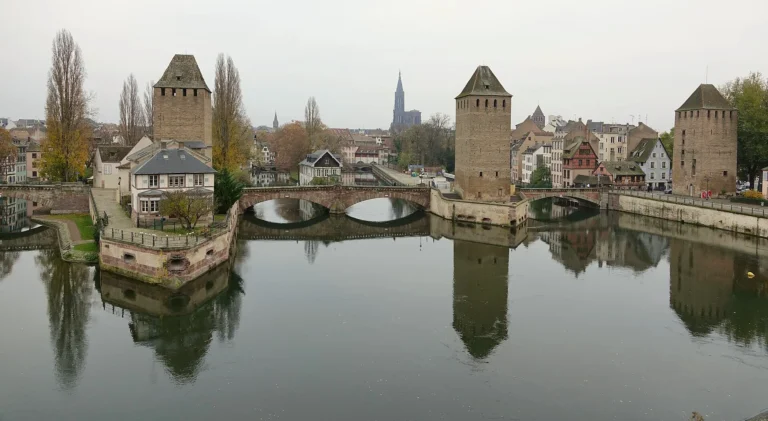
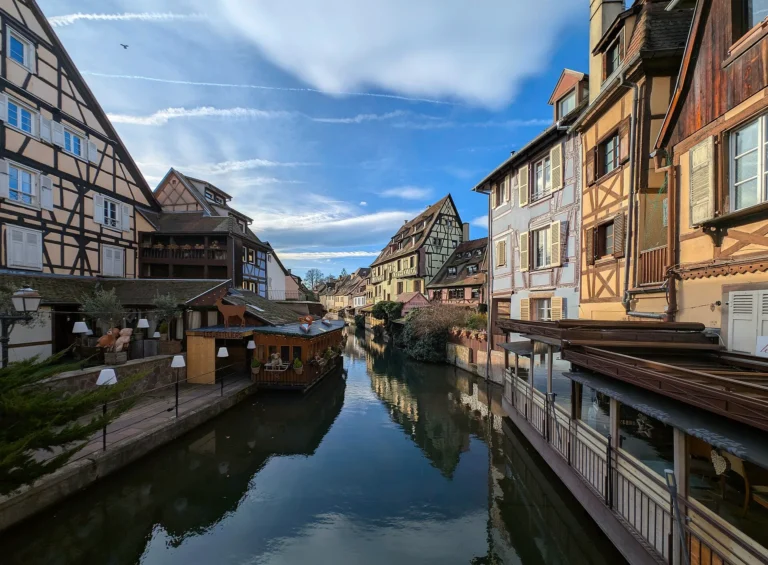
September offers a useful balance for exploring Petite France and the Grande Île historic centre on foot. Its rainfall average is lower than those of late spring and summer, while you still have more scope for outdoor sightseeing than in late autumn. It is the strongest choice if walks are the main purpose of your trip, rather than a particular event.
Late spring gives you longer days for lingering outside, but it is not the drier alternative. For a February visit, cold and limited daylight change how much time you will want to spend outdoors.
For Christmas markets, choose dates around browsing rather than an all-day walking programme. For either kind of visit, weigh your accommodation dates against the European Parliament plenary calendar as well as the season.
Rainfall by month
| Month | Precipitation | Sightseeing verdict and cause |
|---|---|---|
| January | 42.9 mm | Mixed: cold, short days |
| February | 41.4 mm | Mixed: drier, still wintry |
| March | 46.6 mm | Mixed: cool outdoor days |
| April | 49.3 mm | Good: increasing daylight |
| May | 82.6 mm | Mixed: long days, wetter |
| June | 73.2 mm | Mixed: daylight, heat risk |
| July | 77.2 mm | Mixed: heat, summer rain |
| August | 70.5 mm | Mixed: heat affects walks |
| September | 59.9 mm | Good: lower rain, walking |
| October | 67.1 mm | Mixed: shortening days |
| November | 57.9 mm | Mixed: limited daylight |
| December | 55.1 mm | Good for markets; cold |
Longer summer days do not mean a dry season. The warmer part of the year has substantial precipitation totals, so daylight alone is not a reason to expect uninterrupted outdoor sightseeing. The September recommendation balances that pattern with the time available for walking, rather than simply choosing the driest month.
Total precipitation is the amount accumulated over a month, averaged across the observation period. It is not a count of rainy days: the same total can fall in concentrated showers or be spread across more days. These historical averages help you choose a season, but they do not forecast the weather during your stay.
Spring, autumn and Parliament sessions
Late spring suits longer outdoor days, while early autumn suits a walking-led stay with lower average rainfall. In May, leave room to linger around the cathedral and explore the canals of Petite France without treating the extra daylight as a promise of dry weather. September offers a better rainfall balance for making those walks the centre of your trip.
Early spring is a different choice: March and April favour shorter outdoor stretches with an indoor visit between them. In late autumn, shortening daylight makes a museum-led day more appealing than a long succession of walks. The Alsatian Museum, focused on regional life and traditions, gives an indoor visit a distinctly local subject.
In 2026, the European Parliament calendar includes 12 four-day Strasbourg part-sessions, generally Monday to Thursday. During plenary weeks, hotel demand rises sharply, rooms can be difficult to find and prices tend to rise. For ordinary sightseeing, choosing non-session dates can improve accommodation choice without changing the season. This pressure is tied to the session week, so a spring or autumn date is not automatically a quieter or cheaper hotel stay.
Summer walks and heat
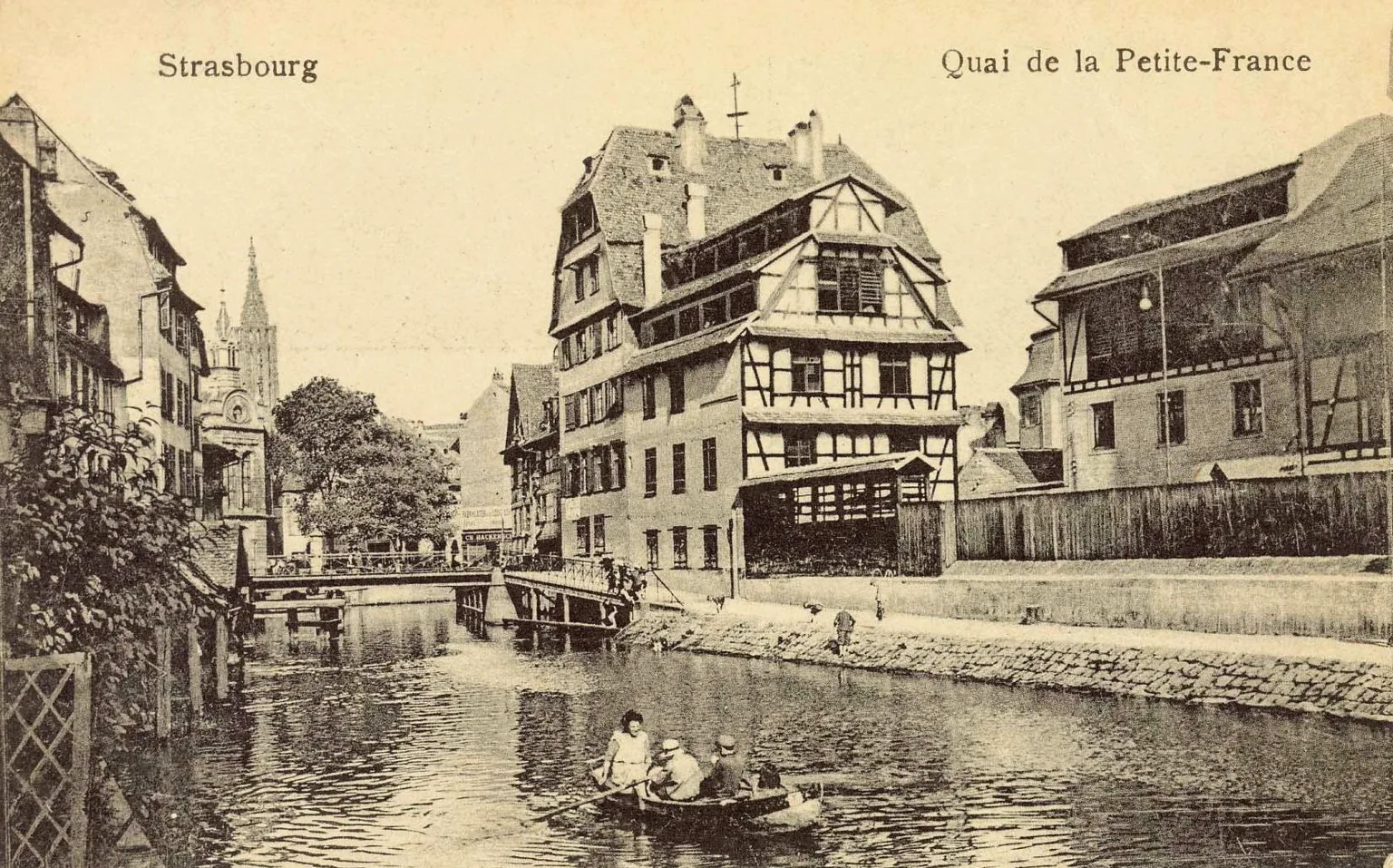
Summer’s long days let you separate outdoor sightseeing into morning and evening stretches. Keep exposed walks shorter in hot weather, rather than using all the available daylight for one continuous outing. Quai de la Petite France, beside the waterways in the historic former milling and tanning district, is a concrete choice for a riverside stroll, but being beside water is not a substitute for a break from the heat.
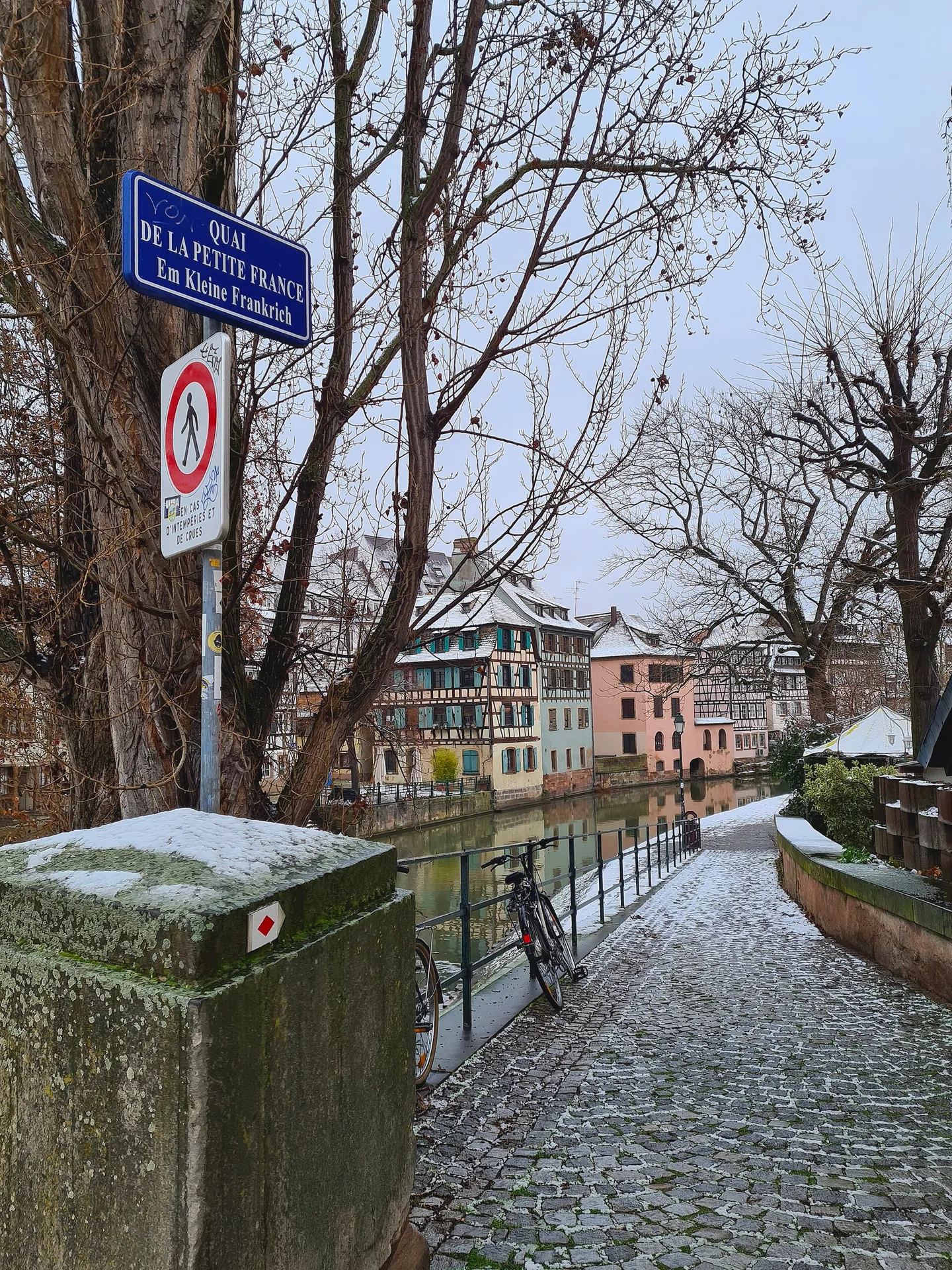
Ji-Elle · CC BY-SA 4.0 · Edited
The DREAL Strasbourg-area climatology records averages of 51 hot days, defined by a maximum of at least 25°C, and 11 very hot days, with a maximum of at least 30°C. That makes heat a meaningful trade-off when choosing summer for extensive walking.
Keep a substantial indoor cultural visit movable, such as the Strasbourg Museum of Modern and Contemporary Art. If rain interrupts an exposed walk, shorten it and use that visit instead. This flexibility is useful beyond summer too, as it lets the weather change the order of your day without taking away its main interest.
Christmas markets and winter sightseeing
Choose Christmas-market travel for the markets themselves, not for the easiest walking weather. Each edition has its own opening window, while the recurring chalet hours below help you arrange your browsing day. Cold and limited daylight favour a shorter sightseeing programme, leaving energy for the chalets. Snow is not something to build the trip around.
The recurring chalet hours are 11:30–21:00 daily, with opening day starting at 14:00. Visit on a weekday for more room to browse. Weekends bring heavier crowds, especially on Saturday afternoons and evenings, when moving between stalls and stopping to look can be less comfortable.
January and February suit a different purpose: an indoor-led Strasbourg visit, with short walks around the cathedral or through Petite France between cultural stops. Their appeal is not a continuation of the Christmas-market trip. Choose them if you are happy to make museums the main activity and accept cold weather and shorter daylight. Take the municipal holiday closures into account before arranging that indoor day.
Holiday closures and Christmas entry
- During Christmas-market visits, allow for random pedestrian checks at access points and within the market in the Grande Île historic centre.
- Suitcases, backpacks and cargo bikes are systematically inspected when entering the Grande Île. Leave luggage at your accommodation before browsing if you can.
- Ascension falls 39 days after Easter Sunday, always on a Thursday. Treat it as a movable public holiday when choosing spring dates, rather than assuming it falls on the same date each year.
The Grande Île contains the cathedral and much of the historic centre, so entry checks affect more than a single market square. Arriving with luggage means an inspection before you can begin browsing. Holiday closures can also remove the indoor stop around which you arranged a spring or autumn day.
Sources & fact-checking
Checks against the sources below cover: key figures, services, closures, and opening hours.