Choose December weekdays within the Christmas-market season if the stalls are your reason for visiting Colmar. You trade comfortable walking weather for a Christmas-focused trip, with cold outdoor stops and greater demand for central accommodation. For a visit built around exploring the old town on foot, May or September is the better choice on daytime-temperature grounds.
December or a milder month?
- Christmas-market choice
- December weekdays within the confirmed market season
- Walking-led choice
- May or September
- Warmest month by mean daily maximum
- July
- Coldest month by mean daily maximum
- January
December is a choice for Christmas activity, not for the mildest sightseeing conditions. Market browsing means stopping outdoors as well as walking, so leave room for warm indoor pauses rather than planning an uninterrupted day outside. The market-season warning below sets the boundary for a stall-led visit.
May and September suit a different priority: spending more of the day looking at the old town’s buildings and exploring its streets on foot. Their milder daytime conditions make them stronger choices for that style of visit, though neither removes the need to adapt to the day’s weather.
Daytime temperatures by month
| Month | Mean daily maximum | Outdoor sightseeing |
|---|---|---|
| January | 5.6°C | Poor fit: cold daytime stops |
| February | 7.5°C | Poor fit: chilly outdoor sessions |
| March | 12.3°C | Mixed: cool for lingering |
| April | 16.9°C | Good fit: milder walking |
| May | 20.8°C | Good fit: comfortable daytime walking |
| June | 24.5°C | Good fit: warm outdoor days |
| July | 26.6°C | Mixed: heat can limit walking |
| August | 26.3°C | Mixed: warmest-season heat |
| September | 21.9°C | Good fit: mild daytime walking |
| October | 16.3°C | Good fit: cooler walking weather |
| November | 9.8°C | Mixed: cold for long stops |
| December | 6.2°C | Poor fit: cold outdoor browsing |
A mean daily maximum is the average of each day’s highest temperature over the observation period. It describes typical daytime warmth, not the temperature throughout the day. Mornings and evenings can be colder, and an individual day’s high can differ substantially from the historical average.
The contrast matters most when you decide how much of the visit to spend outside. Winter conditions favour shorter walks interrupted by indoor breaks, while the warmer part of the year gives you more scope for a walking-led day. In midsummer, warmth can instead make long exposed stretches less appealing, so save those for cooler parts of the day.
May and September offer a middle ground between winter cold and midsummer warmth. April and October can also suit outdoor sightseeing if you prefer cooler walking conditions.
Christmas markets and December crowds
- Monday–Thursday market hours
- 11:00–19:00
- Friday–Sunday market hours
- 10:00–20:00
- 25 and 26 December 2026 market hours
- 10:00–20:00
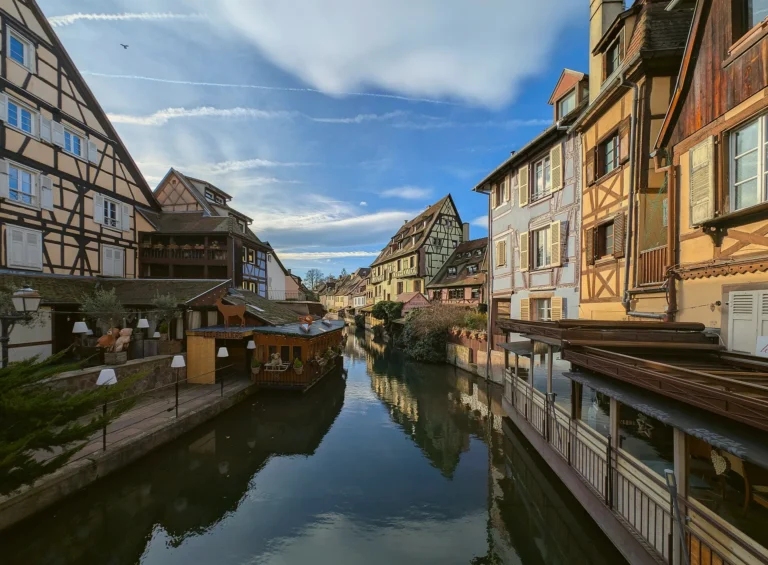
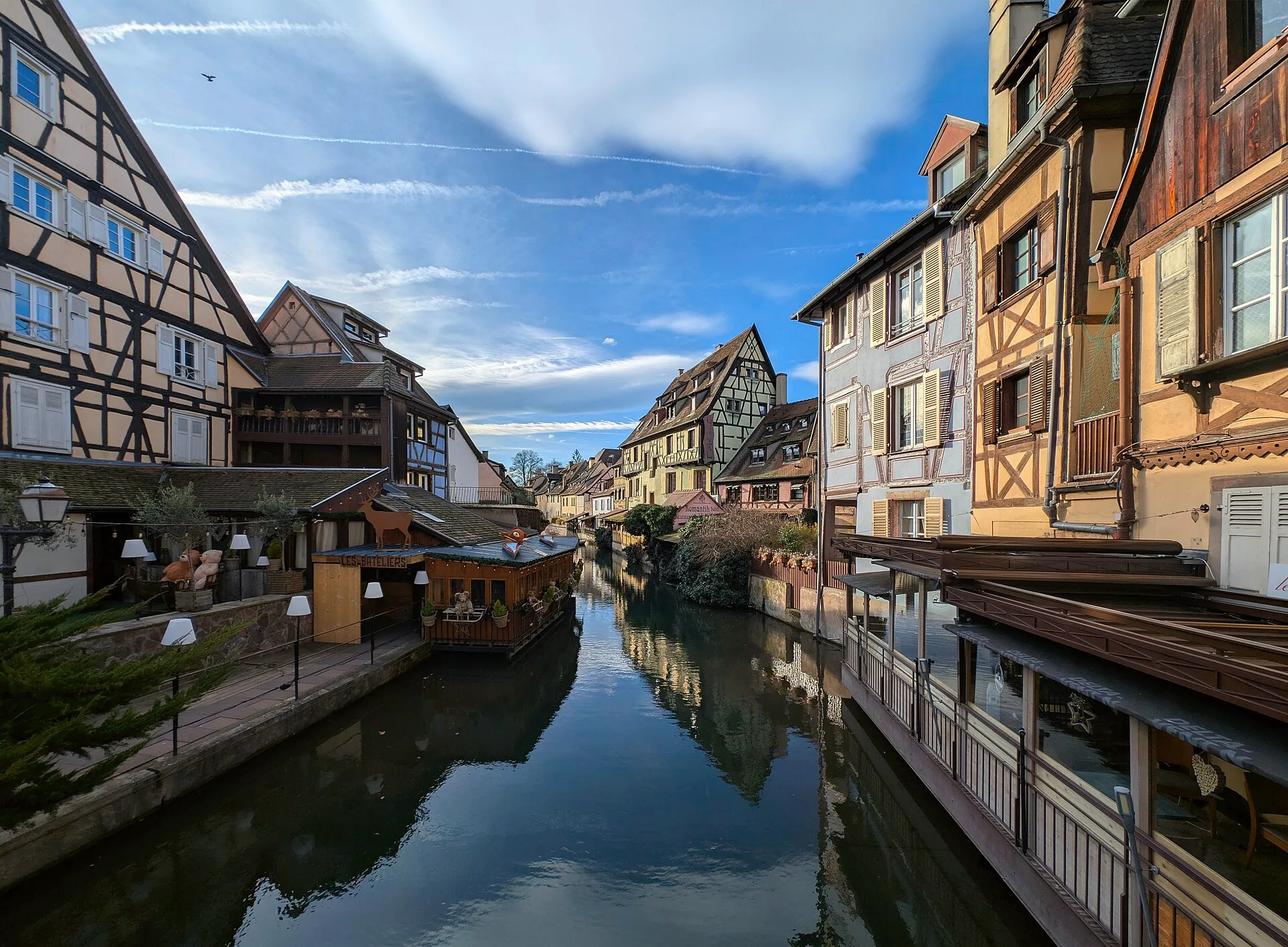
Colmar’s Christmas markets give December its particular appeal: browsing stalls becomes part of the visit rather than an interruption to sightseeing. Place des Dominicains is one of the settings where you can combine the market with time looking at the surrounding old-town buildings. Allow yourself to stop and browse rather than treating every market as a quick stop on a walk.
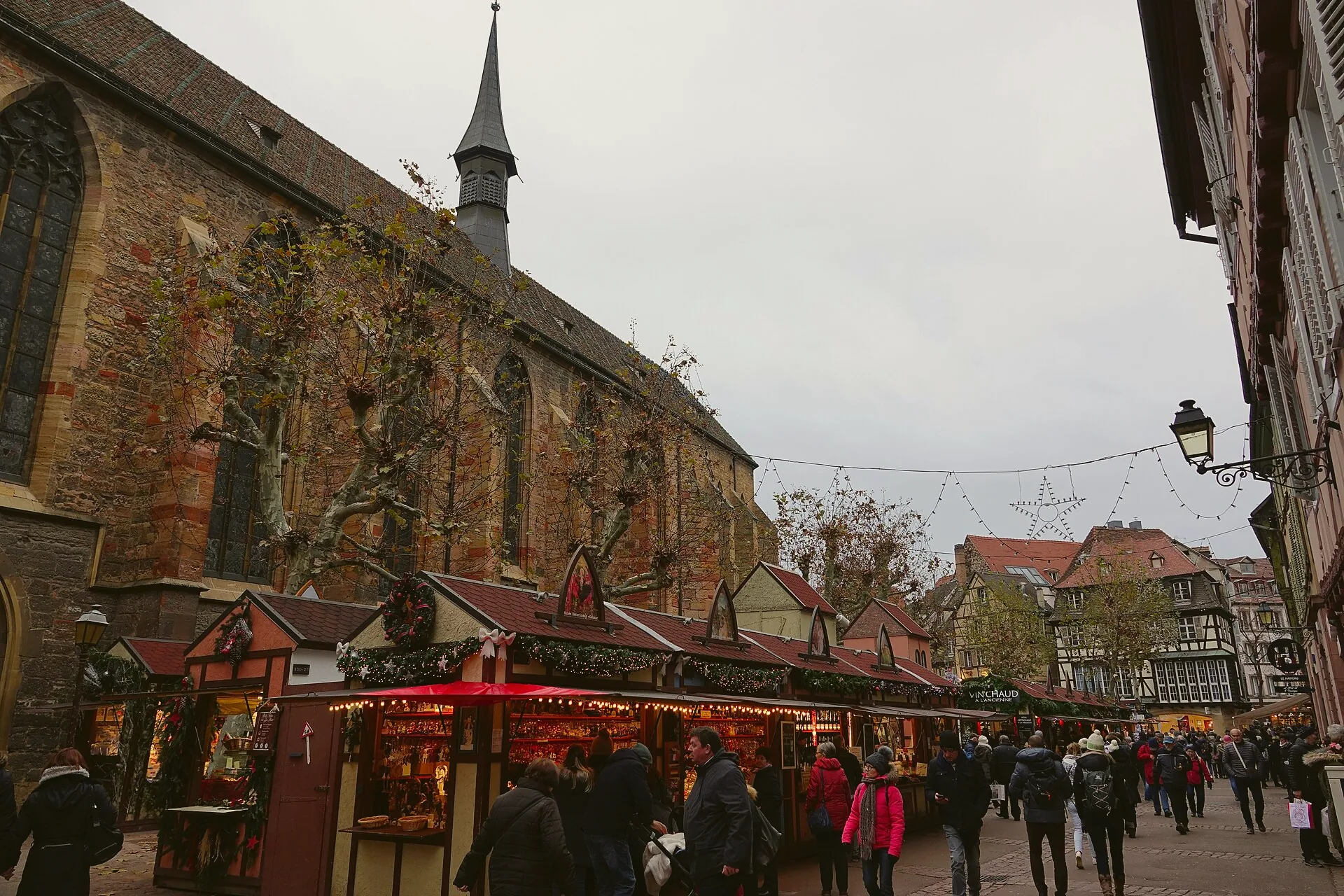
Gzen92 · CC BY-SA 4.0 · Edited
Avoid Saturdays if easier movement between stalls is your priority. Weekends generally bring the heaviest visitor pressure, especially Saturdays. Weekdays tend to be easier, but they can still be busy. Some Sundays are manageable too. A weekday visit is a useful preference, not a promise of empty streets.
For accommodation, compare like with like: the same standard of central room, with similar cancellation terms and breakfast arrangements. Higher festive demand can mean paying more for that convenience or accepting less choice. If your dates are flexible, favour a weekday stay over a market weekend to reduce your exposure to the strongest visitor demand.
Cold-weather sightseeing and Christmas holidays
- 25 December, Christmas Day, is a statutory public holiday throughout France. Allow for disruption to ordinary shopping and avoid making an indoor venue essential to the day’s success unless its holiday opening is established.
- 26 December, St Stephen’s Day, is an additional statutory public holiday in Alsace-Moselle, including Colmar. Treat ordinary shopping and indoor sightseeing as holiday plans here too, rather than assuming the usual weekday routine.
The markets’ holiday opening exception in the preceding section makes them a separate consideration from ordinary shops and indoor attractions. Public-holiday status does not determine every venue’s opening arrangements. Build a day that remains enjoyable if a particular indoor stop is unavailable, rather than assuming everything either opens or closes together.
Start outdoor sightseeing in daylight, using the old town and its canals for the walking part of the day, then leave room for market browsing. Walking generates warmth, but standing still at stalls does not. Break up long outdoor sessions with a meal or a warm indoor pause.
Keep an evening market visit shorter than an uninterrupted daytime walk. Cold can become more noticeable when you linger, especially after dark. If rain arrives, move the indoor break into that part of the day and return outside when it is more comfortable.
After the season boundary in the warning, Colmar’s old town remains a sightseeing destination, but the Christmas stalls no longer provide the reason for a market-led trip. Choose those later dates for the town itself, not as a substitute for a visit during market season.
Sources & fact-checking
Checks against the sources below cover: key figures and opening hours.