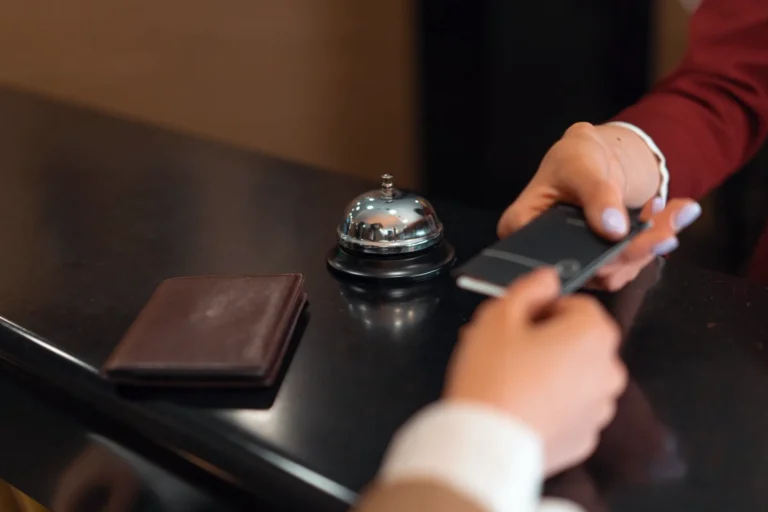
In New Orleans, use a debit card enabled for international ATM withdrawals if its charges suit you. If you are relying on foreign banknotes instead, obtain a small US-dollar reserve before arrival rather than depending on finding a walk-in exchange counter. Direct card payment where accepted reduces how much cash you need.
Hancock Whitney advertises a foreign-banknote buyback service, but exchanging notes and withdrawing dollars with a card are different transactions. Choose by the dollars you receive after all charges, and keep a backup way to pay if your first withdrawal fails.
Cash, cards and foreign banknotes
| What you have | First action | Condition |
|---|---|---|
| Internationally usable debit card | Withdraw US dollars | Compatible ATM network and acceptable charges |
| Foreign banknotes only | Obtain US dollars before arrival | Arrange a reserve before travelling |
| Time to prepare | Bring a modest dollar reserve | Size it around planned cash spending |
The best cash option depends on what you can use, not simply on an advertised exchange rate. For a card withdrawal, allow for both the machine’s fee and your issuer’s charges. For banknotes, compare the final dollar payout after any exchange charges. A favourable-looking rate can still leave you with fewer dollars.
Pay directly by card where accepted, and keep cash for purchases or tips you intend to pay that way. Use tipping in New Orleans to plan small notes around customary tips and bill checks, rather than converting your whole trip budget into cash.
A reserve should let you make the cash payments you expect and cope with a failed first withdrawal. Carrying more adds money to look after without necessarily saving enough in fees to justify it. Keep a backup payment card separate from the one you use at the ATM.
Exchanging foreign banknotes
Hancock Whitney buys back most unused foreign paper currency for US dollars. That is a banknote-exchange service: you hand over foreign notes and receive dollars. It is distinct from withdrawing funds already held in your bank account, so it matters particularly if the money you have brought is physical currency.
At Louis Armstrong New Orleans International Airport, an airport retail directory lists Travelex America as a currency-exchange service in the West Terminal, after security. For money you need before entering the secured departure area, use a compatible debit card or a dollar reserve rather than relying on this departure-side listing.
Ordering foreign currency for home delivery is not the same as selling foreign notes for dollars. A delivery service supplies currency ordered ahead of travel. An electronic money transfer moves funds between accounts or recipients, rather than exchanging the banknotes in your wallet. Choose the service that handles the form of money you actually have.
ATM withdrawals and fees
- Match the ATM’s network marks to your debit card, using a card enabled for international withdrawals and its PIN.
- Select a cash withdrawal and the US-dollar amount you need.
- Read the operator’s fee before accepting. Continue if it suits you, or cancel before agreeing to an unwanted charge.
- Take your cash, card and receipt, if offered, before leaving.
Louis Armstrong New Orleans International Airport has ATMs throughout the terminal, before and after security, so you do not need to enter the departure area to withdraw cash.

Monstera Production · Pexels License · Edited
The airport’s ATM solicitation caps the customer surcharge at $3 per transaction unless the airport approves a higher amount in writing. Read the displayed charge for the withdrawal you are making rather than assuming every machine will charge the same amount.
Under the US Electronic Fund Transfer Act and Regulation E, an ATM operator charging a fee must disclose its amount on-screen or on paper before you are committed to paying. It can charge only after you receive that notice and elect to continue.
The operator’s surcharge is separate from your card issuer’s charges. Your issuer may add an ATM-withdrawal fee and a foreign-transaction or currency-conversion fee, depending on your card. The machine’s fee screen does not replace your card’s fee terms.
Repeated withdrawals can mean repeated fixed charges. Withdraw enough for planned cash spending, without carrying unnecessary cash merely to avoid another fee.
A credit-card withdrawal is typically a cash advance, with a cash-advance fee and interest starting immediately, often at a higher rate without a grace period. A debit-card withdrawal draws on your balance rather than borrowing money.
US dollars and currency conversion
Dynamic currency conversion is an offer to bill you in your card’s home currency. It can appear at an ATM or a merchant’s card terminal. In New Orleans, choose the local US-dollar amount to leave conversion to your card’s usual arrangements.
Visa’s rules require the offer to show both currency amounts and symbols, the exchange rate and any conversion commission, fee, markup or margin. It must identify who conducts conversion and show that you were offered a choice and expressly agreed. Conversion is optional under Visa’s rules.
Do
- Choose US dollars or the local-currency amount.
- Select the option to decline conversion while continuing the withdrawal.
- At a merchant terminal, request US-dollar billing.
Don’t
- Accept home-currency billing simply because the amount is familiar.
- Confuse declining conversion with cancelling the cash withdrawal.
Declined withdrawals and cash problems
If a withdrawal is declined, use a backup payment card or US cash obtained before arrival to continue paying for what you need.
If your account is debited but the machine dispenses no cash or only part of it, keep evidence for reporting the problem to your issuer:
- The receipt, if printed, and the ATM’s identity or location, noted or photographed.
- The transaction date, time, amount and account entry or alert showing the debit.
- What happened, including how much cash, if any, you received.
If the ATM retains your card, contact your issuer immediately to report it and request blocking and replacement. Contact the ATM operator or bank branch too about retrieval. While that is being resolved, use your separate backup card or dollar reserve rather than depending on recovering the retained card.
Sources & fact-checking
Checks against the sources below cover: fares and charges, as well as services.
- Louis Armstrong New Orleans International Airport — service
- New Orleans Aviation Board — fares and charges
- Consumer Financial Protection Bureau — service
- Mastercard; ATM owner/operator and card-issuing financial institution set their respective charges — fares and charges
- Foreign Currency Exchange | Hancock Whitney Bank
- International Banking | Hancock Whitney Bank
- New Orleans Aviation Board — service
- Currency Exchange International, Corp. — service
- The merchant or ATM acquirer, or its DCC service provider — service
- Visa — service