From Bologna, you can spend a morning around Modena’s cathedral and food market, explore Ferrara’s moated castle, or give a whole day to Parma, Ravenna or Brisighella. Choose one destination rather than trying to combine them: the longer outings reward time for lunch, several interiors or a hill-town climb.
Choose a half-day or a full day
| Criterion | Modena | Ferrara | Parma | Ravenna | Brisighella |
|---|---|---|---|---|---|
| Outward transport from Bologna Centrale | Regional: about 32 minutes | Regional example: 43 minutes | Fast regional: just under an hour | Regional: about an hour and a quarter | Intercity to Faenza: about 26 minutes; bus 199 onward: about 26 minutes, including access walks |
| Destination station to main sight | Piazza Grande: about 16 minutes | Este Castle: about 21 minutes | Piazza Duomo: about 15 minutes | San Vitale: about 14 minutes | Via degli Asini: about 8 minutes |
| Route distance from Piazza Maggiore | about 40 km | about 50 km | about 93 km | about 86 km | about 65 km |
| Time away | Half-day | Half-day | Full day | Full day | Full day |
| Principal adult admission | Ghirlandina: €6 | Castle: €12; optional Lions Tower +€2 | Baptistery pass: €12 | Combined ticket: €12.50; Galla Placidia included, no supplement | Fortress combined ticket: €5 |
| Principal closures | Tower: 25 December; 1 January morning | Castle: Tuesdays, 25 December; tower: 30–31 December | Baptistery: services; 25 December, 12:30–15:30 | Galla Placidia and Sant’Apollinare Nuovo: 25 December, 1 January | Fortress: 25 December, 1 January; seasonal days |
| Late regional return to Bologna | — | 23:02 daily, last regional | — | 22:17 service example | — |
The shared walk from Piazza Maggiore to Bologna Centrale is about 1.6 km, about 21 minutes. Add waiting before departure and time for the change at Faenza when deciding how much sightseeing fits.
- Choose Modena for Romanesque architecture and market food.
- Choose Ferrara for its castle and walls.
- Choose Parma for art and lunch.
- Choose Ravenna for mosaics.
- Choose Brisighella for medieval lanes and slopes.
1. Modena
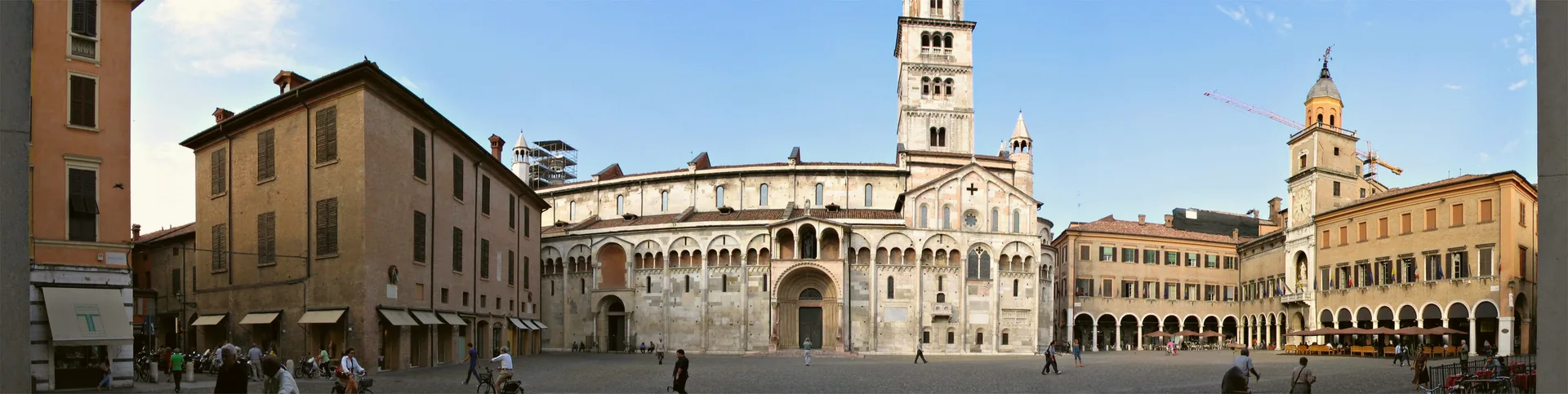
Modena is the strongest half-day choice for cathedral architecture and a food market. Start in Piazza Grande, where the cathedral’s Romanesque sculpture and the adjoining Ghirlandina bell tower give you plenty to look at without moving between distant sights. Examine the carved figures around the entrances before going inside.
Davidtsousa · CC BY-SA 3.0 · Edited
Mercato Albinelli, the covered food market near the square, makes a morning outing particularly worthwhile. Browse the food stalls, then leave time to taste or buy balsamic vinegar in town. A visit to a vinegar producer is a different outing, not something to squeeze into the square-and-market walk. In rain, concentrate on the cathedral and covered market.
The Ghirlandina climb involves roughly 200 steps on narrow, steep internal stairs. It can be strenuous and is unsuitable for visitors with mobility difficulties. Keep the tower optional if you prefer a level walk. The square and cathedral still give the visit a clear focus.
Direct regional trains connect Bologna Centrale with Modena, with multiple daytime departures. Operating days vary between individual trains, including daily, weekday and holiday services. From Modena station, walk into the historic centre towards Piazza Grande. Once there, the cathedral, tower and market form a compact outing.
2. Ferrara
Choose Ferrara for a castle-led half-day, extending it if you want lunch and the walls. Este Castle puts a moat and fortified towers in the middle of the city. Walk around the exterior before exploring the museum route inside, where the building’s defensive origins and later courtly use give the visit its contrast.

Dani1998ele · CC0 · Edited
Continue towards Palazzo dei Diamanti to see the diamond-shaped stonework on its exterior. An optional stretch of Ferrara’s walls adds a greener, more open walk, but need not turn the visit into a cycling excursion. You can enjoy this selection on foot.
In rain, give the castle interiors most of your time. In summer heat, walk the exposed walls earlier or later, rather than making them the centre of a midday outing.
Advance booking is not compulsory for an individual standard castle visit. A reservation gives priority over visitors without one at the agreed time, useful if you want to organise the rest of the outing around entry.
Direct regional trains serve Ferrara from Bologna Centrale. Daytime departures are generally about 30–60 minutes apart, varying by time and operating day, with weekday and weekend services. From Ferrara station, walk towards Este Castle to begin the visit.
3. Parma
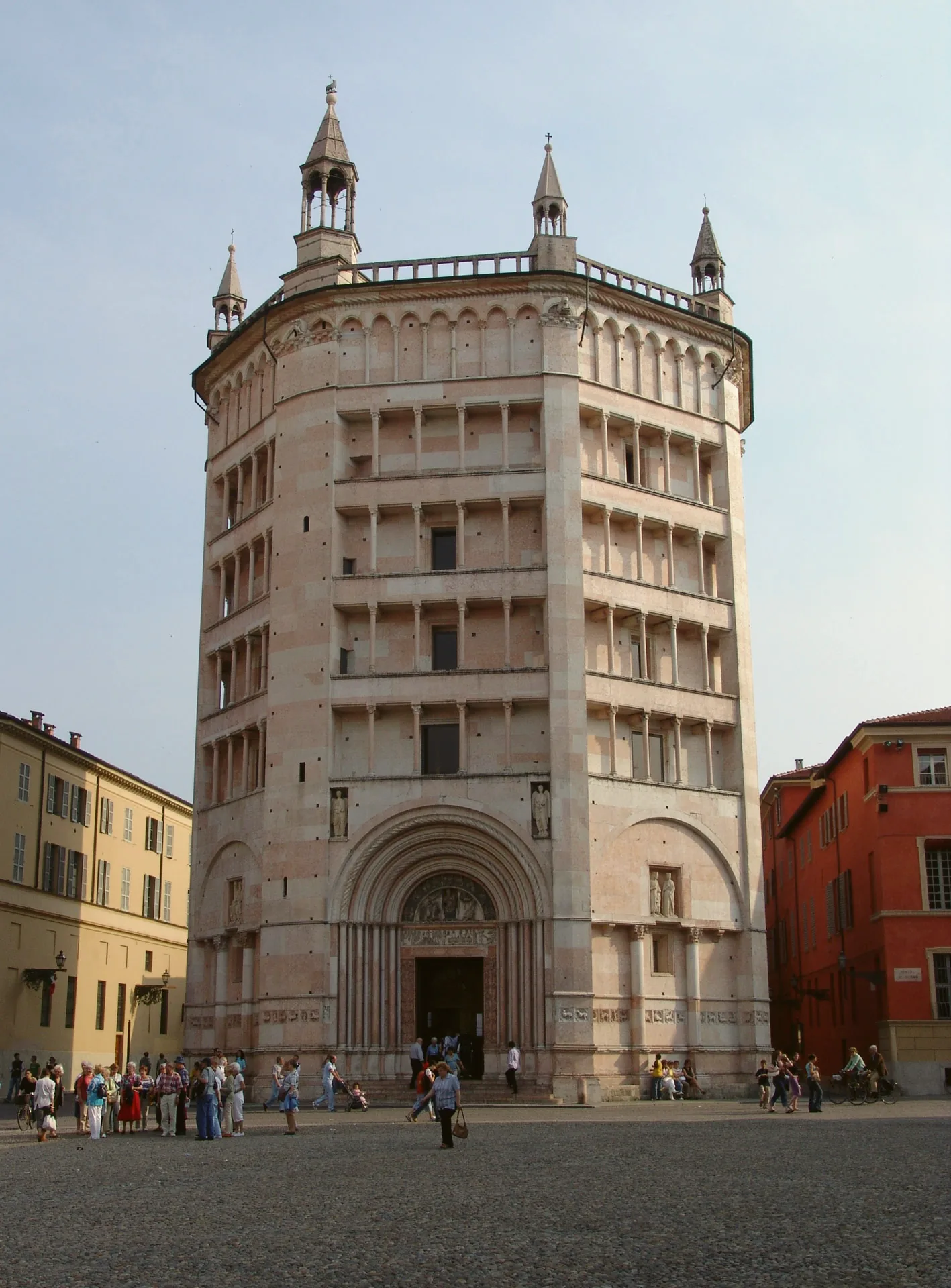
Give Parma a full day for the cathedral, baptistery and an unhurried lunch. In Piazza Duomo, look up into the cathedral’s painted dome, where Correggio’s Assumption draws the eye into a swirling composition. Beside it, the baptistery’s pink-marble exterior offers a different kind of detail, with sculpted portals and tiers of open galleries.
Philip Schäfer · Public domain · Edited
Go inside the baptistery to see its painted interior rather than treating it only as a photograph stop. Its visiting pass lasts two days and also includes the Diocesan Museum, giving you another indoor option without needing to add a separate excursion.
For lunch, enjoy local cured ham and Parmesan in town. Production-site visits belong to a different outing: keep this day centred on Parma itself if art and a relaxed meal are your priorities. Afterwards, head to Piazza Garibaldi for the contrast between the cathedral quarter and the city’s civic centre. The cathedral, baptistery and museum make this a useful wet-weather choice.
Direct regional trains connect Bologna Centrale and Parma. There are daytime services with departures varying by time and operating day, including weekday, Saturday and Sunday or public-holiday patterns. From Parma station, walk into the centre towards Piazza Duomo.
4. Ravenna
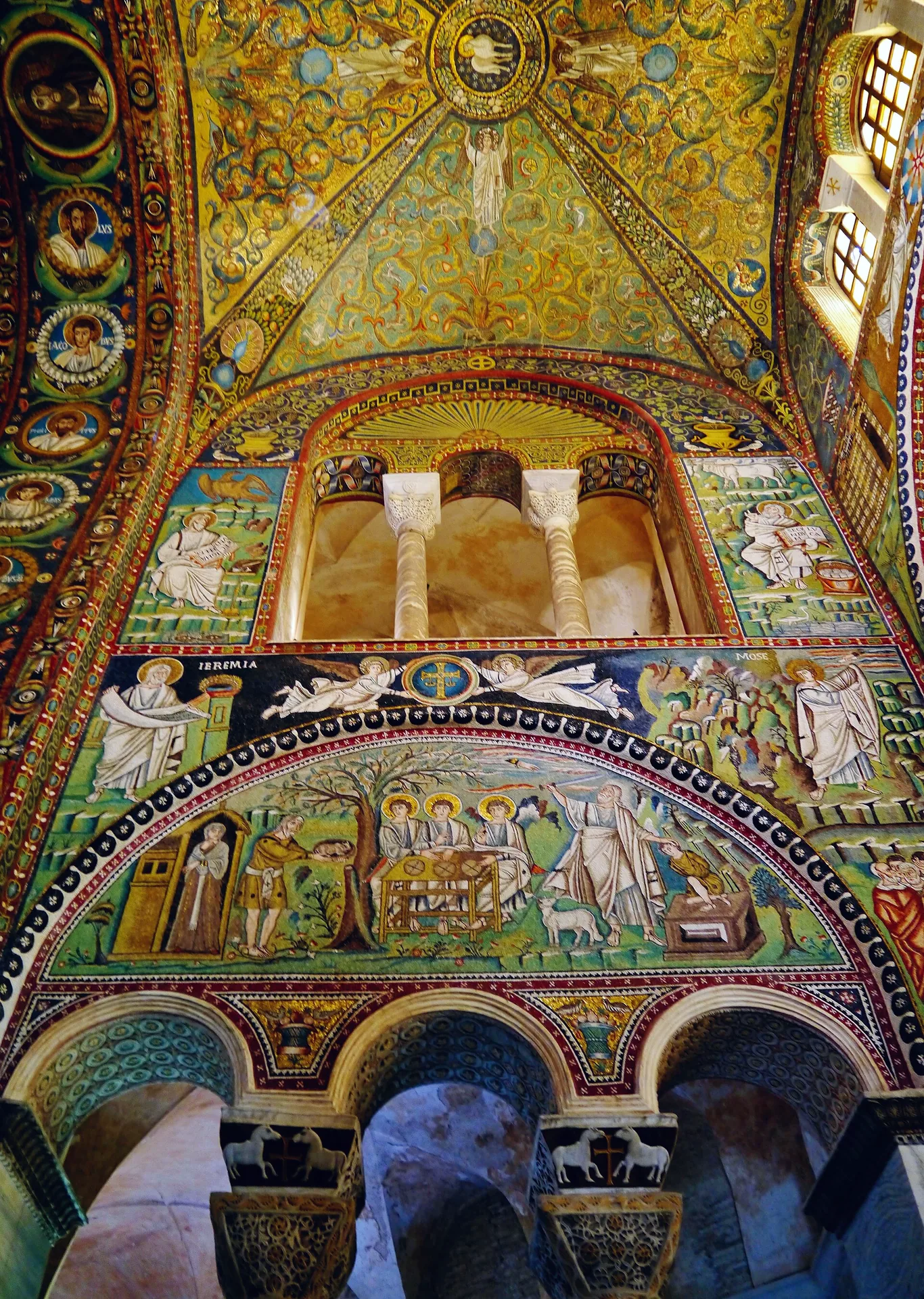
Choose Ravenna when mosaics are the main reason for your day out. San Vitale rewards slow looking at its sanctuary, particularly the panels showing Emperor Justinian and Empress Theodora with their attendants. The figures, dress and architectural setting offer more to examine than a quick glance at the glittering surfaces.
Zairon · CC BY-SA 4.0 · Edited
The Mausoleum of Galla Placidia provides a striking contrast: a small interior with a star-filled blue vault rather than San Vitale’s larger church space. Sant’Apollinare Nuovo changes the scale again, with long mosaic processions extending along the nave. Allow about 30–45 minutes for an unhurried visit there.
Use that appointment to decide whether to visit San Vitale before or after Galla Placidia, then leave space for lunch between interiors. Keep the coast for a different outing: the appeal here is having time to compare the mosaics, not racing through them before a beach transfer. The indoor focus also works well in rain.
The shared ticket is valid for seven days, with one entry per monument. Alongside San Vitale, Galla Placidia and Sant’Apollinare Nuovo, it includes the Neonian Baptistery and the Archiepiscopal Museum with the Chapel of Sant’Andrea. These add baptismal mosaics and a smaller chapel interior if you want to devote the whole visit to Ravenna’s early Christian art.
Direct regional trains link Bologna Centrale and Ravenna, with multiple daytime departures and operating patterns that vary between daily, weekday and weekend services. From Ravenna station, walk towards San Vitale, or begin with another included interior if that better suits your Galla Placidia appointment.
5. Brisighella
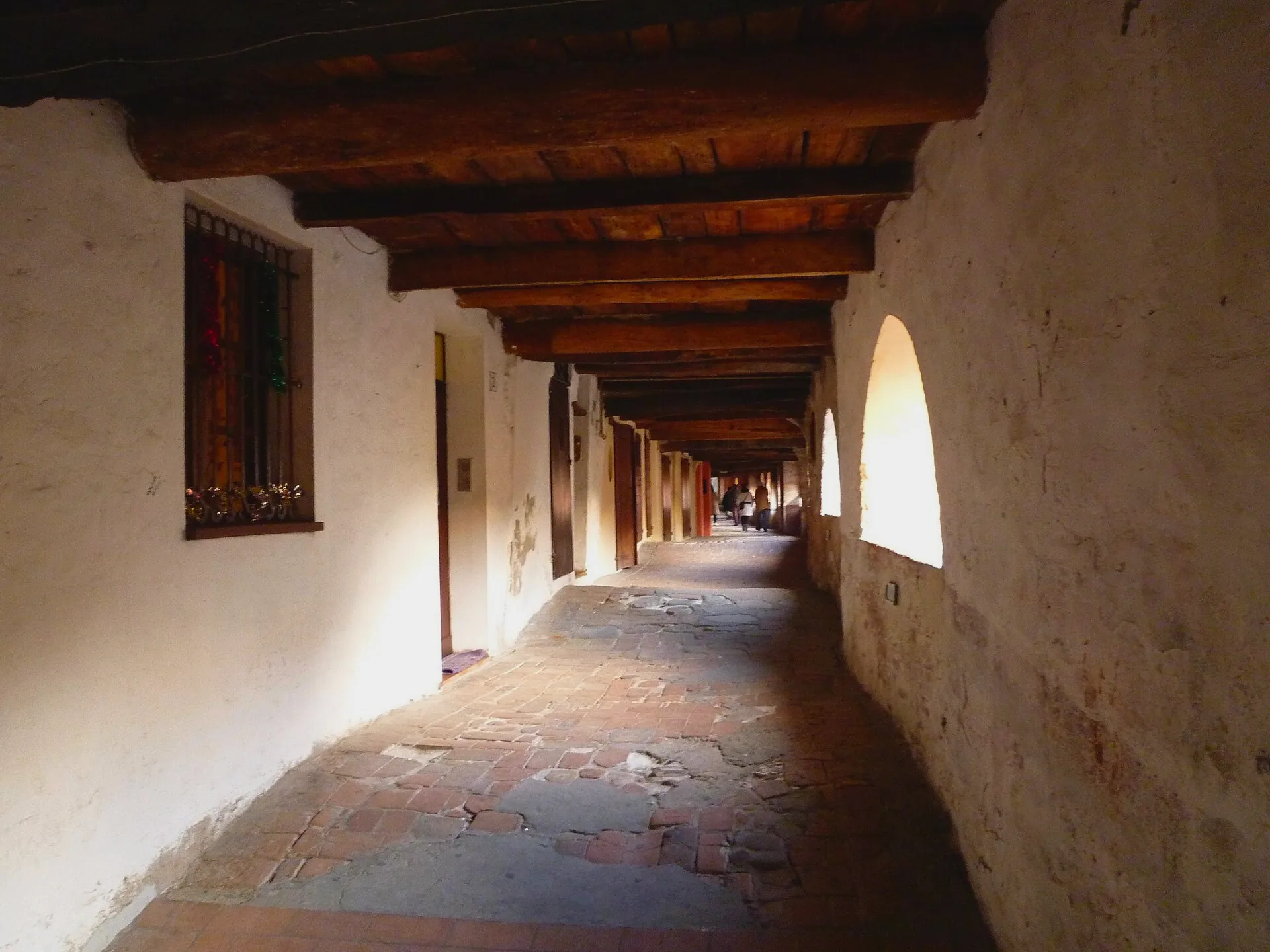
Brisighella is the hill-town choice for medieval lanes and an uphill walk. Begin with Via degli Asini, the covered ‘Donkeys’ Lane’, where the arched passage runs above street level. It gives the lower town a distinctive starting point before you tackle the slopes towards the fortress and clocktower exterior.
Zitumassin · CC BY 3.0 · Edited
The fortress, Rocca Manfrediana, adds a fortified hilltop to the visit, and its combined ticket also includes the Giuseppe Ugonia Civic Museum. The climbs are more demanding than the city walks in the other four destinations. Wear shoes suitable for slopes, go earlier in warm weather, and favour the lower town if paths are wet or the fortress is not open.
Take a direct regional train from Bologna Centrale to Faenza, then change for Brisighella. Passenger trains connect the latter pair, although buses may replace some departures. Both legs have daytime departures that vary by operating day, rather than one uniform interval. Leave room for the change at Faenza, particularly when arranging the climb around a fortress opening window.
| Season | Fortress visiting windows | Operating days |
|---|---|---|
| 1 November–31 March | 10:30–16:00 | Public holidays and holiday eves |
| 1 April–31 May | 10:00–12:30; 14:30–18:00 | — |
| 1 June–31 August | 10:00–12:00; 16:00–19:00 | Public holidays and holiday eves |
| July and August, additional opening | 10:00–12:00; 16:00–18:00 | Tuesday–Friday |
| 1 September–31 October | 10:00–12:30; 14:30–18:00 | Public holidays and holiday eves |
Sources & fact-checking
Checks against the sources below cover: services, fares and charges, and closures.
- In Treno Orario Regionale Digitale Emilia Romagna — Summer Edition
- Fabbriceria of the Cathedral of Parma — fares and charges
- Orario ferroviario PDF | Trenitalia
- Comune di Modena / VisitModena — fares and charges
- VisitModena (Modena Tourist Information Office) — service
- Modena Tourist Information Office (VisitModena) — closures
- Rete Ferroviaria Italiana (RFI) — service
- Castello Estense — fares and charges
- Castello Estense Museum, Comune di Ferrara — closures
- Comune di Ferrara — service
- Ravenna Tourism / Comune di Ravenna — fares and charges
- Comune di Ravenna — fares and charges
- Mausoleo di Galla Placidia — Ravenna Turismo
- Basilica di Sant’Apollinare Nuovo — Ravenna Turismo
- Comune di Brisighella, Servizio Cultura — fares and charges
- Comune di Brisighella — closures