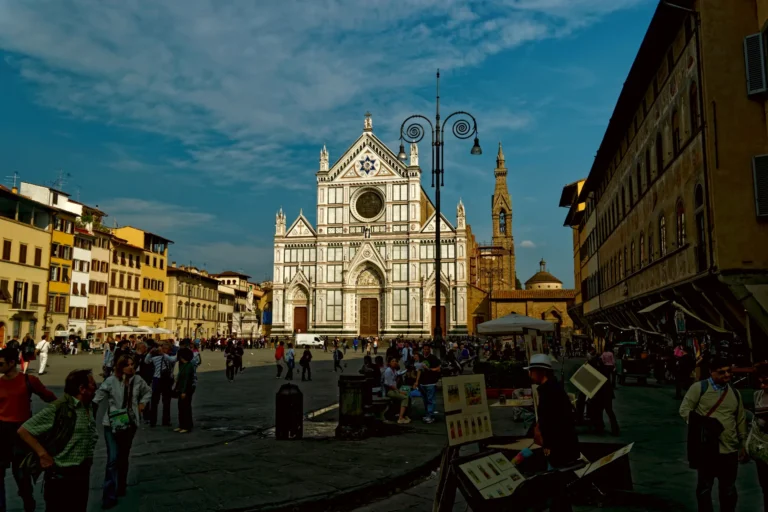
For Florence Cathedral, cover your shoulders and your legs to at least the knee, and do not wear a hat inside. The same stated dress code applies to the Baptistery of Saint John. It is not phrased in the official FAQ as applying to Brunelleschi’s Dome or the Opera del Duomo Museum, while Giotto’s Bell Tower is subject to broader access conditions. A light cover-up and knee-length clothing are the simplest way to keep a cathedral visit compatible with a hot day in the city.
Florence streets, cafés and swimming venues are different settings. Ordinary summer clothing is practical around the centre, but swimwear belongs at a designated swimming place, and a cover-up is useful when you leave the pool. The sections below separate the entry rule from the clothing decisions that make a full day easier.
Florence Duomo Dress Code Requirements
- Cathedral entry
- Clothing suitable for a place of worship
- Shoulders
- Must be covered
- Legs
- Covered to at least the knee
- Hats
- Not allowed inside the Cathedral
- Same rule
- Applies to the Cathedral and Baptistery
- Other complex sites
- Not the same FAQ rule for the Dome or Museum; broader conditions for the Bell Tower
The Florence Duomo dress code is an entry condition, not a suggestion about style. The Cathedral of Santa Maria del Fiore requires clothing suitable for a place of worship: bare shoulders and bare legs are not permitted, and the official wording also excludes hats inside the Cathedral. In practical terms, shorts, skirts or dresses need to cover the legs to at least the knee, while a sleeveless top needs a layer that covers the shoulders.
The Cathedral and the Baptistery of Saint John follow the same stated restriction, so an outfit accepted for one should work for both. The distinction matters if your pass also includes other buildings. The official FAQ says that its Cathedral-and-Baptistery dress code does not apply to Brunelleschi’s Dome or the Opera del Duomo Museum. Giotto’s Bell Tower is not given that same specific wording, but its wider access conditions can still allow staff to refuse clothing that does not respect the religious character or prestige of the site.
- Name
- Florence Cathedral
- Location
- Piazza del Duomo, Firenze Maps
- Site
- duomo.firenze.it
- Hours
- Mon–Sat 10:15–15:45
- Sun Closed
- Price
- €30 full price
- €12 children aged 7–14
- Free children aged 0–6
What to Wear for Cathedral Entry
A useful hot-weather combination is a breathable top with a light shirt, cardigan, scarf or shawl over the shoulders, plus knee-length bottoms or a longer skirt or dress. A cover-up is acceptable when it visibly covers the shoulders at the entrance, because the official information does not require a particular garment. This arrangement also leaves you free to remove the extra layer while walking elsewhere in Florence, then put it back on for the religious sites or a climb.
Prepare one outfit for the religious sites
Do
- Wear a top that covers your shoulders before you reach the entrance
- Choose trousers, shorts, a skirt or a dress that covers your legs to at least the knee
- Carry a scarf, cardigan or shawl that visibly covers your shoulders
- Keep the same compliant layer for the Cathedral and Baptistery, even if your wider complex visit includes a climb
Don’t
- Arrive relying on bare shoulders being overlooked
- Wear shorts, skirts or dresses that leave the legs uncovered above the knee
- Treat a hat as suitable indoor wear in the Cathedral
City Streets, Dining and Swimming
- Around Florence’s streets and squares, wear ordinary daytime clothes rather than treating the Cathedral rule as a city-wide dress code.
- For the Cathedral, Baptistery and other religious interiors, keep shoulders covered and legs covered to at least the knee.
- For a restaurant or cultural venue with a smart-casual expectation, use the venue’s setting as your guide rather than assuming a universal Florence rule.
- At a designated swimming venue, wear swimwear in the water and in the changing rooms and showers, and follow the venue’s pool-deck rules.
- Pack a shirt, loose layer or other cover-up before travelling from a swimming place back into the city.
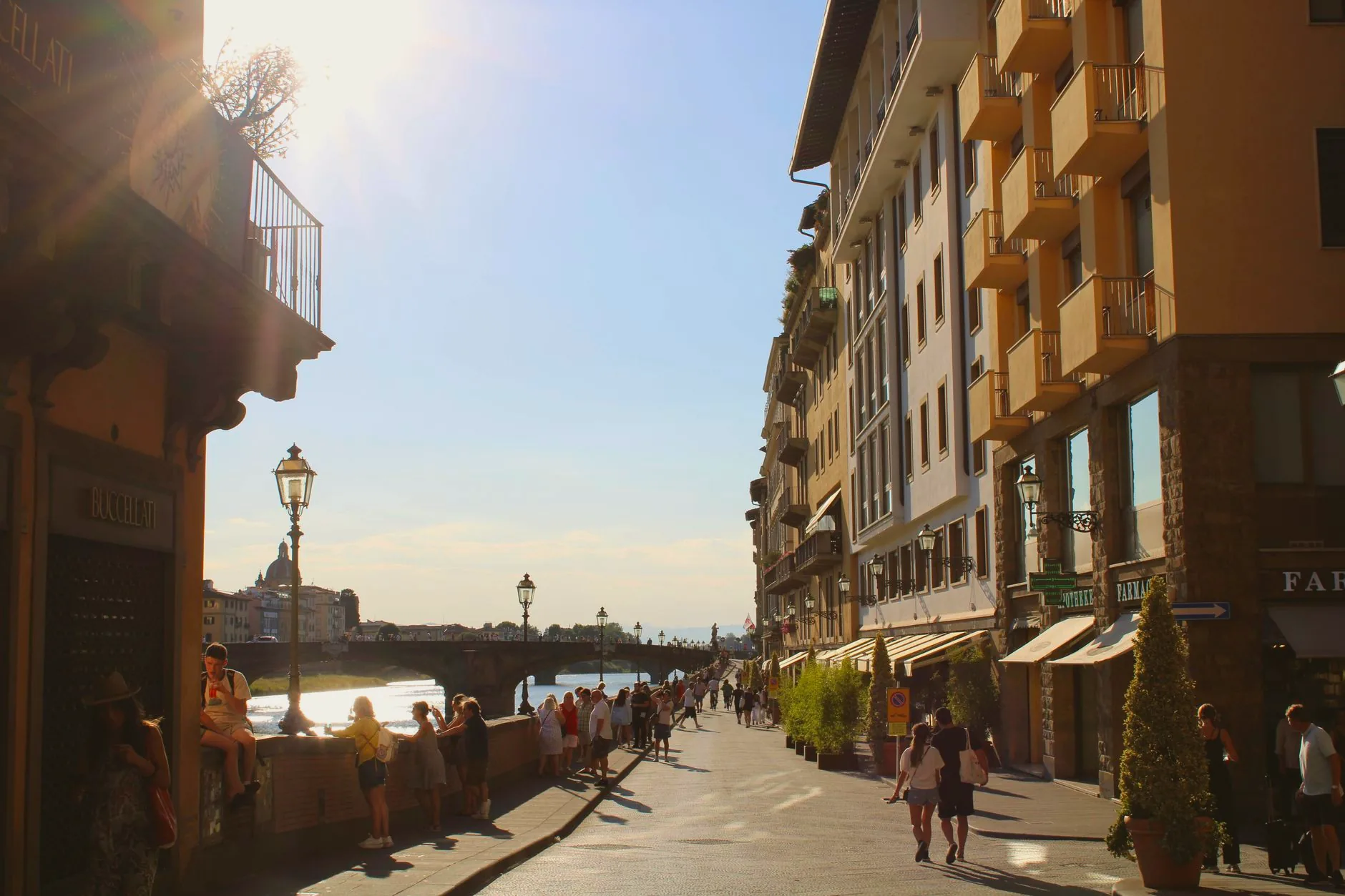
The religious-site requirement is stricter than the clothing you need for walking through Florence. In the city centre, light summer clothes are a practical choice, and the Cathedral’s shoulders-and-knees rule should not be presented as a general rule for every street, café or shop. Dining and cultural venues may have their own expectations: a neat, smart-casual outfit is a sensible choice where the setting calls for it, but that is a venue decision rather than a blanket municipal dress law.
Florence’s municipal public-decency rules address conduct in public streets, squares and other public-use places, including behaviour that may offend public decency or display intimate body parts. They do not expressly name swimwear or bare torsos, so the useful boundary is simple: do not use public streets as a place to remain in pool or beach clothing. At designated swimming venues, swimwear is required in the water and when using changing rooms and showers, and venue rules also govern the pool deck and covered pool areas.
That makes a cover-up part of a practical swimming outfit, not a substitute for the Cathedral rule. At Le Pavoniere, for example, a bathing suit meeting hygiene and public-decency requirements is required on the pool deck and in the associated rooms, with changing in the designated cabins. Once you leave the swimming venue, put on ordinary street clothing before continuing into the city or heading to dinner.
Laura Arnedo · Pexels License · Edited
Sources & fact-checking
Checks against the sources below cover: services.
- Plan your visit | Opera di Santa Maria del Fiore, Florence
- Opera di Santa Maria del Fiore (Opera del Duomo) — service
- Terms and Conditions of Sale — Opera di Santa Maria del Fiore
- Cathedral of Santa Maria del Fiore | Opera Duomo, Florence | Official Site
- Organizza la tua visita
- Opening hours — Opera di Santa Maria del Fiore
- Regolamento di Polizia Urbana – Norme per la civile convivenza in città
- Regolamento per la gestione e l’uso degli impianti sportivi del Comune di Firenze