Choosing between Florence and Milan depends on the kind of city break you want. Florence is the stronger default for a first short visit built around Renaissance art, historic sights and easy walking, while Milan suits you better if design, fashion, nightlife and a larger urban experience matter more. Both work well as Italian bases, but they reward different rhythms.
The practical gap is narrower than the cultural one. Central Florence is compact enough for many major sights on foot, while Milan combines a walkable central cluster with longer trips to outlying attractions. Accommodation, food, timed entry and the rail network can therefore change the better choice for your dates and planned day trips.
At a glance
| Criterion | Florence | Milan |
|---|---|---|
| Central mid-range double room | €150–€285 per room/night | €180–€250 per room/night |
| Main cultural strength | Renaissance art and historic sights | Heritage, design, fashion and modern culture |
| Short-stay pace | Very concentrated historic centre | Central cluster plus farther districts |
| Movement between sights | Many core sights walkable | Walking plus metro, tram and bus |
| Evening choice | Trattorie, performances and bars | Aperitivo, dining, events and nightlife |
| Best rail direction | Pisa and Bologna | Como and Turin |
| Best default fit | First-time art and history break | Urban, design and nightlife break |
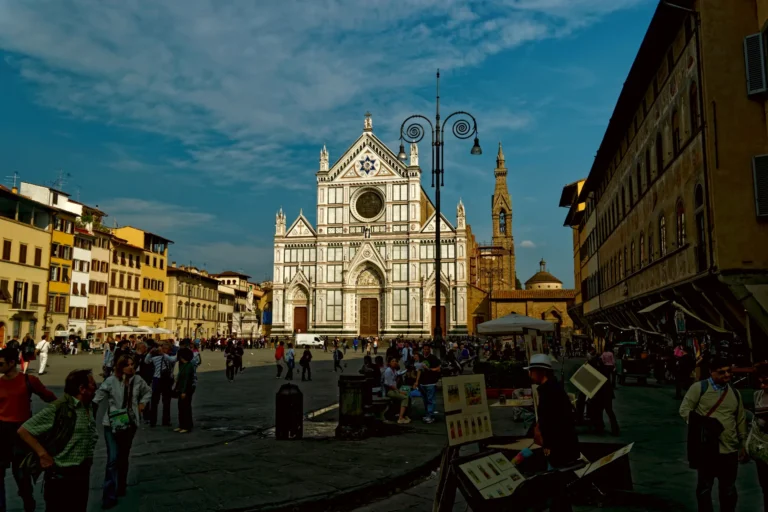
For a first-time visitor with only a weekend, Florence usually gives more visible return from each day: the Duomo, Uffizi, Ponte Vecchio, Santa Croce and Accademia sit in and around the historic centre, generally within about 1–2 km of one another. Milan’s Duomo, Galleria Vittorio Emanuele II, La Scala, Brera and Castello Sforzesco also form a walkable central cluster, but Santa Maria delle Grazie, Navigli and San Siro extend the day across several kilometres.
Neither city is automatically the cheaper base. Central room costs overlap, with Florence more exposed to peak-season pressure and Milan capable of sharp increases during Fashion Week and the Salone del Mobile. Treat the room and dates as the first budget check, then weigh food, transport and paid sights against the programme you actually want.
Choose Florence when the centre itself is the main attraction and you want to spend less time crossing the city. Choose Milan when you want a broader menu of design, shopping, contemporary culture and late-evening options, or when its northern rail connections match your day-trip plan.
Cost and practicalities
Is Florence cheaper than Milan? Often, but not in every part of the budget. Central accommodation overlaps: Florence can reach the upper end of its range in peak periods, while Milan can rise sharply around Fashion Week and the Salone del Mobile. Compare the actual dates before treating either city as the low-cost option. Room location, tourist tax and breakfast can also alter the total.
Food is broadly comparable, with a mid-range Florence budget of about €50–70 per person per day and a Milan budget of roughly €55–70 per person per day. These allowances cover ordinary breakfast, lunch, dinner and typical drinks or snacks rather than fine dining. Florence becomes more expensive when you add steak, wine and heavily visited central restaurants, while Milan can move upward with aperitivo-led evenings and higher-end dining.
Local transport is inexpensive in both cities, but Florence’s compact core means you may buy fewer tickets. Its standard urban ticket costs €2.00 and lasts 90 minutes from validation or activation, covering urban buses and the tramway. Milan’s Mi1–Mi3 ticket costs €2.20 for 90 minutes, while a 24-hour day ticket costs €7.60 and allows unlimited journeys during that period.
Admission prices are not a simple city-wide contest. A regular Uffizi Gallery ticket costs €25 on the day or €29 when bought before the date of entry. Milan’s Duomo and Duomo Museum combination costs €10 at full price, reduced to €5, but on Wednesdays, when the museum is closed, the full price is €8. The better-value base depends on how many paid sights you will actually enter, not just on the headline ticket.
For a short break, Florence can be cheaper when you walk between sights and keep meals informal, but Milan’s public transport helps you cover a larger programme without taxis. If your budget is tight, price the room first, then add the attractions you care about and the number of Milan transport days you would genuinely use.
Culture and things to do
For art and culture, Florence is the clearer choice when Renaissance painting, sculpture, architecture and a historic centre are the reason for the trip. The Duomo complex, Uffizi, Accademia, Bargello, Palazzo Vecchio, Ponte Vecchio, Santa Croce, the Medici Chapels and Pitti Palace with the Boboli Gardens give a short stay a remarkably focused cultural programme.

CEphoto, Uwe Aranas · CC BY-SA 3.0 · Edited
The Uffizi is part of that concentration, but it needs planning: normal visits use advance online booking with a selected day and time, and advance purchases carry the standard booking surcharge. Tickets are nominative and non-transferable. Free-admission days normally do not offer advance purchase, apart from areas where limited entry still requires a reservation.
Milan is better for a wider definition of culture. The Duomo, Galleria Vittorio Emanuele II, Sforza Castle and Leonardo’s Last Supper provide major historic anchors, while Brera, the Quadrilatero della Moda and Tortona add design and fashion. The Museo del Novecento, Fondazione Prada and Pirelli HangarBicocca extend the choice into modern and contemporary art, architecture and creative industries.
Milan Cathedral also uses selected visit dates and times. For Cathedral-inclusive tickets, the time applies to entry to the Cathedral and the ticket shows where security checks begin. Arrival is accepted within 30 minutes before or after the selected time, although entry outside that window may be refused. Use an official or authorised channel and keep the ticket legible and personal.
Access etiquette can change the order of a Florence day. At the Duomo and other principal churches, cover shoulders and knees and remove your hat indoors. A light cover-up is useful in hot weather. In Milan, the strictest booking pressure is usually Leonardo’s Last Supper: reserve when your dates are firm, arrive about 30 minutes early and allow for a viewing limited to roughly 15 minutes. Pick Florence for depth in Renaissance heritage, or pick Milan for heritage joined to design, fashion and contemporary culture.
Getting around and day trips
- Choose Florence if most of your core sightseeing should happen on foot around the historic centre.
- Choose Milan if you are comfortable combining walking with metro, tram and bus journeys across several districts.
- Use Florence as a rail base for direct day trips to Pisa or Bologna.
- Use Milan as a rail base for direct day trips to Como or Turin.
- Match the airport transfer to your arrival airport before comparing convenience.
Which city is better for day trips? Milan has the stronger northern-Italy rail spread, while Florence is excellent for Tuscany and nearby Emilia-Romagna. Direct trains serve Florence–Pisa and Florence–Bologna, and direct services serve Milan–Como and Milan–Turin. The right answer is therefore geographical: choose the base that sits on the side of Italy you want to explore.
Florence is easier to navigate during a sightseeing-led weekend. The Duomo, Uffizi, Ponte Vecchio, Santa Croce and Accademia sit within the central historic area, so walking can cover much of the programme. Buses and the T2 tram remain useful, especially from the airport or when heat, luggage or tired legs make a longer walk unattractive.
Milan’s main central sights are also connected by a walkable core around the Duomo, Galleria, La Scala, Brera and Sforza Castle. The city’s advantage appears when you add Santa Maria delle Grazie, Navigli, Porta Nuova or San Siro: metro, tram and bus services make these practical, but the day involves more deliberate crossings than a Florence centre-only plan.
Arrival logistics differ because Milan is served by Malpensa, Linate and Bergamo Orio al Serio. Malpensa has the Malpensa Express to Cadorna, Milano Centrale or Porta Garibaldi, plus shuttle buses. Linate connects by the M4 Blue metro, and Bergamo airport has direct shuttle buses to Milano Centrale. Florence’s Peretola airport has the direct T2 tram through central stops including Santa Maria Novella, with local buses also linking the airport area to the T2 Guidoni interchange.
Strengths and trade-offs
The trade-off is not simply old city versus modern city. Florence concentrates the most recognisable heritage into a smaller area, which protects a short itinerary from long transfers. Milan offers a broader urban menu, but its best day often depends on timed access, public transport and a willingness to move between distinct districts. Compare each city against the way you actually spend a day, not against an abstract idea of which one is more impressive.
Florence
Pros
- Renaissance art, architecture and Medici history are unusually concentrated.
- Many headline sights sit within a largely walkable historic centre.
- A short stay can combine major museums with trattorie and an evening performance.
Cons
- Peak periods can make the compact centre crowded, with queues at major museums and churches.
- The evening choice is substantial but smaller and less varied than Milan’s nightlife and event scene.
- Summer heat and visitor pressure can make outdoor sightseeing uncomfortable.
Milan
Pros
- Design, fashion, shopping and contemporary culture broaden a short city break beyond historic sights.
- A walkable central cluster combines with public transport to reach museums and districts farther out.
- A short stay can pair aperitivo and dining with events, exhibitions, concerts or nightlife.
Cons
- The wider programme requires more cross-city journeys than a Florence centre-focused visit.
- The Last Supper and other popular highlights can impose fixed, timed access and advance planning.
- Room prices can rise sharply around major events, adding pressure to an already broader city programme.
Florence therefore has the edge when your priority is depth in a compact historic setting and you want the city’s main story to be visible from the centre. Milan has the edge when variety matters more than concentration: a single visit can combine historic architecture, design, shopping, contemporary art and a later evening. Both have real crowd and booking pressures, so the better base is the one whose limitation you are more willing to plan around.
Trip length and travel style
How many days do you need in Florence or Milan? For either city, a weekend can cover the central highlights, but three or four nights gives the choice more room to breathe. A longer stay is most rewarding when you plan a museum-heavy programme, add a day trip or want evenings to be part of the experience rather than leftover time.
Florence works especially well for two or three nights. That is enough for a walk through the historic centre, one or two major collections and selected churches or palaces, provided you arrange timed entry. With three or four full days, you can add the Pitti Palace and Boboli Gardens, more neighbourhood time or a direct rail day trip. Beyond that, Florence benefits from slower visits and excursions rather than simply adding more headline sights.
Milan rewards three or four nights more readily because its interests are spread across historic landmarks, design, fashion, shopping, contemporary art, food districts and evening events. A shorter stay can focus on the Duomo–Galleria area, Brera and one booked highlight such as the Last Supper. A longer visit gives you time for Fondazione Prada, Pirelli HangarBicocca, Navigli, Porta Nuova or a northern rail day trip.
For a first Italy visit centred on famous art and historic architecture, Florence is the more legible introduction. Repeat visitors, design followers, shoppers and travellers who want a larger evening scene may prefer Milan. Food alone should not decide the base: both cities support casual meals and serious dining, but Florence suits a traditional trattoria-led break while Milan adds aperitivo culture and more varied urban districts. If Pisa is also under consideration, the Florence or Pisa base comparison can help you test the wider Tuscany plan.
Season changes the balance. In Florence, roughly June to August brings intense heat and heavier crowds, making outdoor sightseeing and queues harder, while cooler shoulder seasons are generally easier. Milan’s heaviest sightseeing crowds arrive in late spring and summer, with July and August making outdoor walking hotter. Book the time-critical attraction first, then shape the rest of either city around the season and your energy.
Choose your base
- Choose Florence for a first short Italian city break built around Renaissance art, historic churches and a compact walkable centre. It is the easier fit when you want the Duomo, Uffizi, Accademia and other headline sights close together rather than spending much of the day crossing districts.
- Choose Milan for design, fashion, shopping, contemporary culture, nightlife and a larger-city rhythm. It suits a trip where the Duomo and historic centre share space with Brera, modern-art venues, aperitivo and later evening events.
- Choose Florence when your planned rail days are Pisa or Bologna, or choose Milan when they are Como or Turin. Let the places you genuinely want to visit decide the base, rather than choosing a city first and forcing the rail plan around it.
- Choose Florence when you can secure a suitable central room and expect to walk between most sights, or price Milan when several daily journeys make its network useful. Central room ranges overlap, so compare your actual dates, including peak periods and major Milan events.
- Choose Florence for two or three nights focused on headline heritage. Choose Milan for three or four nights that include several districts, museums, shopping and evening events. Either city can support a longer stay when you add a day trip or slower cultural visits.
- Choose Florence for a museum-led first visit, but reserve the Uffizi and respect church dress requirements. The city is strongest when Renaissance painting, sculpture, architecture and Medici history form the centre of the trip.
- Choose Milan if the Last Supper is essential and you are ready to book its timed entry, or if your dates favour its northern rail connections. Its broader cultural offer is a better fit when historic landmarks, design and contemporary creativity need equal weight.
- Choose Florence for a traditional trattoria-led break and a concentrated sightseeing day, or choose Milan for aperitivo, varied urban districts and more nightlife choice. Food alone does not settle the comparison, because both cities support casual meals and serious dining.
- If heat and queues are a concern, give extra weight to your dates and to the attraction you most want to enter. In either city, book the time-critical visit before building the rest of the day around it, especially in the busiest seasons.
The strongest default is Florence for a first, short, art-led visit, but Milan becomes the better base when urban variety, timed modern highlights or northern rail connections matter more. Let the priority you will actually use decide between them.
Sources & fact-checking
Checks against the sources below cover: fares and charges and services.
- Autolinee Toscane — fares and charges
- Azienda Trasporti Milanesi (ATM) — fares and charges
- Uffizi Galleries — fares and charges
- Veneranda Fabbrica del Duomo di Milano — fares and charges
- Le Gallerie degli Uffizi — service
- Veneranda Fabbrica del Duomo di Milano — service
- GEST S.p.A. — service
- YesMilano — service
- Trenitalia — service
- Train from Florence to Bologna | Tickets start at €9,90 | Italotreno.com
- Trenord — service
- Train from Milan to Turin | Tickets start at €8,90 | Italotreno.com