Florence puts Renaissance painting, sculpture and palace collections within a compact centre, while Naples makes its case through the streets of its historic centre, its food and journeys around the Bay. Choose Florence if art museums are the reason for your short break. Choose Naples if you want a city stay with neighbourhoods and Pompeii or island trips. Your UK flight and the room available on your dates may settle a closer contest.
Florence and Naples at a glance
| Criterion | Florence | Naples |
|---|---|---|
| Main draw | Renaissance museums and historic core | Historic neighbourhoods, pizza and the Bay |
| Estimated central double room, per night | €130–220 per room | €90–170 per room |
| Estimated simple sit-down meal with drink, per person | €20–30 per person | €15–25 per person |
| Central sightseeing | Compact on foot | Walkable core; transport for farther districts |
| Direct UK-flight arrival | Florence or Pisa airport | Naples airport |
| Day-trip direction | Lucca, Siena and other Tuscan towns | Pompeii and Bay islands |
A central double room is estimated on a per-night basis, and the meal is a simple sit-down meal with a drink per person. Peak summer, holidays and an especially central or high-end address tend to push room prices upwards in either city; an outlying room or quieter dates can cost less. Naples is €40 lower at the bottom and €50 lower at the top of these room ranges, while its meal range is €5 lower at each end. Because the room ranges overlap, compare places available on your dates rather than assuming one city will always cost less.
Both cities reward time spent without an excursion. Florence’s museums cluster near streets you can cover on foot, while Naples combines a walkable historic centre with districts that call for a longer journey. For only a couple of nights, make the city itself the priority and treat a day out as a choice, not an obligation.
Florence: art and the walkable centre
The Uffizi Gallery earns its place on an art-led visit for its Renaissance paintings: it is a substantial museum, not a quick stop between squares. You can buy a named advance ticket for a chosen admission date at €29, against €25 on the day. Reserve your admission date if the Uffizi is central to your trip. Crowds are most pronounced in July and August, around Easter and other major holidays, and on weekends. Give the collection time rather than trying to fit every museum into the same day.
If you have room for a second collection, the Bargello National Museum turns the focus to sculpture in a historic civic building. Look for works by Verrocchio and Ghiberti, and at how figures occupy space rather than treating the visit as a smaller substitute for the Uffizi. An Accademia or Uffizi gallery comparison helps you pick your painting-and-sculpture priority before adding the Bargello.

Paulacastelli · CC BY-SA 4.0 · Edited
- Name
- Bargello National Museum
- Location
- Historic centre, Florence Maps
- Site
- bargellomusei.it
- Hours
- Mon Closed
- Tue–Sun 08:15–18:50
- Typical visit
- 1 hour 15 minutes
- Essential fact
- A sculpture museum with works by Donatello and Michelangelo.
Palazzo Pitti offers a different kind of visit, with palace rooms and collections across the Arno. Cross Ponte Vecchio, the old bridge lined with shops, towards Oltrarno and spend some of the afternoon in that part of the city instead of immediately returning to the museum quarter. One major collection and time to walk the centre make a better short day than a gallery checklist. If you prefer a slower Uffizi visit, let it replace another gallery rather than squeezing it between fixed admissions.

Jebulon · CC0 · Edited
Naples: neighbourhoods and food
Naples is worth a short break in its own right, not just a departure point for Pompeii. Its historic centre has churches and layered streets to explore between meals, and pizza belongs to the day here, not to a separate food excursion. At the Sansevero Chapel Museum, the Veiled Christ is the reason to step inside: the carved veil appears to rest over the figure while leaving the body legible beneath it.
- Name
- Sansevero Chapel Museum
- Location
- Historic centre, Naples Maps
- Site
- museosansevero.it
- Hours
- Mon 09:00–19:00
- Tue Closed
- Wed–Sun 09:00–19:00
- Typical visit
- 45 minutes
- Essential fact
- Home to Giuseppe Sanmartino’s Veiled Christ.
The Spanish Quarters (Quartieri Spagnoli) are a dense grid of residential streets rising behind the central shopping area, so come to walk through a neighbourhood, not to tick off a single monument. Sanità offers another view of the city’s everyday fabric north of the historic centre. The compact centre is manageable on foot, but allow a separate journey for districts beyond it instead of assuming all of Naples sits in one walking circuit.
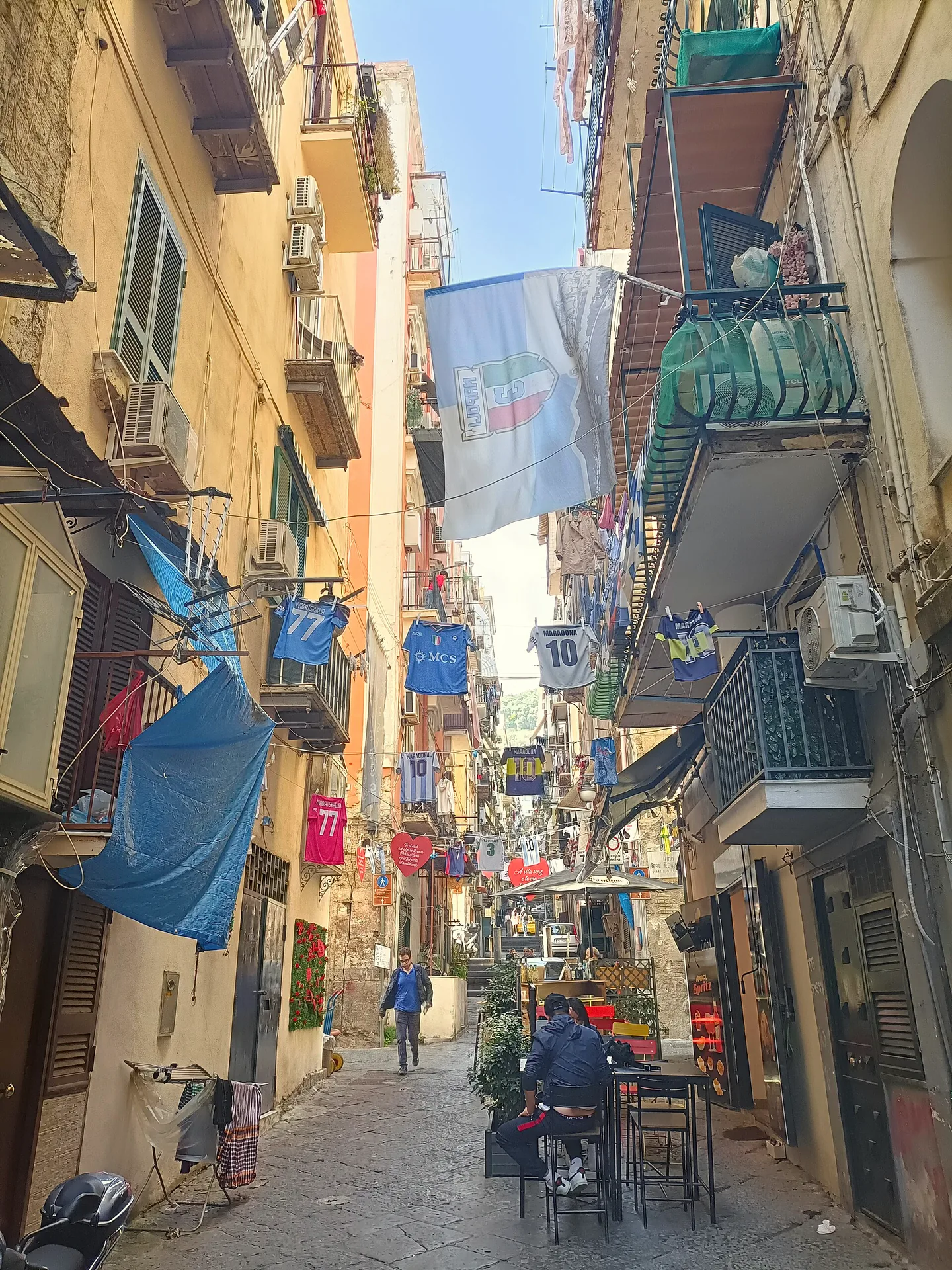
Superchilum · CC BY-SA 4.0 · Edited
Along the waterfront near Castel dell’Ovo, the setting changes from tight inland streets to views across the Bay. It makes a contrasting stretch of a city day even if you do not take a boat. Central sightseeing areas are busiest in June to August, around Easter and other major holidays, and at weekends, while late autumn and winter outside holiday dates generally offer a calmer pace. Naples is not a guaranteed crowd-free alternative to Florence.
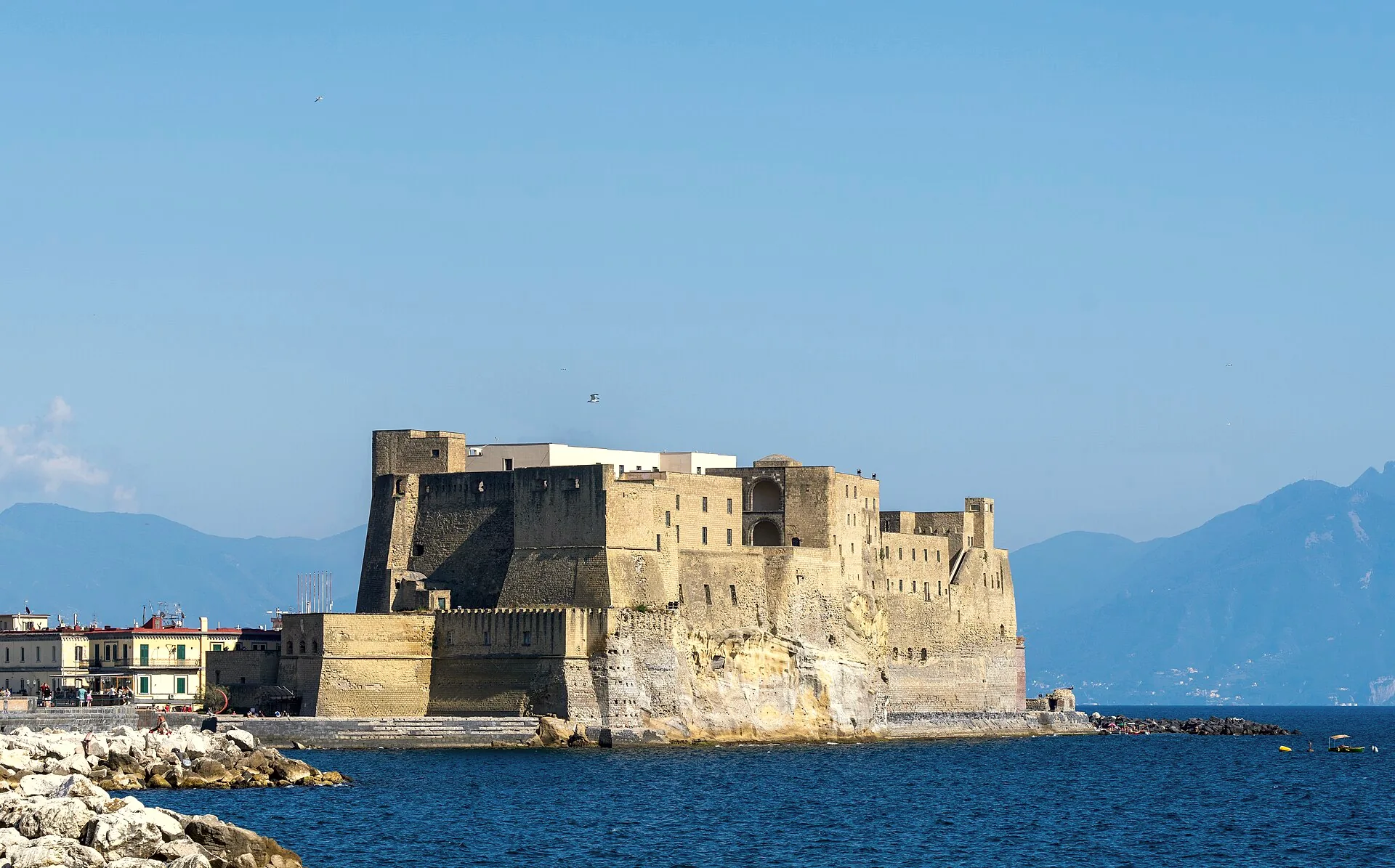
PaestumPaestum · CC BY-SA 4.0 · Edited
UK arrivals and day trips
For a Florence stay from the UK, compare flights to Florence Airport and Pisa Airport, not just fares into the city itself. Florence has direct connections with London City, Gatwick and Heathrow, and Pisa also has direct UK links including Birmingham, Manchester and several London airports. From Florence Airport, the T2 tram reaches central Piazza San Marco in about 20 minutes. Pisa is a separate city: direct Fast Regional trains link its airport with Firenze Santa Maria Novella in about 57 minutes to 1 hour, while other rail journeys change at Pisa Centrale. Count that extra transfer in your arrival day before choosing a flight.
Naples International Airport has direct links with several UK airports, including Edinburgh, Manchester, Birmingham and London airports. The Alibus runs daily to Piazza Garibaldi by Napoli Centrale and to the port at Molo Beverello/Angioino. Choose the station stop for a rail arrival or onward train, and the port stop when joining a boat, rather than treating the airport bus as a doorstep transfer to every hotel. Flight routes and seasons vary. A convenient departure airport can matter more than a small difference in the room estimate.
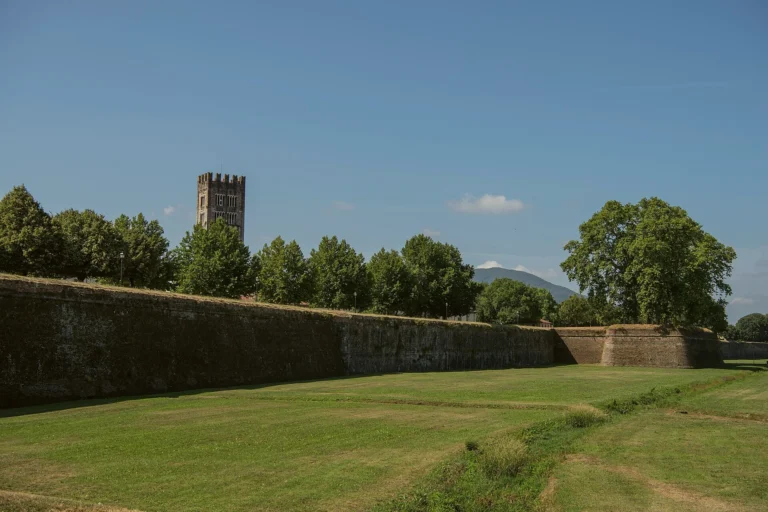
From Florence, Lucca makes a rail-accessible outing for its walled old town, while Siena draws you towards its medieval centre and can be reached by train or bus. A Siena day trip from Florence by bus gives that second choice the space it deserves. Pisa and Arezzo are other rail choices, but a Tuscan hill-town circuit is not the same easy train outing: San Gimignano and Volterra need a local bus connection. Pick one destination for a short stay so the journey does not crowd out Florence itself.
From central Naples, EAV’s Circumvesuviana serves Pompei Scavi near the archaeological site, putting Pompeii within reach as a day visit. Passenger boats from Naples run to Capri, Ischia and Procida, with a port transfer before you board. Sorrento also has a ferry connection. Pompeii is the archaeology choice, while an island day asks you to organise a crossing as well as time ashore. For either base, decide on your excursion after protecting a day for the city you chose to stay in.
Visiting both cities by train
If you have time for both cities, move from Florence to Naples and stay overnight rather than making Naples a return day trip. Direct high-speed trains run between Firenze Santa Maria Novella and Napoli Centrale in both directions. The Florence-to-Naples station leg is about 483 km and about 3 hours. That takes you from one central station to another, so you can spend your Florence morning on a gallery or a walk and keep the following day for Naples. Plan separately for getting to the station, reaching your accommodation and doing anything in the destination, because the rail journey itself is only one part of the move.
An overnight move lets you keep Florence for its galleries and begin Naples with room for its streets and food, then use a flight home from Naples if your UK route permits. Allow for another train journey and station access at both ends if you consider a day return. Those journeys leave less time for either city’s museums or neighbourhoods. If your flights work better in the opposite order, Naples to Florence by train develops the reverse city-centre transfer. You can still change base once rather than commuting between them. This works best when you can give each place a meaningful stretch of time: otherwise, settle into the city that best matches your interests and save the other for a separate stay.
The trade-offs of each base
Florence as a short-stay base
Pros
- You can give a substantial Uffizi visit the time it needs and still walk across Ponte Vecchio towards Oltrarno.
- The Bargello’s sculpture and Palazzo Pitti’s palace rooms offer distinct alternatives if painting is not your sole interest.
Cons
- A date-specific Uffizi plan takes some spontaneity out of an art-led break.
- Summer, holiday and weekend pressure at major galleries can make a museum-heavy short stay feel crowded.
Naples as a short-stay base
Pros
- The historic centre, the Spanish Quarters and the waterfront give you different sides of the city without having to leave for an excursion.
- Pizza and other everyday meals can be part of exploring the neighbourhoods rather than a separate attraction.
Cons
- Moving from the core to Sanità or the waterfront takes more thought than circling Florence’s main central sights on foot.
- Pompeii and island visits each entail a separate station or port transfer; trying to add several to a short stay cuts into the city itself.
- The Sansevero admission plan and seasonal crowds limit how improvised a headline-sights day can be.
Neither base removes the need to make choices. Keep one substantial city day free of excursions if you have only a short break: the difference is whether you would rather spend it between collections and the river or in Naples’s streets and waterfront.
Which city should you choose?
- Choose Florence for a first Renaissance-art break if you want the Uffizi and another collection within a compact centre, with time to cross into Oltrarno on foot.
- Choose Naples for food and neighbourhoods if the historic centre and its surrounding districts appeal as much as Pompeii or a Bay island, but allow for transport beyond the centre.
- If cost decides, compare a central room for your dates and the UK flights you can use. Naples costs less at corresponding ends of the estimated ranges, but prices overlap and an individual stay may cost more.
- If you have enough days for a proper stay in each, take the train between Florence and Naples as an overnight change of base, not a return day trip.
Choose the city you want to explore between planned visits, not the one that merely looks convenient for a day trip. When both appeal and your trip is long enough, change base once and give each a stay of its own.
Sources & fact-checking
Checks against the sources below cover: services.
- Sansevero Chapel Museum — service
- Uffizi Galleries — service
- Italo — service
- Napoli con Frecciarossa: offerte, comfort e collegamenti ogni giorno
- Rete Ferroviaria Italiana (RFI) — service
- Toscana Aeroporti S.p.A. — service
- GESAC (Naples International Airport operator) — service
- Firenze Tramvia — service
- Pisa Airport
- Bologna Guglielmo Marconi Airport — service
- ANM (Azienda Napoletana Mobilità) — service
- Visit Tuscany — service
- Ente Autonomo Volturno (EAV) — service
- NaplesBayFerry — service