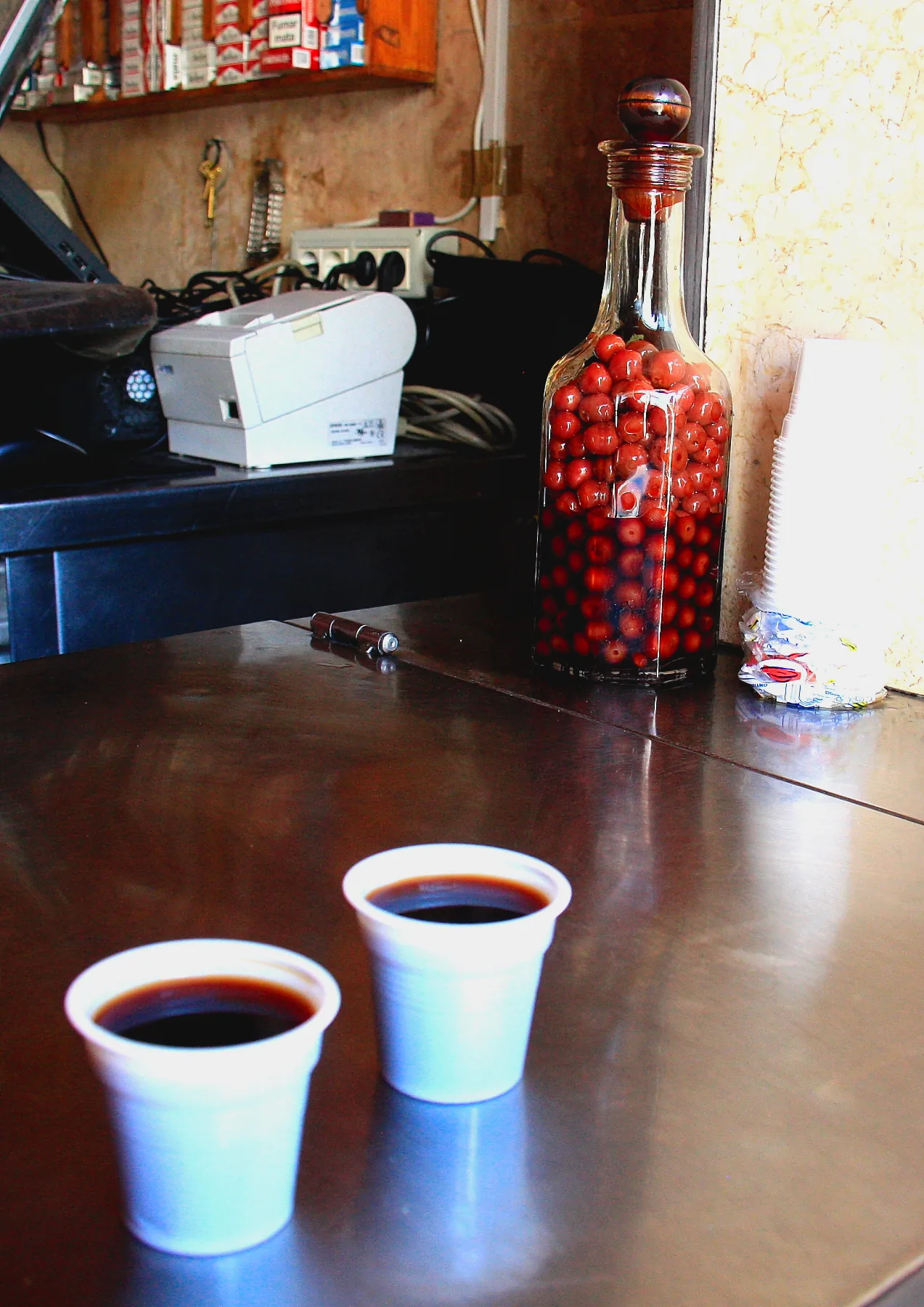
A small glass of ginjinha gives you Lisbon’s sour-cherry liqueur without committing to a bottle. At a traditional counter, the main choice is whether you want cherries in your glass, not a cocktail menu.
A Ginjinha Espinheira is the historic reference for this ritual and a producer in its own right. The traditional glass serving, chocolate cups and take-home bottles offer different ways to try the liqueur, but the simple counter order is a good place to start.
Ginjinha by the glass
- Drink
- Sour-cherry liqueur
- Occasion
- After-dinner digestif or casual drink
- Reference producer
- A Ginjinha Espinheira
Ginjinha combines sour cherries with a brandy base and sugar, giving you sweetness balanced by tart fruit and the warmth of the spirit. Cinnamon and cloves are optional additions, rather than ingredients you should expect in every version. If you enjoy sweet fruit liqueurs, it is an easy drink to try, but if you prefer dry drinks, its sweetness is the deciding point.
In Portuguese, ginja names the sour cherry, while ginjinha names the liqueur made from it. You will also encounter ginja used as shorthand for the drink on signs and labels. The shorter name alone does not identify a particular producer or tell you whether there is fruit in the serving.
Expect roughly €1.50–€3 for a small counter glass. A larger serving or a seat with table service can bring the price to around €3–€5, depending on the establishment and pour. For a first taste, the small glass keeps the commitment modest.
If you want to have it after a meal, traditional food in Lisbon offers choices for what comes before the digestif. There is no need to build dinner around the liqueur: treat it as a small finish rather than a drink to accompany every course.
Lacobrigo · CC BY-SA 4.0
Ordering with or without cherries
At the counter, com elas means “with them”, requesting cherries in your ginjinha, while sem elas means “without them”, requesting just the liquid. Both choices give you the cherry liqueur. The difference is whether you also want the soaked fruit, not whether the drink has a cherry flavour.
For a short order, say “Uma ginjinha com elas, por favor”, meaning “One ginjinha with cherries, please”. Replace com elas with sem elas if you prefer no fruit. You do not need to name a cocktail or ask for a mixer: the usual order is the liqueur itself.
The soaked cherries are normally served whole. Eat the fruit carefully around its stone, rather than biting straight through it. Choosing sem elas avoids handling the fruit and leaves you with a straightforward small drink.
Traditional Lisbon ginjinha counters generally serve a small glass to drink standing, on the spot. Take a sip before finishing it. A shot-sized serving does not oblige you to swallow it in one go. This is a brief counter stop rather than a seated bar visit.
Ginjinha may be served at room temperature or chilled. Neither temperature defines a different drink, so the cherry choice remains the useful thing to specify when you order.
A Ginjinha Espinheira
A Ginjinha Espinheira is the producer’s original outlet, making it a useful place to connect the drink in your glass with the name on a bottle. Its inexpensive format suits a first taste.
Francisco Espinheira founded the tavern in 1840, having learned the recipe from a Galician friar. The liqueur was originally sold as a medicinal remedy, a piece of its history rather than a reason to drink it for your health.
Espinheira describes its ginjinha as sweet and aromatic, with a rich cherry flavour. That makes the producer worth noting if you enjoy your glass and later want the same name on a take-home bottle, rather than choosing solely by the word ginja on the label.
- Name
- A Ginjinha Espinheira
- Location
- Largo de São Domingos 8, Lisbon Maps
- Site
- ginjinhaespinheira.com
- Hours
- 10:00–22:00
- Essential fact
- A traditional ginjinha counter on Largo de São Domingos, near Rossio in central Lisbon.
- Price range
- €
Chocolate cups and bottled ginjinha
Chocolate cups are especially associated with Óbidos, although you may encounter them in Lisbon too. This presentation adds edible chocolate to the serving, so choose a glass if you want to concentrate on the liqueur itself. The chocolate cup is a variation, not a requirement of the Lisbon counter ritual.
A Ginjinha Espinheira also sells bottled ginjinha to take home. Its 0.7 L bottle costs €12.95 in the producer’s online shop, with fruit and without fruit versions available. The cherry choice you made at the counter therefore applies to the bottle too.
When choosing a bottle, look at the producer, fruit inclusion and size together. A familiar producer helps you return to a flavour you enjoyed, while fruit inclusion tells you whether you will also be serving soaked cherries. Bottle size determines how much you are taking home, rather than how sweet the drink will be.
Sources & fact-checking
Checks against the sources below cover: key figures and services.