Madeira wine can start a meal with a dry, citrus-led glass or finish it with a richer pour. The grape name helps you choose the sweetness, while an age label tells you something different.
Ordering a glass
- What it is
- Fortified wine, often classed as a dessert wine
- When to drink it
- Before a meal or with and after food, depending on style
- Representative producer
- Blandy’s
Madeira starts as grape wine and is fortified with neutral grape spirit, also called grape brandy. It is wine, not sherry: sherry is a separate fortified wine from Spain.
Ask for “a glass of dry Madeira” or “a glass of sweet Madeira” at a wine bar, restaurant or producer tasting room. A single pour lets you enjoy one wine, while a flight gives you smaller samples to compare.
Expect roughly €5–10 for a glass and €10–25 for a modest flight. Older wines and larger pours cost more, and rare bottlings can go well beyond these ranges. Table service may also raise the price compared with a counter pour.
At a restaurant, bread and other cover items are separate from the wine, often around €2–5 per person if accepted. A tasting-counter purchase is not a meal cover. Lunch is commonly around 12:00–15:00 and dinner around 19:00–22:00.
Heat, ageing and origin
Madeira’s distinctive character comes from deliberate warmth and ageing, alongside acidity that keeps even rich wines lively. Nutty, dried-fruit and caramelised flavours are part of its appeal.
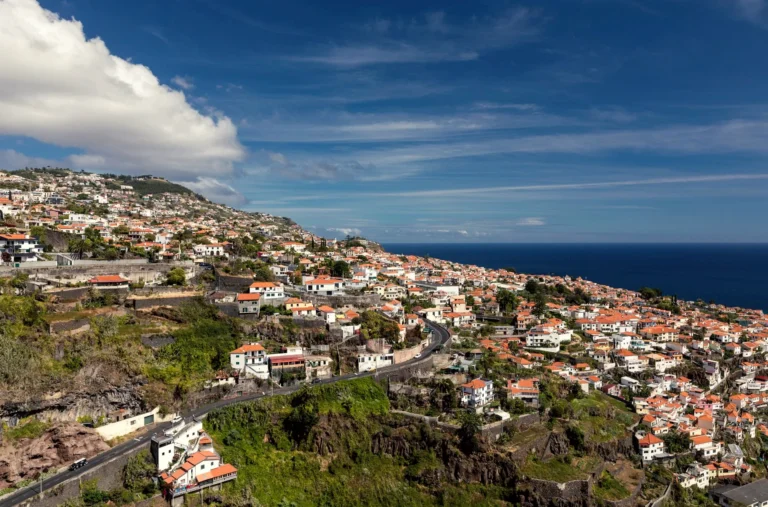
Madeira has Protected Designation of Origin (PDO) status. The grapes for protected-origin Madeira wine must grow on the island of Madeira, linking the wine to this Atlantic island rather than just to a method of production.

Luis Miguel Bugallo Sánchez (Lmbuga) · CC BY-SA 4.0 · Edited
Estufagem, heated-tank treatment, typically warms the wine in stainless-steel tanks to about 45–50°C for at least three months. This reproduces the effects of long, warm sea voyages. The wine then rests before bottling.
Canteiro, slow ageing in warm casks, uses natural warmth in wine lodges, traditionally their lofts. Time in wood develops the wine gradually. The distinction is useful when discussing a tasting: one method applies controlled heat, while the other relies on a longer development in cask.
Sweetness is only part of the choice: when tasting, notice how the acidity balances the richer flavours. Take a moment with each glass before moving to the next, so you can decide which balance you enjoy.
Sercial, Verdelho, Bual and Malvasia
| Criterion | Sercial | Verdelho | Bual | Malvasia |
|---|---|---|---|---|
| Usual sweetness | Dry; the driest style | Medium-dry; can range from dry to sweet | Medium-rich to sweet | Sweet, rich |
| Characteristic flavours | Citrus, almond; sometimes smoke or salinity | Citrus, stone fruit, nuts, smoke, spice | Dried fruit, caramel, nuts, spice, orange peel | Caramel, dried fruit, nuts, spice; coffee or chocolate |
| When to drink it | Before a meal | Before or alongside dinner | After a meal, or with rich desserts | After dinner |
Madeira can be dry or sweet, with intermediate styles as well. These four familiar grape names are useful starting points when you order, but Verdelho in particular is not a guarantee of one sweetness level. Ask about the specific bottle if that distinction matters to you.
Boal is the traditional Madeira spelling of Bual: the names refer to the same grape variety and its associated style. Malmsey is the traditional English label name for Malvasia, so you may encounter either name on a tasting menu.
For a first glass, choose according to what you feel like drinking rather than treating richness as a ranking of quality. Sercial offers crisp acidity, while Malvasia is fuller-bodied. If both are offered at the same counter, comparing them makes the breadth of Madeira easier to taste. Verdelho or Bual gives you a way to explore the space between those ends.
Grape names and age labels
Tinta Negra can produce the full range from dry to sweet. Its grape name alone does not tell you which kind is in the bottle, so read the sweetness description when choosing a pour.
- Seco means dry.
- Meio Seco means medium-dry.
- Meio Doce means medium-sweet.
- Doce means sweet.
An age indication on a blend denotes its approximate average age, not the age of every component. The blend is made to match the style and quality associated with that age category. It is not a harvest year, and it does not replace the sweetness description: choose the style you want before using age to narrow the selection.
Colheita, meaning harvest, identifies a single-vintage Madeira aged in cask for at least five years before bottling. Frasqueira is also from a single harvest, but spends at least 20 years in cask before bottling. These labels let you choose a wine tied to a particular harvest rather than an age-labelled blend.
For a straightforward first pour, an age-labelled blend in your preferred sweetness style is an accessible starting point. If you want to explore a particular harvest, look for colheita or frasqueira and ask which bottles are offered by the glass.
Serving and food pairings
Serve dry and medium-dry Madeira chilled at 12°C. Sweeter styles are best lightly chilled, around 13–15°C. Use small pours so you can enjoy the wine slowly, especially when trying several styles.
Try Sercial with salted nuts or olives, and Verdelho with savoury snacks or cheese. Bual suits rich cake or chocolate, while Malvasia works with a dessert or a piece of blue cheese. These pairings give the wine something to contrast with, without requiring a full meal.
Bolo de mel, Madeira’s honey cake, is a useful local pairing for the richer styles. Its honey flavours, cinnamon and cloves, citrus zest and nuts give you several points of connection with the wine. A small piece alongside a glass is enough to explore the match.
If you know Amontillado or Oloroso sherry, their nutty, saline, savoury, dried-fruit and toasted flavours offer a reference for dry Madeira. Sweet tawny port provides another comparison through almonds, caramel, dried figs and orange peel. Madeira, sherry and port are distinct wines. Madeira’s acidity remains an important part of its character.
Keep an opened bottle upright, tightly stoppered, in a cool, dark place. Refrigeration is optional. Madeira usually keeps well for several weeks or longer after opening, depending on the style and storage, making it suitable for enjoying a little at a time.
Wine houses and a Funchal tasting
Blandy’s, Vinhos Barbeito and Henriques & Henriques all produce protected-origin Madeira wine. These are producer names to recognise on bottles and tasting menus, but the sweetness and age labels still guide what you order.
Compare contrasting sweetness styles before moving to older wines. If a tasting menu offers both Sercial and Malvasia, that pair gives you a clear contrast. Then try an intermediate style if you want to explore further. Comparing wines of similar age helps you focus on style rather than changing everything at once.
Blandy’s Wine Lodge offers public tasting in Funchal. You can order glasses or a flight in the tasting room without joining a guided tour. Tours include a tasting, so they suit you if you also want the visit around the lodge rather than simply a drink. The tasting rooms also open on public holidays, but on Sundays, plan your visit around the midday break.
An ordinary counter tasting lets you choose your wines and compare them at your own pace, usually as a walk-in without booking. A tutored tasting is a more structured, guided tasting and requires advance booking. For a first encounter with Madeira, the counter experience lets you begin with the styles that interest you rather than committing to a tour.
- Name
- Blandy’s Wine Lodge
- Location
- Central Funchal, Madeira Maps
- Site
- blandyswinelodge.com
- Hours
- Mon–Fri 10:00–18:30
- Sat 10:00–18:00
- Sun 10:00–13:00, 14:00–18:00
- Essential fact
- Blandy’s wine lodge in central Funchal.
Sources & fact-checking
Checks against the sources below cover: opening hours and key figures.