Venice’s central sights are close enough to connect on foot, but the effort depends as much on bridge steps as on distance. From Santa Lucia railway station, you can walk through Rialto to St Mark’s Square; carrying a suitcase or pushing a pushchair makes those same crossings a different proposition.
The historic centre on foot
Yes, Venice is walkable for central sightseeing if you can manage repeated bridge steps. Walking is the usual way to move between its lanes, squares and sights. The historic island centre is pedestrian, with the Grand Canal and Giudecca Canal as recognisable boundaries. It is distinct from mainland Venice and the separate lagoon islands.
Calle Larga XXII Marzo, in the San Marco area, is a broad pedestrian street, but it is not a template for every route: narrower lanes and canal crossings also shape your walk. Compact distances do not mean step-free access. Heavy luggage or limited walking stamina can make a boat useful even within the centre.

Andrzej Otrębski · CC BY-SA 4.0 · Edited
If you arrive by road, plan for car access and where to stop before the walk begins: you cannot continue driving through the historic centre’s pedestrian lanes.
Walks between the station and main sights
| Walk | Distance | Moving time |
|---|---|---|
| Santa Lucia railway station → Rialto Bridge | about 1.6 km | about 22 minutes |
| Rialto Bridge → St Mark’s Square | about 500 metres | about 7 minutes |
| Santa Lucia → St Mark’s Square via Rialto (combined) | about 2.1 km | about 29 minutes |
| St Mark’s Square → Accademia Bridge | about 950 metres | about 13 minutes |
| Accademia Bridge → Frari church | about 950 metres | about 14 minutes |
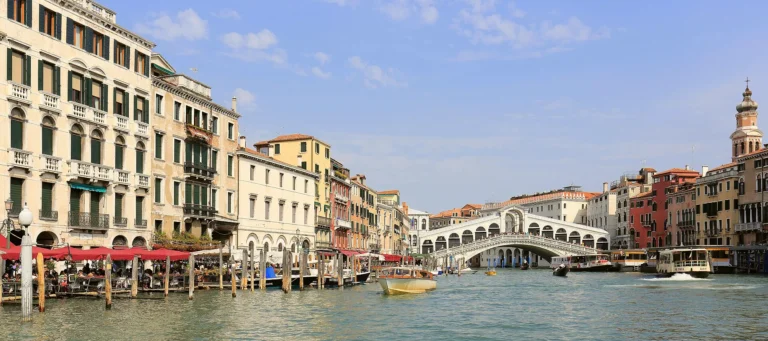
Starting at Santa Lucia railway station, the walk to Rialto Bridge brings you to the Grand Canal’s central crossing. From Rialto, continue to St Mark’s Square (Piazza San Marco), where the basilica and Doge’s Palace face the city’s principal public space. Treat the walking times as time spent moving, not as a sightseeing schedule. Looking into shops, stopping at the canal or visiting a monument extends the journey.
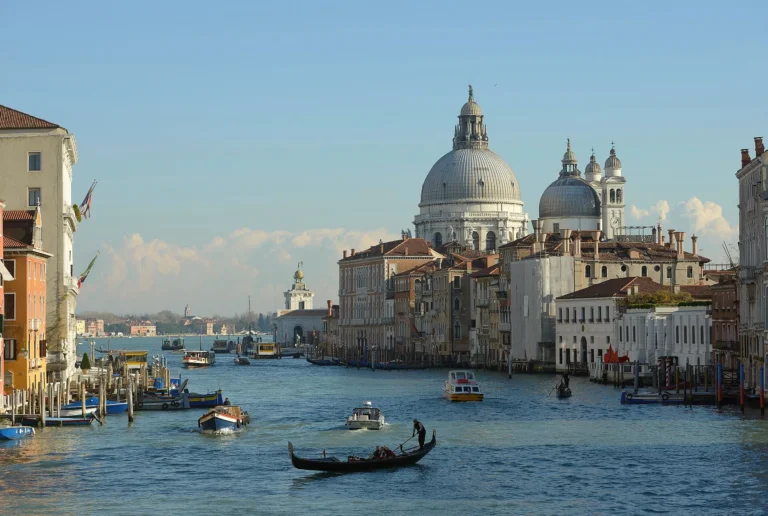
From St Mark’s Square, the next stretch reaches Accademia Bridge, a Grand Canal crossing towards Dorsoduro. Continue from the bridge towards the Frari church in San Polo, a substantial Gothic church set among smaller lanes and squares. Canals interrupt direct lines between places: you need to follow the available crossings rather than aim straight at your destination.

Didier Descouens · CC BY-SA 4.0 · Edited
Walking across the centre is not the same as walking around all of Venice. These routes connect particular sights, rather than trace every district or the island’s edges. Exploring Cannaregio’s northern canals or Dorsoduro’s southern waterfront adds separate walks and time to linger. Choose the districts you want to explore, then leave room for breaks instead of treating a cross-centre journey as a complete tour.
Bridges, luggage and step-free access
On walks such as the route through Accademia towards the Frari, the repeated crossings matter more when you have something to carry. Many Venice bridges have steps rather than ramps, so wheeled luggage and pushchairs may need lifting up and down. Ponte degli Scalzi, beside Santa Lucia station, illustrates the stepped crossing of the Grand Canal that can confront you early in a visit.

Effems · CC BY-SA 4.0 · Edited
For a luggage transfer, pack so that you can lift your bag safely, rather than relying on its wheels throughout. Keep essentials in a small day bag and leave larger luggage at your accommodation before sightseeing. With a pushchair, consider how you will manage both it and your child at steps, because repeated lifting becomes tiring even when the next sight is nearby.
An ordinary pedestrian route is not a verified step-free route. If steps are a barrier, plan around accessible crossings and landings rather than using the walking distances alone to decide. A boat journey still needs usable access at both ends.
Wear supportive shoes with grip for paved lanes and bridge steps. Break exploration into shorter stretches with seated pauses, and reduce the number of times you move accommodation with bags. Walking light and transferring luggage are different tasks, even along the same route.
When to take a waterbus
If bridge crossings or a luggage transfer make a walk difficult, a vaporetto, Venice’s public waterbus, can reduce the stretch you cover on foot. Murano, Burano and Giudecca require water transport from the historic centre: there is no pedestrian route across to these separate islands. Murano is known for glassmaking, Burano for its colourful houses and lace, while Giudecca lies across the canal from the centre’s southern waterfront.
Ferrovia, meaning railway station, is the ACTV landing serving Santa Lucia. It gives you a waterbus departure point at the rail arrival rather than requiring a walk across the centre first. Within central Venice, a ride can spare repeated crossings or some bag carrying, but reaching the landing, waiting and walking onwards are still part of the journey.
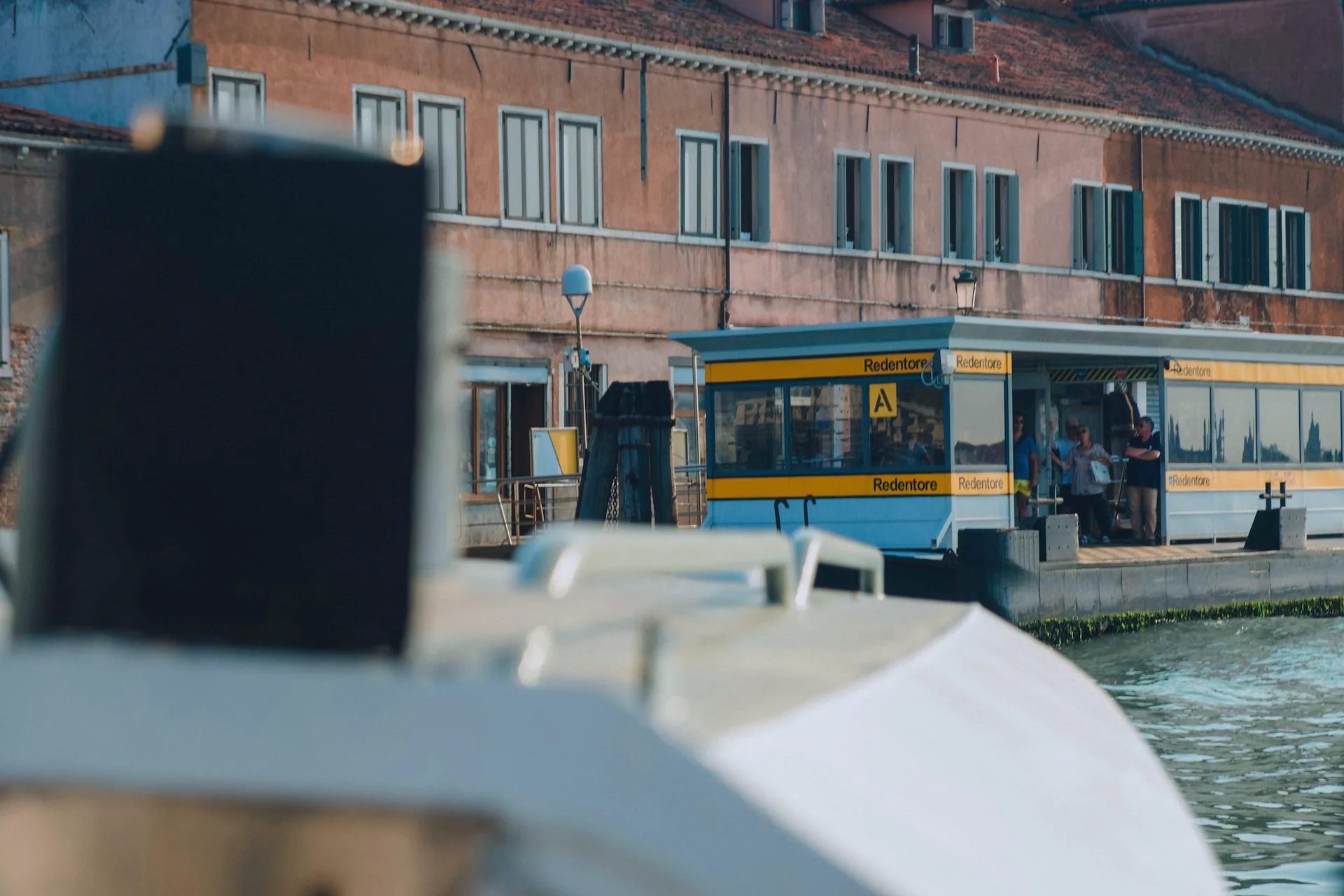
Semyon Borisov · Unsplash License · Edited
For a wheelchair user, consider whether you can reach and leave each landing along an accessible route. For other travellers carrying bags, a landing near your destination can still leave bridge steps between you and the door.
Crowds and high water
Whether you arrive on foot or leave a waterbus landing, crowds can slow the St Mark’s–Rialto corridor independently of its distance. Bridge approaches and narrow lanes bring pedestrian flows together, so allow room for slower progress rather than expecting the moving times to match a busy sightseeing day.
Step aside into a wider space before stopping to look at your phone or take photographs. Keep narrow bridge approaches clear and choose a square or broader stretch of pavement for a longer pause. St Mark’s Square offers more open space for a pause.

IvanPhoto23 · CC BY-SA 4.0 · Edited
Sources & fact-checking
Checks against the sources below cover: services.