Verona is generally safe for visitors, including women travelling alone, with sensible precautions around belongings and late returns. Opportunistic theft is the more relevant visitor concern than violent-crime fears: distraction creates opportunities at Porta Nuova during boarding and afternoon or evening waits, in busy sightseeing queues, and around Arena performance exits. Travellers managing luggage, photographs or crowded departures have particular reason to stay attentive. After dark, choose your return according to how populated the streets are, rather than treating the whole centre as unsafe.
Visitor safety at a glance
- Visitor verdict
- Generally safe with everyday precautions
- Main concern
- Opportunistic theft in transport and sightseeing crowds
- Emergency assistance
- 112, free; police or medical emergencies
- Police enquiries
- +39 045 809 0411, Questura di Verona switchboard
- Reporting office
- Ufficio Ricezione Denunce (Reports Reception Office)
Use emergency assistance for immediate danger or urgent medical help, not routine reporting enquiries. Emergency short codes are dialled without a country prefix, including from a foreign mobile phone in Italy. For a completed theft with no continuing danger, the police switchboard can help with reporting enquiries. Ask for the office named above.
Italy-wide safety advice is not a verdict on every Verona neighbourhood. Here, focus on the situations that expose belongings and on having a comfortable way home after an evening out.
Porta Nuova and crowded visitor sites
Verona Porta Nuova is a principal rail arrival point, with the Piazzale XXV Aprile bus interchange outside. During afternoon and evening travel, finding a platform, boarding a bus or waiting with luggage can divide your attention between bags, tickets and directions. If you need to stop and work out where to go, move out of the boarding stream first. Finish orientating yourself before joining the queue again. While waiting, choose a spot where you can watch your luggage without obstructing other passengers.

CAPTAIN RAJU · CC0 · Edited
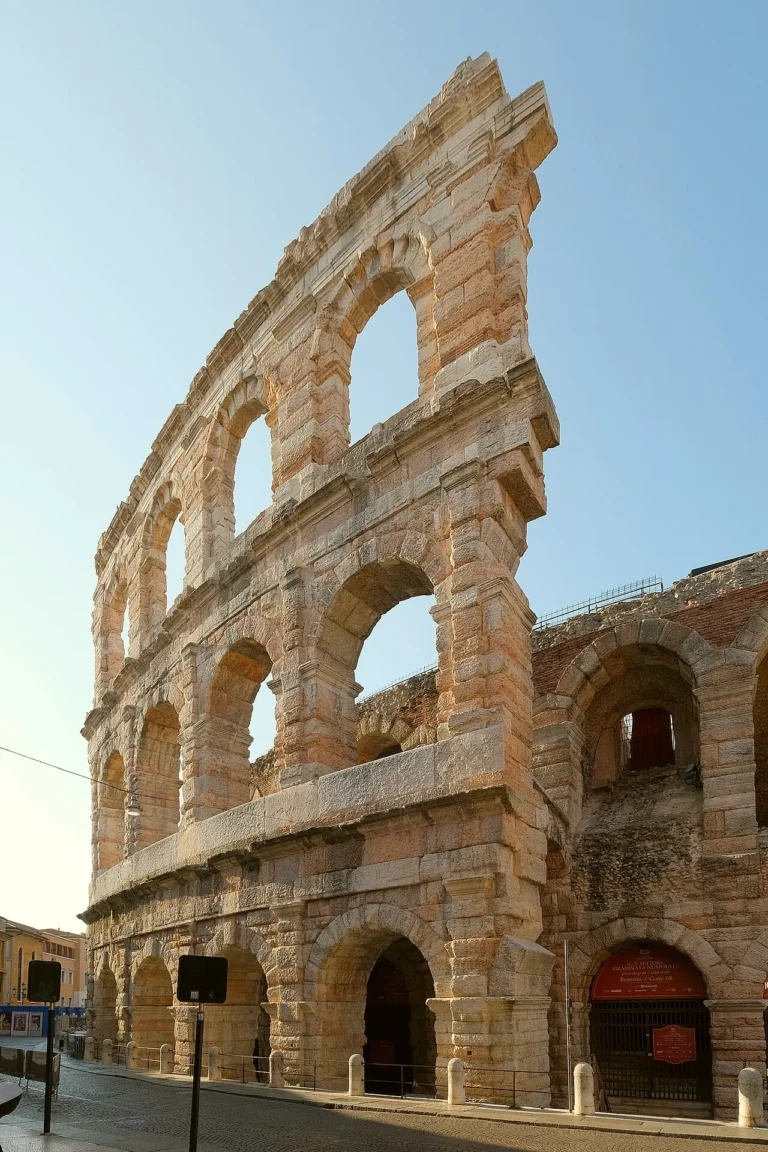
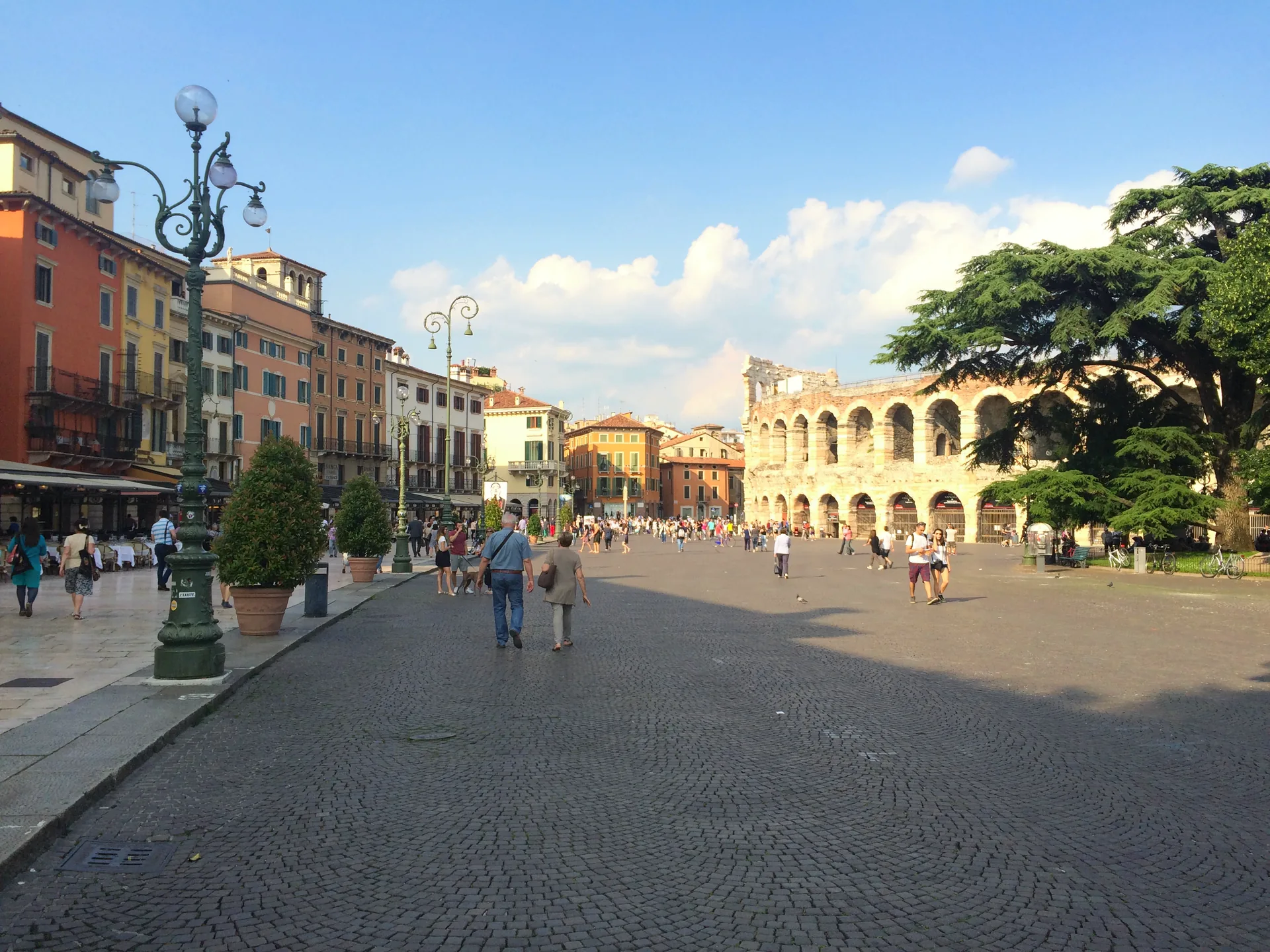
Piazza Bra gathers visitors before and after performances at the Arena, Verona’s Roman amphitheatre. The concern is the crush of people leaving together, when jostling makes it harder to notice an unexpected touch. If the exit becomes congested, let the tightest group pass before stopping to arrange your onward journey.
Juliet’s House draws queues and courtyard photographs, while Via Cappello carries the surrounding pedestrian flow. A photograph can leave you watching a screen rather than what is happening beside you. Step aside from the queue or moving crowd before setting up a photograph, and pause the shot if someone presses close or distracts you.
These are situations to recognise, not reasons to avoid the station or the central sights. Crowd-related concerns do not make an entire district dangerous. The useful response is to notice when your attention is being pulled in several directions.
Petitions, bracelets and rose sellers
- Petition distraction: around Piazza Bra during sightseeing or performance crowds, a clipboard and a request to sign draw your attention away from your belongings. Decline briefly, keep your bag in view and continue without stopping to debate.
- Friendship bracelet: on busy pedestrian approaches to Piazza delle Erbe and Juliet’s House, someone offers a supposed gift or tries to tie a bracelet onto your wrist. Keep your arm back, say “No, thank you” and leave rather than negotiating over an unsolicited item.
- Rose payment demand: at central restaurant terraces during dining, a flower is offered or placed on your table, then payment is requested. Refuse it at the outset. If it has been left, leave it on the table and disengage. Ask terrace staff for help if the seller persists.
These are possible unsolicited approaches, not encounters you should expect on every visit. If someone persists after you have declined, move towards an open shop or staffed venue rather than remaining in a conversation that keeps you distracted.
A restaurant’s coperto, or cover charge, is different: a disclosed charge for dining is a normal part of Italian restaurant pricing, not the same as a demand for an unwanted flower. Read the menu’s stated charges before ordering, and ask staff to explain a bill item that does not match the pricing.
Evening walks and the journey back
Walking around the Arena, Piazza Bra and Piazza delle Erbe is generally a reasonable choice while streets and venues remain active. The decision changes after performances, when departing crowds disperse and quieter stretches can feel isolated. Choose a populated route, but if the walk or a late wait near Porta Nuova feels uncomfortable, take a licensed taxi directly to your accommodation.
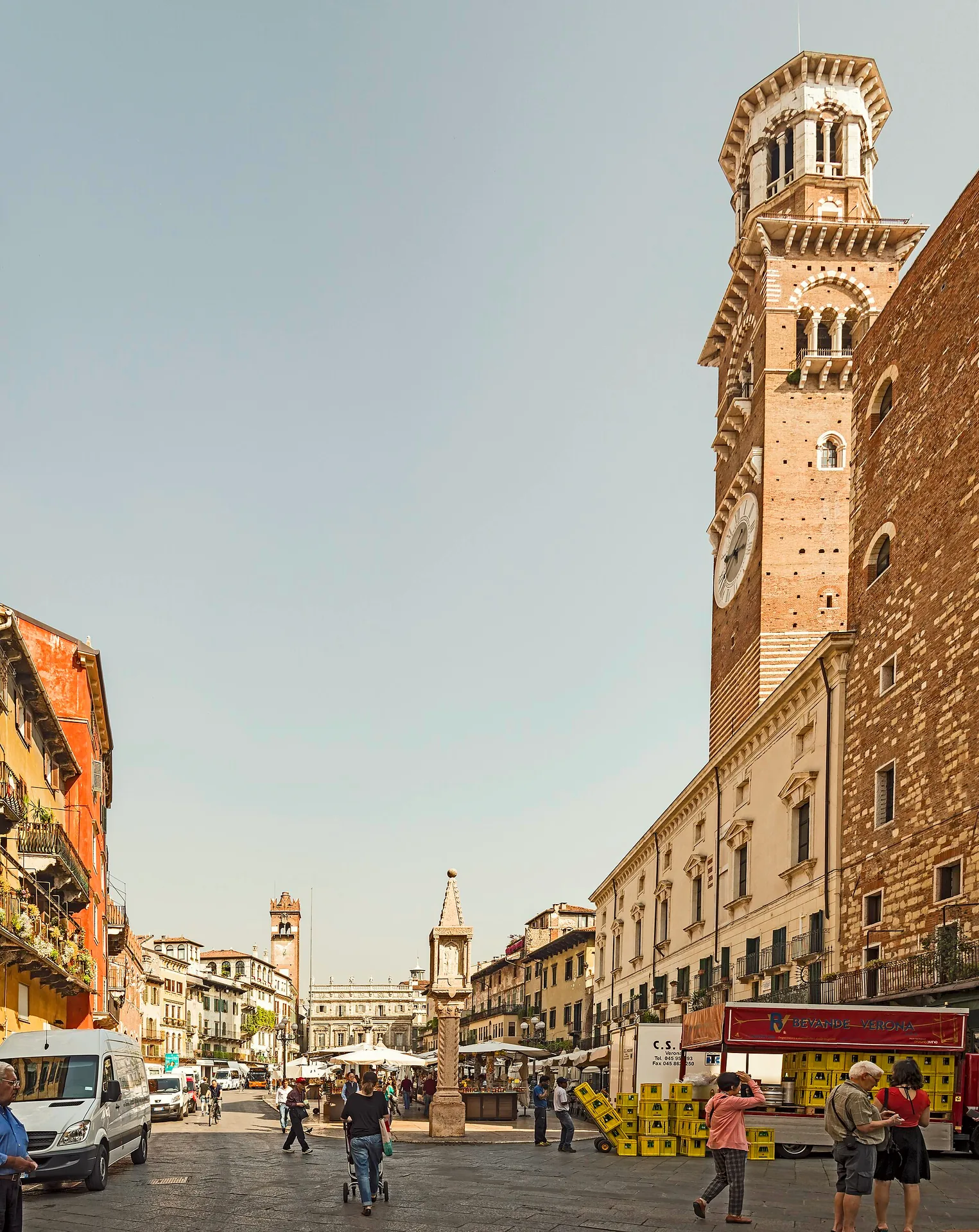
Didier Descouens · CC BY-SA 4.0 · Edited
ATV’s evening urban network connects the historic centre, including Piazza Bra, with Porta Nuova. It operates daily from 20:30 to midnight. Some services follow fixed routes, while others are on-demand, so do not assume every evening service can simply be boarded at a stop. Choose a licensed taxi if you are unsure how to use the evening bus and would otherwise be waiting alone.
You can call Radio Taxi Verona on +39 045 532 666 at any hour. A direct ride is a practical alternative to waiting alone after the streets have emptied, especially if you are unfamiliar with the final approach to your accommodation.
- Look for the illuminated roof-mounted “TAXI” sign.
- The front mudguard carries the Comune di Verona crest and licence number.
- A rear-right sticker reads “TAXI – SERVIZIO PUBBLICO” and carries the licence number and municipal crest.
- A clearly visible interior plate at the rear right also displays the licence number.
Women travelling alone
For a woman travelling alone, choose accommodation with a straightforward arrival and someone you can ask for help. Know where the entrance is before returning after dark, and understand how you will get inside if reception is not staffed on arrival. This matters more than choosing solely by proximity to a landmark.
On an evening out, keep control of your drink rather than leaving it unattended or accepting one whose handling you have not seen. If attention becomes persistent, you do not owe the person a conversation or details about where you are staying.
If you think someone is following you, enter an open, staffed venue rather than leading them to your accommodation. Ask a staff member directly for help and explain what is happening. Stay there while arranging a safe onward journey, and use emergency assistance if there is immediate danger.
For support with violence or stalking, call 1522, Italy’s free national helpline, available 24 hours a day, every day of the year, with English-language support. It is accessible in Italy from landlines and mobile phones. Dial the short code without a country prefix. Specialist support can help you discuss what has happened and your next steps, even when you are unsure how to describe the situation.
Bags, phones and cash machines
Make a quick belongings check when the situation changes: before boarding, after taking photographs and when leaving a terrace. Those transitions are when you may discover something missing, and recognising it promptly helps you respond. For cash withdrawals, choose a machine where you can concentrate on the transaction without people pressing close behind you.
Do
- Keep your bag closed and in front of you in crowds.
- Keep luggage within reach while waiting or sitting.
- Put your phone away when you are not using it at a café.
- Shield your PIN; if someone interrupts, cancel the withdrawal and retrieve your card.
- Store a backup payment method separately from your main wallet.
Don’t
- Carry valuables in an open outer pocket or a bag behind you.
- Leave luggage unattended while buying a ticket or food.
- Leave a phone near a café-table edge.
- Let a stranger handle your card or guide you through a withdrawal.
- Keep every card and all your cash together.
Reporting and replacement contacts
- Get somewhere safe first. Seek immediate assistance if you are threatened or injured, but do not chase someone who has taken your belongings.
- Contact your card issuer or bank immediately. Report the theft, request cancellation and ask for a replacement. The issuer explains the account-specific process and any emergency replacement options.
- Report the theft in person at the Questura di Verona’s Reports Reception Office, at Lungadige Galtarossa 11, 37133 Verona. Bring available valid identification and describe the stolen items. Photographs of valuables can help identify recovered property.
- Keep the police report for your insurance claim. Retain relevant supporting documents alongside it so you can explain what was stolen.
- After passport theft, contact your own country’s embassy or consulate responsible for Italy. Following the police report, ask about a replacement passport or emergency travel document. Procedures and eligibility depend on your nationality.
A police report is not a replacement passport or permission to travel. The consular service handles the travel document, while the card issuer handles payment-card replacement. Explain any imminent travel to the consular staff rather than assuming that the report alone will let you continue your journey.
EU citizens whose own country has no representation able to assist may seek an EU Emergency Travel Document through another EU country’s consular representation, subject to formal authorisation from their home-country authorities. This is a consular route, not a document issued by the Verona police.
Sources & fact-checking
Checks against the sources below cover: services and key figures.
- Municipality of Verona — service
- Department for Equal Opportunities, Presidency of the Council of Ministers — service
- Presidency of the Council of Ministers – Department for Equal Opportunities — key figures
- ATV – Azienda Trasporti Verona — service
- ATV (Azienda Trasporti Verona) — service
- Comune di Verona — service
- Comune di Verona — key figures
- Comune di Verona; European Union — key figures
- Questura di Verona (Polizia di Stato) — key figures
- Questura di Verona / Polizia di Stato — service
- Questura di Verona — service
- Questura di Verona — Polizia di Stato — service
- Italian Ministry of Foreign Affairs and International Cooperation — service
- Visa — service