In Málaga, a small glass of sweet wine belongs as naturally with dessert as a dry white does with fish. Choose sweetness first, then the grape: Moscatel and Pedro Ximénez appear in both sweet and dry wines, and the protected designation alone does not settle the choice.
Ordering wine by the glass
| Wine | What it is | When to drink it | Typical glass |
|---|---|---|---|
| Sweet Moscatel | Aromatic sweet white | With dessert | €3–€5 |
| Sweet Pedro Ximénez | Concentrated sweet wine | After a meal | €3–€6 |
| Dry Sierras de Málaga white | Dry local white | With lunch or dinner | €4–€7 |
| Dry Sierras de Málaga red | Dry local red | With lunch or dinner | €4–€8 |
The Málaga protected designation covers sweet, semi-sweet, semi-dry and dry wines, including naturally sweet and fortified wines. Sierras de Málaga covers still whites, rosés and reds across dry, semi-dry, semi-sweet and sweet styles, including naturally sweet wines. Say dulce for sweet or seco for dry when ordering.
A copa is a glass, and a botella is a bottle. Ask for “Una copa de vino de Málaga, dulce, por favor” for a sweet local glass, or “Una botella de vino de Sierras de Málaga, seco” for a dry local bottle.
Sweet wines usually come in smaller pours than table wines. Expect roughly €18–€35 for a bottle of local table wine in a restaurant, or €20–€40 for sweet wine, with bottle size affecting the latter. House choices and counter service tend towards the lower end, while premium labels, larger pours or table service can cost more.
Lunch is usually around 14:00–16:00 and dinner around 21:00–23:00. Bread may be charged separately, often about €1–€3 per person, but that is not the same as a cover charge. For a seated meal, restaurants in Málaga’s Old Town offer a separate choice of places to match your wine with food.
Sweet Moscatel
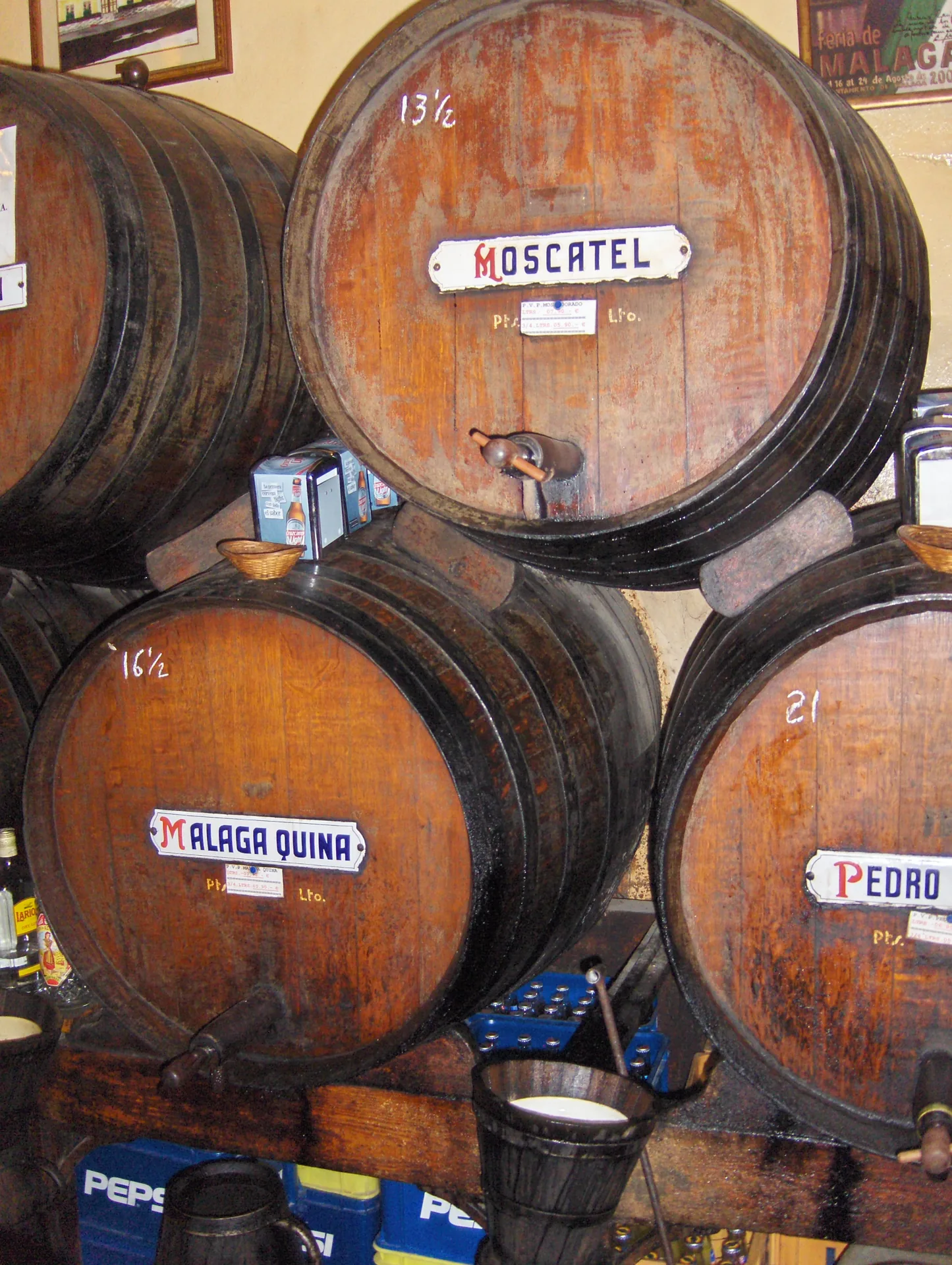
Málaga is particularly known for its traditional sweet wines, including Moscatel. Made from Muscat of Alexandria, sweet Moscatel brings orange blossom, ripe grape, apricot and honey flavours. The Axarquía, east of the city, is part of the province’s Moscatel-growing landscape.

Cayetano · CC BY-SA 2.0 · Edited
Its sweetness comes from grape sugar: sun-drying can concentrate it before fermentation, or fermentation can be stopped while sugar remains. Some styles also use arrope, cooked, concentrated grape must, blended into the wine. Moscatel Iberia from Bodegas Málaga Virgen is a named sweet Moscatel example.
Have it with dessert, particularly at Christmas Eve dinner. Local seasonal accompaniments include pestiños, honeyed fried pastries, and roscos de vino, wine-flavoured ring biscuits. Fruit tarts suit its fruity character, while blue cheese offers a savoury contrast.
At a wine-tavern counter, ask for “Una copita de moscatel dulce, por favor”, a small glass of sweet Moscatel. Antigua Casa de Guardia on Alameda Principal is a traditional reference for this style of drinking, rather than a seated restaurant meal. It is an inexpensive setting for trying a sweet wine. Doors open at 10:00 Monday–Saturday and 11:00 on Sunday. Sunday suits a pre-lunch drink rather than an evening visit.
- Name
- Antigua Casa de Guardia
- Location
- Alameda Principal, Málaga Maps
- Site
- antiguacasadeguardia.com
- Hours
- Mon–Thu 11:30–22:00
- Fri–Sat 11:30–22:45
- Sun 11:30–15:00
- Essential fact
- A traditional wine tavern in Málaga’s city centre.
- Price range
- €
Sweet Pedro Ximénez
Sweet Pedro Ximénez, usually shortened to PX, is the richer, dried-fruit choice. The grape gives this traditional style its name. In the glass, expect intense sweetness with raisins, dried figs and dates, often joined by caramel, coffee and nut notes.
Very ripe grapes are traditionally sun-dried on mats, then pressed. Fermentation of the concentrated juice is often stopped by adding grape spirit, preserving sweetness. Oak-cask ageing commonly uses a solera, a system that progressively blends younger wine with older stocks.
Málaga Virgen, the sweet wine from Bodegas Málaga Virgen, is made entirely from Pedro Ximénez and carries the Málaga protected designation. Its grapes come from Finca Vista Hermosa in Fuente de Piedra, where the winery is based.
Choose it at the end of a meal with chocolate dessert or ice cream, or alongside blue cheese. At a wine tavern, “Una copita de Pedro Ximénez dulce, por favor” asks for a small sweet PX. Its concentration makes it a drink to sip with dessert rather than a substitute for a table-wine glass.
Dry Sierras de Málaga whites
Pedro Ximénez and Moscatel can also make dry Sierras de Málaga whites. A dry expression gives you a local white to drink through lunch or dinner, rather than save for the final course.
Try one with grilled fish, prawns or mild goat’s cheese. In a restaurant or wine bar, ask for “Una copa de blanco seco de Sierras de Málaga, por favor”, a glass of dry local white. Keep blanco seco, meaning dry white, in the order even when naming a grape.
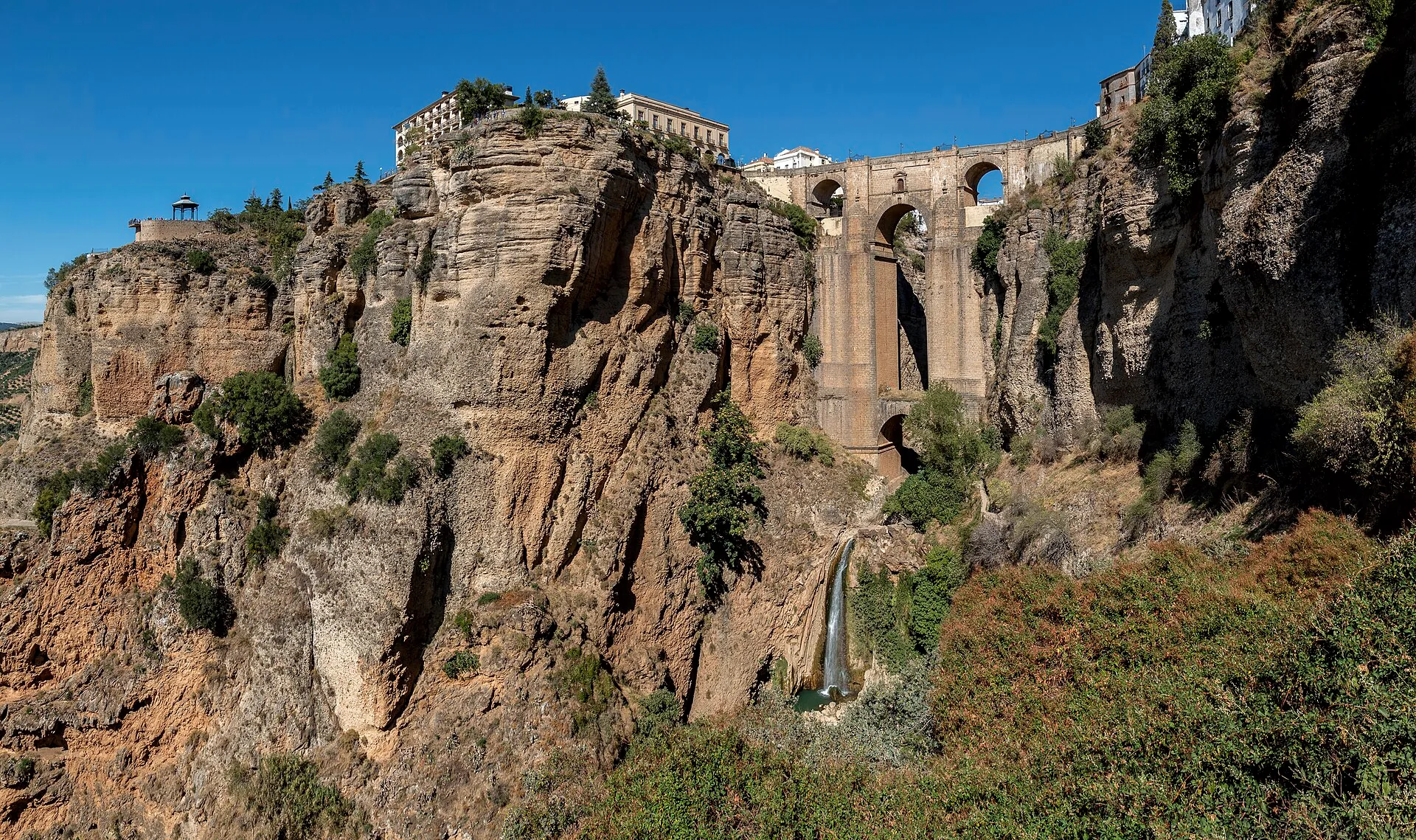
Descalzos Viejos is a producer based in Ronda. The town provides inland context for the province’s wine production, beyond the coastal city where you are choosing your glass.
Tesla Delacroix · CC BY-SA 4.0 · Edited
Dry Sierras de Málaga reds
Dry Sierras de Málaga reds give you a locally produced wine for a savoury meal. The grape range includes familiar Cabernet Sauvignon, Merlot, Syrah and Tempranillo, alongside Garnacha Tinta, Cabernet Franc and the local Romé.
El Lero from Tres Generaciones carries the Sierras de Málaga protected designation. Tres Generaciones is based in Ronda, in the Serranía de Ronda, the mountainous inland setting behind this example.

Daniel GB · CC BY 2.0 · Edited
Ask for “Una copa de tinto seco de Sierras de Málaga, por favor”, a glass of dry local red. Say ligero for a lighter wine or con más cuerpo for more body when choosing among the reds offered by the glass in a restaurant or wine bar.
Sources & fact-checking
Checks against the sources below cover: key figures and opening hours.
- Consejo Regulador de las Denominaciones de Origen Málaga, Sierras de Málaga y Pasas de Málaga — key figures
- Vino Tres Generaciones. La definición de Ronda en 3 etiquetas
- Antigua Casa de Guardia — opening hours
- Bodegas Málaga Virgen — key figures
- Junta de Andalucía — key figures
- Descalzos Viejos, S.L. — key figures
- Bodegas Málaga Virgen, S.A.U. — key figures