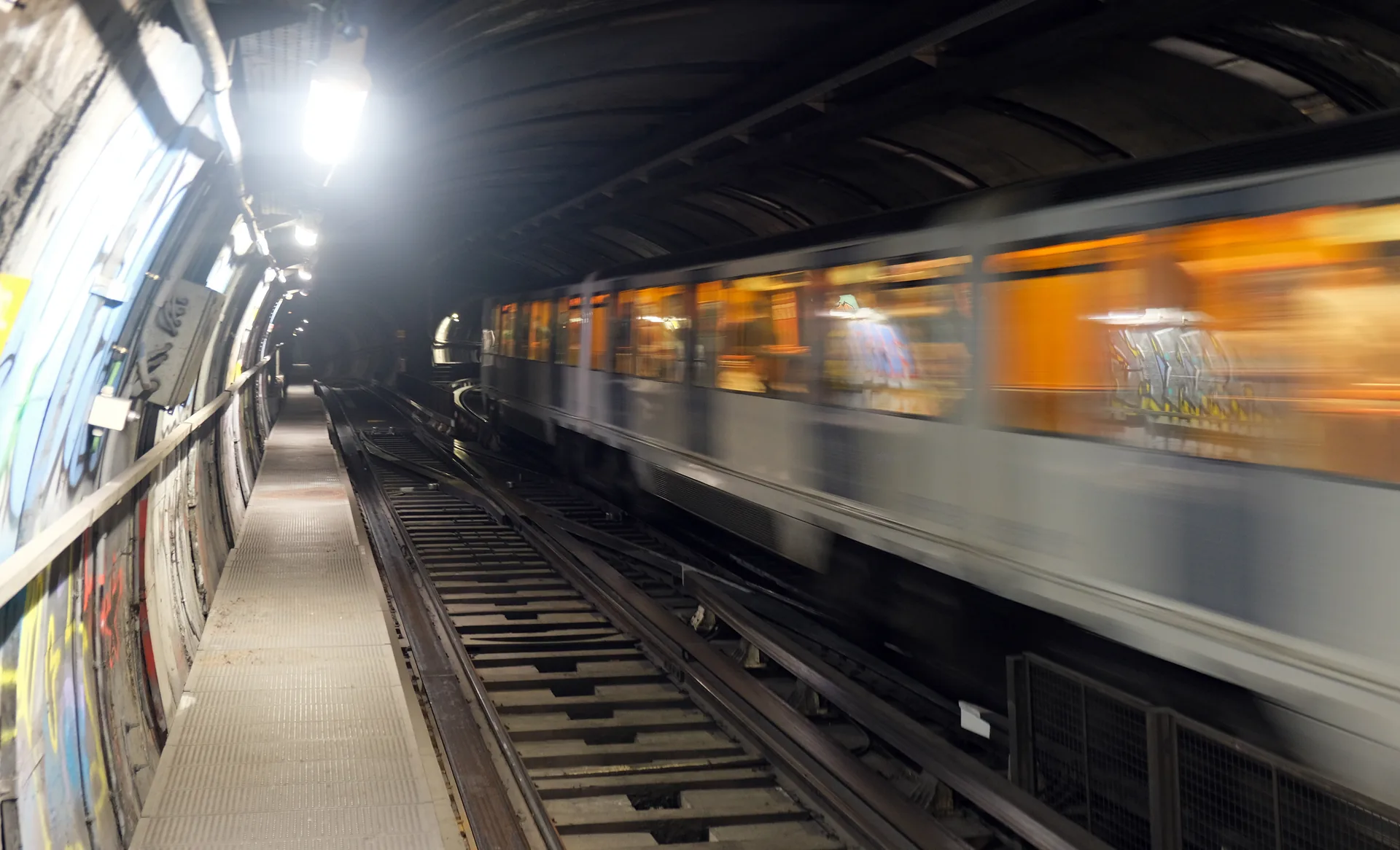
Central Marseille is easiest to explore on foot, but the city’s hills, beaches and outer districts make public transport useful. Walk between the Old Port, Le Panier and the Canebière; use the metro for longer cross-city trips, trams for central surface corridors, buses for steep or poorly connected streets, and boats for selected coastal routes. Buy and validate the correct RTM ticket before travelling, and treat the airport transfer as a separate fare question.
Public Transport at a Glance
Marseille public transport works best as a layered network: walk in the compact centre, then choose the mode that matches the terrain and distance. The metro is the fast central spine; trams fill surface corridors; buses reach hills and neighbourhood gaps; public boats serve selected coastal journeys. No single mode covers the whole city, so the most efficient choice often changes when you leave the waterfront.
| Mode | Worth using for | Main reach | Main limitation |
|---|---|---|---|
| Metro | Longer cross-city trips | Saint-Charles, Vieux-Port, Castellane, Prado | Small network |
| Tram | Central and east-west links | Canebière, Joliette, eastern centre | Slower on the surface |
| Bus | Hills, gaps and last-mile trips | Residential and outer districts | Road traffic |
| Boat | Coastal links | Pointe Rouge, L’Estaque, Les Goudes | Seasonal and weather-sensitive |
Tickets and Passes
For most visitors, the standard RTM fare is enough, but the product type and its validity window matter. The table sets out the current prices and windows. A single journey permits only one Metro entry, so do not treat a connection as permission to re-enter. The 7-day product requires a personalised card and photo ID.
| Product | Price | Validity | Buy it / break-even |
|---|---|---|---|
| 1 journey | €1.70; €2.00 on bus | 1 hour | Machines, vendors, driver / — |
| 2 journeys | €3.40 | 1 hour each | Machines and vendors / — |
| 10 journeys | €15.00 | 1 hour each | Machines and vendors / — |
| 24-hour pass | €6.70 | 24 hours | Machines, vendors / 4 rides |
| 72-hour pass | €14.00 | 72 hours | Machines, vendors / 9 rides |
| 7-day pass | €15.50 | 7 days | Card points, machines, vendors / 10 rides |
The table’s break-even figures give the verdict. A 24-hour pass suits a genuinely busy day. A 72-hour pass usually loses to walking on a central two- to four-day stay; it becomes useful when you combine hills, beaches and outer districts. The 7-day pass can make sense across a full week if you expect to reach its break-even, but not for a visitor staying centrally and walking most days. Ordinary urban tickets and 24-hour or 72-hour passes do not cover the Marseille–Marignane airport shuttle. Compare the separate airport transfer options before leaving the airport.
Use and validate your RTM ticket correctly
Do
- Buy from an RTM machine, authorised vendor, website or sales point; on a bus, buy immediately from the driver with exact fare.
- Validate immediately: before boarding or entering a tram, at the metro gates, or on boarding a bus, including connections.
- Keep the same contactless card or device available for inspection if you tapped to pay.
- Use the airport-specific product for the Marseille–Marignane shuttle.
- Carry official ID during an inspection; a missing, unvalidated or expired ticket is an offence, with a published €50 charge plus €20 file fees when paid within 14 days.
Don’t
- Board with an unvalidated or expired ticket.
- Assume a city ticket covers the airport shuttle.
- Buy a bus ticket after boarding without the requested exact fare.
- Tap different cards or devices during one connected journey.
Is the Centre Walkable?
Most first-visit sightseeing in central Marseille is practical on foot. The representative route across the centre is the walk from Vieux-Port to Castellane.
That route is about 2.2 km and about 25 minutes. It links the waterfront and central streets without needing a ticket, and the Old Port, Le Panier and the Canebière sit within the same broadly walkable area. The calculation changes with Marseille’s hills, summer heat, luggage and late travel. Use transport for the steep approach to Notre-Dame de la Garde, for the Prado beaches and for outlying districts. If you are deciding where to stay in Marseille, access to a metro or frequent bus matters more than a short map distance.
Metro
Marseille’s two metro lines are the quickest way to cross the central city and continue towards the southern or north-eastern districts. M1 links La Rose, Saint-Charles, Vieux-Port and Castellane with La Fourragère; M2 runs from Bougainville through Joliette, Saint-Charles, Castellane and Rond-Point du Prado to Sainte-Marguerite–Dromel. Use the metro for longer trips between the station, waterfront, Prado area and southern districts. Walking is simpler in the core, while buses suit hills and places away from the corridors.
- First service
- 04:50, M1 and M2
- Last service
- 00:30 Friday-Sunday; 21:30 Monday-Thursday
- Late network
- BM1A, BM1B and BM2 until 00:30 Monday-Thursday; evening buses and N1/N2
Tram
The tram complements the metro with surface routes through central and inner Marseille. It is useful around the Canebière, Vieux-Port, Noailles and Cinq-Avenues, and along the corridor through Joliette towards Euroméditerranée, especially when your destination lies between metro stations. Unlike the metro, it gives you a continuous street-level route, but traffic and crossings can make it slower. Choose it for short central or east-west journeys; choose the metro for a faster cross-city run.
- First service
- 05:10 daily
- Last service
- 01:00 daily, T1, T2 and T3
- Late network
- Noctambus N1 and N2 on Thursday-Friday, Friday-Saturday and Saturday-Sunday nights
Buses
Buses fill the gaps left by rail. They are the practical choice for hills, residential districts and outer destinations where a metro or tram does not reach, and they can spare you the climb towards hillside sights. Allow for traffic, indirect streets and a stop short of the entrance. Check the exact route rather than relying on a landmark name. Urban buses use RTM fares; the Marseille–Marignane airport shuttle is separate and needs its own airport product.
- First service
- As early as 04:15, depending on the line
- Regular daytime service
- Generally until about 22:00
- Late service
- Selected routes until 01:00 daily; line 59 runs Vieux-Port-Ballard to Colline de la Garde, 21:00-01:00
- Night buses
- N1 and N2 on Thursday-Friday, Friday-Saturday and Saturday-Sunday nights; Vieux-Port departures 01:30, 02:30, 03:30 and 04:30
Boats
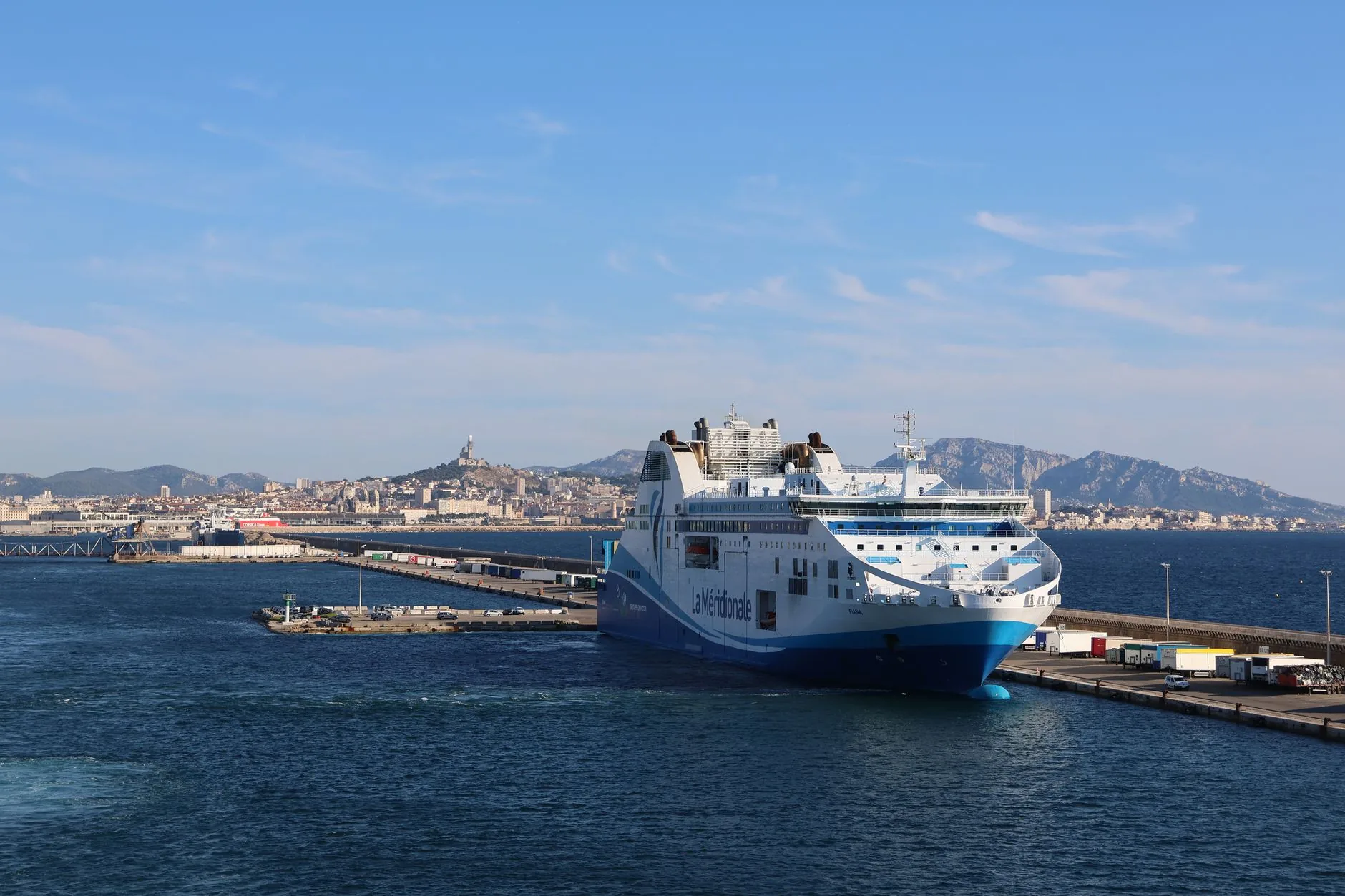
Marseille’s public boat network is a seasonal way to reach the coast, not a replacement for ordinary city transport.
arnaud audoin · Pexels License
Use the sea shuttles for L’Estaque, Pointe Rouge and Les Goudes, or the public ferry to Château d’If and the Frioul Islands. They avoid congested coastal roads, but wind, waves and berthing conditions can interrupt a crossing. Departures are less frequent than land services, so keep a road-based backup if the destination is time-critical. The best time to visit Marseille also affects whether a boat is a dependable part of your plan.
- Seasonal operating window
- 25 April to 27 September; Les Goudes line, 30 May to 30 August
- Service days
- Daily during the published operating windows
- First and last departures
- Vieux-Port-Pointe Rouge: Vieux-Port 08:00 to 19:00, Pointe Rouge 07:00 to 19:00; summer extensions to 22:00. Vieux-Port-L’Estaque: Vieux-Port 08:30 to 19:30, L’Estaque 07:30 to 19:30; summer extensions to 22:30. Pointe Rouge-Les Goudes: Pointe Rouge 08:50 to 19:50, Les Goudes 09:20 to 20:20
- Ticket rule
- €5 crossing with 1h30 connection to bus, metro or tram; €8 coastal ticket with 3h connection. 24h/72h passes and CityPass do not give free access; eligible RTM mobility-card subscriptions do
Sources for the figures in this guide