Choose ordinary January weeks outside holidays and major parade dates for quieter sightseeing in New Orleans. Accommodation demand is usually softer then, but the weather is colder and wetter than in the other winter months. Make room for indoor visits rather than counting on uninterrupted outdoor days.
December suits a trip centred on Christmas and New Year festivities. February offers milder averages, but Carnival can transform the streets and the demand for rooms. City Park and the New Orleans Museum of Art give you contrasting ways to spend a winter day, provided their access conditions suit your dates.
December, January or February?
- Recommended winter window
- Ordinary January weeks outside holidays and major parade dates
- Coldest month
- January
- Hottest month by average daytime high
- July
- Wettest month
- June
Winter is a good choice if quieter sightseeing matters more than dependable warmth. December and most of January are generally less crowded than the spring festival peak, and accommodation demand is usually softer. That gives you more scope to choose dates around walks and museum visits rather than around a major celebration.
January’s advantage comes with the strongest cold-weather trade-off within winter. Keep outdoor plans flexible, especially if your trip is short and you have only one chance to spend time in the park. A museum-led stay can absorb an interrupted walk more easily than a visit built entirely around outdoor sightseeing.
Choose December for festive activity, or February for relative warmth only if its Carnival dates suit you. Holiday travel interrupts December’s quieter pattern, while January parade weekends can be locally crowded. February is not automatically a low-demand month: the moving Mardi Gras calendar determines how much of it overlaps the busiest celebrations. If crowds are the reason you are travelling in winter, avoid choosing solely by month.
Winter temperatures and rain
| Month | Average high | Average low | Precipitation | Average rain days | Average freezing nights | Crowds | Suitability |
|---|---|---|---|---|---|---|---|
| January | 62.5°F | 46.1°F | 5.18 inches | 7 | 2.9 | Quieter outside holidays/parades | Good fit: quiet, colder |
| February | 66.4°F | 49.7°F | 4.13 inches | 6 | 0.9 | Busy near Mardi Gras | Mixed: milder, Carnival crowds |
| March | 72.3°F | 55.3°F | 4.36 inches | — | — | — | — |
| April | 78.5°F | 61.7°F | 5.22 inches | — | — | — | — |
| May | 85.3°F | 69.0°F | 5.64 inches | — | — | — | — |
| June | 90.0°F | 74.7°F | 7.62 inches | — | — | — | — |
| July | 91.4°F | 76.5°F | 6.79 inches | — | — | — | — |
| August | 91.3°F | 76.6°F | 6.91 inches | — | — | — | — |
| September | 88.1°F | 73.5°F | 5.11 inches | — | — | — | — |
| October | 80.6°F | 64.3°F | 3.70 inches | — | — | — | — |
| November | 71.2°F | 53.7°F | 3.87 inches | — | — | — | — |
| December | 64.8°F | 48.4°F | 4.82 inches | 6 | 1.0 | Quieter outside holidays | Mixed: festive, holiday demand |
New Orleans can have freezing winter nights despite its mild average afternoons. The highs describe average daily maximum temperatures, not temperatures you can expect throughout a sightseeing day. The lows describe average daily minimums, so an evening outside can feel quite different from an afternoon walk.
January combines the quiet-date advantage with winter’s lowest averages and greatest rainfall volume. February’s relative warmth makes outdoor sightseeing more appealing, but cold spells can still interrupt a walk. Keep an indoor visit flexible whichever winter month you choose.
Rainfall volume and rain-day frequency answer different questions. The first tells you how much precipitation falls on average, while the second describes how often rain occurs. Keep a daylight walk movable rather than assigning every outdoor visit to a fixed slot. City Park is a useful fair-weather choice, with the New Orleans Museum of Art offering an indoor alternative when their opening days align.
If warmth matters more to you than quieter streets, New Orleans in summer presents a different choice, with heat and rain shaping outdoor plans instead of winter cold. For a winter stay, the useful compromise is time outside when conditions suit it and a substantial indoor visit when they do not.
Christmas, New Year and Carnival
Christmas through New Year brings a visitor surge, especially around New Year’s Eve. The Sugar Bowl adds to that holiday demand, so this is a better choice for festive travel than for a quiet escape. December’s generally softer accommodation demand does not make the holiday stretch an equally quiet time to stay.
Carnival opens on Twelfth Night, the Feast of the Epiphany, on 6 January. Mardi Gras, meaning Fat Tuesday, falls on the Tuesday before Ash Wednesday, 47 days before Easter. That moving date can put the culmination of Carnival in February or March, and it makes February’s appeal depend on where your visit falls within the season.
The start of Carnival is not the same as its concentrated parade peaks. An ordinary week early in the season can still suit sightseeing, while a major parade weekend changes the experience around its route. Treat the celebrations as a reason to choose particular dates if you want them, rather than as an incidental extra to a quiet visit.

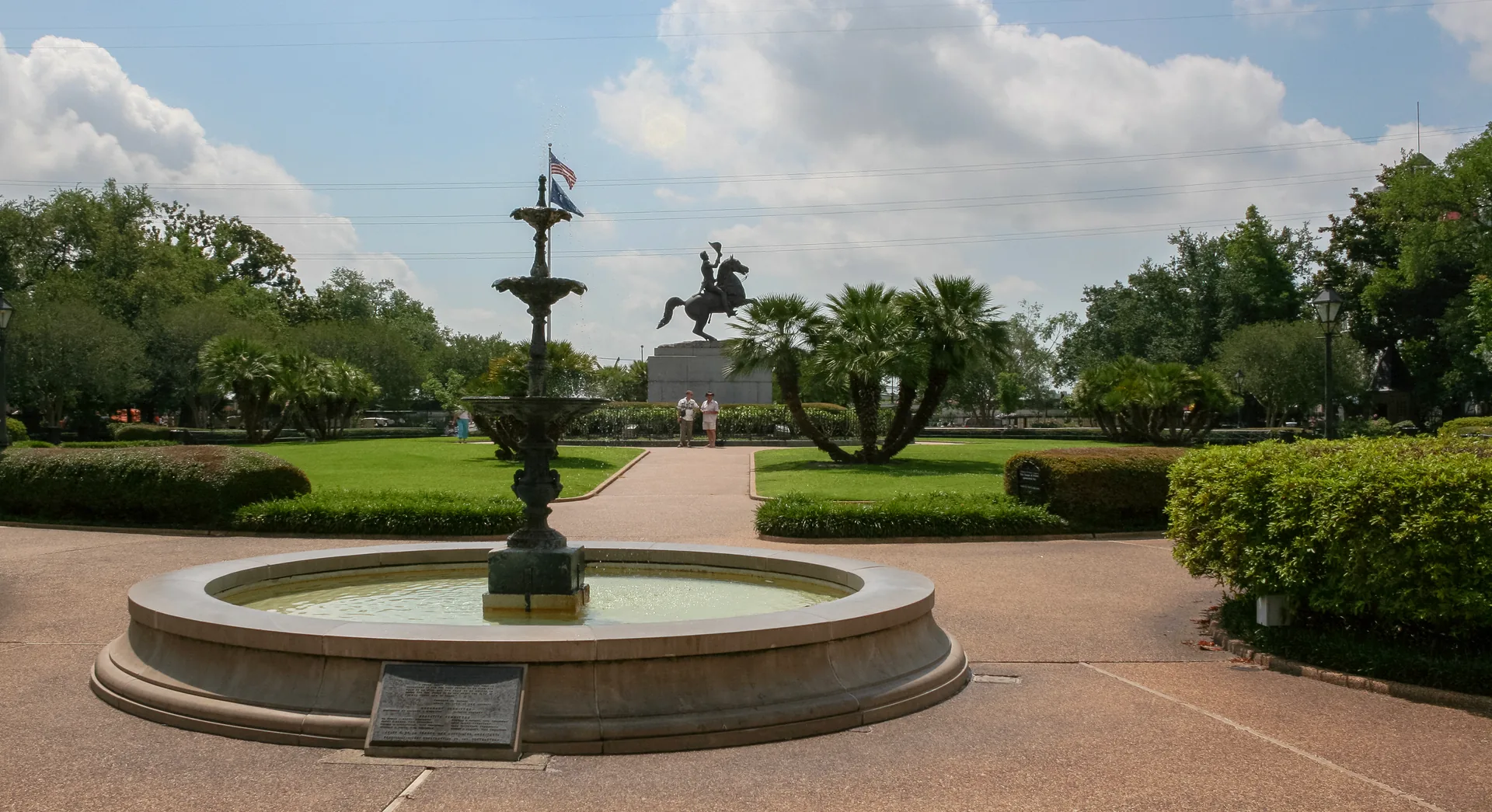
Sergey Galyonkin · CC BY-SA 2.0 · Edited
For a festive trip, accept that street celebrations and other visitors will be part of the day. For a quieter one, make the holiday and parade calendar the first filter before weighing the weather. A slightly milder month is not necessarily the more comfortable choice if crowds are what you most want to avoid.
City Park and museum access
- Plan City Park’s free outdoor grounds for sunrise to sunset, their daily year-round opening window. Individual attractions have separate hours and seasonal limits, and safety issues or approved special events can close the park.
- Use the New Orleans Museum of Art for a winter indoor visit: Tuesday and Thursday–Sunday, 10am–5pm, or Wednesday, noon–7pm.
- Visit the Besthoff Sculpture Garden during its October–March winter window of 10am–5pm daily, except on closure days.
- On Christmas Eve and New Year’s Eve, finish visits to the museum and sculpture garden within their shorter 10am–3pm opening.
City Park gives you space for an outdoor break when the weather is suitable. Pair time in the grounds with the Besthoff Sculpture Garden for a day focused on outdoor art. For shelter from rain, make the museum your indoor choice instead.
The New Orleans Museum of Art offers a substantial indoor visit through an encyclopaedic collection of more than 40,000 works. Its holdings span European and American art, photography and glass, alongside pieces from Africa, Asia and the Americas. That breadth makes it a useful counterweight to weather-dependent time outside.
Quieter winter sightseeing pays off most when you can move outdoor time around an indoor visit. Choose your museum day before assigning the park walk, so a closure does not remove the alternative you were relying on.
Sources & fact-checking
Checks against the sources below cover: opening hours, services, and key figures.
- City Park Conservancy — opening hours
- New Orleans Museum of Art — opening hours
- New Orleans Regional Transit Authority (RTA) — service
- National Weather Service (NWS), New Orleans/Baton Rouge — key figures
- New Orleans & Company — key figures
- National Oceanic and Atmospheric Administration (NOAA), National Centers for Environmental Information — key figures