Porto’s best-known meal choices include a sauce-covered francesinha, a tripe stew and a salt-cod dish linked to the city’s Ribeira district. Choose by what you enjoy eating, not just by how famous the name is: these are quite different plates. Octopus rice and the dense bread of nearby Avintes give you two more foods to recognise on menus and bakery counters.
Meals, ordering and prices
| Food | What it is | When to have it | Typical price |
|---|---|---|---|
| Francesinha | Meat sandwich, cheese and sauce | Lunch or dinner | €10–€16 per main |
| Tripas à moda do Porto | Tripe, bean and meat stew | Lunch or dinner | €12–€18 per main |
| Bacalhau à Gomes de Sá | Salt cod with potatoes | Lunch or dinner | €13–€20 per main |
| Arroz de polvo | Octopus rice | Lunch or dinner | €15–€22 per main |
| Broa de Avintes | Maize-and-rye bread | Alongside a meal | €2–€4 per bread portion |
Start with francesinha if you eat meat, tripe if you enjoy offal, or Gomes de Sá for a fish main. These three preparations are associated with Porto. Avintes bread comes from neighbouring Gaia, while octopus rice belongs to wider Portuguese cooking.
Egg and chips push francesinha towards the upper end. Larger portions and central or upmarket restaurants raise main-course prices, and a larger bread portion or restaurant service raises bread costs.
Lunch is usually around 12:00–14:30 and dinner around 19:00–22:00. A café snack can bridge the gap, but leave room for a full restaurant main. Breakfast commonly means coffee with buttered bread, toast or a pastry: allow about €3–€6, more for a larger breakfast.
Order at a café counter for a quick coffee, usually about €1–€2. Table service can add roughly €0.50–€1. Restaurant couvert means separately priced bread or starters, often about €2–€5 per person. Decline unwanted items before eating them to keep them off your bill.
Francesinha
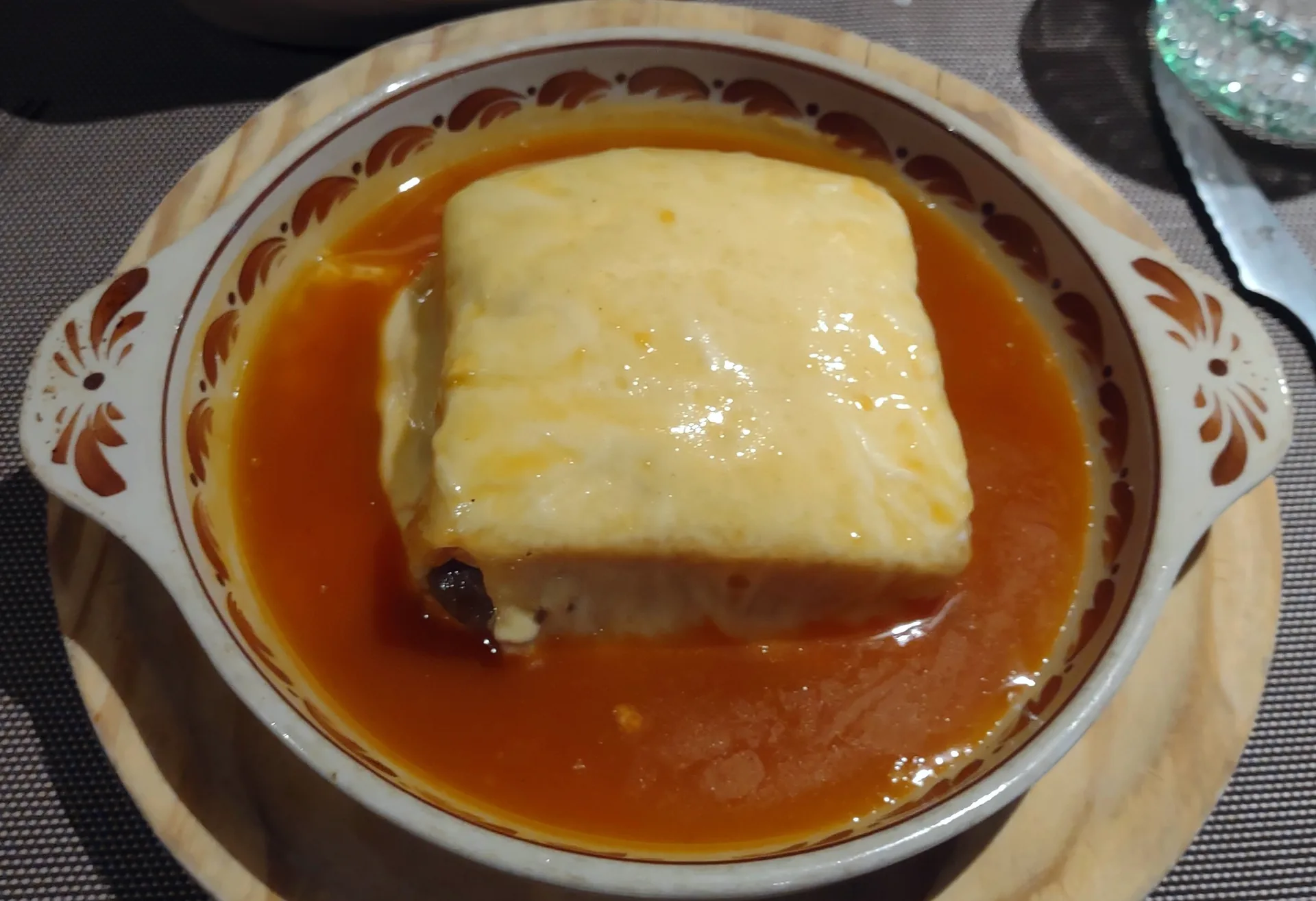
Francesinha is Porto’s famous sauce-covered sandwich, substantial enough for a café or casual-restaurant lunch or dinner. Bread encloses steak or roast meat, ham, fresh sausage and linguiça, a Portuguese sausage. Melted cheese covers the top, with sauce poured over and around it.
The sauce is rich, spicy and slightly tangy, usually built from tomato, beer, stock and chilli, with onion and garlic. Recipes differ between houses, and some add port or other spirits. The traditional dish contains meat and dairy, and the beer-based sauce also matters if you avoid alcohol.
For a fried egg, ask for com ovo, meaning “with egg”, and for chips, com batata frita means “with chips”. These are often optional additions rather than something you must order. If a prepared sandwich is visible before you choose, look for melted cheese draped over the bread and a generous covering of sauce.
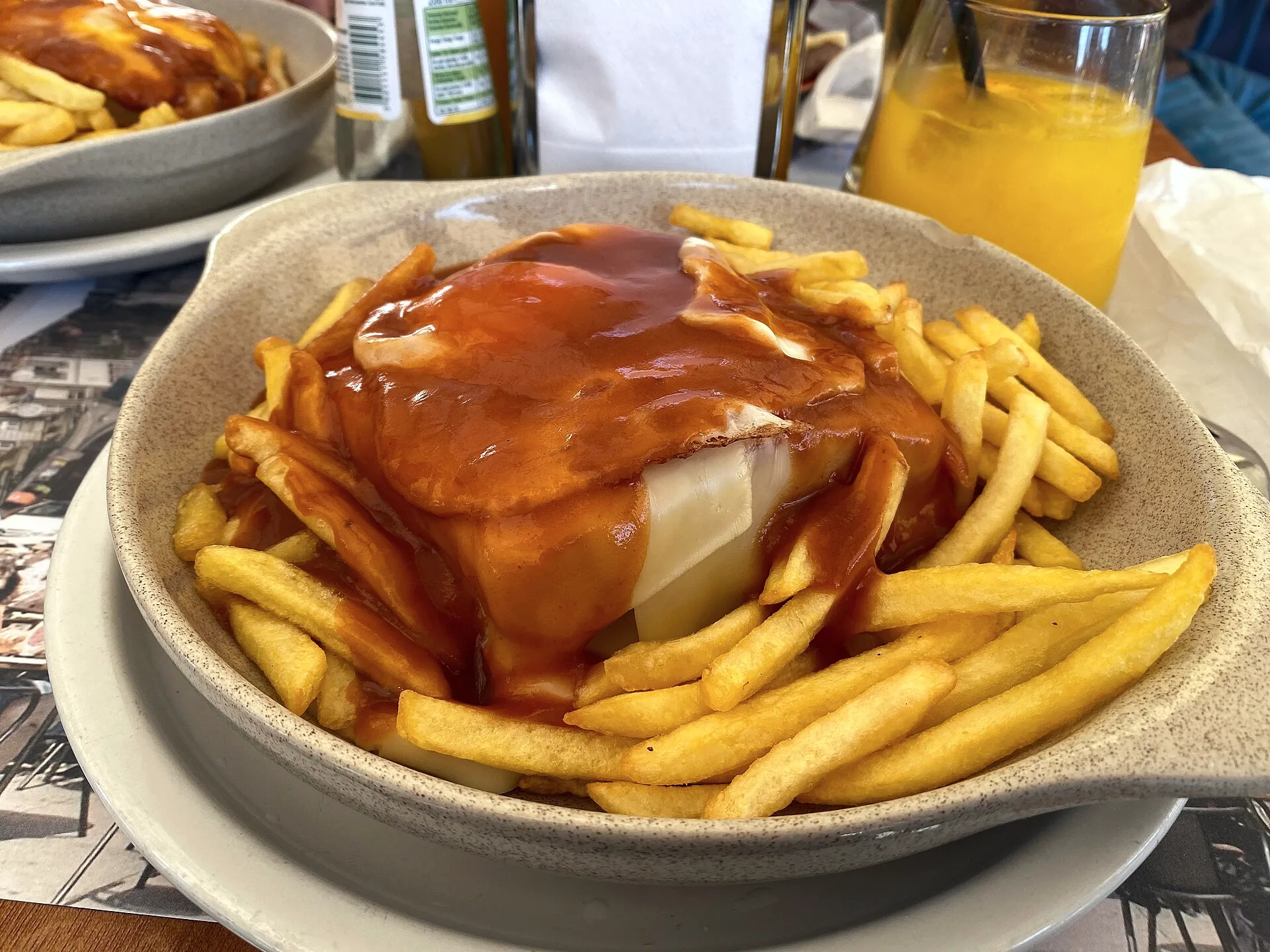
DgOlsen · CC BY-SA 4.0 · Edited
Café Santiago is one optional walk-in example. The café describes its own Francesinha Santiago® as a gastronomic icon of Porto and Portugal. On Rua de Passos Manuel, it is a named option when you are eating in that part of the centre.
- Name
- Café Santiago
- Location
- R. de Passos Manuel 226, 4000-382 Porto Maps
- Site
- cafesantiago.pt
- Hours
- Mon–Sat 12:00–22:45
- Sun Closed
- Essential fact
- A café and restaurant in Porto.
- Price range
- €€€
Tripas à moda do Porto
Tripas à moda do Porto means Porto-style tripe stew. Choose it for the combination of offal, beans and cured meat, not for a simple beef stew. It remains a city speciality cooked in households and served in restaurants throughout the year.
The customary pot brings together tripe, white beans, beef, pork, chicken and sausage. Onion, carrot and bay leaf form part of the seasoning, with cumin and pepper adding warmth. Beans give the stew a soft, creamy body, while sausage and other cured meat contribute savoury depth.
Tripe has a yielding but slightly chewy texture that remains distinct from the beans and meat around it. If you dislike that texture or avoid offal or pork, another main will suit you better. Picking out the tripe does not turn the stew into an offal-free meal.
White rice is the traditional accompaniment. Have it as a lunch or dinner main in a traditional restaurant, where it is generally a regular menu dish rather than something reserved for a particular weekday. Availability varies by house, so look for the full name on the menu when choosing your meal.
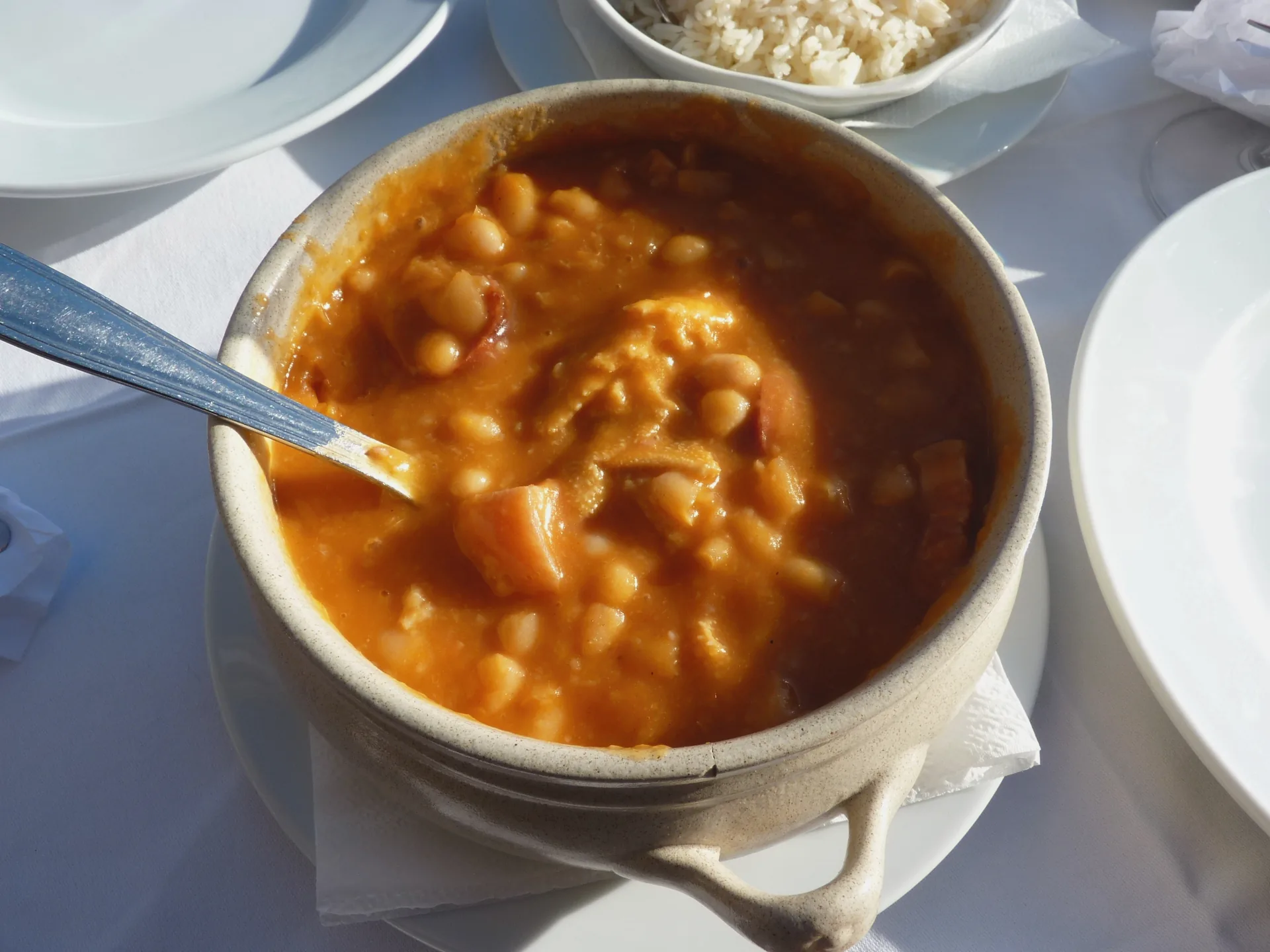
MariaCartas · CC BY-SA 3.0 · Edited
Bacalhau à Gomes de Sá
Bacalhau à Gomes de Sá brings flaked salt cod together with potatoes, onions and olive oil. Its name recalls José Luís Gomes de Sá, the Porto cod merchant who traded from a warehouse in Ribeira and originated the recipe. It is a traditional-restaurant main for lunch or dinner.
Salt cod is fish preserved by salting and drying, then soaked before cooking. It retains a distinctive savoury taste and firm flakes. Here, potatoes soften the mouthful and onions bring sweetness, with olive oil carrying the flavours through the dish.
Hard-boiled egg and black olives are the customary garnish, often with parsley. If you avoid egg, raise that when ordering, rather than assuming a fish dish will be suitable.
Ask for the full dish name: bacalhau alone means salt cod, which appears in many Portuguese preparations. Gomes de Sá gives you a mixed plate of fish and potatoes, not a whole grilled portion or a fried cod cake. Choose it when you want the fish incorporated into the meal rather than served as a separate fillet.
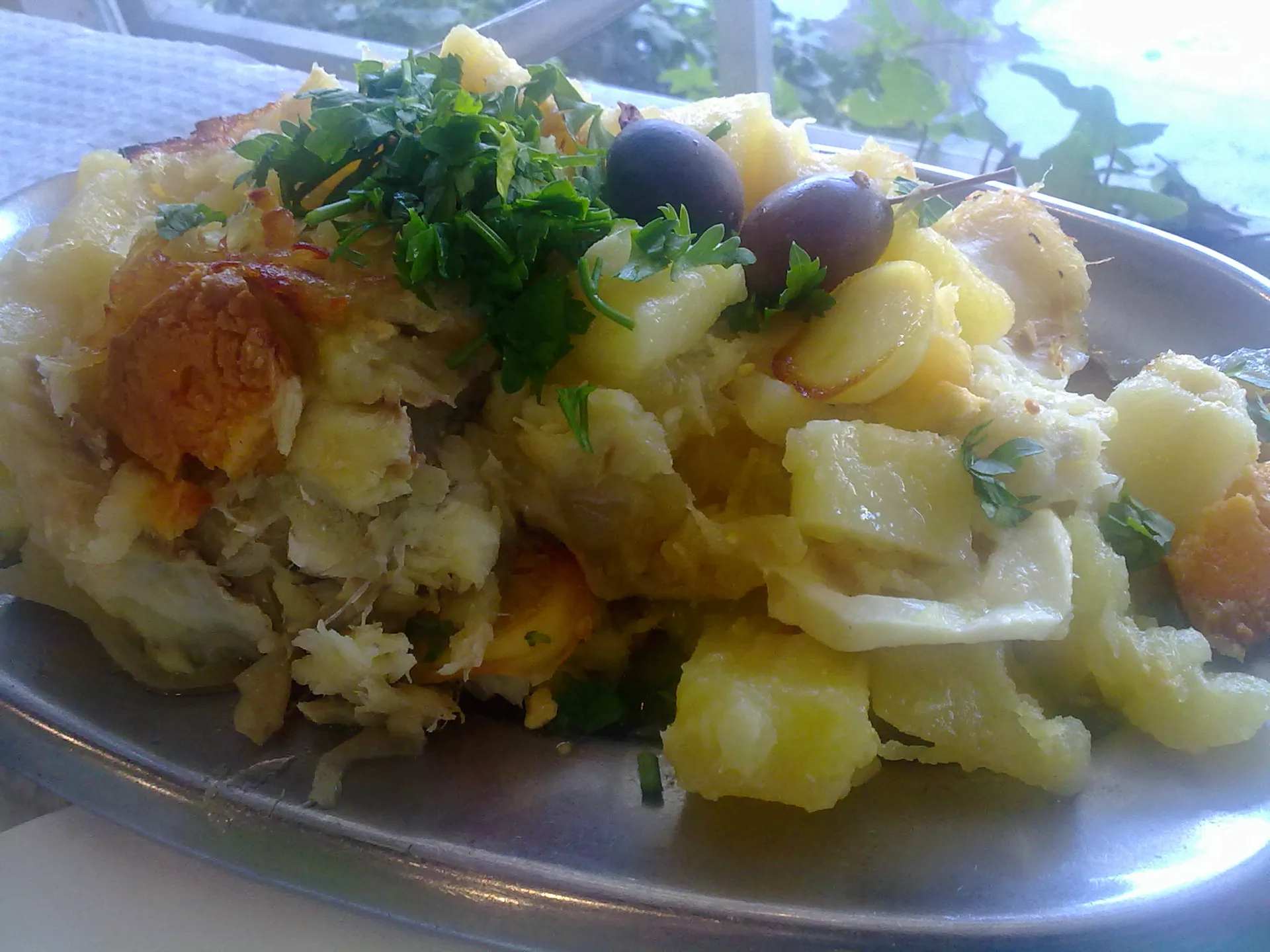
Adriao · CC BY-SA 3.0 · Edited
Arroz de polvo
Arroz de polvo means octopus rice, a main course found in Porto’s traditional restaurants and more widely across Portugal. Octopus pieces sit among rice cooked with onion, garlic, tomato, olive oil and herbs such as coriander.
The cooking liquid from the octopus forms the broth for the rice, sometimes supplemented with water or fish stock. That gives the rice a seafood flavour of its own, rather than leaving it as a plain accompaniment to the octopus. If you avoid fish, ask about the stock as well as considering the visible ingredients.
Malandrinho means loose, soupy rice, with plenty of liquid rather than dry, fluffy grains. When that word appears on the menu, expect a spoonable dish. If the food is displayed before ordering, visible octopus pieces and broth around the rice help you recognise the preparation.
Have it as a lunch or dinner main, with time to enjoy the rice while it is hot.

Luís Tinoco Azevedo · CC BY-SA 4.0 · Edited
Broa de Avintes
Broa de Avintes is maize-and-rye bread from Avintes in Vila Nova de Gaia. Look for a dark loaf with a thick, firm crust and a dense, moist crumb. The inside is slightly sticky, with a mildly sweet, earthy flavour, quite different from lighter Portuguese broa.
It has Protected Geographical Indication (PGI) status, linking the named bread to its origin. Padaria Maria Cristina Rocha Santos is one producer. Ask for broa de Avintes by name at a bakery if you want this particular bread rather than another maize loaf. Despite the maize, its rye content means it is not gluten-free.
Thick slices accompany meals, including soup. They are bread to eat alongside a dish, not a main course. You can also encounter it in Porto restaurant bread baskets: Churrasqueira Domingos includes it in its selection. A bakery purchase gives you a way to try the bread on its own, while a restaurant portion lets you taste it with your meal.

Vitor Oliveira from Torres Vedras, PORTUGAL · CC BY-SA 2.0 · Edited
Sources & fact-checking
Checks against the sources below cover: key figures.
- Produtos Tradicionais Portugueses — Tripas à Moda do Porto
- Visit Porto — key figures
- Centro Interpretativo da História do Bacalhau — key figures
- Porto City Council (Visit Porto) — key figures
- Churrasqueira Domingos — key figures
- Norte Norte IGP – Indicação Geográfica Protegida (Produtos agrícolas e géneros alimentícios)
- Clube de Produtores Continente — key figures