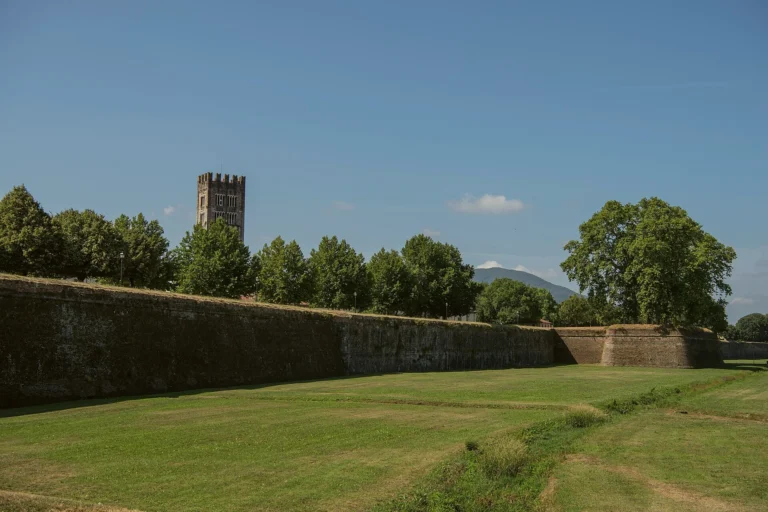
Choose Prague for a short break built around historic streets. Choose Budapest if thermal bathing and late evenings are central to the trip. Prague’s Old Town, Charles Bridge and castle make a concentrated sightseeing stay. Budapest spreads its pleasures across the Danube, with Széchenyi Thermal Bath and ruin bars giving you reasons to pause rather than keep moving.
The better choice depends on your travelling party as well as your interests. A museum visit in Prague needs the right day, while Budapest’s best-known bath has an admission-age restriction. Compare the same length of stay and room standard before deciding on price alone.
Prague and Budapest at a glance
| Criterion | Prague | Budapest |
|---|---|---|
| Historic sightseeing | Compact Old Town and bridge circuit | Spread across Buda and Pest |
| Distinctive experiences | Castle, Jewish heritage, Czech beer | Thermal baths, ruin bars, Danube |
| Getting around | Walking, with trams for hills | More metro and tram use |
| Central mid-range double room | CZK 2,500–4,500 per room per night | HUF 35,000–65,000 per room per night |
| Casual sit-down main meal | CZK 300–500 per person | HUF 4,000–7,000 per person |
Use a three-night stay in each city as the basis, with a private mid-range double room and casual restaurant meals rather than luxury hotels or takeaway food. These are rounded spending estimates: central addresses, summer weekends and festive periods push rooms towards the upper end, while quieter dates and locations beyond the busiest sights can cost less. Meal ranges cover a main dish, with drinks extra.
Prague makes it easier to spend much of a first visit on foot. Budapest rewards a different rhythm: cross the river for Buda sights, use public transport between districts, and leave a substantial part of a day for bathing. A bath visit also depends on everyone in your party meeting its entry conditions.
Historic streets, thermal baths and evenings
Prague is the stronger fit if your idea of a lovely city break is a succession of historic streets and monuments. The Old Town leads into Charles Bridge, while Prague Castle draws you uphill to its courtyards and cathedral. Josefov’s Jewish Museum circuit adds Jewish history rather than another panoramic viewpoint. Vinohrady offers residential streets and cafés; Holešovice adds galleries and former industrial spaces.
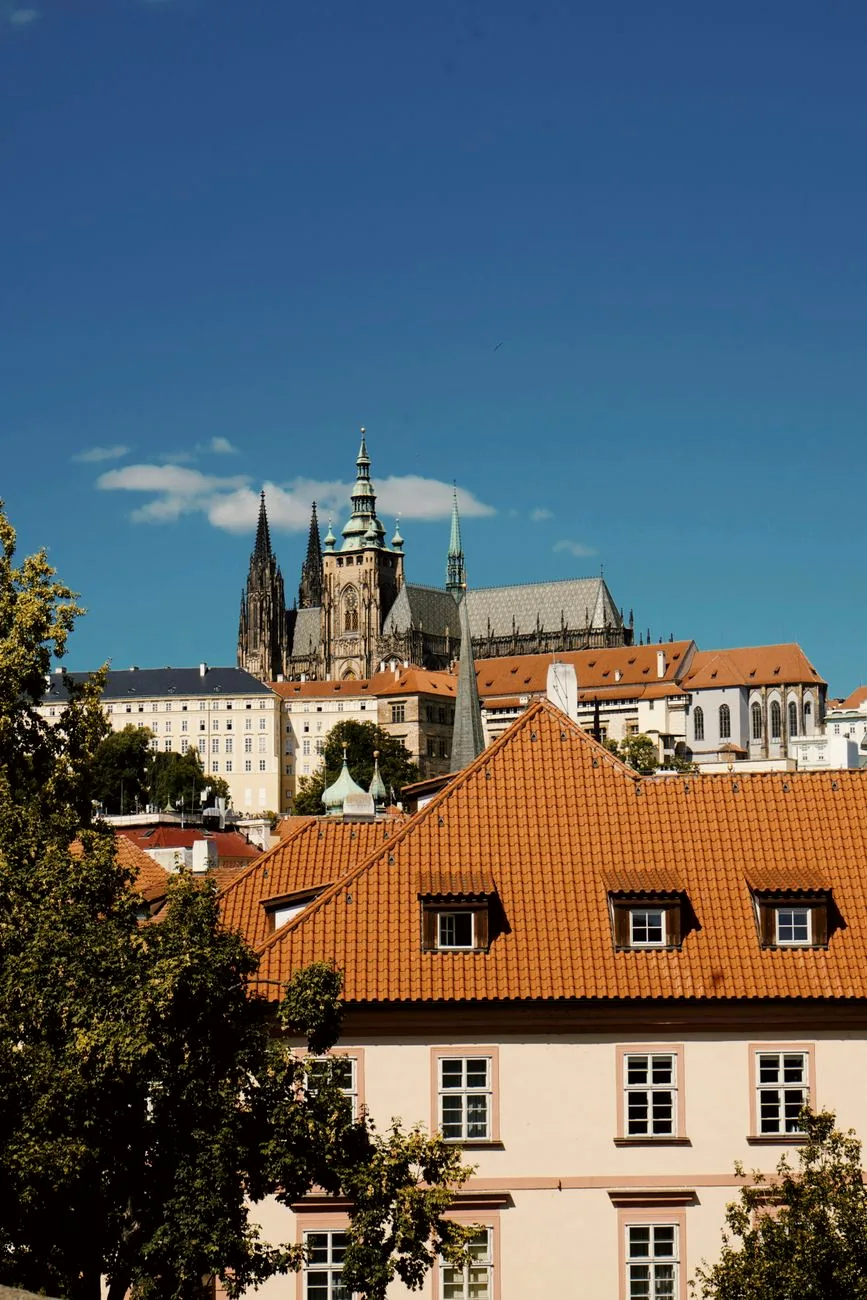
By Esmirna · Pexels License · Edited
Budapest’s Danube setting separates the hillside sights of Buda from the streets of Pest. Széchenyi Thermal Bath makes bathing a destination in its own right. Great Market Hall brings food shopping and Hungarian produce into the visit, while Szimpla Kert offers the ruin-bar experience, a bar in a repurposed building, rather than a conventional pub evening.

Marc Ryckaert ( MJJR ) · CC BY 3.0 · Edited
For eating and drinking, Prague suits Czech beer and hearty dishes such as roast pork with dumplings. Budapest’s Hungarian cooking often uses paprika, from goulash soup to chicken paprikash. Neither menu needs to determine the whole trip, but each gives your sightseeing day a natural sit-down break.
Prague
Pros
- Jewish heritage and neighbourhood galleries give a return visit depth beyond the classic monuments.
- Czech beer halls provide an evening that need not revolve around clubbing.
Cons
- A monument-heavy short stay can leave little time for neighbourhood life.
- The busiest historic streets can make sightseeing feel crowded.
Budapest
Pros
- Bathing gives the stay a different pace from consecutive museum visits.
- Ruin bars offer a distinctive evening in reused urban buildings.
Cons
- A satisfying bath visit takes time out of a short sightseeing stay.
- Late-night plans can mean slower starts and noise near your room.
Jewish Museum circuit
The Jewish Museum in Prague makes Josefov worth more than a quick walk past its buildings. Its synagogue venues and Old Jewish Cemetery connect religious life, remembrance and the history of Prague’s Jewish community. The museum circuit includes all currently open venues, among them the Maisel, Pinkas, Klausen and Spanish synagogues and the cemetery.
- Name
- Jewish Museum in Prague
- Location
- Maiselova 15 110 00 Praha 1-Josefov Maps
- Site
- jewishmuseum.cz
- Hours
- Mon–Fri 09:00–19:00
- Sat Closed
- Sun 09:00–19:00
- Price
- CZK 600
- CZK 400 students under 26
- CZK 200 children aged 7–15
Show 1 more
Free children up to 6
You can spread an individual or family ticket across three opening days, visiting each venue once. That lets you return to the circuit without squeezing every interior into one sightseeing session. Keep track of which venues you have already entered.
- Museum venues, 2 January–31 March and 18 October–31 December
- 09:00–16:30
- Museum venues, April and 1 September–17 October
- 09:00–18:00
- Museum venues, May–August
- 09:00–19:00
Széchenyi Thermal Bath
Széchenyi Thermal Bath is a substantial bathing visit, not a quick stop between monuments. Its indoor and outdoor pools give you a reason to slow down in Budapest’s City Park. It is open to public visitors: leave room to change, bathe and relax rather than placing it between tightly timed sightseeing plans.
- Name
- Széchenyi Thermal Bath
- Location
- Budapest, Állatkerti krt. 9-11 1146 Maps
- Site
- szechenyifurdo.hu
- Hours
- Mon–Thu 07:00–20:00
- Fri 07:00–22:00
- Sat–Sun 08:00–20:00
| Adult locker admission | Monday–Thursday | Friday and weekend | Holiday and peak season |
|---|---|---|---|
| Daily ticket | HUF 13,200 | HUF 14,800 | HUF 15,800 |
| Early entry | HUF 10,500 | HUF 11,800 (Friday only) | — |
| Online Fast Track | HUF 15,200 | HUF 16,800 | HUF 17,800 |
The early-entry ticket requires arrival by 09:00, while Fast Track is available only online. Public holidays follow weekend opening hours. Choose the ordinary locker ticket if neither the early start nor the alternative entry arrangement matters to you.
Accommodation, food and transport costs
- Prague adult 24-hour ticket
- CZK 150 per person; CZK 140 in the PID Lítačka app
- Budapest adult 24-hour travelcard
- HUF 2,750 per person
Neither city is reliably cheaper for every short break: the room you choose and the experiences you add can change the result. Compare hotel quotes for the same dates, cancellation terms and standard, converting both into pounds. A central room may cost more while reducing the journeys you need to make.
Prague’s historic core lends itself to walking between sights, though a tram can spare you an uphill approach to the castle. Budapest’s more dispersed visits make a travelcard useful when you want to move repeatedly between the river, neighbourhoods and baths. In Prague, buying the day ticket in the app costs CZK 10 less than the standard ticket.
Prague’s day ticket covers the city’s integrated public-transport network, including metro, trams and ordinary airport services: routes 59, 100 and 191, plus night routes 907 and 910. Airport Express has a separate fare. Budapest’s travelcard covers metro, trams and almost all ordinary BKK services within the city boundary, together with eligible suburban buses and rail services. It covers airport bus 200E, but not 100E Airport Express, which needs an airport shuttlebus ticket or an eligible add-on ticket.
Bath admission is a separate expense in Budapest, not a substitute for your transport ticket. If you share a double room, divide that room cost between you but allow each person their own meals and admissions. Choosing neighbourhood restaurants over the most prominent tourist addresses can help in either city, but extra drinks and repeated paid attractions can matter more than a small difference in a main-course price.
UK flights, getting around and where to stay
Non-stop UK flights arrive at Václav Havel Airport Prague (PRG) and Budapest Ferenc Liszt International Airport (BUD). Both give you an ordinary public-transport route into the city as well as an airport express option. For a short break, flight timings matter: a late arrival takes time away from your first evening even if the room costs less.
From Prague’s airport, take trolleybus 59 to Nádraží Veleslavín and change to metro line A for the centre. One regular public-transport ticket covers both legs. From Budapest’s airport, take bus 200E to Kőbánya-Kispest, then metro M3 towards central Pest, including Deák Ferenc tér. For Budapest’s bus-to-metro route, use a valid travelcard, transfer or time-based ticket, or two single tickets. An ordinary single ticket should not be treated as covering both legs. The onward overnight connection differs when the metro is closed. The direct 100E Airport Express avoids that interchange.
In Prague, a room in or near the historic centre puts Old Town and Charles Bridge within a walking-based stay. The castle-side slopes still mean uphill walking or a tram ride. Vinohrady offers a residential base with cafés and routes back into the centre: metro line A serves Náměstí Míru and Jiřího z Poděbrad, and frequent trams run towards the central sightseeing area.
In Budapest, inner Pest is a useful hotel-search area for restaurants, evening plans and metro access. Buda’s hills and the separation of the two riverbanks make tram and metro journeys part of many visits. Choose a room away from bars if uninterrupted sleep matters. A Jewish Quarter address can be convenient for nightlife without every room there being equally quiet. A room facing a busy bar street trades that convenience for evening noise.
If Vienna is also on your hotel-base shortlist, the Vienna and Prague city-break comparison weighs Vienna’s palaces, museums and music against Prague’s compact historic stay.
Seasons, crowds and visitor concerns
Warm weather gives you longer outdoor sightseeing days, but exposed squares, hills and river walks benefit from café breaks. Winter makes a shorter walking circuit and more indoor time appealing. In Budapest, thermal bathing can suit a cold-weather stay, though moving between outdoor pools and changing areas still means exposure to cold air.
Prague’s peak-season crowds concentrate around Old Town, Charles Bridge and the castle. Add a neighbourhood visit rather than repeatedly returning to the busiest sights. Vinohrady’s cafés or Holešovice’s galleries change the focus of the day without requiring another major-monument circuit.
In both cities, keep bags closed and close to you on crowded transport and in tourist areas, and do not leave them unattended. In Prague, take particular care on airport routes and trams serving major sights. If someone claiming to be plain-clothes police asks to inspect your cash or passport, do not show your money: suggest going to a police station or verify their identity through the police.
Exchange money at a bank or currency exchange, not with someone in a Prague street. In Budapest, use a licensed taxi or reputable app rather than accepting an unsolicited ride. Keep drinks in sight during evenings out, and keep belongings with you on the intercity train as well as during sightseeing.
Combining Prague and Budapest
Visit Prague first, then Budapest, if you have time for two separate stays. That order moves from concentrated historic sightseeing to a visit with room for bathing and evenings out, rather than making both cities a hurried checklist.
Direct Metropolitan trains connect Prague main station (Praha hlavní nádraží) with Budapest Nyugati station. The daytime service runs every two hours, and the station-to-station journey takes about 7 hours. Treat the transfer as a dedicated travel day, adding time to reach the departure station, wait for the train and continue to your next hotel.
This is a change of base, not a practical sightseeing day trip. If your leave only allows one short stay, choose the city whose experiences matter more to you instead of spending a large part of the break between them.
Prague or Budapest for your trip
Let the experience you most want time for guide your choice.
- Choose Prague for a short first visit centred on historic streets, the castle and a largely walkable sightseeing circuit.
- Choose Budapest for thermal bathing and ruin-bar evenings if your party meets Széchenyi’s admission conditions and is happy using public transport.
- For budget, compare equivalent rooms and meals on your dates, then add the experiences you actually want, especially bath admission.
- Choose both, Prague then Budapest, only when you have time for two stays and the intervening rail travel day.
Sources & fact-checking
Checks against the sources below cover: fares and charges, services, opening hours, and key figures.
- Prague Integrated Transport (PID) — fares and charges
- Budapest Transport Centre (BKK) — fares and charges
- Prague Integrated Transport (PID) — service
- Dopravní podnik hl. m. Prahy (DPP) — service
- Budapest Spas cPlc. — fares and charges
- Budapest Spas — opening hours
- Budapest Gyógyfürdői és Hévizei Zrt. — service
- Jewish Museum in Prague — fares and charges
- Jewish Museum in Prague — opening hours
- Prague Airport (Letiště Praha, a. s.) — key figures
- Budapest Airport — key figures
- České dráhy (ČD) — service