Choose ordinary January weeks after New Year for Savannah’s quietest historic sightseeing, or February if gentler afternoons matter more than the lowest visitor demand. December suits a different trip, with Christmas celebrations but busier holiday streets and more pressure on accommodation.
Winter lets you spend time in the historic squares and Forsyth Park without summer heat, provided you can adapt to rain and cold mornings. Keep indoor art as part of the visit, and treat Tybee Island as an optional beach walk rather than the reason for a swimming holiday.
Which winter weeks suit your trip?
- Recommended winter window
- Ordinary January weeks after New Year
- Best fit
- Flexible historic sightseeing and indoor art
- Gentler winter alternative
- February
- Busiest winter stretch
- Christmas–New Year
- Hottest month, 1991–2020 averages
- July
- Coldest month, 1991–2020 averages
- January
- Wettest month, 1991–2020 averages
- June
January trades colder starts for quieter streets. Visitor demand is generally low in winter, but December’s holiday attractions bring a bump and January is the quietest month. February usually stays calm too, although event weekends can draw more people. Ordinary midweek stays are a better fit than holiday dates if you want unhurried sightseeing.
For a mid-range hotel double before tax, allow roughly $140–240 a night in ordinary January weeks and $160–260 in February. Central locations and popular weekends push you towards the upper end.
If cold mornings or shorter outdoor days would limit your enjoyment, compare the best times to visit Savannah to choose warmer sightseeing weather across the year. Winter’s advantage is a quieter city visit, not reliable beach conditions.
Winter weather: December to February
| Month | Mean daily high | Mean daily low | Precipitation | Precipitation days | Freezing days | Crowds | Verdict |
|---|---|---|---|---|---|---|---|
| December | 63.7 | 42.6 | 3.21 | 8.4 | 5.7 | Low, holiday bump | Mixed: festive but busier |
| January | 61.4 | 40.0 | 3.28 | 8.5 | 8.6 | Lowest outside holidays | Good fit: quiet sightseeing |
| February | 65.1 | 42.9 | 2.80 | 7.8 | 4.2 | Low, event exceptions | Good fit: gentler weather |
Savannah can have freezing winter mornings despite mild afternoon averages. The daytime and overnight columns describe different parts of the day, so a comfortable afternoon does not mean you can set out early without a warm layer. A coat over removable layers gives you more freedom than dressing for the afternoon alone.
February offers a useful compromise if January’s colder starts would discourage you from walking. Its warmer daytime average and fewer freezing mornings favour outdoor sightseeing, while its generally calm visitor demand preserves much of winter’s appeal. On a cold morning, start with indoor art and leave your longer walk until later.
Rain remains part of all three months. Keep an indoor visit movable rather than assigning every day to outdoor sightseeing. The Jepson Center’s galleries give you somewhere to spend a wet spell without abandoning the city’s cultural sights. Carry rain protection and shoes suitable for wet pavements.
Shorter winter days also affect the shape of a visit. Give the squares and Forsyth Park the brighter part of the day, leave room for a lunch or park pause, and use indoor art when outdoor time becomes less inviting. You do not need a fixed route to make winter worthwhile, but a schedule built entirely around long outdoor days is a weaker fit.
| Month | Mean daily high (°F) | Mean daily low (°F) | Precipitation (inches) |
|---|---|---|---|
| March | 71.4 | 48.6 | 3.50 |
| April | 78.2 | 55.2 | 3.39 |
| May | 84.7 | 63.4 | 3.62 |
| June | 89.6 | 70.7 | 6.65 |
| July | 92.3 | 73.7 | 5.75 |
| August | 90.8 | 73.3 | 5.46 |
| September | 86.4 | 69.0 | 4.35 |
| October | 79.0 | 58.6 | 3.72 |
| November | 70.2 | 48.0 | 2.39 |
Christmas and New Year
Choose December for seasonal celebrations rather than the quietest streets. The Savannah Christmas Market at Plant Riverside District runs from 19 November 2026 to 3 January 2027. That window makes the riverfront district a reason to choose a festive stay, including the opening days of January, rather than treating the calendar’s turn as an immediate return to quiet.
Christmas–New Year brings more visitors and firmer hotel demand than ordinary winter weeks. Thanksgiving week is another holiday-demand exception at the approach to winter. These concentrated holiday stretches matter more to your choice than assuming all of December is crowded or all of January is equally calm.
For a mid-range hotel double before tax, budget roughly $150–250 a night in ordinary December weeks and $200–350 around Christmas–New Year, with central locations and popular dates towards the upper end. Arrange your accommodation earlier for a holiday stay, particularly if being within walking distance of the historic sights matters to you.
If festive activity is not part of what you want, choose ordinary post-holiday weeks instead. You gain a quieter setting for the squares, while still needing to account for individual holiday closures when planning indoor visits.
Squares, galleries and beach access
- Treat Tybee Island as an optional winter beach walk, not the basis for a swimming holiday: off-season lifeguard coverage is limited in December–February.
- Daily lifeguard cover runs from 1 May to 31 October, with duty hours of 10am–5:30pm. Do not assume that level of cover for a winter shore visit.
Savannah’s historic squares give you a series of small outdoor stops among the city’s streets, rather than one long excursion that commits you to staying outside. Use them for unhurried sightseeing between longer visits, with time to sit or stop for a meal. Cooler conditions remove summer heat from the choice, but rain can still make an indoor break more appealing.
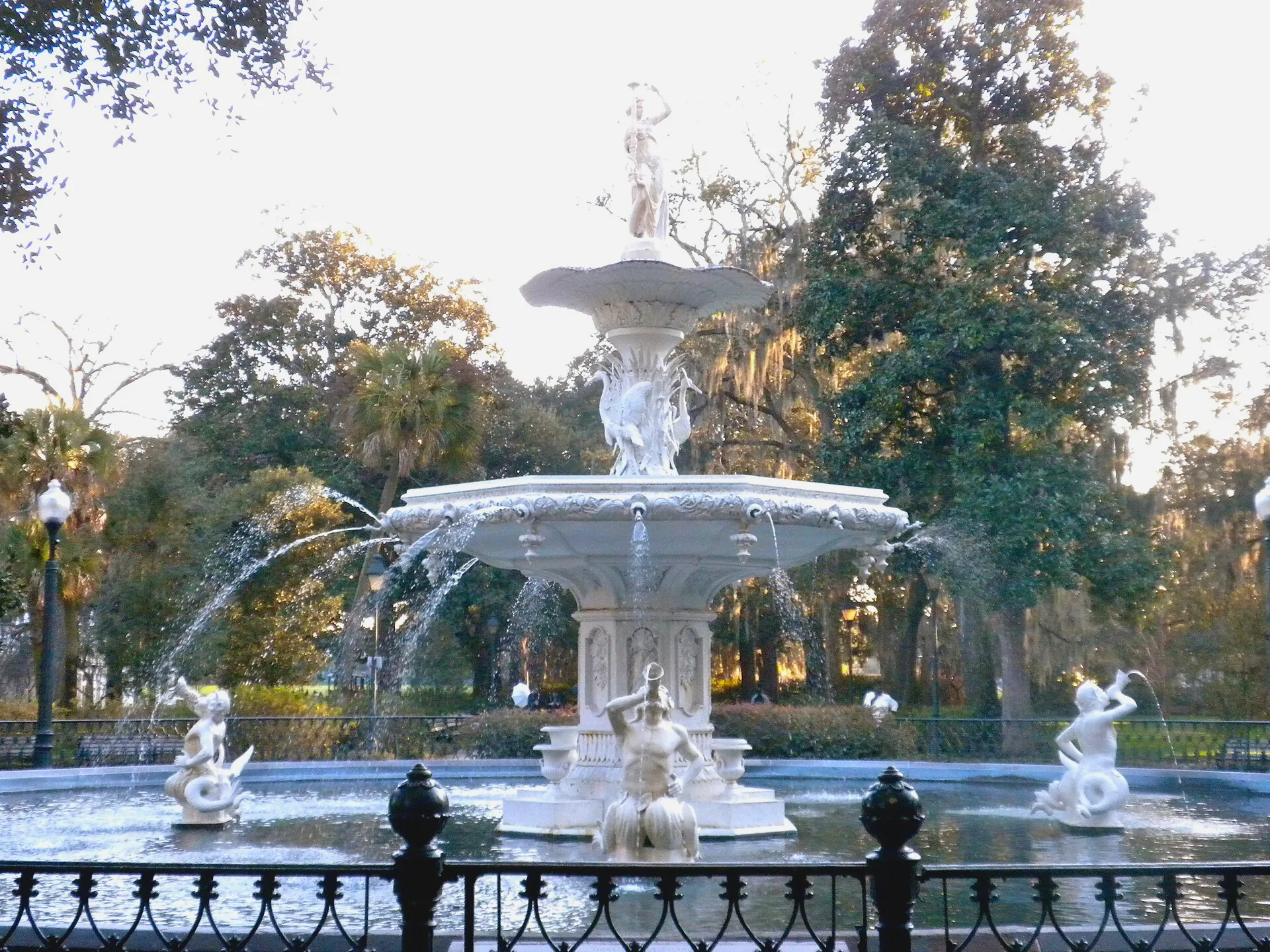
Forsyth Park offers a more continuous walk, with its fountain as a recognisable focus. Its paved, lighted, wheelchair-accessible sidewalks form a 1.5-mile loop around the park. You can choose a shorter stroll and a pause rather than making the whole loop a requirement of the day.
The Jepson Center adds indoor art galleries to that outdoor mix, so wet weather need not reduce the visit to waiting for a dry spell. Make the galleries part of the trip’s appeal, not only a rain shelter. Winter access allows you to balance a park walk with time looking at art, subject to the holiday exceptions below.
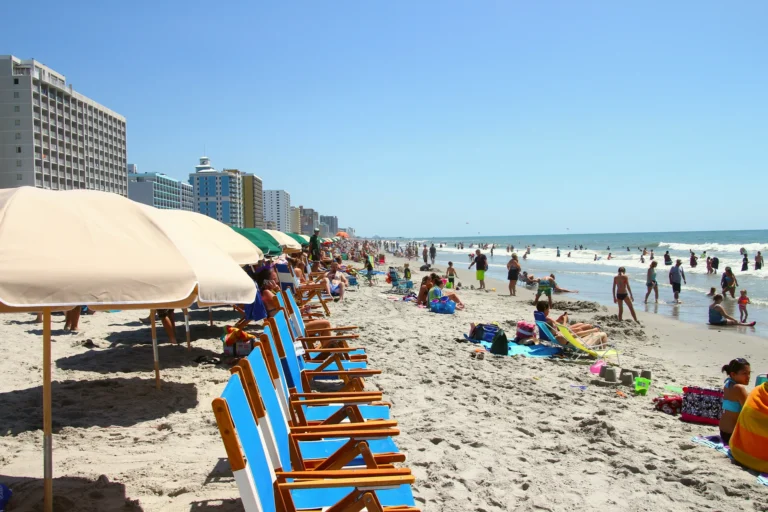
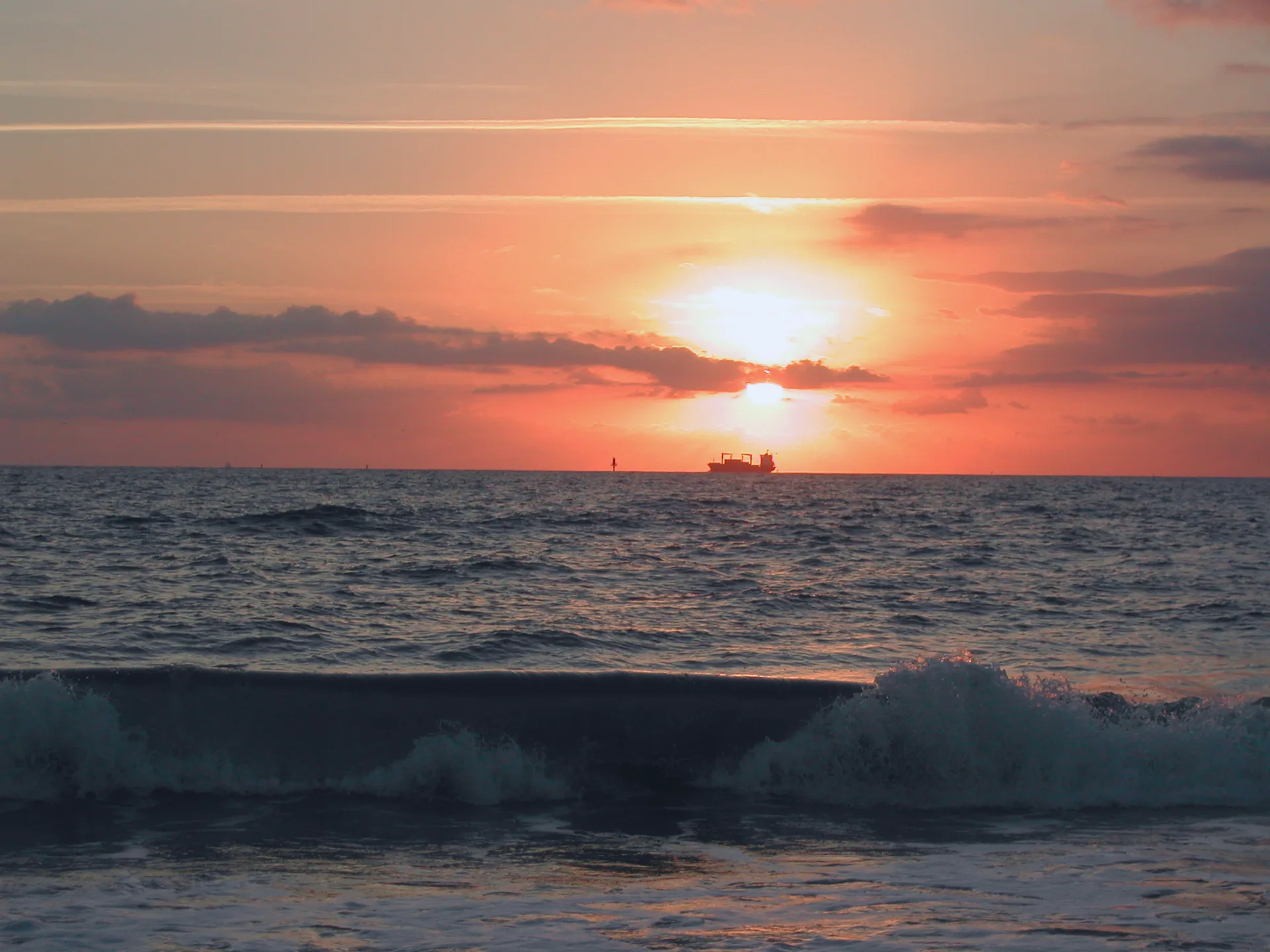
Tybee Island’s beaches have public access in winter, allowing a shore walk if the weather makes an exposed outing attractive. The trade-off is leaving the city’s close mix of squares and indoor art for open sand and ocean. Keep that outing optional, and favour city sightseeing when cold or rain would make the shore less enjoyable.
Michael Sennello · Public domain · Edited
Sources & fact-checking
Checks against the sources below cover: services, closures, and key figures.