Choose June for a short summer sightseeing trip to Sedona, when drier conditions and cooler nights make it easier to balance brief outdoor visits with time indoors. Daytime heat is still substantial. If long, exposed hikes are the main reason for your trip, choose a milder season rather than try to fit them around summer weather.
June, July or August?
- Recommended summer month
- June, for short sightseeing visits
- Hottest summer days
- July
- Coolest summer nights
- June
- Wettest summer month
- August
June gives you the strongest summer compromise: red-rock sightseeing without the more frequent storm interruptions of later summer. Choose it for brief outdoor stops, not a full day of exposed walking. A cooler night helps you start earlier, but it does not make the afternoon mild.
July and August can work if your dates are fixed and you are happy to spend a substantial part of the day indoors. Leave a later outing optional rather than making it the day’s main attraction. For a hiking-led holiday, spring or autumn is a better fit, though neither removes the need to adapt to the day’s conditions.
For a standard double room, a rough summer budget is $150–$300 per night before taxes, with weekends, holidays and higher-end properties pushing quotes upwards. Treat a lower quote as a saving only if the visit still suits you. Giving up the walks you came for is a poor exchange for cheaper accommodation, and summer does not guarantee a bargain.
Summer weather by month
| Month | Mean daily high (°F) | Mean daily low (°F) | Monthly precipitation (inches) | Average precipitation days | Crowds | Sightseeing verdict |
|---|---|---|---|---|---|---|
| June | 94.1 | 61.2 | 0.16 | 2 | — | Good fit: drier, cooler nights |
| July | 96.9 | 67.6 | 1.62 | 8 | Independence Day peak | Mixed: heat and storms |
| August | 94.2 | 66.9 | 2.04 | 9 | — | Mixed: wetter conditions |
Mean highs describe the average daily maximum, not a ceiling on the heat. Mean lows describe the average daily minimum, usually reached overnight. The gap between them is useful for choosing when to go outside, but a pleasant start does not promise a comfortable outdoor afternoon. An exposed rock viewpoint offers a different experience from a shaded indoor visit even on the same day.
Rainfall totals and precipitation-day counts answer different questions. The total describes the amount of water over a month, while the count describes how often precipitation occurred. A precipitation day need not mean rain throughout the day. The two series also cover different observation periods, so read them as complementary descriptions rather than matching records.
For your plans, the important change is from a predominantly dry early-summer visit to one that needs room for interruptions. Keep an indoor activity available in later summer, rather than assuming a wet day must be abandoned or that a dry morning settles the whole day’s weather. These historical averages help you choose the type of holiday, but individual travel days can differ considerably.
Heat and monsoon storms
Arizona’s official monsoon season runs from 15 June to 30 September each year, but monsoonal moisture typically reaches northern Arizona in the first week of July. The calendar window and the arrival of wetter weather are not the same thing. Rain is intermittent, with afternoon and evening thunderstorms on most days during the active pattern, rather than continuous wet weather.
This makes a later outdoor visit conditional. Clear skies earlier in the day do not settle whether an exposed viewpoint will be suitable by evening. Shorten the outing if heat is wearing you down, and drop it altogether if storms threaten. Carry water and sun protection, and choose a route you can comfortably leave rather than pushing onwards to a distant turning point.
Oak Creek can be affected by storms upstream even when it is dry where you stand. Nearby washes can also carry sudden flows, so a creekside visit needs more than a glance at the local sky. Review the local forecast and flash-flood warnings before setting out, and keep watching conditions during the visit.
When flooding is possible, stay out of creek beds, washes, narrow drainages and low crossings. Never walk or drive through floodwater. Flood danger can persist after local rain has stopped, so the end of a shower is not a reason to return to a low-lying route.
Holiday crowds and trailhead access
- Plan Cathedral Rock shuttle visits around the year-round Thursday–Sunday service, which also applies in summer.
- Additional service runs on select holidays, including Independence Day on 4 July 2027, so include the shuttle in your holiday visit.
- Start at North SR 179 Park & Ride for Route 15 to Cathedral Rock, and make the shuttle part of your outdoor visit.
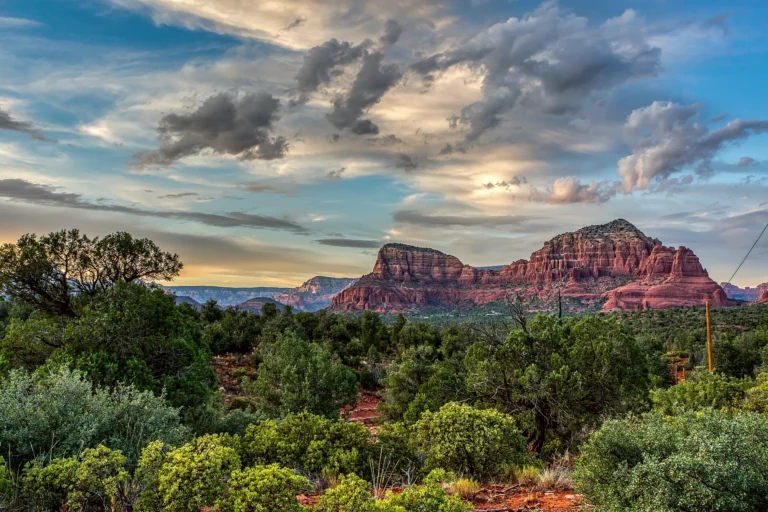
Cathedral Rock’s red-rock formation is a distinctive sightseeing choice, but a short visit still needs a transport plan. Do not build your morning around simply driving to the trailhead and finding a space. Access arrangements matter even if you have no intention of undertaking a long hike.
Avoid Independence Day weekend if you want less traffic and parking pressure. It is normally one of Sedona’s busiest periods, with stronger demand for accommodation and restaurants as well. If your dates are fixed, arrange your stay and any important restaurant reservations earlier, and leave more flexibility between activities. A holiday spike is a usual pattern, not a guarantee, and disruptions can alter it. Choosing quieter dates helps with access, but it does not remove summer heat or storm constraints.
Outdoor mornings and a midday break
After planning your Cathedral Rock access, make a short outdoor morning the main outing, with a substantial indoor break afterwards. Choose a red-rock view or a manageable walk rather than combining several exposed stops. Early morning is a timing choice, not a promise of comfortable conditions, so shorten the visit if the heat is already difficult. Leave yourself the option to turn back.
Sedona Heritage Museum gives the midday break a purpose beyond escaping the sun. Its exhibits occupy the Jordan family home, packing shed and tractor shed, letting you explore local history inside historic buildings rather than adding another exposed walk. Public visiting hours are daily, 11am–3pm, so place the museum between the morning outing and a relaxed meal or rest.
After the break, decide whether you actually want another outing. Sunset is optional, not automatically safe or cool: lingering heat and storms may make staying indoors the better choice. Keep the extra stop easy to abandon without losing the day’s main experience. A long exposed hike or an additional creek outing is a poor addition when the day is already constrained by heat, shuttle access or storm risk.
Sources & fact-checking
Checks against the sources below cover: key figures and services.
- National Centers for Environmental Information (NOAA) — key figures
- National Centers for Environmental Information (NCEI), National Oceanic and Atmospheric Administration (NOAA) — key figures
- Western Regional Climate Center — key figures
- National Weather Service Flagstaff — key figures
- Sedona Historical Society — service
- City of Sedona — service