Choose a weekday after New Year, while Nights of Lights is still running, for a January break built around St Augustine’s historic sights. You can combine daytime sightseeing with an evening display, but winter brings changeable air temperatures and cold Atlantic water. This is a better choice for walking and history than for a warm-water beach holiday.
Is January a good time to visit?
- Recommended January window
- A weekday after New Year, during Nights of Lights
- Poor trip fit
- A warm-water swimming holiday
- Coldest month
- January
- Highest mean daytime temperature
- July
- Wettest months
- August and September
- Reported crowd peak
- Christmas-to-New-Year week, among the busiest periods
January is a good fit if historic sightseeing matters more than beach swimming. Its appeal is the combination of the old town and the lights, rather than dependable warmth. Leave some freedom in when you spend time outdoors.
Holiday traffic can make reaching the centre and finding downtown parking difficult. A midweek visit is a timing choice, not a guarantee of empty streets or cheaper accommodation. Reaching the centre before the evening rush, or seeing the display later at night, can help you sidestep the worst congestion.
If avoiding crowds matters more than seeing the display, February is the stronger alternative. It offers a longer outdoor day and generally quieter sightseeing, with some holiday exceptions.
Winter weather and sea conditions
| Month | Mean daily high | Mean daily low | Mean precipitation | Mean coastal water | 2026 daylight range | Crowd pattern | Trip fit and cause |
|---|---|---|---|---|---|---|---|
| December | 68.9°F | 51.3°F | 2.99 inches | 63.3°F | 10h 13m 44s–10h 21m 54s | Busy festive evenings | Mixed: lights, holiday crowds |
| January | 67.5°F | 47.8°F | 2.74 inches | 59.1°F | 10h 16m 3s–10h 46m 4s | Holiday rush, then variable | Good: history and early-month lights |
| February | 69.7°F | 50.2°F | 2.69 inches | 59.6°F | 10h 47m 30s–11h 53m 25s | Generally quieter, holiday exceptions | Good: longer sightseeing days |
A mean daily high is not the temperature you will have all day. It describes the average daytime maximum, while the mean low reflects the colder part of the daily cycle, usually overnight. An evening spent looking at the lights can therefore feel very different from an afternoon walk.
Winter cold fronts bring sharp day-to-day changes to north-east Florida as polar or Arctic air arrives behind them. Monthly averages describe the season, but cannot promise the conditions of an individual stay. A mild arrival day does not mean the rest of your visit will stay mild.
Rainfall totals describe the amount of rain, rather than how often it falls. For sightseeing, the timing of a shower matters more than the monthly total: a wet afternoon can interrupt a walk even in a relatively dry month. Daylight means the span from sunrise to sunset, while cloud cover affects how much sunshine you get during that time.
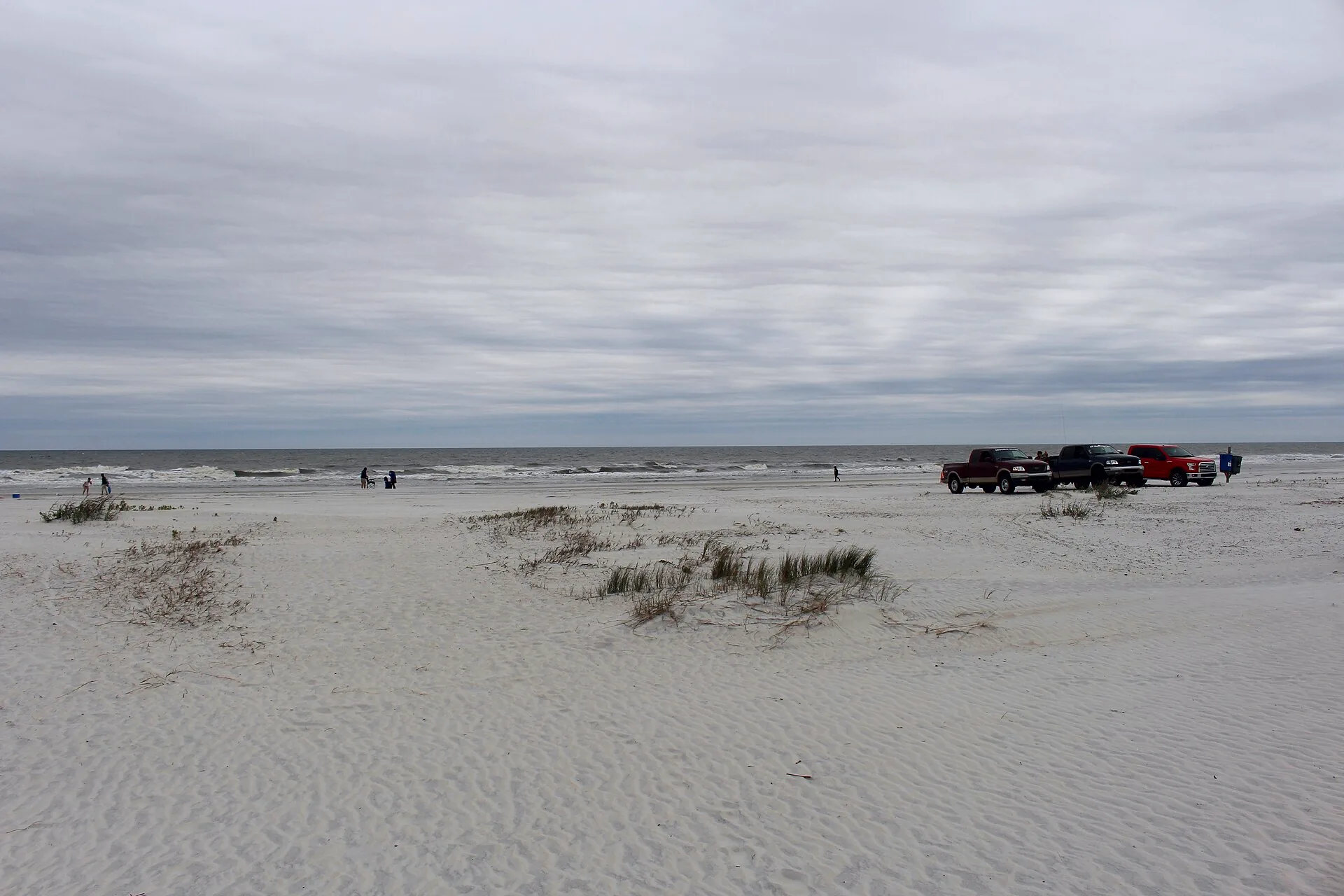
St Augustine Beach is better treated as a shoreline outing than the centre of a winter swimming holiday. The coastal-water averages remain cold even when the air feels pleasant. February’s extra daylight is useful for sightseeing, but its water temperature offers little reason to switch months for swimming.
Michael Rivera · CC BY-SA 4.0 · Edited
Nights of Lights in January
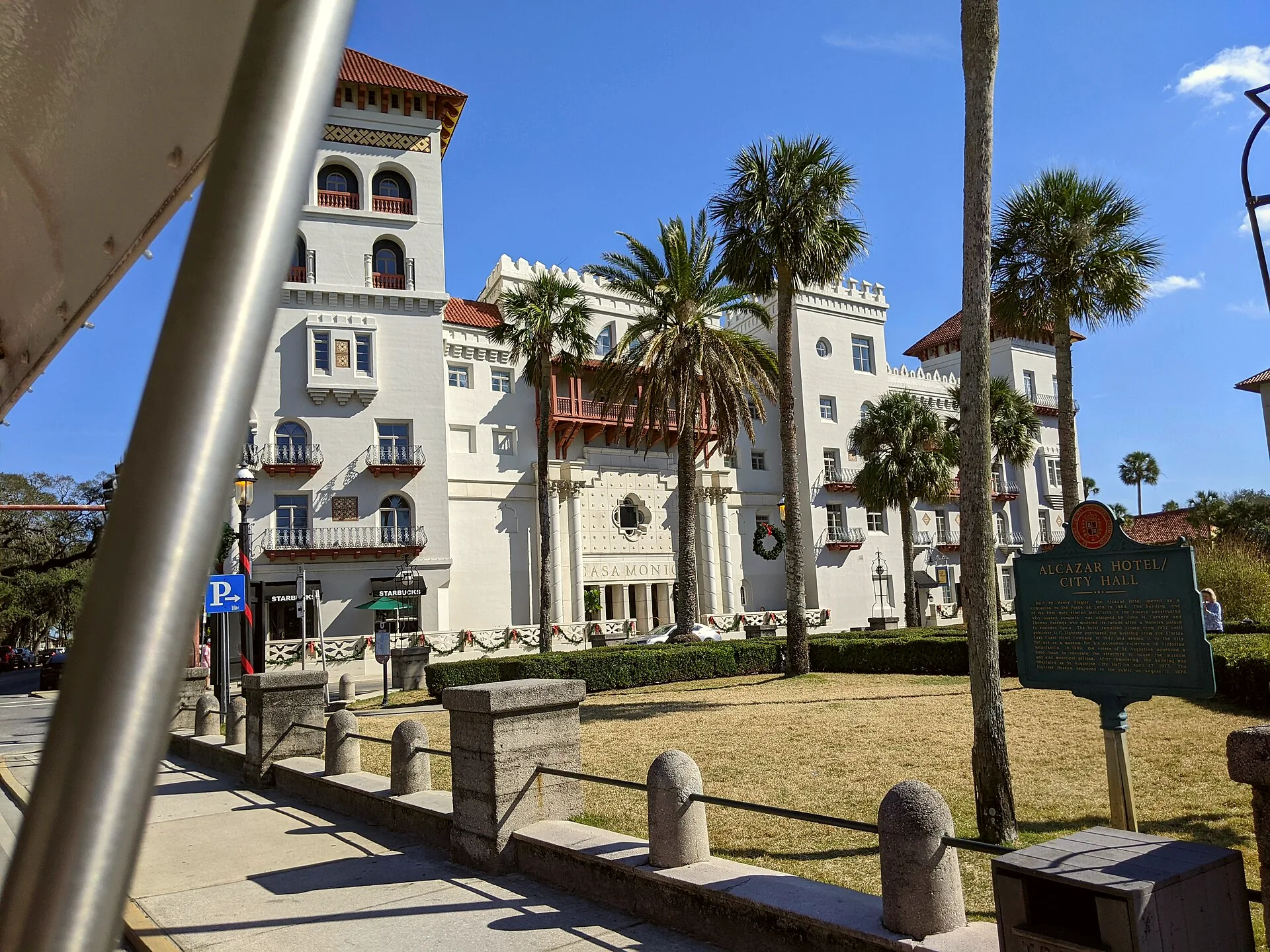
Nights of Lights gives a January sightseeing visit a reason to continue into the evening. The public display illuminates the historic centre and runs every evening during its season, so you do not need to choose a weekend to see it. The important decision is whether your dates fall within the display’s window.
December brings heavy downtown evening crowds and traffic, especially at weekends. Choosing January after the festive rush lets you separate a lights-led visit from the busiest Christmas celebrations, though a particular evening can still be crowded. Allow the display to be an evening walk rather than making every part of the day depend on it.
If the earlier festive atmosphere is what you want, St Augustine in December helps you choose between pre-Christmas weekdays, busy weekends and the holiday stretch. If the lights are only a bonus, later January leaves you free to choose dates around the historic sights instead.
Winter access and outdoor plans
- For a shoreline walk, pedestrian access to St Johns County beaches remains open 24 hours a day.
- County-managed vehicle gates remain open overnight from 1 November to 30 April, but may close during significant weather or tidal events. Keep a beach drive optional.
- At A Street in St Augustine Beach, the city-managed vehicle gate closes at 5pm and reopens at 8am year-round. Finish your vehicle outing before it closes.
- January is outside the staffed lifeguard season. Seasonal coverage runs from Memorial Day weekend through Labor Day weekend, 10am–6pm, weather permitting. Do not treat open access as supervised swimming.
Castillo de San Marcos offers a historic focus for a winter day, with its Spanish-built stone defences overlooking the waterfront. January does not bring a recurring seasonal reduction in visitor access, so winter is not a reason to drop the fort from your sightseeing plans.
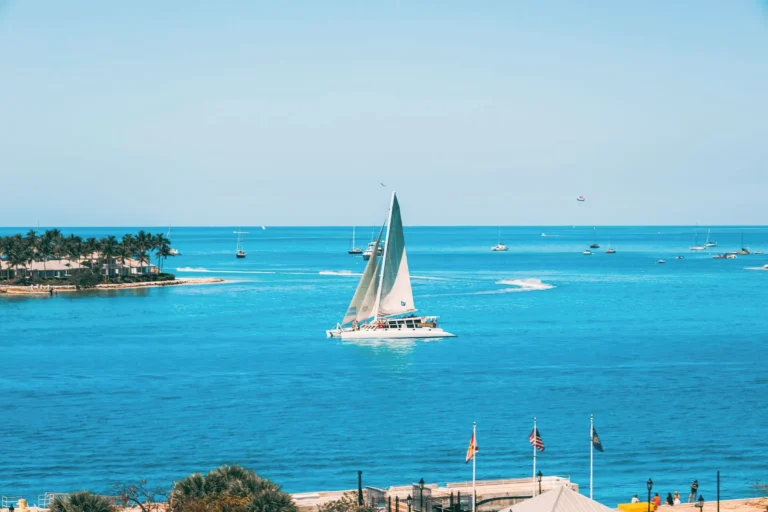
St Augustine Scenic Cruise offers another way to see the waterfront, from a boat rather than the shore. Its winter operating period runs from 17 October to 31 March, with daily departures from the Municipal Marina. This is one sightseeing option that continues into January, rather than an activity confined to warmer months.
Keep outdoor stretches movable when a cold front or rain intervenes. Pair a historic-centre walk with indoor time, and leave the coastal outing for the more comfortable part of your stay. You can still enjoy the beach as a walk without building the day around swimming. The same flexibility helps with a cruise, where time on the water is a different prospect from sightseeing indoors.
January or February?
Choose January for a lights evening, or February for generally quieter sightseeing and more daylight. February is a good time for a history-led visit if the display is not part of your plans. The modest rise in average daytime warmth helps less than the longer outdoor day, and cold coastal water remains a drawback for a beach-focused holiday.
February is generally calmer after the holiday crowds, but Valentine’s Day and the end of the month can still be busy. That makes it a useful alternative, not a promise that every weekend will be quiet.
Anecdotal accounts from different years describe heavy traffic and crowds around Presidents’ Day, with one busy-weekend account also reporting pressure on lodging availability. Do not assume the Presidents’ Day weekend will offer a quiet escape. If you want a calmer sightseeing break, favour dates outside that holiday weekend rather than relying on February’s generally quieter reputation.
Sources & fact-checking
Checks against the sources below cover: services, closures, key figures, and opening hours.
- St. Johns County; City of St. Augustine Beach manages the A Street gate — service
- St. Johns County — service
- National Park Service superintendent — closures
- St. Augustine Scenic Cruise, Inc. — service
- National Centers for Environmental Information, National Oceanic and Atmospheric Administration — key figures
- Florida Climate Center, Office of the State Climatologist — key figures
- National Centers for Environmental Information (NOAA) — key figures
- Time and Date AS — key figures
- National Oceanic and Atmospheric Administration (NOAA) — key figures
- St. Augustine, Ponte Vedra & The Beaches Visitor and Convention Bureau — opening hours
- City of St. Augustine — key figures