Choose April for a sightseeing-led visit to St Augustine, rather than a holiday built around swimming. The weather suits exploring the historic centre and spending time at St Augustine Beach, but the ocean can still feel cool. Dates beyond the spring-break rush offer a better balance of outdoor comfort and visitor demand.
April and alternative visiting months
- Recommended sightseeing window
- April after the spring-break rush
- Hottest month
- July
- Coldest month
- January
- Joint-wettest months
- August and September
April is the best starting point if historic sightseeing matters more than warm-water swimming. Comfortable daytime conditions favour walks between sights, while busy holiday dates put pressure on accommodation prices. Beach walking needs much less warmth than a long swim, so judge those activities separately.
- March offers cooler walking weather but cooler evenings.
- May brings warmer days at the cost of more rain and a greater need for indoor breaks.
- October remains warm but has a higher rainfall total than April.
- November is cooler and drier, though Nights of Lights can bring extra bustle.
For a swimming-led trip, use the water-temperature assessment and guarded-season alternative below rather than choosing dates by air temperature alone.
Monthly temperatures and rainfall
| Month | Average high (°F) | Average low (°F) | Rain (inches) | Crowd outlook | Weather-led verdict |
|---|---|---|---|---|---|
| January | 67.5 | 47.8 | 2.74 | Lights busy early | Good: cool sightseeing |
| February | 69.7 | 50.2 | 2.69 | — | Good: mild walks |
| March | 74.4 | 54.6 | 3.43 | Spring-break busy | Good: comfortable days |
| April | 79.8 | 60.6 | 2.93 | Busy early | Good: warm sightseeing |
| May | 85.1 | 67.4 | 3.66 | — | Mixed: warmer walks |
| June | 88.6 | 72.3 | 6.27 | — | Mixed: heat and rain |
| July | 91.0 | 73.8 | 4.88 | — | Mixed: heat needs breaks |
| August | 89.9 | 74.2 | 7.18 | — | Mixed: wet outdoor plans |
| September | 87.4 | 73.1 | 7.18 | — | Mixed: heat and rain |
| October | 81.8 | 66.5 | 4.37 | — | Good: warm, flexible walks |
| November | 74.9 | 57.5 | 2.32 | Lights busy late | Good: cooler, drier days |
| December | 68.9 | 51.3 | 2.99 | Lights-season busy | Good: cool sightseeing |
Daily highs describe average daytime maxima, and lows describe average overnight minima. Monthly precipitation is the average total volume, not the number of rainy days. These historical averages describe the climate, not the weather during your particular stay.
Compared with March, April allows more comfortable time outside into the evening. May’s warmer afternoons make an indoor pause more useful during a sightseeing day. October suits similar outdoor activities to April, but its greater rainfall total favours a more movable plan.
The cooler months suit sustained sightseeing, with an extra layer useful after dark. Summer shifts the balance towards shorter outdoor visits and breaks inside. The wetter late-summer period calls for flexibility rather than abandoning outdoor plans altogether.
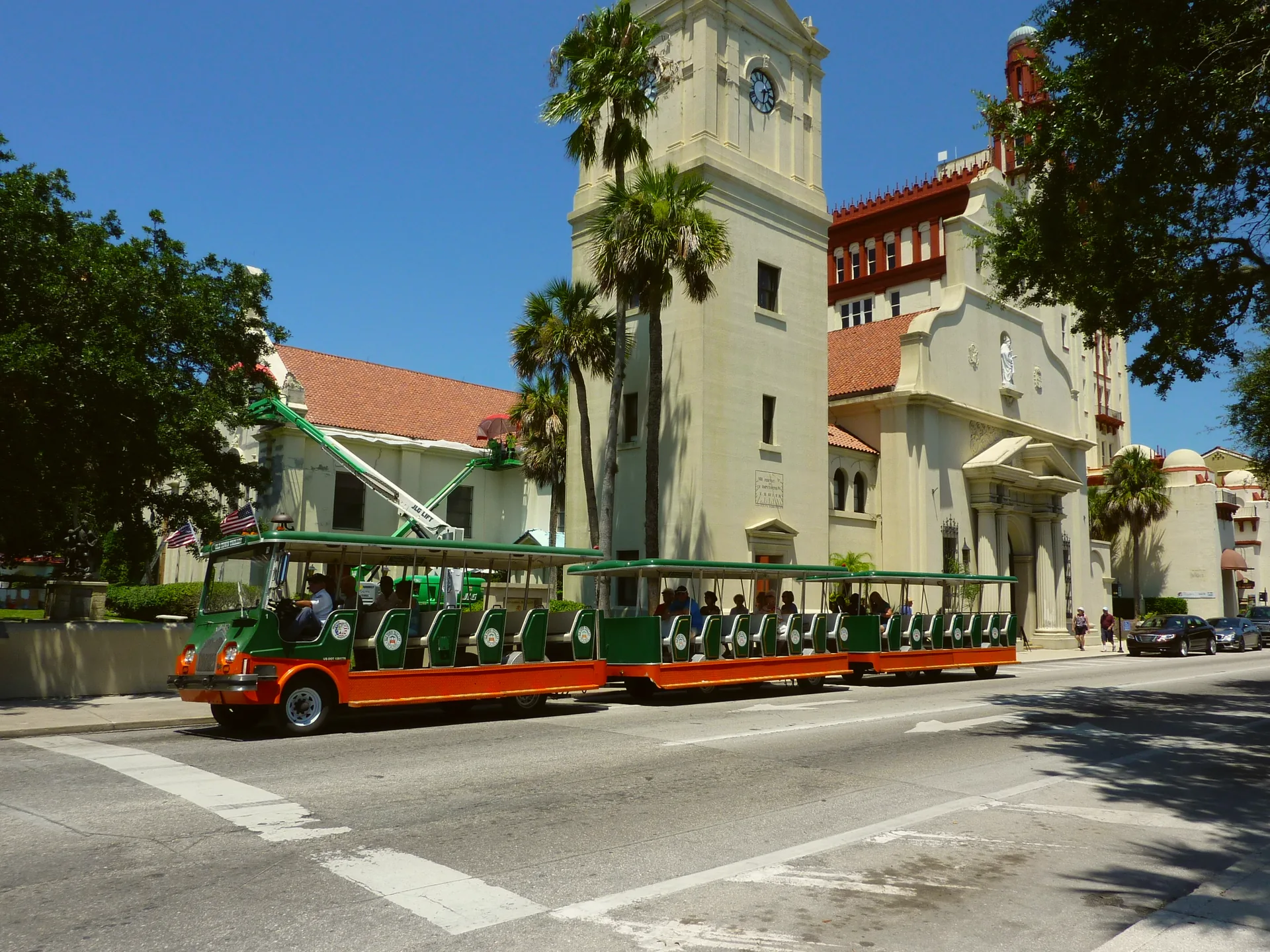
Keep historic-centre walks movable around rain. Explore St George Street when conditions suit, and use the Lightner Museum, housed in the former Hotel Alcazar, for an indoor visit. Avoid putting every outdoor stop into one fixed stretch of the day.
Spring break and Nights of Lights
Aim beyond early April if you want less spring-break bustle. School and college holidays overlap from mid-March through early April, increasing visitor demand. Choose your dates before settling on accommodation, and arrange a busy-period stay further ahead than an ordinary-date visit.
For the same standard mid-range double room, expect more price pressure during spring break and popular lights-season dates than on ordinary dates. Historic-centre locations and weekend stays can add to that pressure. If you want to stay near the sights without paying a busy-period premium, start with dates outside those demand peaks.
Nights of Lights illuminates St Augustine nightly after dark from 21 November 2026 to 18 January 2027, spanning late autumn to midwinter. During the 2024–25 season, its growing popularity brought heavier crowds and traffic, so cooler weather does not necessarily mean quieter sightseeing.
If your dates are open, the best time to visit St Augustine also depends on whether you want historic walks, more comfortable swimming or the lights themselves. For an April sightseeing trip, avoiding the holiday rush is more useful than seeking the warmest possible day.
April swimming and beach conditions
- Yellow flag: medium hazard, including strong currents and surf. Use caution.
- Red flag: high hazard, with stronger currents and dangerous surf. Treat conditions as unsafe for swimming.
- Purple flag: dangerous marine life is present.
- No flag does not mean no danger. Swim near a lifeguard and ask a staffed tower about local conditions.
- In a rip current, stay calm and call or wave for help, or swim parallel to shore until clear, then towards shore.
- Weak swimmers should stay at about knee depth or shallower.
- Seasonal lifeguard coverage runs from May to the end of September. April falls outside that window, so do not assume a staffed tower.
April swimming suits people comfortable with cool water, not everyone seeking a warm beach holiday. St Augustine’s average April coastal water temperature is 69.3°F. That can feel chilly during a sustained swim even when the air makes sightseeing comfortable. Your tolerance matters, and pleasant air temperatures do not settle the swimming question.
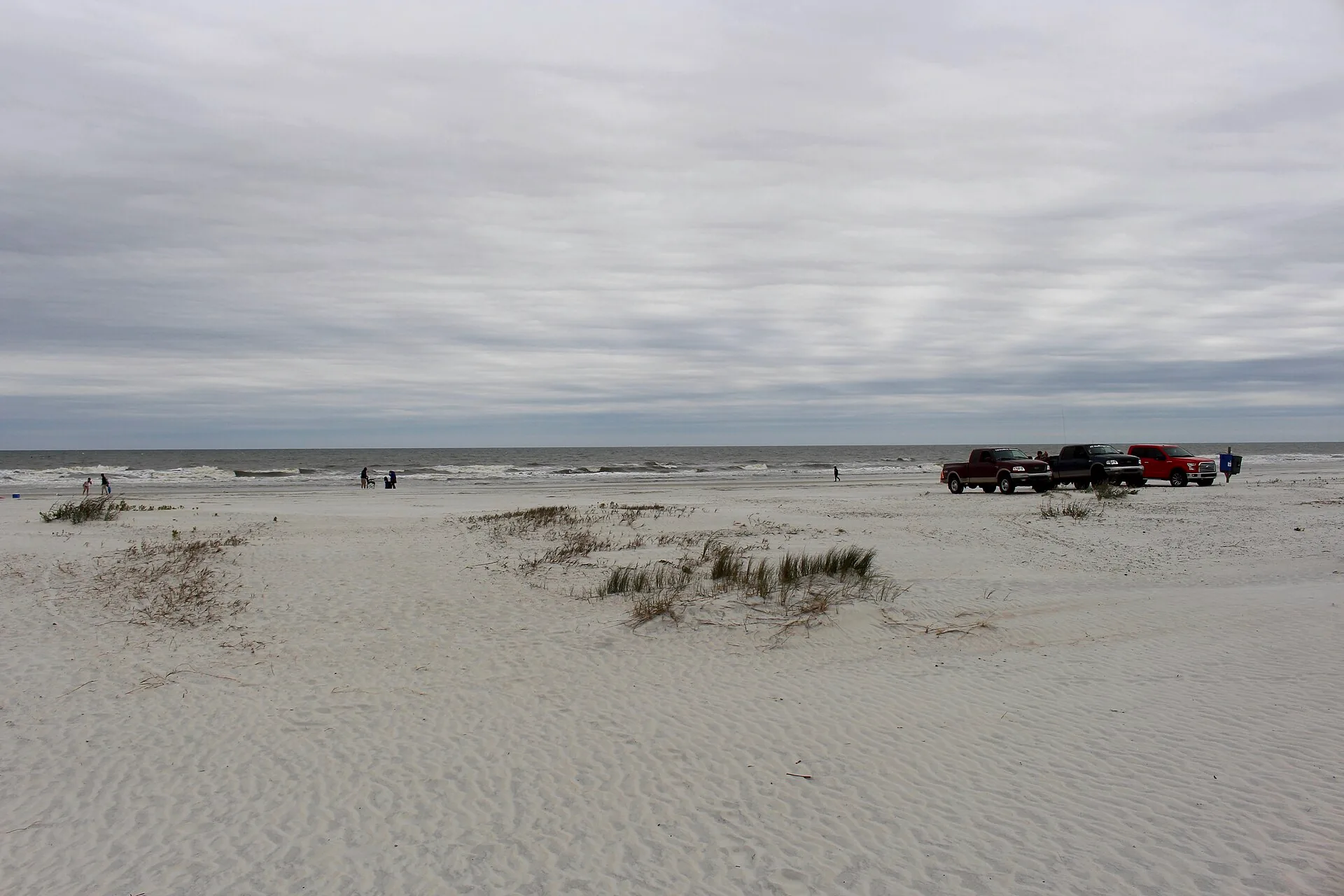
At St Augustine Beach, walking the shoreline or sitting outside asks much less of the water temperature. Wind can make a stationary beach break feel cooler, while rough surf may favour watching the ocean rather than entering it. The flags and conditions on the day matter more than the monthly average.
Michael Rivera · CC BY-SA 4.0 · Edited
For a swimming-led visit, choose a date within the guarded season rather than April. May offers an alternative if beach time is the priority, though warmer sightseeing days need more indoor breaks. Allow room for a shoreline walk instead of a swim when surf or other hazards make entering the water unsuitable.
Sources & fact-checking
Checks against the sources below cover: services, opening hours, and key figures.
- St. Johns County Marine Rescue — service
- St. Johns County Marine Rescue, part of St. Johns County Fire Rescue — opening hours
- National Weather Service — service
- NOAA National Centers for Environmental Information (NCEI) — key figures
- City of St. Augustine — opening hours
- National Oceanic and Atmospheric Administration (NOAA) — key figures
- National Oceanic and Atmospheric Administration (NOAA), National Centers for Environmental Information (NCEI) — key figures