In Trento, a meal can begin with a platter of potato fritters or settle around a substantial dumpling first course. These are Trentino regional specialities rather than foods exclusive to the city, with influences shared across the Alps. Choose by the kind of meal you want, from a shared savoury plate to apple strudel over coffee, or a glass of Trentodoc before dinner.
Ordering and meal times
| Food or drink | What it is | When | Typical price |
|---|---|---|---|
| Tortel di patate | Potato fritters | Shared starter or platter | €10–18 per person |
| Carne salada | Cured beef | Starter or main | €12–22 |
| Canederli | Bread dumplings | First course | €10–16 |
| Strangolapreti | Spinach-and-bread gnocchi | First course | €10–16 |
| Polenta carbonera, when listed | Enriched polenta | Substantial meal | €12–18 |
| Apple strudel | Apple-filled pastry | Dessert or café break | €3–5 takeaway; €5–8 seated |
| Trentodoc | Sparkling wine | Aperitif or meal | €6–10 glass; €25–50 bottle |
Trattorias typically serve lunch around 12:00–14:00; dinner starts around 19:00–19:30 and commonly continues until about 22:00. You need not order a full sequence of courses: a first course alone can make lunch, while a shared starter can precede a main.
Coperto is a per-person cover charge, typically €1–3. It applies to each diner even when you share a platter, so sharing food does not remove that part of the bill. Ask how many people a platter serves before choosing its size.
The ranges reflect portion size and setting: larger meat plates cost more than starters. Bakeries suit takeaway pastry, while at cafés, table service commonly adds around €1–3 compared with the counter. Wine prices depend on the producer and cuvée as well as whether you order a glass or bottle.
Tortel di patate: potato fritters
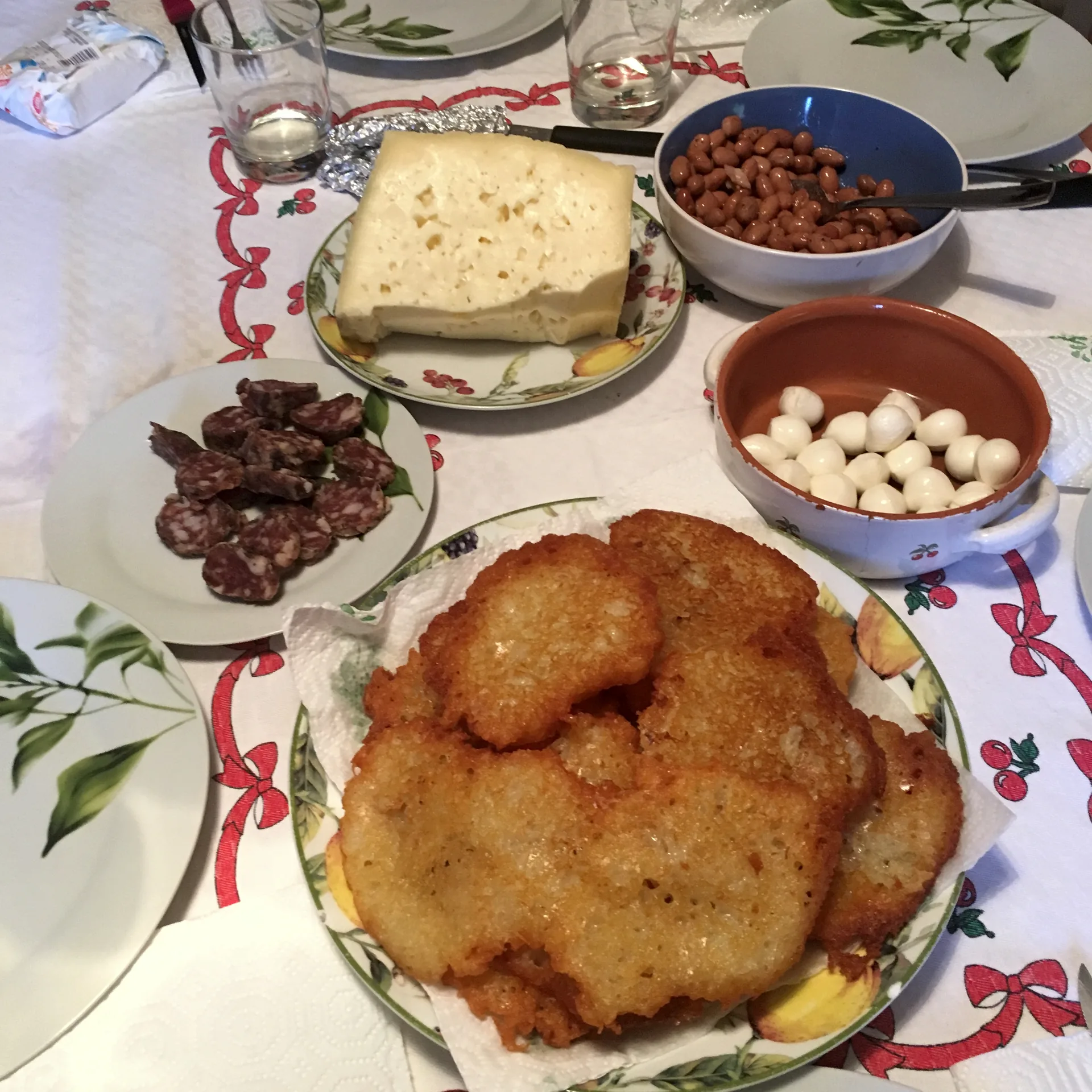
Tortel di patate, associated with Val di Non, is made from finely grated raw potatoes mixed with flour and salt, sometimes egg, then shaped into small patties and fried in hot oil. Look for a crisp, golden surface when fritters are on display.
In Trento’s traditional trattorias, the plural tortei often appears on menus for a shared starter or platter with cured meats and cheeses, sometimes cabbage salad or pickles. Decide whether the platter is your starter or the centre of the meal before agreeing its size.
Among the accompaniments you may find mortandela: coarsely minced pork, sometimes including liver, seasoned with salt, pepper, garlic and spices. Hand-shaped into flattened balls, it is traditionally wrapped in caul fat, smoked and air-dried, and usually cooked before eating. It is a distinct Val di Non speciality, not mortadella, the smooth sliced sausage.
Filisara · CC BY-SA 4.0 · Edited
Carne salada: cured beef
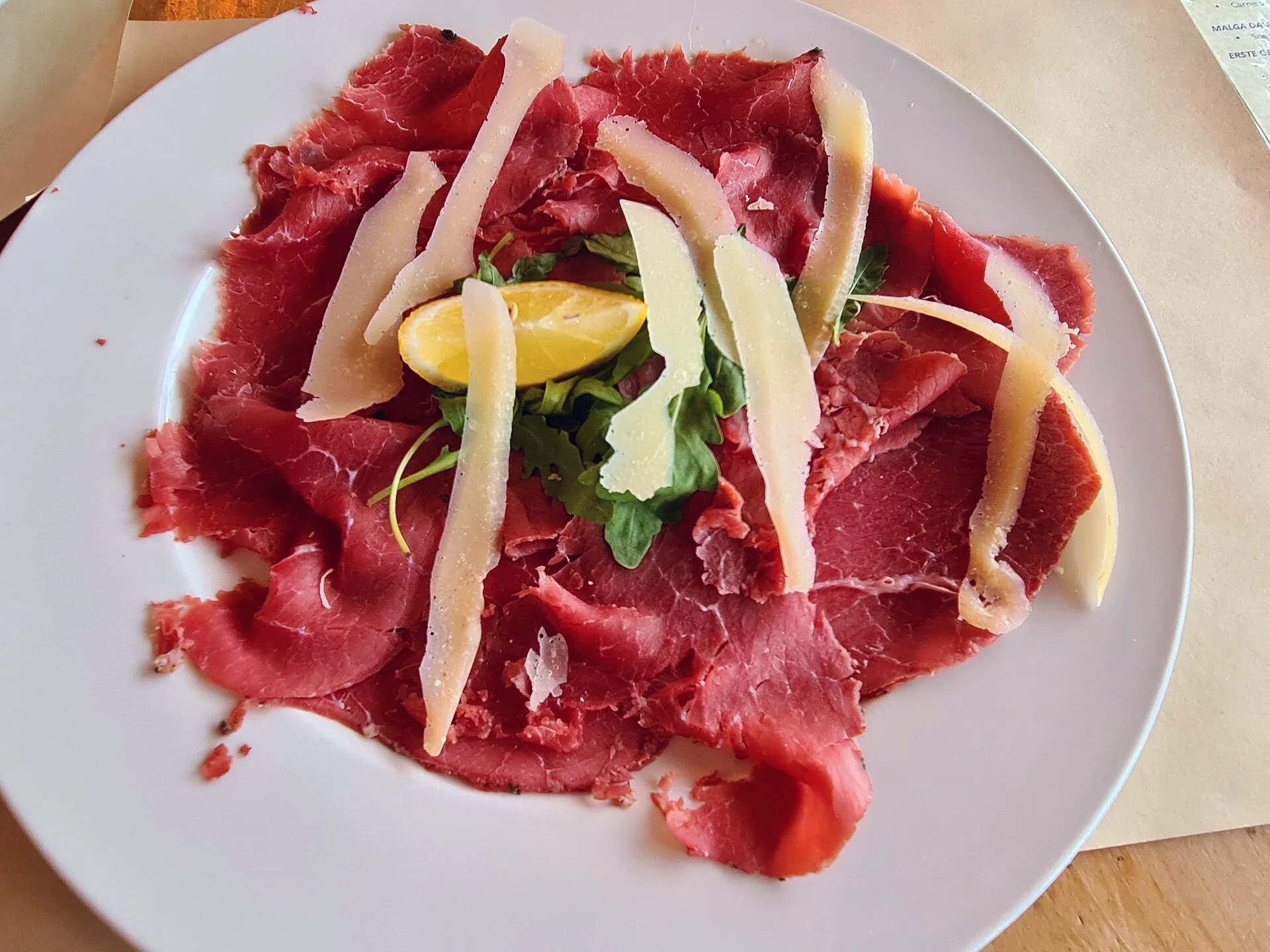
Carne salada is lean beef, traditionally rump, rubbed with salt, black pepper, garlic, bay, rosemary and juniper. Packed tightly, it cures in its own brine and is turned regularly, developing a savoury flavour with herbal and spice notes. Its traditional home is northern Lake Garda, particularly around Arco and Riva del Garda.
In a Trento trattoria, choose raw slices for a starter or a cooked serving for a main when both appear on the menu. The raw version is thinly sliced, carpaccio-style, while the cooked version is usually grilled or seared on a hot plate. The same cured beef gives the two plates their character, but cooking changes its texture and how it fits into your meal.
Carne salada e fasoi means cured beef with beans, usually borlotti. The beans make the cooked serving a more substantial plate, rather than simply a tasting of cured meat.
Benreis · CC BY-SA 4.0 · Edited
Canederli: bread dumplings
Canederli combine stale bread with milk, eggs, flour and herbs such as parsley or chives. Speck, smoked cured ham, is a common addition, and cheese and vegetable versions, including spinach, are also made. These ingredients are mixed through the dumpling, rather than enclosed as a separate filling.
Order them as a substantial first course in a traditional trattoria. The dumpling mixture and its accompaniment are separate choices: a menu may offer broth or melted butter and sage, with mushroom, cheese or goulash sauces on some menus.
In brodo means served in broth. The traditional stock is meat-based, usually beef, though vegetable broth is another possibility. If you avoid meat, ask about both the dumplings and the broth: choosing a cheese or spinach mixture alone does not settle what arrives in the bowl.
Strangolapreti: spinach-and-bread gnocchi
Strangolapreti alla trentina are soft dumplings made with stale bread and spinach or other leafy greens, bound with eggs, milk and flour. Alla trentina identifies the local bread-and-greens version, rather than the similarly named pasta you may encounter elsewhere in Italy.
In a traditional trattoria they occupy the first-course part of the menu. Melted butter and sage are the usual dressing, often finished with grated Trentingrana, a local hard cheese. The greens run through the soft dumplings, while the butter coats their surface and the cheese adds a savoury finish.
Choose this dish when you want a greens-based first course rather than a meat plate. It still contains dairy and eggs, so its vegetable character does not make it a vegan option.
Polenta carbonera
Polenta carbonera combines cornmeal, often with buckwheat flour, with butter, local cheeses and luganega, a pork sausage. It is an enriched dish in its own right, not plain polenta acting as a side to stew or game. Its thick, filling texture and meat-and-dairy mixture suit a substantial traditional meal.
Associated with Storo, carbonera has also appeared on past festival menus in Trento. Treat it as a regional speciality to choose when a trattoria lists it, rather than an everyday fixture of city menus.

Dario Zontini · CC BY-SA 4.0 · Edited
Apple strudel
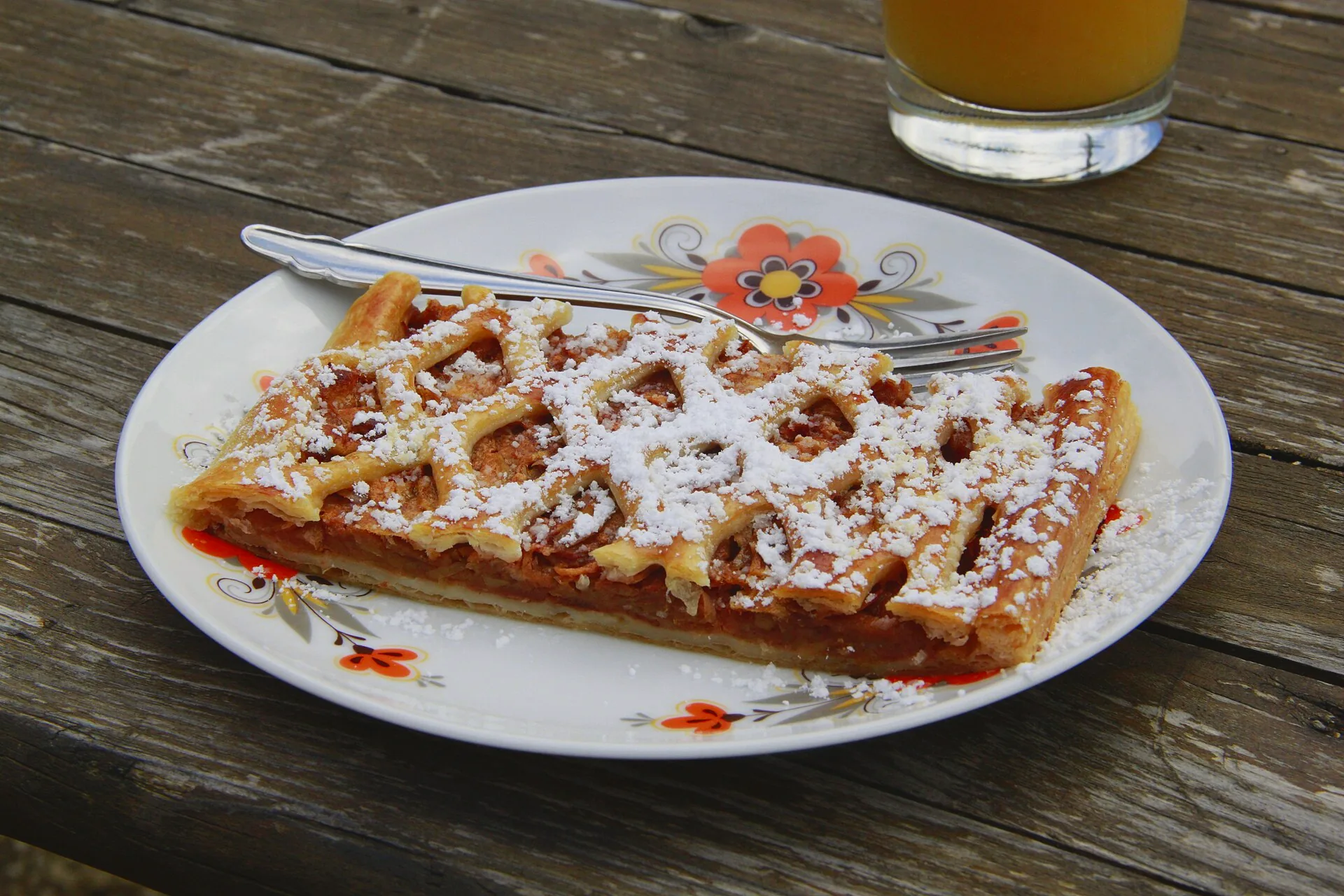
Apple strudel wraps apples, raisins, pine nuts, sugar, cinnamon and breadcrumbs in pastry, often with lemon zest. Trentino apples give the regional version its fragrant, slightly tart filling within a dessert tradition shared across the Alps. The apple’s sharpness balances the sweetness of the dried fruit and sugar.
Have it after a meal or during a café break. A bakery portion suits takeaway, while a café table gives you a seated break with coffee. The portion you see at the bakery counter lets you judge whether you want a small snack or something more substantial. At a trattoria, leaving room for strudel makes it the sweet finish rather than a separate afternoon stop.
Ximeg · CC BY-SA 3.0 · Edited
Trentodoc sparkling wine
Trentodoc is traditional-method sparkling wine: its secondary fermentation takes place in the bottle. Expect fresh acidity and fine bubbles, with possible bread-like notes. Trento DOC is the protected designation, while Trentodoc is the collective brand. DOC means controlled designation of origin. Ferrari and Rotari are two producer names you can recognise on a wine list, both making wines carrying the brand.
Order it as an aperitif in a wine bar or with a meal in a restaurant. A glass lets you taste one wine without committing to a bottle, while a bottle suits sharing the same cuvée around the table. Its acidity also makes it a lively companion to richer cheese or fried-potato dishes.

Ximonic (Simo Räsänen) · CC BY-SA 4.0 · Edited
Sources & fact-checking
Checks against the sources below cover: key figures.