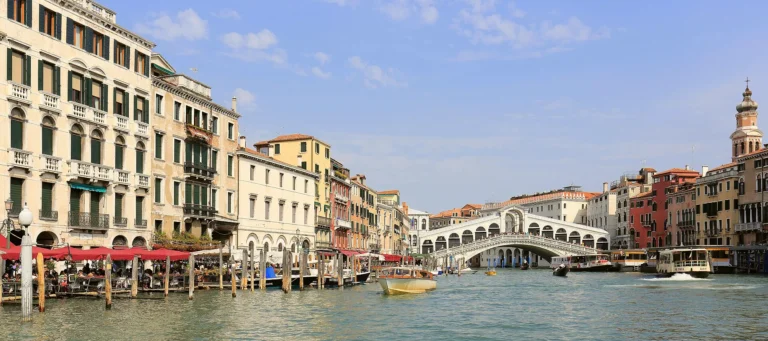
For quieter sightseeing in Venice, favour the gap between winter festivities and the spring holiday peaks. Lower seasonal demand does not mean empty streets around St Mark’s Square and Rialto. Those landmarks draw concentrated foot traffic even when other parts of the historic city offer more room to walk.
The useful choice is between colder dates with less overnight demand and milder dates that make a longer outdoor day more appealing. Allow for Carnival and public holidays before settling on a month, then choose an ordinary weekday and leave time for waterfront walks beyond the main sightseeing corridor.
Low season and early spring
- Recommended sightseeing window
- March, outside event and holiday peaks
- Lower-demand alternative
- Ordinary January dates, outside Carnival
- Lowest accommodation arrivals
- January, historic centre, 2023
- Highest accommodation arrivals
- July, historic centre, 2023
- Wettest monthly average
- June, WMO Venezia normals, 1971–2000
January is the strongest choice if fewer overnight visitors matter more than outdoor comfort. Short winter days and cold weather favour a mix of walking and indoor visits. March offers a better balance for sightseeing on foot, while still preceding the higher demand of late spring and summer.
Ordinary winter dates usually offer the best chance of a lower room price, unless Carnival intervenes. Early spring trades some of that saving for more comfortable outdoor sightseeing, while late spring, summer and major events put more pressure on accommodation prices. Location and room standard also affect what you pay.
Venice’s congestion is uneven: the St Mark’s–Rialto corridor can be crowded while side streets elsewhere remain easier to explore. Choose winter for lower demand, not a promise of deserted landmarks.
Visitor demand and rainfall by month
| Month | Rainfall (mm) | Overnight demand | Sightseeing verdict |
|---|---|---|---|
| January | 47.0 | Lowest | Good: quieter, cold |
| February | 48.3 | Low winter | Mixed: Carnival surges |
| March | 48.8 | Rising | Good: spring, lower demand |
| April | 70.0 | Rising | Mixed: holiday peaks |
| May | 66.0 | Higher | Mixed: stronger demand |
| June | 78.0 | High | Mixed: rain, heat |
| July | 63.9 | Highest | Avoid for quiet: heat |
| August | 64.8 | Relatively high | Mixed: heat, demand |
| September | 72.0 | Relatively high | Mixed: continuing demand |
| October | 73.5 | Relatively high | Mixed: rain, high water |
| November | 65.5 | Falling | Mixed: high-water season |
| December | 50.6 | Lower | Mixed: cold, high water |
The winter-to-summer contrast is substantial: historic-centre accommodation arrivals rose from 175,070 in January to 423,252 in July in 2023. Comparisons for 2019 and 2022 show a similar broad seasonal pattern, driven largely by visitors from outside Italy, while Italy-resident arrivals vary less through the year.
Accommodation arrivals count registered overnight guests, not everyone walking through Venice. Day visitors and other daily city users are outside that series, so the demand column helps you choose a season rather than predict the crowd on a particular bridge.
Rainfall totals are climate averages, not forecasts or counts of rainy days. A wetter monthly average need not mean rain throughout your stay. Cold in winter and heat in summer also affect how much of the day you will want to spend outdoors.
Carnival and holiday peaks
Carnival is the exception to a quiet winter visit. The 2027 edition runs from 23 January to 9 February 2027. Visitor surges centre on the main tourist areas and events, so a winter date within that window is a different proposition from an ordinary cold-weather sightseeing trip. If you want to watch the festivities, allow time to linger. If quiet walking is the priority, choose dates outside them.
Easter week brings another rise in visitor pressure. Spring holiday peaks also gather around Liberation Day and the Feast of St Mark on 25 April, Labour Day on 1 May and Republic Day on 2 June. Easter moves each year, and the length of the other holiday weekends depends on where their dates fall. A mild spring day can therefore coincide with particularly busy streets, rather than deliver the quieter visit its season might suggest.
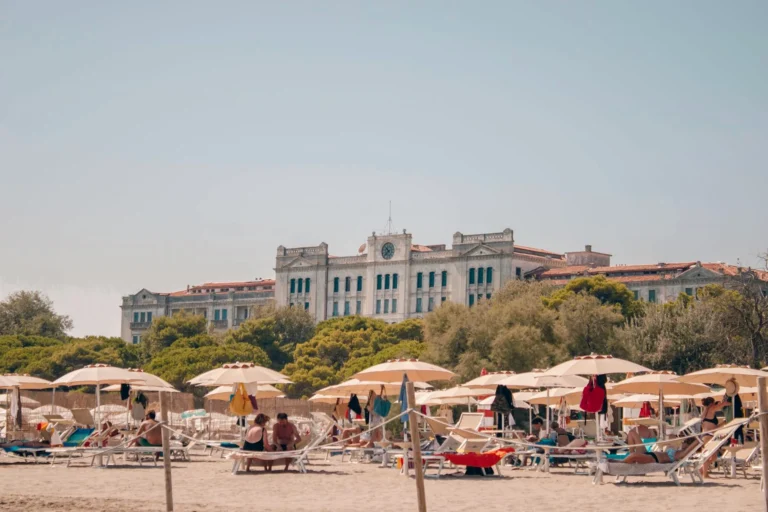
The Venice Film Festival takes place in September, with its strongest crowd pressure on the Lido. Festivalgoers, press and premiere audiences concentrate there, and boats linking the Lido with historic Venice can be packed after late screenings. Festival crowds are more noticeable on the Lido than across the historic city as a whole. Choose a waterfront walk elsewhere if you are not attending, rather than treating the entire city as a festival venue.
August and early autumn are not a dependable quiet-season escape: overnight demand remains substantial. For Venice in summer, heat also changes the sightseeing day. Alternate outdoor visits with indoor breaks, and avoid making a long succession of exposed squares and crowded walking routes your only plan.
Weekdays and neighbourhood alternatives
Choose an ordinary earlier-week date rather than Friday through Sunday if your dates are flexible. Visitor pressure generally rises towards the weekend, but this is a tendency rather than a guarantee. A public holiday or Carnival date should be treated as a busy period in its own right, even when it falls midweek. Weather can also alter the number of people out in the streets.
Fondamenta della Misericordia, in northern Cannaregio, offers an alternative to the direct St Mark’s–Rialto route during busy sightseeing hours. A fondamenta is a canal-side walkway. Here, shops and bars share the waterfront with everyday activity and passing boats, giving you a reason to walk beside the water rather than simply seek a less crowded shortcut.
The Misericordia waterfront is a quieter walking alternative, not a crowd-free spot. Cannaregio lies north of the main sightseeing corridor, and its side lanes take you away from much of that through-traffic. Nearby Strada Nova, however, can be congested. In the evening the waterfront becomes a lively bar-and-restaurant strip used by both residents and visitors, so choose it for a pause and street life, not for guaranteed solitude.
Via Garibaldi in eastern Castello changes the activity as well as the setting. East of St Mark’s, it offers an open-air market and everyday waterside street life along the canal. Rather than replacing one major sight with another, spend time looking at the market and the public life around it, then leave room for a drink or a rest.
Neither neighbourhood needs to become a checklist. Keep the landmark visits you care about, then give one of these walks its own part of the day. Moving away from the busiest corridor allows time for shops, boats and a waterfront pause without asking the whole visit to revolve around avoiding other people.
High water and public access
- From 15 September to 30 April, raised pedestrian walkways are deployed according to tide forecasts, so allow flexibility in your outdoor route.
- Since 27 July 2026, following the end of the 2026 access-charge trial, visiting Venice requires no access-charge payment, registration or exemption request.
High water, known locally as acqua alta, can change how you cross public squares and waterfronts. Historical tide observations place about 70% of events reaching at least 110 cm in October, November and December. November has the most events, followed by December and October. Such events are rare in summer.

KlausFoehl · CC BY-SA 3.0 · Edited
Keep an indoor visit available as an alternative to a long walk, especially during the autumn high-water season.
Sources & fact-checking
Checks against the sources below cover: services and key figures.
- FAQ | Contributo di Accesso
- Homepage | Contributo di Accesso
- City of Venice (Comune di Venezia) — service
- Servizio Meteorologico dell’Aeronautica Militare Italiana — key figures
- Vela S.p.A. (Venice Carnival official site) — key figures
- La Biennale di Venezia — key figures
- Comune di Venezia — key figures