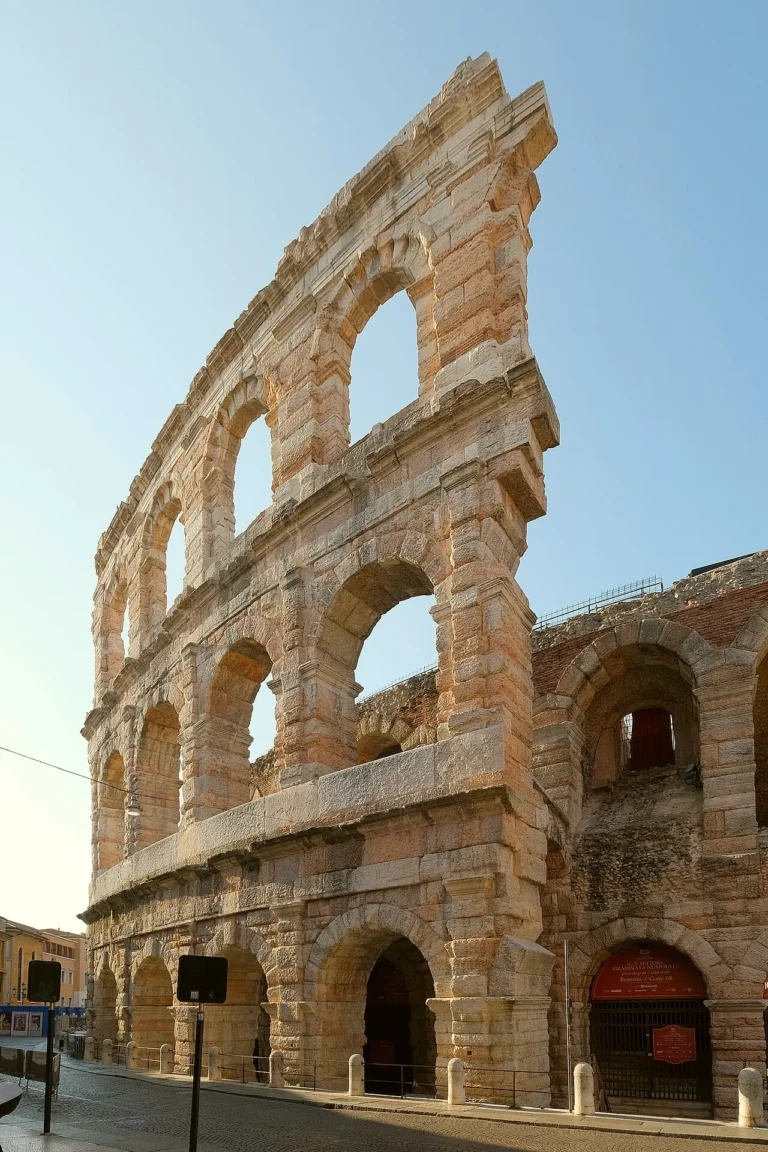
Choose Verona for a shorter break built around river walks, selected art and unhurried meals, or choose Florence if Renaissance collections are the reason you are travelling. Castelvecchio gives Verona a substantial museum visit without making galleries the centre of every day. In Florence, Michelangelo’s David and the Uffizi can anchor a much fuller art programme.
Both cities reward staying overnight rather than rushing through their headline sights. The deciding questions are how many full days you have, how much entry planning you want and whether your evenings revolve around dinner, neighbourhood walks or opera.
Verona and Florence at a glance
| Criterion | Verona | Florence |
|---|---|---|
| Sightseeing focus | Castelvecchio, river walks, Roman Arena | Renaissance art, cathedral complex, major galleries |
| Suggested full sightseeing days | 2 days | 3 days |
| Central mid-range double room, typical estimate | €110–€180 per room per nightBest | €140–€230 per room per night |
| Casual main meal, without drinks, typical estimate | €15–€25 per personBest | €18–€30 per person |
| Adult tourist tax, three-star hotel | €3.50 per person per night; up to 4 nightsBest | €6 per person per night; up to 7 consecutive nights |
These suggested days leave room for meals and walks, not just admissions. Verona suits a principal museum visit with time around the Adige, while Florence needs more space if you want the Accademia and Uffizi on separate days. Count full sightseeing days, not hotel nights partly spent travelling.
The room estimates compare central, mid-range doubles rather than a peripheral room against a landmark-facing hotel. Summer event dates in Verona and popular spring or autumn dates in Florence tend towards the upper end. Location and room standard matter in both. At the range endpoints, Verona is roughly €30–€50 less per room per night. Its casual main-meal estimate is roughly €3–€5 less per person, although menu choices can erase that difference.
For the same taxed night, Verona’s three-star hotel tax is €2.50 less per adult. Keep that separate from the room price when comparing accommodation. Drinks, several courses and a large steak also take a meal beyond the main-dish estimates.
Art, walks and local food
The contrast is clearest when you choose what deserves a long visit. Verona lets you alternate one art collection with the river and churches, while Florence offers enough major collections that selection becomes part of enjoying the stay.
Verona: Castelvecchio, the Adige and bigoli
Castelvecchio Museum makes a strong centrepiece for an art-minded Verona break. Paintings, sculpture and historical objects give you more to consider than the city’s romantic associations. Look at the objects as well as the building: the collection offers a way into Verona’s artistic history, not simply a castle to photograph.
- Name
- Castelvecchio Museum
- Location
- Corso Castelvècchio 2, Verona Maps
- Site
- museodicastelvecchio.comune.verona.it
- Hours
- Mon Closed
- Tue–Sun 10:00–18:00
- Typical visit
- 1 hour 30 minutes
- Essential fact
- An art museum in Verona’s medieval Castelvecchio castle beside the Adige.
- Price
- €9
- €6 standard reduced admission
- €2 ages 18–25
Show 1 more
Free ages 0–17 · visitors with disabilities and one companion · VeronaCard holders
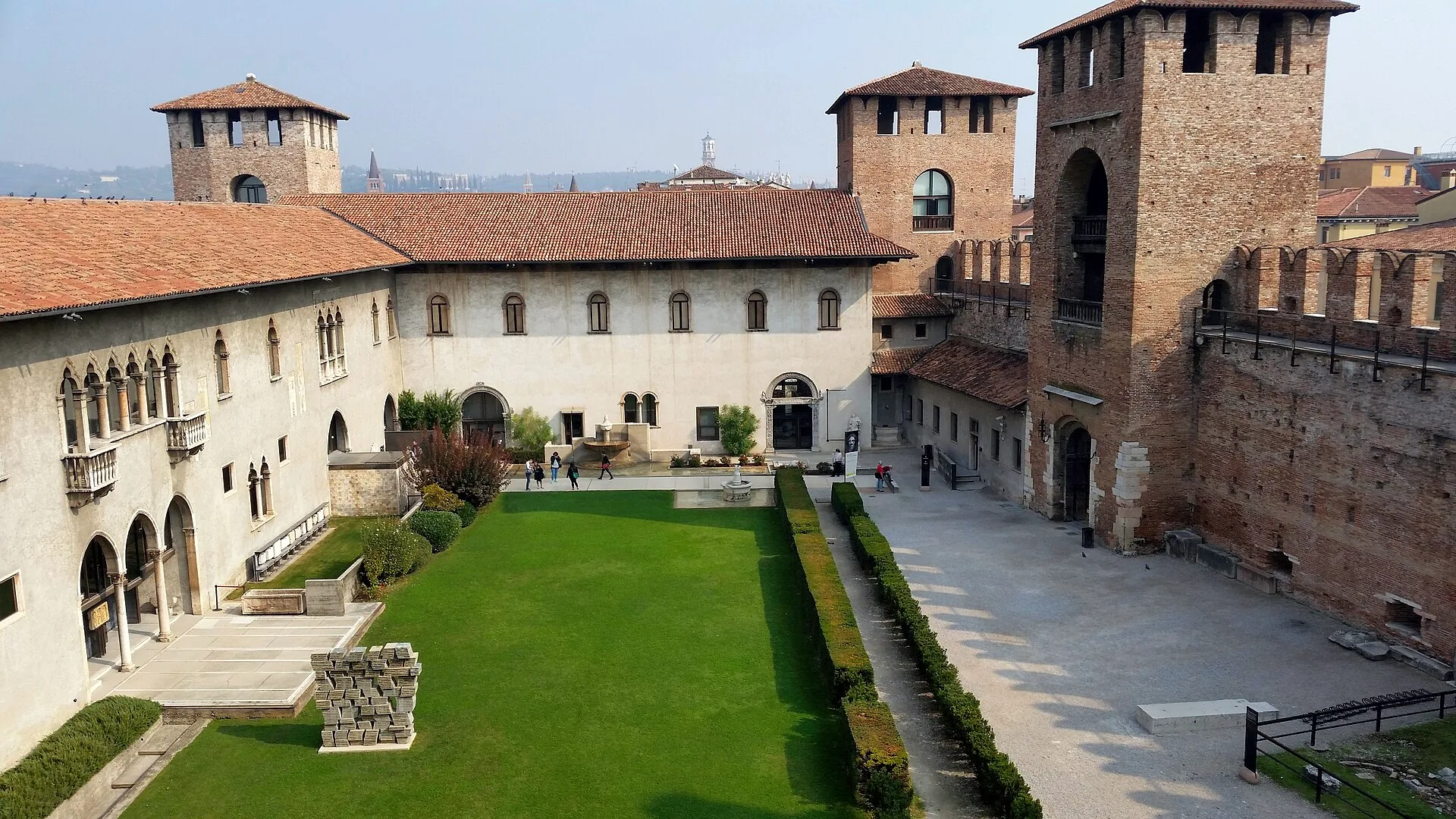
Orledio · CC BY-SA 4.0 · Edited
The Adige provides the outdoor counterweight, with riverbank walks and views towards the fortified Castelvecchio Bridge. Verona Cathedral adds a different kind of art visit: its Romanesque entrance and Titian’s Assumption give you specific reasons to stop rather than treating every church as interchangeable.
Juliet’s House belongs to Verona’s literary identity. Its association with Shakespeare’s Juliet is a later tradition, not the home of a historical Juliet: the character is fictional. Treat it as a literary stop if that interests you, rather than the centre of your city programme.
At dinner, try bigoli, thick pasta often served with a robust sauce, or radicchio risotto, rice cooked with the red-leaved chicory. This is a good city for a break that does not revolve around museums. A collection, a cathedral and time beside the river can give the days variety without filling every morning and afternoon with indoor visits.
Florence: art, the Arno and Tuscan food
The Accademia and Uffizi are the strongest reasons to choose Florence for art. At the Accademia, Michelangelo’s David rewards attention to scale and the figure’s poised stance, while the unfinished Prisoners offer a contrasting view of bodies emerging from marble. The Uffizi broadens the story through paintings by artists including Botticelli, Leonardo and Raphael.
- Name
- Accademia Gallery
- Location
- Via Ricasoli, 58/60, Firenze Maps
- Site
- galleriaaccademiafirenze.it
- Hours
- Mon Closed
- Tue–Sun 08:15–18:50
- Typical visit
- 1 hour
- Essential fact
- Florence’s art museum housing Michelangelo’s David.
- Price
- €20
- €4 timed-entry reservation

Ren G · Pexels License
Timed-entry reservations are optional. You can arrange one through the official B-Ticket online booking service or Firenze Musei by telephone, +39 055 294883. Without a reservation, you may wait in the entrance queue. Reserving helps protect the time you want for the collection, but commits part of your day to an entry time.
Florence’s cathedral complex supplies architectural context beyond the galleries. Ponte Vecchio, with shops along the bridge, gives you an Arno walk between visits. Across the river, Pitti Palace and Boboli Gardens add palace collections and terraced gardens for a longer stay. Choose among them rather than stacking every major site into a short break.
For Tuscan food, ribollita is a bread-and-vegetable soup, usually with beans and leafy greens. Bistecca alla Fiorentina is a thick Florentine steak, commonly served rare and priced by weight. It is often a meal to share, not an equivalent to a single casual main dish.
Crowds and evenings
Verona
Pros
- River walks and selected museum visits leave you free to change much of the day without rearranging several admissions.
- Dinner around the historic centre can be the whole evening, or you can make a performance at the Roman Arena its centrepiece. The recurring opera season runs from June to September.
Cons
- Summer brings the strongest visitor pressure, especially July and August, remaining high into September. Opera dates add demand; spring is generally quieter, but Easter can still be busy.
Florence
Pros
- The depth of the art collections gives a longer stay purpose, with scope to follow particular artists or periods rather than just see the headline works.
- Oltrarno, the area south of the Arno, offers dinner and neighbourhood walks around places such as Piazza Santo Spirito, away from an evening spent only around the cathedral.
Cons
- Reserved gallery entries make it harder to change plans spontaneously, and an ambitious museum programme can leave little time outdoors.
- The main visitor season stretches roughly from April to October. Pressure is particularly strong in May and September–October; Easter, the 25 April–1 May holiday period and summer holidays can add surges.
Stay within walking reach of the evenings you actually want. In Verona, that might mean dinner near Piazza Bra or returning from an Arena performance. In Florence, a room near the cathedral is not the same choice as one convenient for Oltrarno restaurants. Think about the return to your room as well as the morning’s sightseeing.
In either city, keep valuables secured in crowded squares and on transport, and avoid leaving a phone or bag unattended at a café table. Choose a straightforward route back after dinner.
Airports and railway arrivals
Verona Villafranca Airport, also called Valerio Catullo, is Verona’s local passenger airport, while Venice Marco Polo is an additional international gateway. For Florence, the local airport is Amerigo Vespucci at Peretola, with Pisa Galileo Galilei as another arrival option. An alternative airport adds a journey before your city stay, so weigh its location alongside the flight rather than treating the airport name as your destination.
Verona Porta Nuova stands outside the historic centre. The walk to Piazza Bra, the broad square beside the Arena, is about 1.5 km and takes about 21 minutes. With luggage, think about whether you want to walk to your accommodation first rather than begin sightseeing straight from the station.
Firenze Santa Maria Novella is closer to Florence’s cathedral square, Piazza del Duomo: the walk is about 800 metres and takes about 10 minutes. The cathedral’s dome and marble façades make this a natural first landmark, but a room across the Arno will involve a different final approach.
These are station-to-centre walks, not complete transfers to a room. A station-side hotel can simplify arrival and departure, while accommodation nearer your chosen sights or dinner area can save walking during the stay. Allow for luggage and finding the entrance rather than using a landmark walk as your hotel arrival time.
Florence followed by Verona
If you have enough nights for both and are continuing into northern Italy, visit Florence first, then stay overnight in Verona. Put the fuller art programme before the smaller-scale finish. An overnight stay lets Verona’s dinner and evening walks belong to the visit, rather than turning the day into a race back to Florence.
From Firenze Santa Maria Novella to Verona Porta Nuova, a direct Frecciarossa journey takes about an hour and a half. Seat reservation is compulsory and comes with the ticket. A return example from Verona to Florence takes about 2 and a half hours, using a regional train to Bologna and then Frecciarossa. The Frecciarossa portion also requires a seat reservation.
Italo offers a separate direct-service option: five trains daily from Florence to Verona, stopping at Bologna Centrale, with the service pattern varying by day and date.
The return fare depends on the train and service selected. Trenitalia’s Base fare is the flexible option on eligible services, useful if keeping flexibility matters more than securing a cheaper restricted ticket.
Starting from Florence’s centre, you still need to reach the station, then leave Verona Porta Nuova for your next accommodation. The rail journeys are station to station, so packing, centre-access walks and settling into another hotel take additional time. For a genuinely short break, staying in one city preserves more time for visits and meals than moving hotels.
Which city fits your trip?
- Choose Florence for major Renaissance collections if you are happy to plan gallery entries.
- Choose Verona for a shorter, less museum-intensive break with river walks.
- Choose Verona for bigoli and radicchio risotto; Florence for ribollita and a shared Florentine steak.
- Lean towards Verona for lower typical room costs and three-star hotel tax, except when event dates change the room comparison.
- For opera, choose Verona during its performance season. For neighbourhood dinners, Florence’s Oltrarno is a strong draw.
- If crowds matter, favour Verona’s spring outside Easter, whereas Florence’s spring and early autumn can be busy.
- With enough nights and an onward journey north, choose Florence followed by an overnight stay in Verona.
Let your sightseeing priorities decide, then match the dates.
Sources & fact-checking
Checks against the sources below cover: key figures, services, fares and charges, and opening hours.
- Comune di Verona, Area Cultura e Turismo — key figures
- Arriving by plane
- SAVE S.p.A. — key figures
- Getting around barrier-free
- Fondazione Arena di Verona — service
- Comune di Verona — fares and charges
- Comune di Firenze — fares and charges
- Trenitalia — fares and charges
- Italo — service
- Trenitalia Pass
- Treni e servizi del trasporto nazionale | Trenitalia
- Musei Civici di Verona, Comune di Verona — fares and charges
- Galleria dell’Accademia di Firenze — fares and charges
- Galleria dell’Accademia di Firenze — opening hours