Choose later January for a quieter, museum-led Berlin break, or choose pre-Christmas weekdays if the markets are the reason you are going. Winter suits visits built around collections such as the Neues Museum, with short walks rather than full days outdoors. The price of lower-demand travel is cold weather and limited daylight, not a shortage of things to see.
Which winter month suits you?
- Quiet cultural break
- Later January; February outside the Berlinale
- Festive alternative
- Pre-Christmas weekdays
- Busiest winter periods
- Christmas-market weekends and New Year
Winter is worth it if indoor culture matters more to you than long outdoor days. You can give a collection proper attention, then make a brief walk part of the day rather than its main purpose. For stalls and festive outings, accept higher demand in exchange for a different kind of trip.
Ordinary winter weeks tend to bring softer hotel demand and lower occupancy, giving you a better chance of finding accommodation value. Christmas, New Year, trade fairs and major events can reverse that advantage: hotels fill faster and rates often rise. Choose ordinary winter weeks if accommodation value matters more than festive or event-led dates.
If you want extended park walks and outdoor sightseeing, the best time to visit Berlin is a wider seasonal choice. A quieter winter stay is a good cultural option, not a substitute for a daylight-rich trip.
Winter crowds by month
| Month | Usual visitor demand | Exception | Culture-break verdict |
|---|---|---|---|
| November | Falling | Late-month market run-up | Mixed: quieter before festivities |
| December | Higher festive demand | Market weekends; New Year | Mixed: festive, less quiet |
| January | Very low after holidays | New Year interval | Good fit: quieter collections |
| February | Generally low | Berlinale visitor bump | Good fit: outside festival |
| March | Relatively quiet | ITB business-travel demand | Mixed: event-sensitive rooms |
Cold and early darkness favour one substantial indoor visit over a string of outdoor stops. Wet weather can make even a modest walk less appealing, so leave space for a café break rather than treating every gap as sightseeing time. Snow is possible, but it is not something to build the trip around.
A low-demand month does not mean every date is equally inexpensive. Film audiences and business visitors can put pressure on accommodation without creating summer-style crowds across the whole city. If your main purpose is visiting collections, avoid making a major event the centre of your dates unless you also want to attend it.
The shoulder months offer different compromises. November still loses daylight as winter approaches, while March gives you more time outdoors. Neither removes the need for a weather-proof indoor plan. Choose a quieter week for museums, not merely a month labelled low season.
Christmas markets and New Year
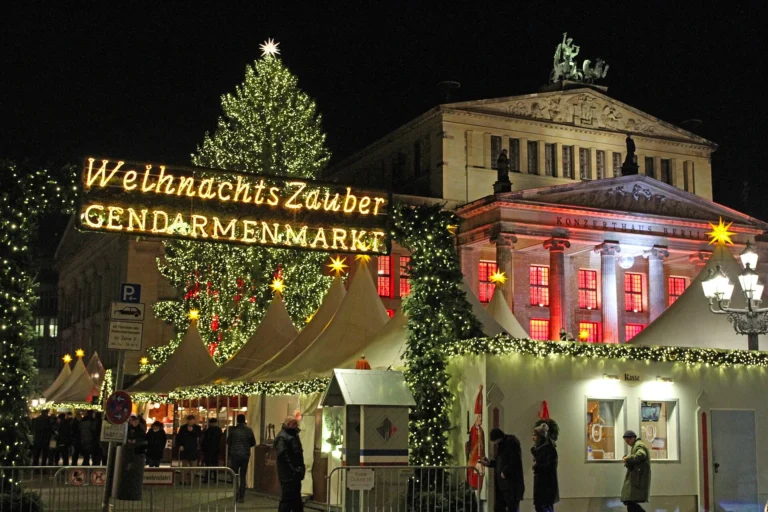
A pre-Christmas weekday is the better fit for browsing markets without the festive weekend rush. WeihnachtsZauber, the Gendarmenmarkt Christmas market, gives you a named destination around which to build an outing, rather than hoping to encounter stalls between museum visits. Allow time to browse and eat there, with an indoor stop elsewhere if the weather turns.

Bgabel · CC BY-SA 3.0 · Edited
- WeihnachtsZauber opens on 23 November 2026.
- Regular opening hours are Sunday–Thursday, 11:00–22:00, and Friday–Saturday, 11:00–23:00.
- Christmas Eve, 24 December 2026: 11:00–18:00.
- New Year’s Eve, 31 December 2026: 11:00–00:00.
- Name
- WeihnachtsZauber Gendarmenmarkt
- Location
- Gendarmenmarkt, Berlin Maps
- Site
- weihnachtsmarkt-berlin.de
- Price
- €2
- Free Monday–Friday, 11:00–14:00 (except 24, 25, 26 and 31 December 2026)
- Free children under 12
Berlin’s wider festive calendar begins on 31 October 2026 and extends to 10 January 2027, when Christmas Garden Berlin is the final listed attraction. That span is not the season of every Christmas market. A late festive outing and a traditional pre-Christmas market break are different choices, even though both fall within the city’s calendar.
The holiday interval also changes how you combine stalls with culture: museum closures fall on days when you might otherwise want an indoor refuge. New Year is a celebration-led choice, not the quieter low-season option. If the markets are your priority, leave room for browsing rather than scheduling them as a hurried evening extra. If museums are your priority, ordinary winter weeks give you a simpler rhythm.
January and February
January suits a trip whose main pleasures are collections and galleries rather than festive stalls. After the holiday period, you can spend a substantial part of the day indoors without feeling that you are missing the activity you came for. Use daylight for a short outdoor visit, and keep evenings flexible for dinner or another indoor outing.
February has a distinct alternative: the 77th Berlinale takes place from 10 to 21 February 2027. Choose those dates if cinema is a reason to travel, rather than assuming that every winter week offers the same accommodation value.
The Berlinale’s public film screenings require tickets, and selected public events also welcome general visitors. Industry screenings, European Film Market activities and accredited-guest spaces are restricted. A public screening is the visitor’s route into the festival, not an industry pass. Make films part of the purpose of the stay. The festival is not simply background entertainment for a cheaper museum break.
If cold weather would stop you enjoying even brief outdoor visits, March is the nearby seasonal alternative. The extra daylight gives you more scope to combine galleries with walks. That choice does need to account for the Neues Museum’s maintenance closure, so a later-season trip should not rest entirely on seeing that collection.
Indoor visits and winter walks
- Plan ordinary visits to the Neues Museum and Gemäldegalerie for Tuesday–Sunday, 10:00–18:00.
- Both museums open 10:00–18:00 on Christmas Day, 25 December 2026, and Boxing Day, 26 December 2026.
- On New Year’s Day, 1 January 2027, both museums open 12:00–18:00, so put your indoor visit in the afternoon.
- Tiergarten is publicly accessible year-round, but use daylight for your winter walk.
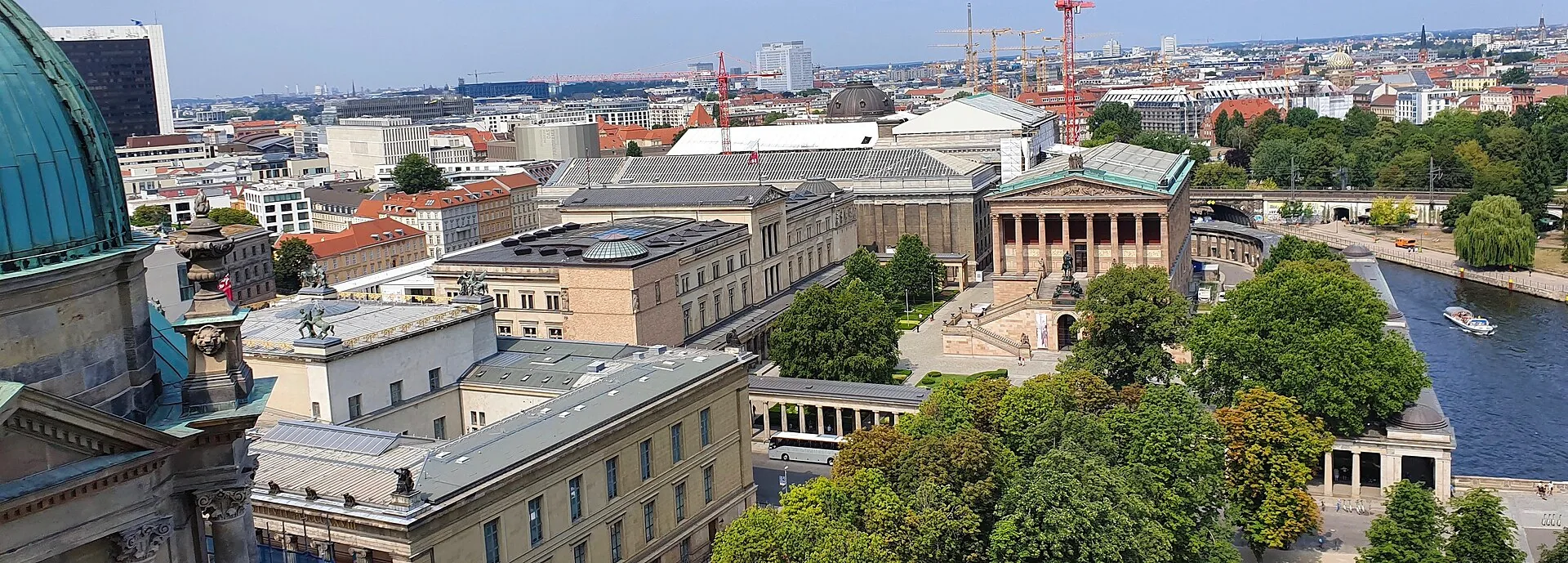
The Neues Museum gives a winter day a substantial indoor focus through ancient objects and archaeology. Its Egyptian Museum and Papyrus Collection includes the bust of Nefertiti and the Berlin Green Head. The Museum of Prehistory and Early History and the collection of Classical Antiquities broaden the visit beyond those famous Egyptian highlights. Choose it for the collections themselves, rather than treating it merely as somewhere warm.
The Gemäldegalerie, meaning painting gallery, offers European paintings from the 13th to the 18th century. Works by Jan van Eyck, Dürer, Raphael, Titian, Caravaggio and Vermeer give you reasons to pause in front of individual pictures. Choose the Gemäldegalerie if you would rather spend your indoor time with paintings than archaeological collections. You need not fit both museums into a single day to make a winter break worthwhile.
Tiergarten offers a different pace through broad tree-lined paths, open lawns, ponds and small waterways. Woodland sections and quieter garden areas let you keep a walk simple rather than chasing a list of sights. Treat Tiergarten as a flexible daylight outing, not an obligation in poor weather. Stay on paths that feel secure underfoot, especially when wet or icy conditions make a longer park visit less inviting.

Leonhard Lenz · CC0 · Edited
Alternate a collection visit with a short walk and a proper break. On a clear day, use the outdoor portion while there is light. In rain, spend longer with the art and shorten the walk. A café pause gives you somewhere to sit and warm up without rushing straight into another museum.
Wear removable layers so that you can adjust between outdoors and heated galleries. Add rain protection and shoes with grip suitable for wet or icy paths. This is a more useful approach than dressing only for the outdoor temperature, then spending much of the day uncomfortable indoors.
Sources & fact-checking
Checks against the sources below cover: services, key figures, opening hours, and closures.
- Berlin International Film Festival (Berlinale) — service
- Berlin International Film Festival (Berlinale) — key figures
- WeihnachtsZauber Gendarmenmarkt GmbH — key figures
- Weihnachtsmarkt am Gendarmenmarkt
- Christmas Markets in Berlin – Berlin.de
- Berlin Senate Department for Urban Development, Building and Housing — key figures
- Deutscher Wetterdienst (DWD) Climate Data Center — key figures
- Plan Your Visit | Neues Museum
- Sonderöffnungszeiten der Staatlichen Museen zu Berlin
- Plan Your Visit: Gemäldegalerie
- Special Opening Hours of the Staatliche Museen zu Berlin
- State of Berlin (Berlin.de) — service