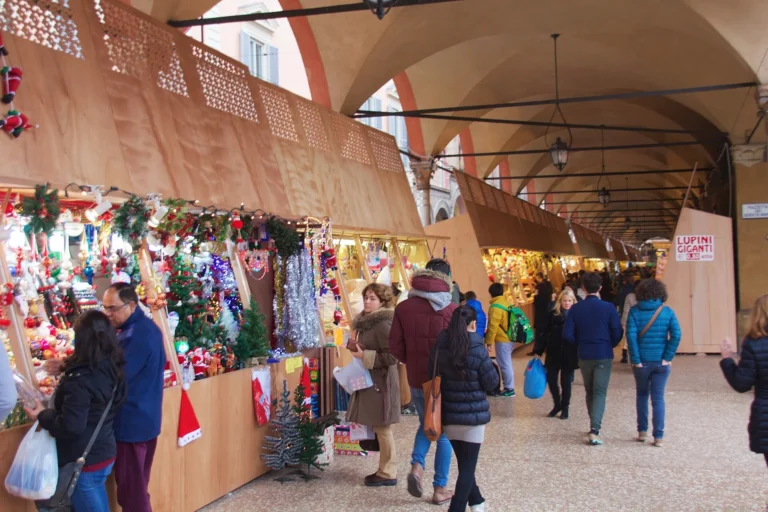
Choose spring or autumn for a Bologna break that combines walking with indoor sights. The porticoes along Via Zamboni show why covered streets are part of the city’s appeal, but shelter alone does not make a long summer walk comfortable. Summer suits shorter outings with substantial indoor breaks, while winter suits a stay built around museums and other indoor visits.
Before settling on dates, weigh restaurant choice and accommodation as well as the kind of sightseeing you want. Trade fairs can make an otherwise appealing period harder to arrange, while August holidays can narrow your choice of places to eat.
Choosing dates for sightseeing
- Walking with indoor sights
- Spring or autumn
- Short outdoor outings with sheltered breaks
- Summer, June to August
- Indoor-led sightseeing
- Winter, December to February
Choose the season to match how you want to spend the day. If wandering between sights matters as much as the visits themselves, leave room for outdoor time rather than filling every gap with another indoor stop. If museums are your main reason for coming, the weather has less influence on the shape of your stay.
Accommodation demand can change that choice. A sightseeing trip need not coincide with a major fair: nearby dates can still serve the same purpose without competing with its visitors for rooms. For someone attending, however, the event determines the dates and accommodation becomes the first part of the trip to arrange. The Bologna Children’s Book Fair and Cersaie are the two timing exceptions to bear in mind.
Spring and autumn
Spring and autumn suit a visit in which walking is an activity in its own right, not simply the connection between indoor sights. Keep the day flexible enough to alternate covered streets and indoor visits when rain interrupts a walk. April need not be treated as a promise of dry sightseeing: choosing a walk-led break still means leaving yourself an enjoyable indoor alternative.
Bologna’s porticoes are covered pedestrian walkways, usually supported by columns along building fronts. They shelter you from rain and summer sun while letting you move through much of the historic centre under cover. Via Zamboni provides a concrete example: its porticoes let you explore the street from the covered pavement rather than retreat indoors at the first shower. The buildings and street remain part of the visit even when the weather changes.
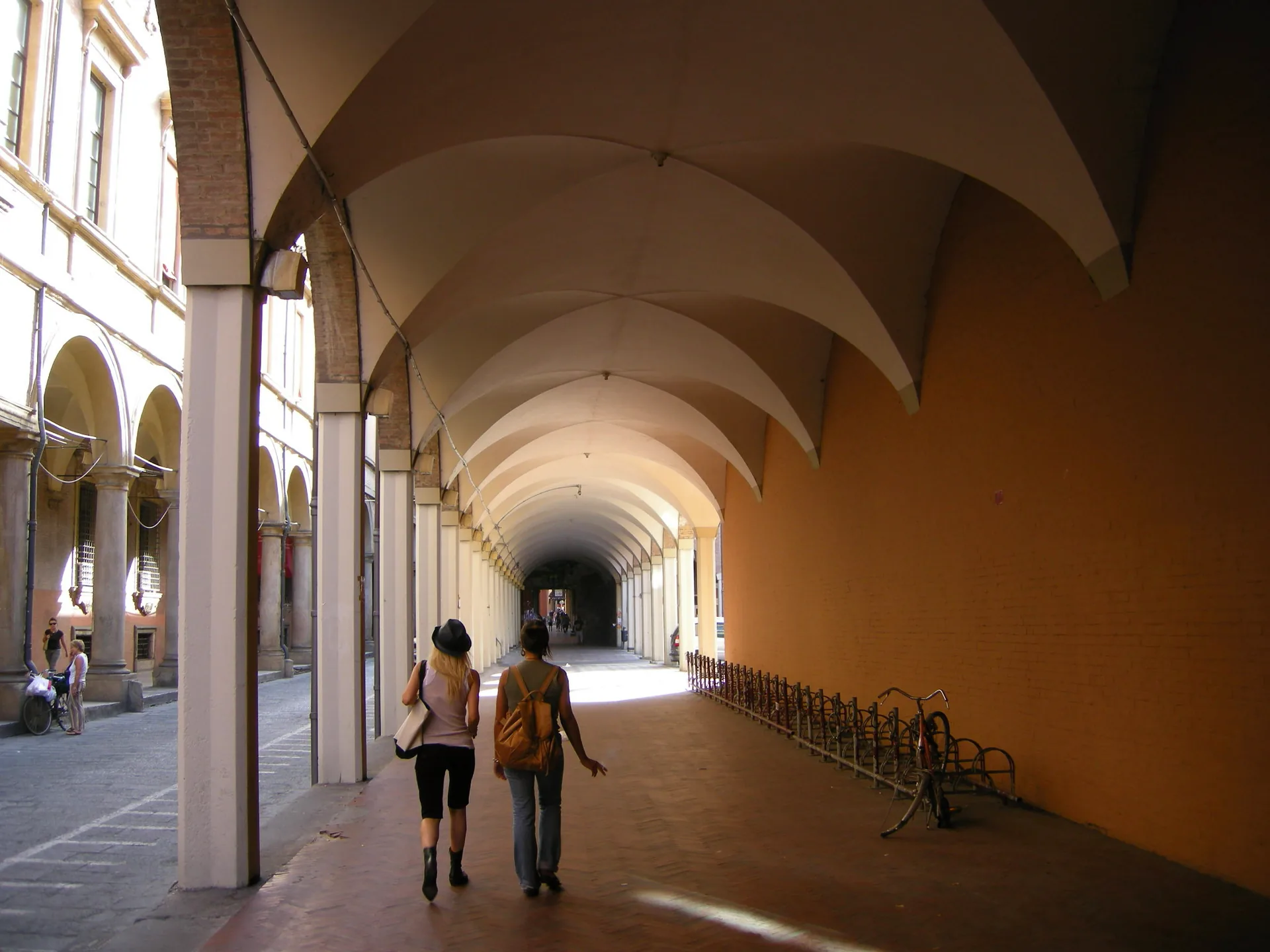
sailko · CC BY-SA 3.0 · Edited
Plan shorter sheltered walks, an indoor visit and a proper break rather than assuming an entirely covered route. Covered stretches are useful, but crossings and gaps still leave you exposed. A museum visit gives the day a destination if a shower becomes prolonged, while a café break lets you pause without turning every weather interruption into another sight to tick off.
Autumn remains a good choice for that mixed style of sightseeing, but it is not automatically a quiet or inexpensive period. Cersaie brings accommodation pressure, just as the Bologna Children’s Book Fair can complicate a spring stay. The season’s shoulder-season reputation is less useful than the timing of those events when weighing lodging choice. A stay outside a fair window can retain the same balance of walks and indoor sights while offering a broader choice of rooms.
Summer: June to August
In summer, make a substantial indoor visit part of the day rather than relying on shade for all your sightseeing. The porticoes help with sun exposure, but a hot spell calls for shorter outdoor stretches. Leave yourself room to shorten a walk without losing the main purpose of the outing.
Summer heatwave duration in the Bologna metropolitan area has been assessed for the observed periods 1961–1990 and 1991–2018. Heatwave duration here is the maximum number of consecutive days when the daily maximum temperature exceeds the 90th percentile of its distribution. Leave outdoor plans flexible so you can shorten a walk during a hot spell.
An indoor visit gives you something worthwhile to do during a hot spell instead of spending the day moving between exposed streets. Restaurant choice is another consideration when choosing summer dates: if eating out is central to your trip, the August holiday pattern described below may matter as much as the balance of walking and indoor sightseeing.
Winter: December to February
Choose winter if indoor sightseeing is the purpose of your break, with walks between visits rather than prolonged outdoor exploration. Give a museum or another indoor sight enough time to be the main activity, then allow an unhurried break before moving on. That creates a different kind of stay from one devoted to wandering the historic centre.
For the choice of indoor sights and how to put them together, Bologna in winter develops that approach into a visit. Use it to choose your main stops rather than simply carrying a walk-heavy plan into a different season.
Trade fairs and holiday availability
- Bologna Children’s Book Fair: usually in early April, typically a four-day weekday event. Accommodation becomes harder to find and tends to cost more around the fair. If attending, arrange your room months ahead. Visitor reports suggest roughly three months for cheaper options. If coming only for sightseeing, choose nearby dates outside the fair window.
- Cersaie, the ceramics and bathroom furnishings fair: usually in late September, typically over five days. Its visitor influx puts heavy pressure on accommodation. Recent editions have brought scarce hotel availability and sharp price rises, with effects varying by year. If attending, arrange accommodation months ahead. For unrelated sightseeing, favour dates outside the event window.
- August holidays: many restaurants and everyday visitor-facing businesses in the historic centre traditionally close for summer holidays, though the extent varies from year to year. If a wide restaurant choice matters to you, choose another period. If travelling in August, allow flexibility about where you eat.
For a sightseeing-only trip, moving away from fair dates can be more useful than changing seasons. Nearby dates let you keep the same kind of visit without tying your lodging search to a large event. They do not guarantee identical weather, but you need not abandon a spring or autumn break simply because a fair falls within it.
For a fair visitor, the event determines the dates, so a room that suits the stay matters more than the freedom to shift the trip. For a sightseeing visitor, that freedom is useful: the accommodation pressure is concentrated around the events rather than spread evenly through the year.
Sources & fact-checking
Checks against the sources below cover: key figures.