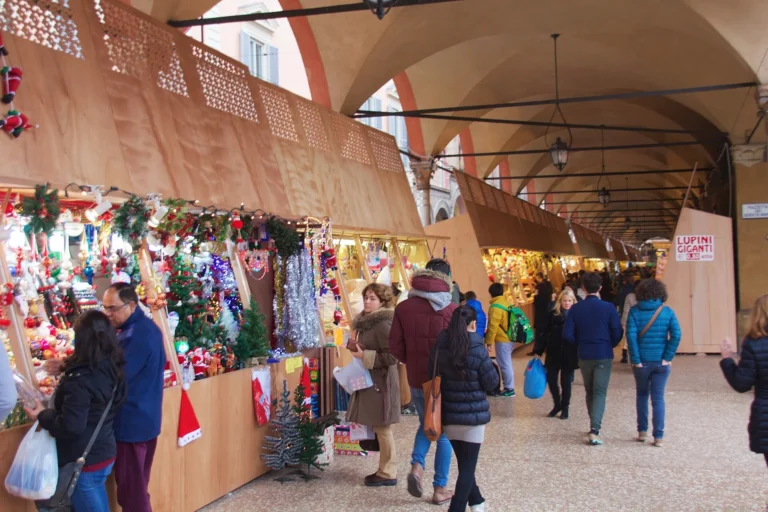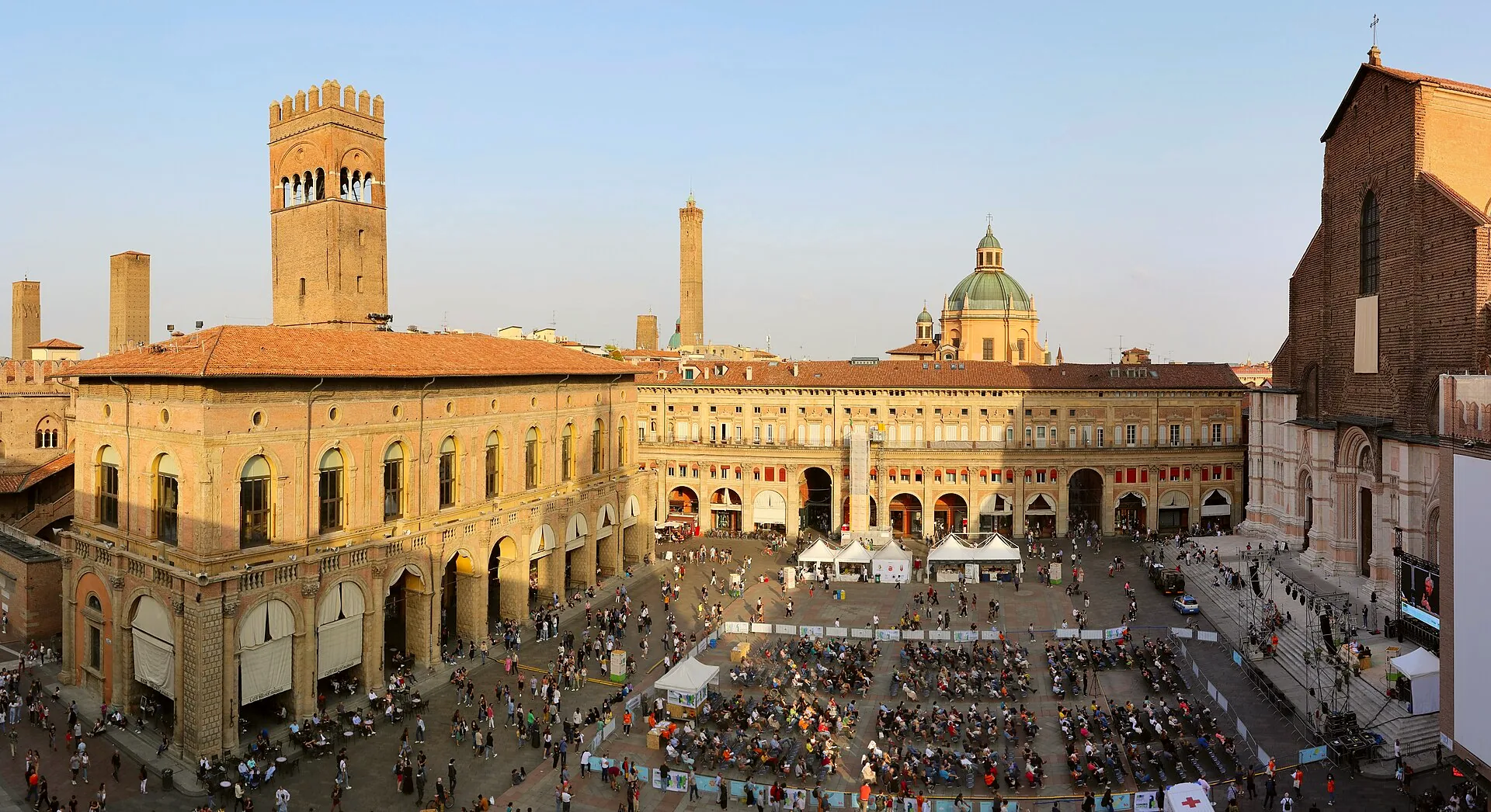
Choose the beginning of October for a Bologna break built around walking. Typical temperatures fall through the month, making earlier dates the better choice for longer outdoor visits around Piazza Maggiore. Later October still suits a mix of shorter walks and historic interiors, with warmer layers for evenings. Accommodation demand is a separate consideration: the announced SAIE fair falls early in the month, so the warmer period is not automatically the easier one for finding a room.
Choosing your October dates
- Recommended window
- Beginning of October
- Best suited to
- Outdoor sightseeing with flexible indoor visits
- Later October
- Shorter walks and more time inside
October is a good choice if you can rearrange your sightseeing around the weather. Earlier dates give you the warmer end of the month’s typical conditions, useful when you want to linger in squares rather than move straight between buildings. Keep some interiors in the plan rather than committing every day to outdoor visits.
Towards the end of the month, a break centred on art and historic buildings remains appealing. Split walking into shorter stretches and leave room for a seated lunch or an indoor afternoon. The choice is between more outdoor time and a visit that relies less on warmth, not between a worthwhile trip and an unsuitable month.
Treat room demand separately from that weather preference. SAIE at BolognaFiere can affect your early-month date choice. Ordinary visiting dates and major-fair periods need different accommodation budgets.
Temperatures and the clock change
| Period | Typical daily high | Typical daily low | Sightseeing verdict |
|---|---|---|---|
| Start of October | About 22°C | About 13°C | Good for longer walks: warmer days |
| End of October | About 16°C | About 8°C | Mixed for outdoor days: cooler conditions |
Plan longer outdoor visits earlier in the month if warmth matters to you. The downward temperature pattern changes how comfortably you can combine an extended walk with time standing in an exposed square. Around Piazza Maggiore, stopping to look at the buildings involves less movement than walking between sights, so a layer you can add is useful even on a walking-led day.
The typical night-time cooling also matters if you intend to stay out for dinner. Dress for the return walk, not just the afternoon departure: a jumper and an outer layer give you more flexibility than one heavy outfit. Later in October, it makes sense to break up outdoor sightseeing with an interior or a meal rather than expecting the whole day to feel like the afternoon.
The historical averages describe typical October conditions, not a forecast for your particular weekend. For a walking-led break, leave room to swap an outdoor afternoon with a visit to the Archiginnasio or San Petronio when rain arrives.
On the last Sunday in October, Italy’s clocks go back from 03:00 to 02:00 local time. Afterwards, sunset falls earlier on the clock, leaving less daylight for sightseeing after a leisurely lunch. An indoor late afternoon fits that shift better than a long walk left until the end of the day.
Porticoes and outdoor sightseeing
- Keep exposed visits movable: use a dry spell for Piazza Maggiore rather than fixing it to one afternoon.
- Give longer outdoor visits the daylight part of the day, before settling into an interior.
- Retain a museum or historic interior for sustained rain, so you can shorten the outdoor part without losing the day’s main visit.
The Portico del Pavaglione gives you a covered walk beside Piazza Maggiore. A portico is a covered walkway beneath an arcade. This publicly accessible stretch runs along the square’s east side, beside the Archiginnasio and San Petronio. It lets you keep walking near these central sights without treating every shower as a reason to abandon the historic centre.
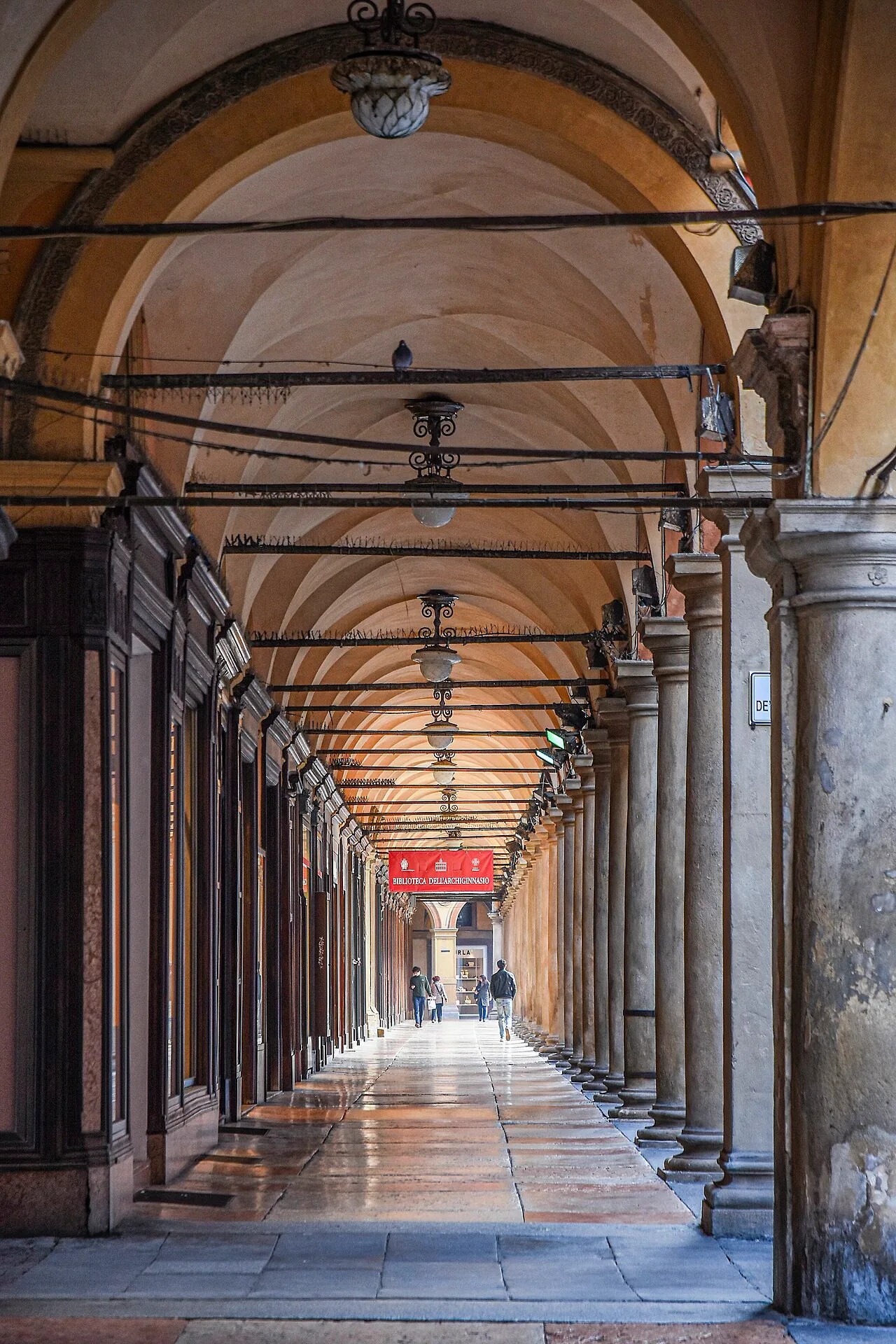
AnetaMalinowska · CC BY-SA 4.0 · Edited
The Pavaglione is useful shelter, but Piazza Maggiore itself remains exposed. To appreciate the square’s buildings together, you need to step out from the arcade. Walking beneath cover and spending time looking across the square are different parts of a visit. Covered walking does not make the whole sightseeing day rainproof. Shoes suited to wet paving and a compact umbrella or waterproof jacket still have a place in your bag.
For an indoor alternative, the Archiginnasio offers the historic university setting, while San Petronio draws your attention to the church beside the square. Choose an interior because it interests you, not simply because it is the nearest door when rain starts. That makes it easier to give the visit proper time rather than interrupting it as soon as the weather improves.
A museum-led afternoon offers a different balance: MAMbo, Bologna’s modern art museum, suits a break from historic architecture. Keep that as an alternative to the central sights rather than adding it to an already full outdoor day. You can enjoy a substantial indoor visit and leave a longer walk for another day, instead of trying to preserve every stop in worsening weather.
Trade fairs and accommodation
Major trade fairs can matter more to your room budget than the temperature difference across October. Accommodation demand rises sharply compared with an ordinary visiting week. When central rooms become scarce, staying outside Bologna may be the alternative, which adds a journey to each sightseeing day. Cosmoprof has produced particularly severe pressure, with reported rates around four times normal, but that is an example of a peak fair, not a price multiplier to apply to every event.
SAIE Bologna takes place on 7–10 October 2026 at BolognaFiere. If your city break overlaps that window, weigh the appeal of warmer outdoor time against competing demand for accommodation. Choosing early dates outside the fair window separates those two considerations more clearly.
For budgeting, allow roughly €100–€180 per night for a mid-range double room on ordinary October dates, and roughly €180–€350 during a major-fair period, on the same room-only basis. These are planning ranges: central location and late booking push costs upwards, and exceptional peaks can exceed them. Compare the total for your stay before committing to travel dates.
If walking from your hotel to the historic centre is important, favour an ordinary-demand period over a cheaper room outside the city during a fair. Later October’s cooler conditions may be the more acceptable compromise.
Sources & fact-checking
Checks against the sources below cover: key figures.
- NUOVO CLIMA – Temperature e precipitazioni. Stazione di Bologna – Area Urbana – dati mensili
- Temperature e precipitazioni. Stazione di Bologna – Area Urbana – dati mensili
- Comune di Bologna – Area Programmazione, Statistica e Presidio sistemi di controllo interni, U.I. Ufficio Comunale di Statistica; Città Metropolitana di Bologna – Servizio Studi e Statistica per la programmazione strategica — key figures
- Glossario indici climatici
- Senaf srl — key figures