Choose April for a first visit built around Charleston’s historic-district walks and gardens. November is a cooler alternative with less rain on average, while summer suits a trip where warm-water beach time matters more than long walks. Folly Beach and the city call for different choices: the warmest water coincides with heat, wetter months and afternoon thunderstorms.
Best months for your trip
- First-choice sightseeing month
- April
- Cooler sightseeing alternative
- November
- Hottest month
- July
- Coldest month
- January
- Wettest month
- August
For walking-led sightseeing, favour a month when you can spend a substantial part of the day outdoors without building every outing around heat relief. Spring also brings special access to private houses and gardens, but tree pollen can make that choice less appealing if you are sensitive.
Avoid July and August if continuous outdoor walking is the main purpose of your trip. They are better suited to a beach-and-city mix, with early sightseeing and a proper indoor afternoon break. Warm water is an advantage for swimming, not a reason to expect comfortable pavement-level sightseeing.
Ordinary winter dates offer a quieter city break if you accept cool starts and shorter daylight. Late autumn is a useful compromise for walks, although low-lying waterfront outings still need flexibility around tidal flooding. Christmas through New Year is the exception to winter’s quieter character.
Monthly temperatures, rain and sea temperature
| Month | Average high °F | Average low °F | Rainfall inches | Water °F | Crowds | Walking verdict |
|---|---|---|---|---|---|---|
| January | 58.0 | 43.6 | 2.56 | 53.1 | Lower | Mixed: cool starts |
| February | 60.3 | 46.1 | 2.56 | 54.0 | Lower early on | Mixed: cool mornings |
| March | 65.6 | 52.0 | 3.03 | 59.9 | — | Good fit: mild days |
| April | 72.3 | 59.7 | 2.96 | 67.8 | — | Good fit: comfortable warmth |
| May | 79.0 | 68.0 | 2.58 | 75.6 | — | Mixed: warmer afternoons |
| June | 84.3 | 74.2 | 4.85 | 82.2 | — | Mixed: heat and storms |
| July | 87.5 | 77.1 | 5.08 | 85.4 | — | Avoid long walks: heat |
| August | 86.4 | 76.5 | 6.11 | 85.1 | — | Avoid long walks: heat, rain |
| September | 82.6 | 72.5 | 5.25 | 81.4 | — | Mixed: warmth and storm risk |
| October | 75.6 | 63.2 | 4.07 | 74.5 | — | Good fit: cooler days |
| November | 67.1 | 53.1 | 2.30 | 64.4 | — | Good fit: cooler, less rain |
| December | 60.9 | 46.8 | 2.91 | 56.6 | Lower, holiday rise | Mixed: cool, short days |
Average highs describe the daily maximum, and average lows describe the daily minimum, usually reached overnight or early in the morning. They help you choose clothing and the balance of outdoor time, but climate averages are not a forecast for your travel dates. A particular week can be warmer, cooler or wetter.
The wetter stretch runs from summer into early autumn. Rainfall totals describe the amount of water, not how many days it rains or how long each shower lasts. A wetter month can still contain useful outdoor time, especially when you organise city visits around summer’s afternoon storm tendency.
The water column describes the Cooper River Entrance at Charleston’s harbour mouth, not the air in the historic district or a reading on Folly Beach’s swimming shore. Use it to judge the broad seasonal warming and cooling of coastal water. Your comfort in the sea also depends on wind, waves and how long you stay in.
For a beach-led visit, warmer coastal water favours summer and early autumn. For a walking-led visit, the city’s air temperatures and rainfall are more useful deciding factors. Winter’s quieter dates offer another way to choose, with the year-end holidays bringing a rise in demand.
Spring: walks and garden visits
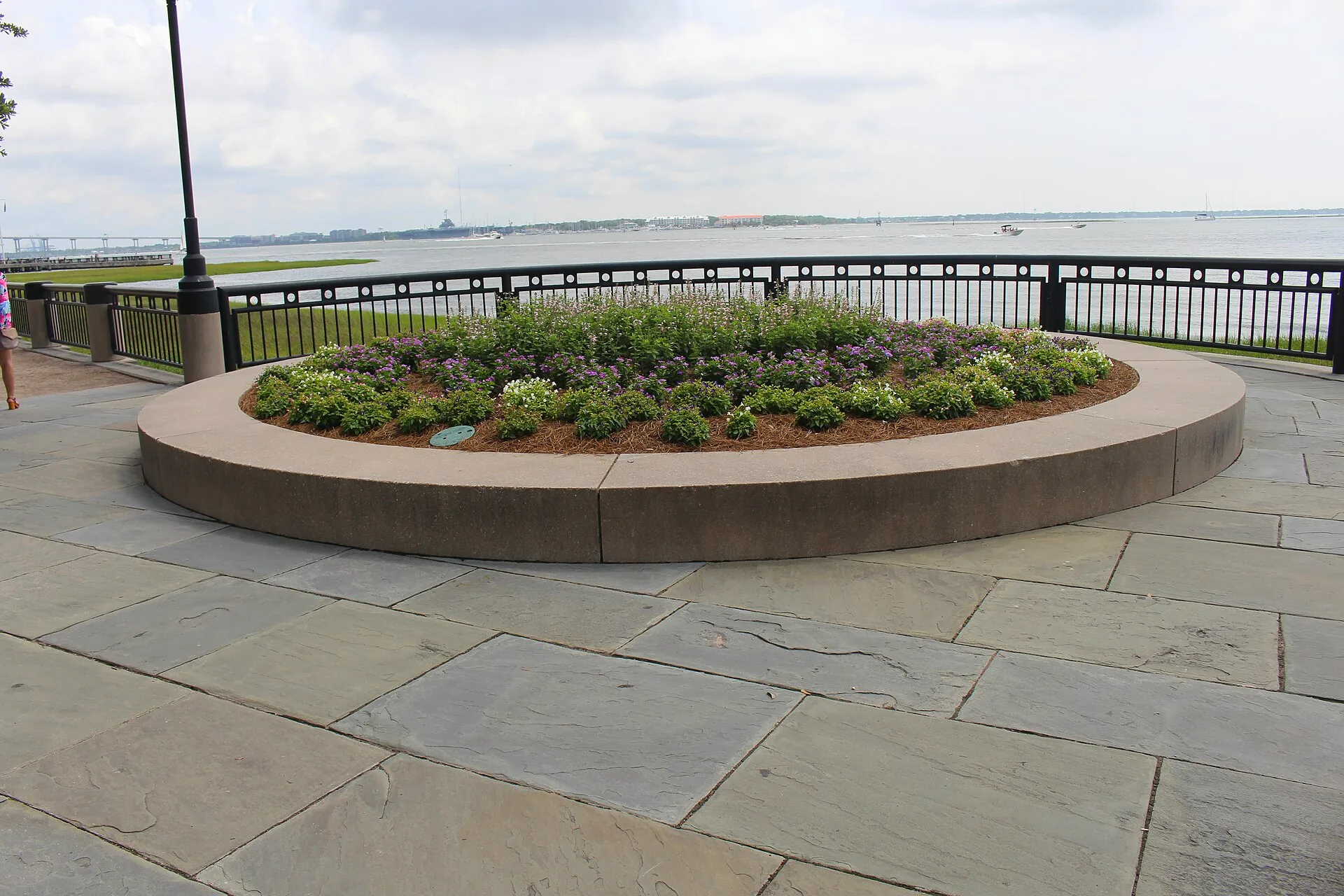
Charleston’s Historic District suits a spring visit built around walking between historic houses and garden visits. Earlier in the season, cooler starts favour a light layer, while later spring brings warmer afternoons. Leave the longest outdoor stretch for the morning as spring warms up, then pause indoors rather than treating the whole day as one continuous walk.

Jesse Lee Tucker · CC BY-SA 4.0 · Edited
The Charleston Festival, the successor to the Festival of Houses and Gardens, adds a reason to choose spring beyond the weather. Its annual window falls roughly from March into April, with dates varying by edition. Ticketed tours open private houses and gardens that are not ordinarily accessible, so the event offers something a normal historic-district walk cannot. Build your other sightseeing around the tours you choose rather than expecting unrestricted entry.
Tree pollen is the main timing trade-off for allergy-sensitive travellers. Charleston’s tree-pollen season runs from January through May, and grass pollen overlaps from March through July. The local pattern is informed by allergist observations and daily pollen counts at a Summerville monitoring site. If pollen regularly disrupts your outdoor days, autumn may be a better match than a garden-focused spring break.
Summer: heat and beach days
- At the first thunder or lightning, leave the beach and water immediately. Shelter in a substantial enclosed building or a hard-topped vehicle, not an open-sided picnic shelter. Wait 30 minutes after the last thunder before returning.
- If a tropical storm or hurricane warning applies, end your visit early and evacuate immediately. Follow official evacuation instructions and designated routes.
- If you remain, tell someone your location, keep at least a three-day supply of water, nonperishable food and prescription medicines, and shelter in an interior room away from windows and doors.
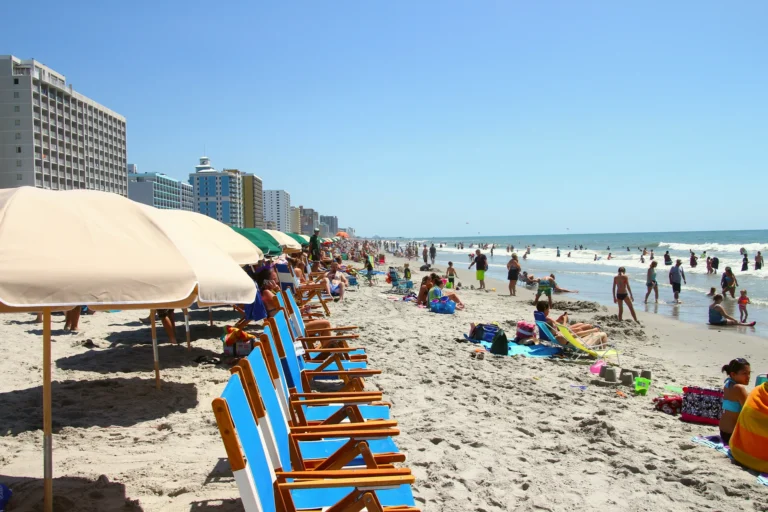
Folly Beach is a better summer priority than uninterrupted walking through Charleston’s Historic District. Coastal water is at its warmest, but city sightseeing calls for a different rhythm. Go outdoors early and reserve a substantial indoor break for the afternoon, rather than trying to finish every outdoor stop before resting.

Brian Stansberry · CC BY 3.0 · Edited
Summer showers and thunderstorms commonly develop in the afternoon and often peak late in the afternoon. That tendency makes early outings useful, although it does not mean every day follows the same pattern.
The air also holds abundant moisture. Across the National Weather Service’s Charleston forecast area, typical summer precipitable water is often near 2 inches. This is the depth of water that would result if all the vapour in a column of air condensed, not a surface humidity percentage or a dew-point reading. It helps explain the moisture available for summer downpours.
Autumn: sightseeing and storm risk
September retains much of summer’s warmth, while October and November make longer walks more appealing. Choose later autumn for city sightseeing rather than the warmest swimming water. Give daytime walks priority as the evenings shorten, particularly if the waterfront is central to your plans.
Early autumn carries a tropical-weather trade-off. Across the Atlantic basin, including the Caribbean Sea and Gulf of Mexico, activity historically peaks around 10 September, with most activity from mid-August through mid-October. This pattern covers 1991–2020 and describes the basin’s season, not a prediction of a storm reaching Charleston during your stay.
Charleston Harbor has a separate seasonal concern: high-tide flooding is most active in autumn, especially September and October. The seasonal summary uses records beginning in 1935, distinct from the harbour gauge’s full record from 1 October 1921 to 30 September 2026. Summer ranks next, followed by spring, with winter least active. Flooding can interrupt low-lying waterfront outings even on cooler days, so a waterfront-focused visit benefits from flexible plans.
November’s cooler, less rainy character suits a walking break even when beach time is no longer your priority.
Winter: quieter city breaks
For quieter dates, favour the first three weeks of December or January through early February. Christmas week through New Year brings a holiday increase in visitors and hotel demand, so winter is not uniformly quiet.
Charleston in winter suits short historic-district walks and waterfront visits on comfortable days, rather than a swimming-led holiday. Allow for cool starts, bring layers and give outdoor sightseeing the daylight hours instead of postponing it until evening.
For wet weather in any season, spend a substantial part of the day in the Charleston Museum or the Gibbes Museum of Art. The former develops the city’s history, while the latter gives you an art-focused alternative. Put an indoor pause between outdoor stretches so a rainy day can still include a walk without depending on hours of dry weather.
Sources & fact-checking
Checks against the sources below cover: key figures and services.
- National Weather Service Charleston, SC — key figures
- Charleston Allergy & Asthma — key figures
- National Weather Service Charleston, South Carolina — service
- Charleston County Government — service
- National Weather Service Forecast Office, Charleston, South Carolina — key figures
- National Centers for Environmental Information (NOAA) — key figures
- National Oceanic and Atmospheric Administration (NOAA), National Centers for Environmental Information (NCEI) — key figures