At Colmar’s Christmas markets, you can make a meal of Alsatian savoury dishes or buy festive baking to take home. Choose tarte flambée for a lighter bite, choucroute for a substantial lunch, and biscuits or spiced honey bread for gifts. A cup of mulled wine belongs to the visit itself, while a mixed bag of Christmas biscuits can last beyond it.
Choosing food at the Christmas markets
| Food or drink | What it is | When to have it | Typical spend |
|---|---|---|---|
| Tarte flambée | Alsatian flatbread | Snack or light meal | €5–8 portion; €10–15 whole |
| Choucroute | Cabbage and pork meal | Winter lunch | €10–16 stall plate; €18–25 seated |
| Bredele | Christmas biscuits | Sweet snack or gift | €5–10 small bag; €12–20 larger assortment |
| Pain d’épices | Spiced honey bread | Sweet snack or gift | €3–6 piece; €8–15 loaf or gift pack |
| Vin chaud | Mulled wine | During a market visit | €3–5 standard cup; deposit extra |
The Cathedral gourmet Christmas market is the main stop for ready-to-eat dishes, including local Alsatian specialities. Place Jeanne d’Arc focuses on regional products, from cheeses and cured meats to wines, alongside crafts and decorations. For a taste of Colmar’s regional cooking, favour these Alsatian dishes and festive bakes over general fairground snacks such as churros.
At a stall, choose your portion, order and pay at the counter, then collect your food as directed. Takeaway suits a snack between stalls, while a seated meal gives you space for a full plate. Lunch is usually around 12:00–14:00 and dinner around 19:00–21:00, though grazing need not follow meal hours.
In a café or restaurant, table service commonly adds roughly €1–3 to a drink compared with counter service. French menu prices normally include service, and a separate cover charge is not customary. Keep immediate eating separate from gift shopping so fragile biscuits are not carried loose with a meal.
Tarte flambée
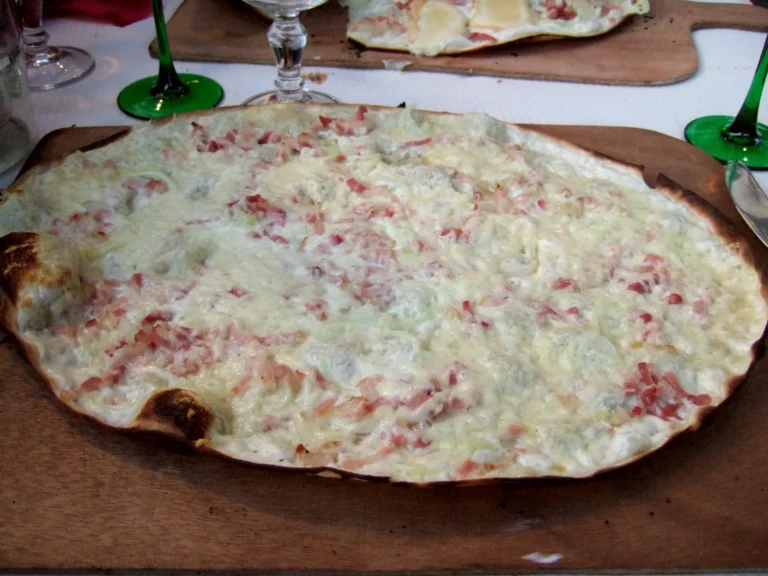
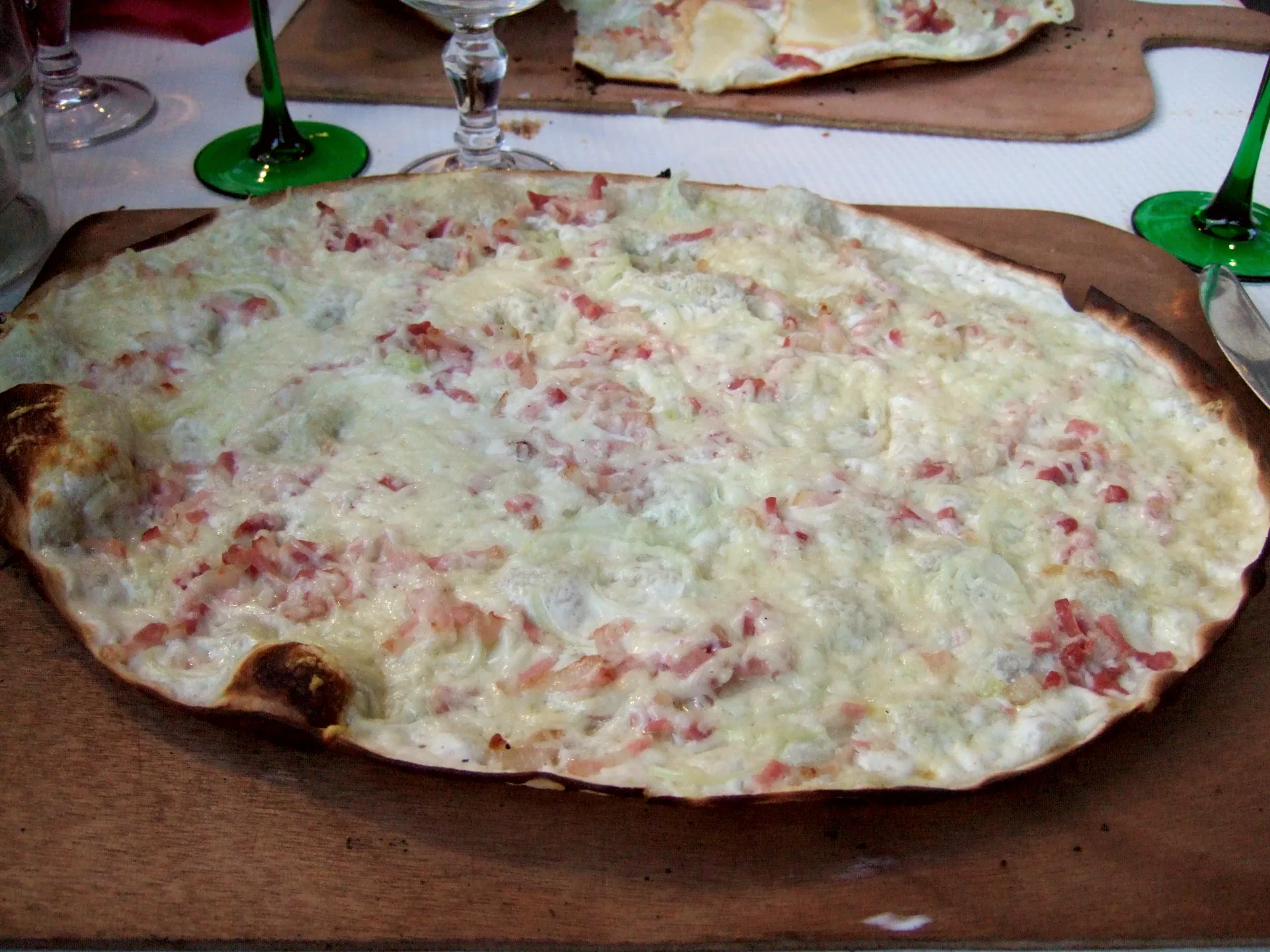
Tarte flambée is an Alsatian flatbread commonly offered as prepared food at Colmar’s Christmas markets. Flammekueche is the local name for the same dish, useful to recognise on a stall menu. Its thin bread dough carries crème fraîche or fromage blanc, a fresh soft cheese, with thinly sliced onions and smoked bacon pieces.
The thin base makes this a good hot snack or shared light meal rather than a thick, bread-heavy one. Look for it at a food stall or bakery counter, and choose a portion or a whole flatbread where both are offered. A whole one is easy to divide if you want a savoury bite without committing everyone to a separate plate.
Look for browned edges and a portion coming freshly from the oven. You can judge those before paying when baking is visible. The edge should look crisp, while the creamy topping remains spread across the centre. Taking it straight after baking lets you enjoy that contrast.
Jane Belinda Smith from Peterborough, Cambridgeshire · CC BY 2.0 · Edited
Choucroute
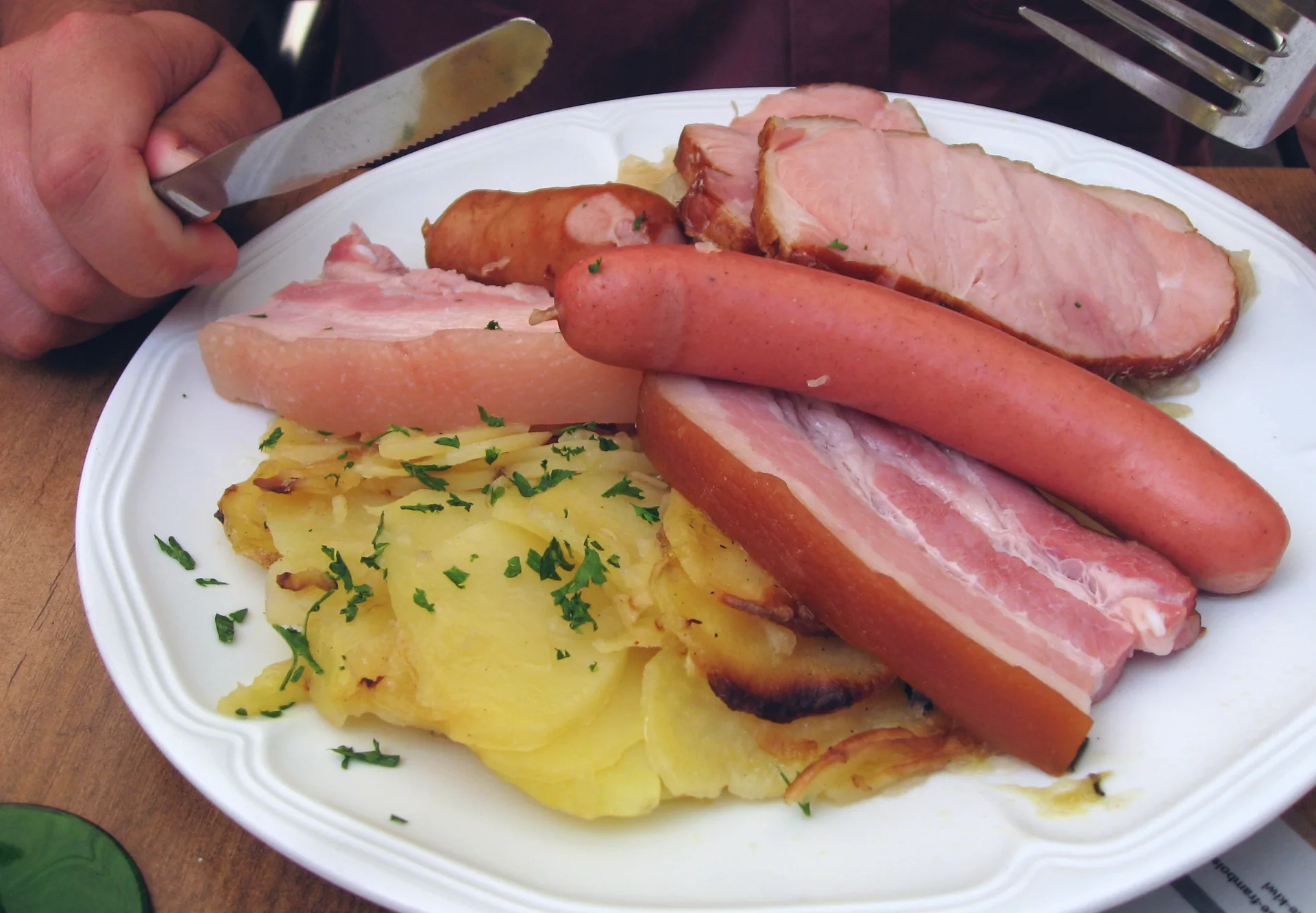
Choucroute, fermented cabbage or sauerkraut, is among the Alsatian specialities sold at Colmar’s Christmas markets. As a meal, it usually appears as choucroute garnie, cabbage served with substantial accompaniments. The cabbage is cooked with white wine and aromatic seasonings, then served with potatoes and assorted pork, often sausages, smoked pork and bacon or other cured cuts.
This is a traditional winter lunch rather than a small bite to nibble while browsing. A prepared-food stall is the natural place to look for a plate during a market visit, while in a traditional restaurant, it becomes a sit-down meal. The cabbage brings acidity to balance the richer meats.
For a meat-free meal, ask about the cabbage as well as the toppings. It can be cooked with goose or pork fat and meat stock, so leaving off the sausages does not necessarily make the dish vegetarian.
Will Bakker from Luxembourg, Luxembourg · CC BY-SA 2.0 · Edited
Bredele
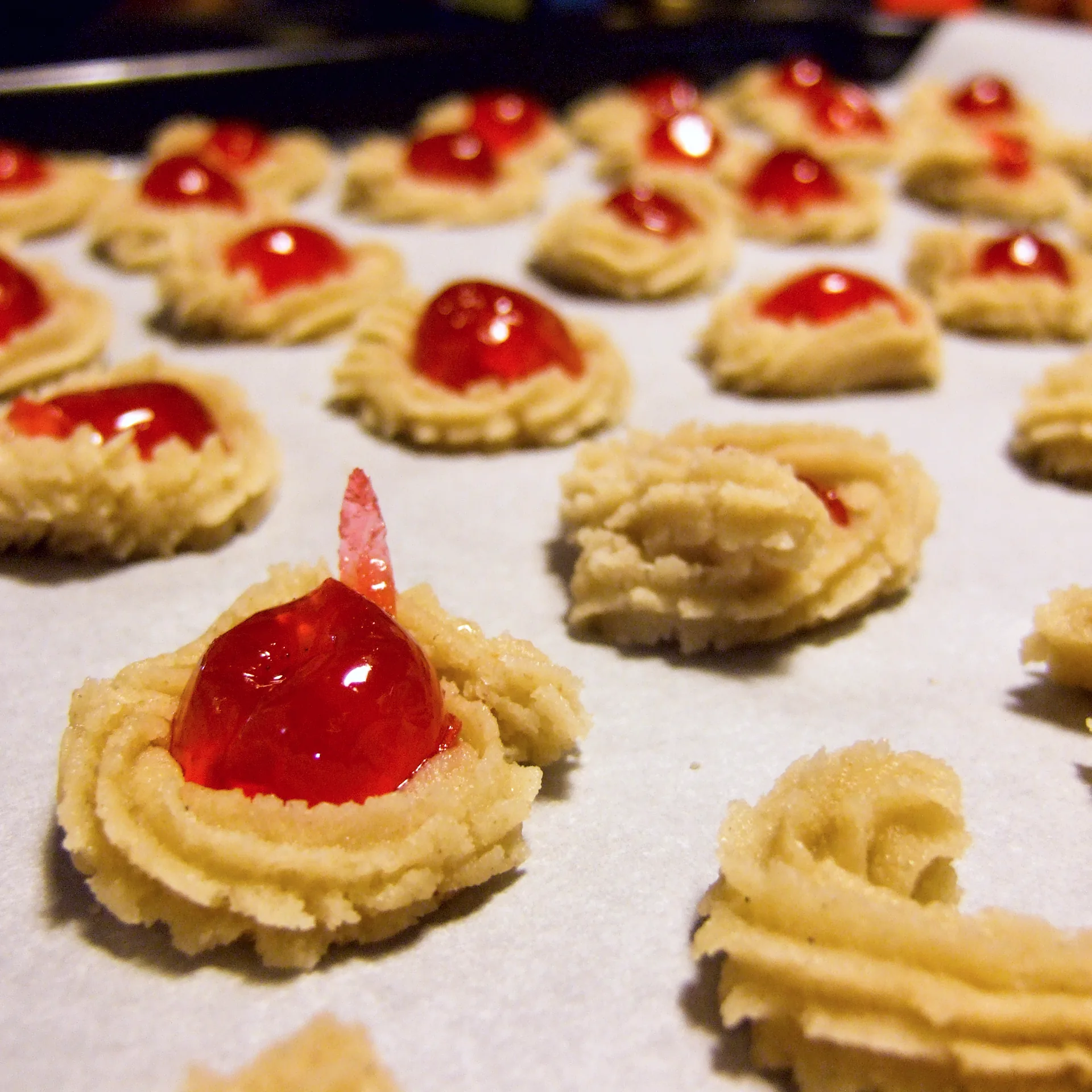
Bredele are small Alsatian Christmas biscuits, sold at Colmar’s markets and traditionally shared or given as gifts during Advent. You may also see the local name bredalas. A mixed bag offers several kinds of biscuit, not one recipe in different shapes. A bakery or regional-product stall is a good place to choose a sweet snack or a take-home assortment.
Butter varieties have a rich, straightforward biscuit taste; aniseed versions bring a distinctive aromatic note. Cinnamon biscuits give you warming spice, while almond and hazelnut varieties add nuttiness. An assortment can therefore suit several tastes, but the flavour label matters if you particularly like, or dislike, one ingredient.
Use shapes and finishes as clues alongside the label. Stars often point towards cinnamon varieties, and ridged, piped biscuits towards spritz, which may include almonds. These are useful starting points rather than a substitute for the ingredient description. Where individual biscuits and mixed bags are both sold, choose a few for eating now or a packaged assortment for sharing later. Keep the latter protected from crushing in your shopping bag.

Stéphane Friedelmeyer · CC BY-SA 4.0 · Edited
Pain d’épices
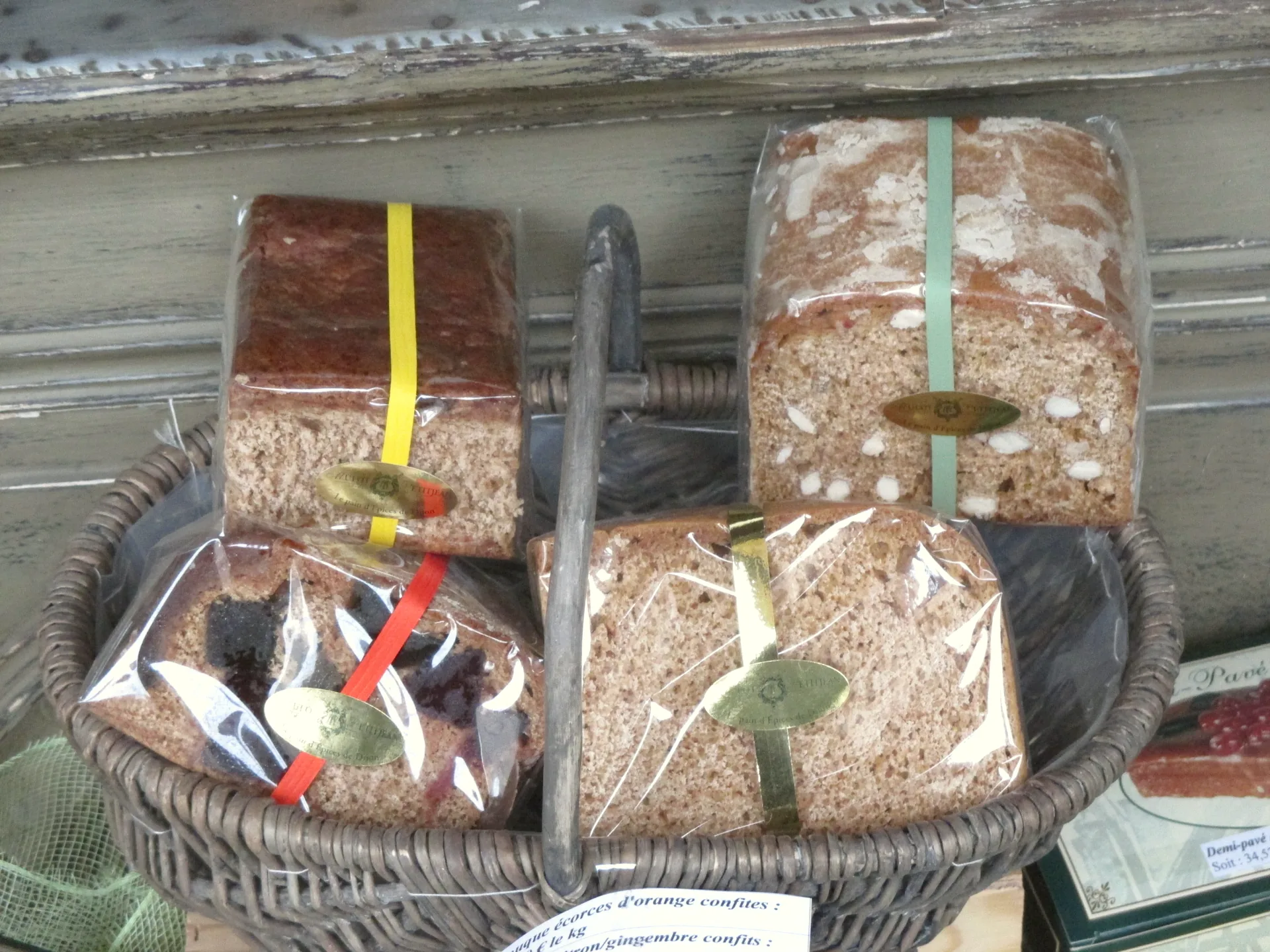
Pain d’épices, spiced honey bread, is sold at Colmar’s Christmas markets and belongs to Alsatian Christmas and Saint Nicholas festivities. Rye or wheat flour and honey form its base, with warming spices such as cinnamon, ginger, cloves, anise and nutmeg. Recipes vary: eggs or milk can soften the texture, while candied citrus peel adds another flavour.
Choose soft honey gingerbread for a slice to eat, or a decorated piece for a festive gift. Bakery counters and regional-product stalls sell several formats, including soft gingerbread made with local honey and tongue-shaped pieces with sugar or chocolate glaze and traditional Christmas images. The decoration is visible before you buy, so you can choose a design as well as a flavour.
Filled versions bring chocolate or almond cream into the centre, making them a richer sweet snack. Where plain and filled pieces sit together, decide whether you want the honey-and-spice flavour on its own or a sweeter filling. A loaf is convenient for slicing and sharing at home, while a glazed, decorated piece can be given without cutting it first.
Arnaud 25 · CC BY-SA 4.0 · Edited
Vin chaud
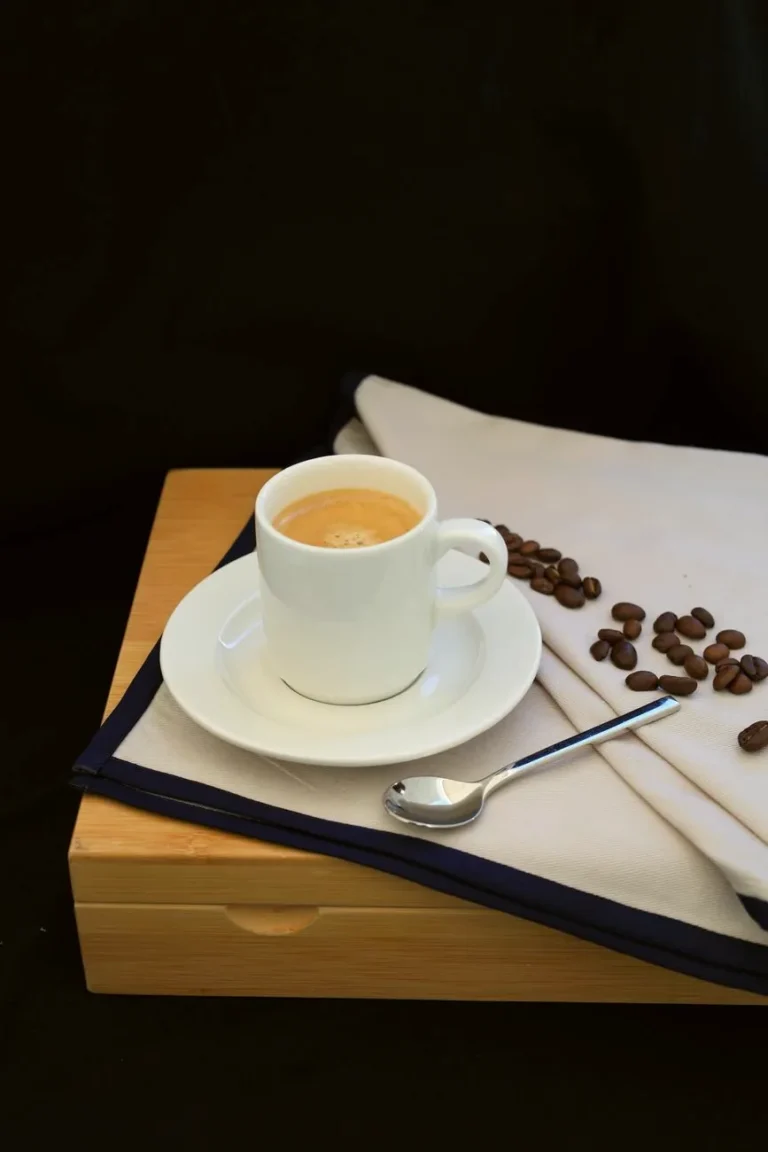
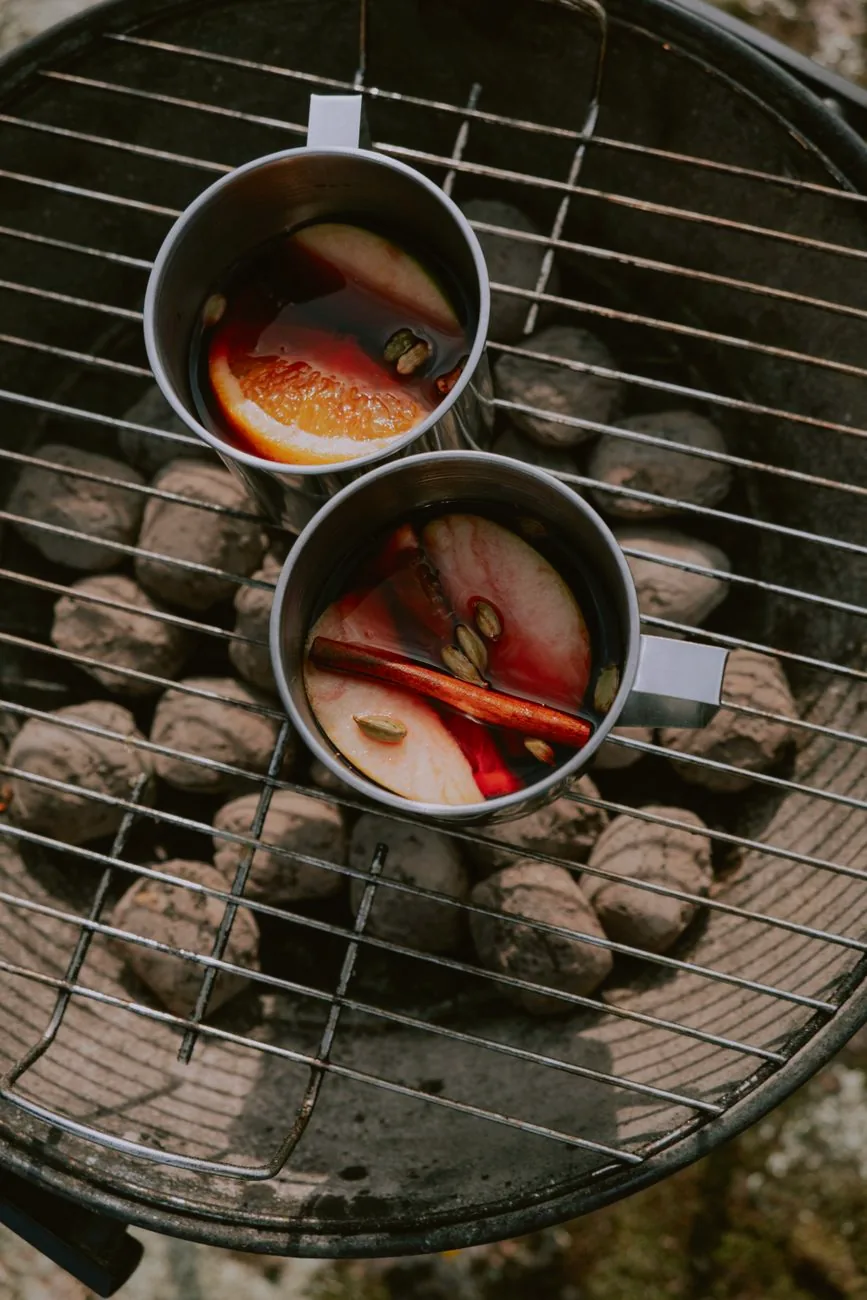
Vin chaud, mulled wine, is a staple drink during a visit to Colmar’s Christmas markets. Its usual recipe combines wine and sugar with cinnamon, cloves, star anise and citrus, often orange or lemon. Recipes vary, so the balance of fruit, spice and sweetness differs between stalls.
Both red and white versions are offered: order by colour at the drinks stall. Ask for vin chaud rouge for red or vin chaud blanc for white. Red generally gives a fuller wine flavour, while white makes a lighter alternative when both are available at the same counter. Hot apple juice and hot orange juice are non-alcoholic options if you want a warm drink without wine.
The reusable cup comes with a deposit separate from the drink price, so allow for that in your initial payment. Return the empty cup to a stall serving hot drinks to reclaim the deposit. It need not be the stall where you bought your drink. You can keep the cup instead, but then you forgo the refund. Decide before leaving the markets whether it is a souvenir you want to carry home.
cottonbro studio · Pexels License · Edited
Sources & fact-checking
Checks against the sources below cover: services and key figures.